Skip to content

Southern Fried Science

Over 15 years of ocean science and conservation online

  • Home
  • About SFS
  • Authors
  • Support SFS

Category: Popular Culture

The horrifying physiological and psychological consequences of being Aquaman

Posted on July 18, 2012December 27, 2012 By Andrew Thaler 20 Comments on The horrifying physiological and psychological consequences of being Aquaman
Popular Culture
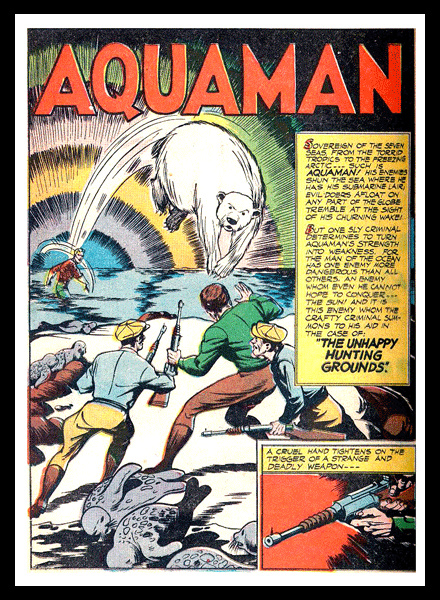
Aquaman. DC Comics.
Aquaman. DC Comics. A rational response to seal poaching is to lob a polar bear at the aggressors.

Aquaman may not be everybody’s favorite superhero, but since his creation in 1941, he has been among DC’s most enduring icons. During the Golden Age of comic books, he held his own against Superman, Batman, and Wonder Woman. Silver Age Aquaman was a founding member of the Justice League. His powers, tied to the ocean, forced writers to create a compelling, complex hero with explicit limitations. In the early days, when Superman’s strength was practically infinite, and Batman’s brilliance was unmatched, Aquaman had to become more than just a superhero, he had to be a person.

If Superman existed to show us how high the human spirit could fly, and Batman to show us the darkness within even our most noble, Aquaman is here to show us the world that triumphs in our absence. The ocean is not ours, and no matter how great our technology, we will never master it as we have mastered land, but Aquaman has. Through this lonely ocean wanderer, we can experience a world that we can never truly command. In many ways, Aquaman was stronger than the Man of Steel and darker than the Dark Knight. He knew loneliness that the orphan and the alien exile never could.

Roll on, thou deep and dark blue Ocean – roll!
Ten thousand fleets sweep over thee in vain;
Man marks the earth with ruin – his control
Stops with the shore; — upon the watery plain
The wrecks are all thy deed, not does remain
A shadow of man’s ravage, save his own,
When for a moment, like a drop of rain,
He sinks into thy depths with bubbling groan,
Without a grave, unknell’d, uncoffin’d, and unknown.

Byron

Even though Aquaman had to fight harder, endure the jokes of other, less limited heroes, and find relevance in an ecosystem hostile to the humans that had to empathize with him, Aquaman was never forced to confront the truly horrifying consequences of life in the ocean.

Read More “The horrifying physiological and psychological consequences of being Aquaman” »

Candidate Mitt Romney on Ocean Policy

Posted on July 10, 2012 By Andrew Thaler 2 Comments on Candidate Mitt Romney on Ocean Policy
Popular Culture

[View the story “Romney on Ocean Policy” on Storify]

A field guide to ocean science and conservation on twitter

Posted on June 30, 2012June 30, 2012 By Andrew Thaler 2 Comments on A field guide to ocean science and conservation on twitter
Popular Culture

A few of my colleagues recently came to me looking for advice on how to get started on twitter. Even for seasoned marine scientists who grew up during the internet revolution, establishing a twitter presence can be a daunting task. When used well, it provides a steady stream of news, commentary, and discussion that can provide broad insight into the current state of marine science and conservation. When used poorly, twitter can become a continuous, unrelenting torrent of irrelevant nonsense, punditry, and manufactured controversy. I put this guide together to provide a foundation for those interested in using twitter to engage with the Ocean Community.

There are several great basic guides on how to get started on twitter, so, rather than reinventing the wheel, here are a few of my favorite resources:

  • What is Twitter and Why Scientists Need To Use It
  • Twitter: What’s All the Chirping About? 
  • How to live-tweet a conference: A guide for conference organizers and twitter users
  • Your 5-minute, 5-day orientation to twitter

All of these guides have some good advice, but really, the best thing you can to get a feel for twitter is to create a personal account and play around for a week or two. Always start with a personal account. You’re going to make mistakes, faux pas, or perhaps accidentally tweet something that you’d wish you hadn’t. You don’t learn to ride a bike on a Pinarello Dogma 60.1 and you shouldn’t learn to use a new social media tool on an account that will be permenently linked to your online reputation.

Read More “A field guide to ocean science and conservation on twitter” »

A brief, poorly researched, history of amphibious vehicles

Posted on June 22, 2012 By Andrew Thaler
Popular Culture

James Bond had them. Baltimore’s inner harbor has them. Mitt Romney is probably building one for each of his moon mansions. From the Alligator Tug to the Boston Duck Boats, amphibious vehicles have been with us for more than a century. Which is why it’s strange to see a headline, dated June 21st, 2012, touting “WORLD’S FIRST AMPHIBIOUS CAR REVEALED“.

Now, if we want to strictly limit ourselves to production line, non-military, non-commercial vehicles (so no decommissioned beach landers or custom fanboat VW bugs), than the first amphibious vehicle was probably the Amphibicar, way back in 1965:

Amphicar im Main, am Eisernen Steg in Ffm via Wikimedia Commons

Notoriously leaky, not entirely stable, but still pretty swank. If Romney ever finishes building his moon mansion’s moon ocean pool for amphibious moon cars, he’ll join the ranks of former president Lyndon Johnson, who also owned an Amphibicar.

Read More “A brief, poorly researched, history of amphibious vehicles” »

Wolf conservation and negative media portrayals: A panel discussion about “The Grey” with wolf experts

Posted on February 29, 2012February 29, 2012 By David Shiffman 3 Comments on Wolf conservation and negative media portrayals: A panel discussion about “The Grey” with wolf experts
Conservation, Popular Culture

A red wolf. Photo credit: DeLene Beland

The recently-released movie “The Grey” tells the story of a pack of wolves that hunts the survivors of a plane crash. In addition to both being the subject of inaccurate and negative media portrayals, wolves and sharks share many ecological similarities (sharks have been called “the wolves of the sea”). A panel of wolf scientists and conservation experts agreed to answer my questions about these animals and their thoughts on how “The Grey”  might impact their conservation.

Dr. Sylvia Fallon  is a senior scientist with the Natural Resources Defense Council. She has worked for the American Association for the Advancement of Science, the Environmental Protection Agency, and the National Park Service.

DeLene Beland is an independent science writer whose work has been featured by the Charlotte Observer, Earth Magazine, and Wildlife in North Carolina. She blogs at Wild Muse, and  is the author of an upcoming book about wolves in the Eastern United States.

Cristina Eisenberg is a Ph.D. student at Oregon State University. Her dissertation focuses on the ecological effects of the loss of wolves from forest ecosystems.

Read More “Wolf conservation and negative media portrayals: A panel discussion about “The Grey” with wolf experts” »

This is what a Marine Invertebrate Zoology class looks like.

Posted on February 7, 2012February 7, 2012 By Andrew Thaler 2 Comments on This is what a Marine Invertebrate Zoology class looks like.
Popular Culture, Science

The last few weeks have seen a groundswell of support for Kevin Zelnio’s #IamScience movement, what began as a single, incredibly heartfelt post and twitter hashtag evolved into a series of personal reflections, a somber music video, and a tumbler and Facebook page, all with the unifying message that there is no traditional path through science, only … Read More “This is what a Marine Invertebrate Zoology class looks like.” »

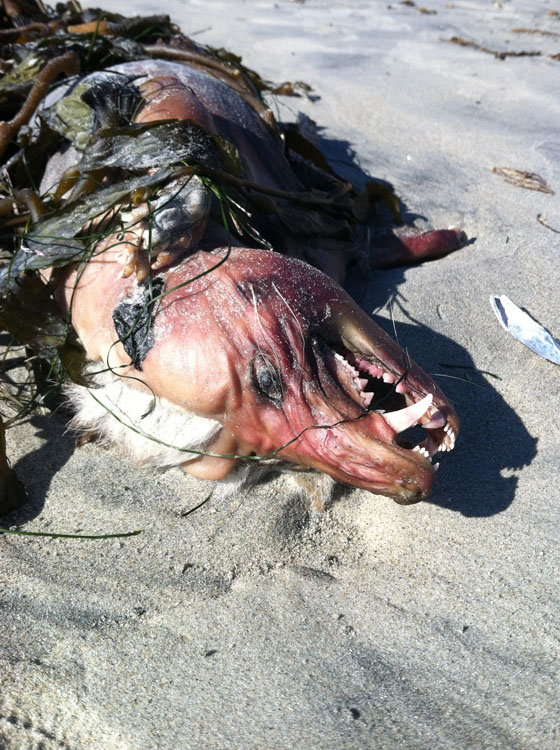
San Diego Demon? This ain’t my first trip down Possum Trot Road

Posted on February 2, 2012February 2, 2012 By Andrew Thaler 10 Comments on San Diego Demon? This ain’t my first trip down Possum Trot Road
Popular Culture

Ever since we started tackling marine cryptids (not to be confused with real cryptic species) during our annual Week of Ocean Pseudoscience, people occasionally e-mail me with new “rotting rodent” style monsters. This news story – Behold: The San Diego Demonoid – has been making the twitter and e-mails rounds today. Like the Montauk Monster a few years back, a waterlogged, decomposed critter washed up on a beach, this time in San Diego, and people unfamiliar with what decomposing varmints look like branded it some sort of cryptid. To the right is the uncredited photo (now credited to Josh Menard) that’s been cropping up in various corners of the internet. Like many “cryptic critter” photos leaked to the press, the ones associated with this story fail to show the entire animal or provide any sense of scale. That should be red flag #1 that it is, in fact, a common local resident that is being dressed up to appear more monstrous than it really is.

Now, I’m not a marsupial specialists, but I’ve seen my fair share of possums (Opposums for our non-southern readers) in all states of decay, so those nasty teeth immediately clued me in. Here’s a possum skull (from a Virginia possum) for comparisons:

Read More “San Diego Demon? This ain’t my first trip down Possum Trot Road” »

Saving Nemo: 1 out of 6 species that appear in Finding Nemo are threatened with extinction

Posted on December 12, 2011December 13, 2011 By David Shiffman 3 Comments on Saving Nemo: 1 out of 6 species that appear in Finding Nemo are threatened with extinction
Conservation, Popular Culture, Science

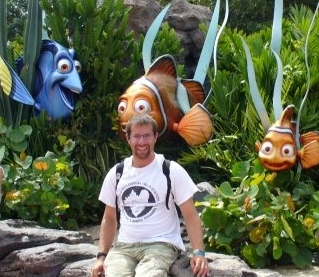
WhySharksMatter found Nemo at Disney's Living Seas Aquarium

Like most marine biology geeks, I’m a huge fan of Disney/Pixar’s “Finding Nemo”. In addition to a heartwarming story of a father trying to bring his son home to their aneme…anemeneme… amenememe… anemone,  the film showcases an enormous variety of beautiful real-life coral reef species. According to  research published today in Conservation Letters, however, we may soon only be able to see some of these animals in the movies. The paper, titled “Extinction Risk and Bottlenecks in the Conservation of Charismatic Marine Species”, concluded that many of the stars of Finding Nemo are in deep trouble.

Read More “Saving Nemo: 1 out of 6 species that appear in Finding Nemo are threatened with extinction” »

Are Neutrinos really faster than light? Irish folk rock parody band weighs in.

Posted on November 27, 2011December 9, 2011 By Andrew Thaler
Popular Culture, Science

From the same people who brought us the eminently catchy “There’s no one as Irish as Barack O’Bama.” Quoth Ger Corrigan “for the moment we are backing Albert and his theory, I’m no Einstein but he was.” The Neutrino Song: httpv://www.youtube.com/watch?v=vpMY84T8WY0

Check out Shark Attack Experiment Live, Friday on National Geographic Wild

Posted on November 23, 2011December 9, 2011 By David Shiffman
Popular Culture, Science

This Friday, tune in to National Geographic Wild for a day of sharks! Starting at noon, they will air a series of shark documentaries culminating at 9 p.m. with “Shark Attack Experiment: Live“. This show, aired live from the shark hotspot of South Africa, aims to test some common myths about shark attacks and to “to … Read More “Check out Shark Attack Experiment Live, Friday on National Geographic Wild” »

Posts pagination

Previous 1 … 12 13 14 … 20 Next

Popular Posts

Florida angler catches (and likely kills) Endangered great hammerhead sharkFlorida angler catches (and likely kills) Endangered great hammerhead sharkFebruary 13, 2012David Shiffman
10 misrepresentations about climate change10 misrepresentations about climate changeOctober 3, 2011David Shiffman
What shark finning means (and doesn't mean): a primer and quizWhat shark finning means (and doesn't mean): a primer and quizJune 18, 2012David Shiffman
Why the new Trump order to shoot wolves is both illegal and a dreadful precedent for endangered speciesWhy the new Trump order to shoot wolves is both illegal and a dreadful precedent for endangered speciesSeptember 5, 2026Ali Gaster
At least 74 practicing shark researchers: How a silly thing I said online raised thousands for conservationAt least 74 practicing shark researchers: How a silly thing I said online raised thousands for conservationFebruary 26, 2025David Shiffman
Is Sea Shepherd really saving whales?Is Sea Shepherd really saving whales?June 7, 2010Andrew Thaler
That's not a blobfish: Deep Sea Social Media is Flooded by AI SlopThat's not a blobfish: Deep Sea Social Media is Flooded by AI SlopDecember 19, 2025Andrew Thaler
When is a take not a take? Yet another attack on Endangered Species by the Trump AdministrationWhen is a take not a take? Yet another attack on Endangered Species by the Trump AdministrationSeptember 22, 2026Ali Gaster
Have we found the city of Atlantis?Have we found the city of Atlantis?September 1, 2026Chris Parsons
The Trump Administration’s latest attack on endangered speciesThe Trump Administration’s latest attack on endangered speciesSeptember 17, 2026Ali Gaster
Subscribe to our RSS Feed for updates whenever new articles are published.

We recommend Feedly for RSS management. It's like Google Reader, except it still exists.

Southern Fried Science

  • Home
  • About SFS
  • Authors
  • Support SFS


If you enjoy Southern Fried Science, consider contributing to our Patreon campaign.

Copyright © 2026 Southern Fried Science.

Theme: Oceanly Premium by ScriptsTown