Skip to content

Southern Fried Science

Over 15 years of ocean science and conservation online

  • Home
  • About SFS
  • Authors
  • Support SFS

Misunderstood Marine Life # 3 – Cryptics and Cryptids

Posted on October 6, 2011October 6, 2011 By Andrew Thaler
Science

In my mind, where I imagine people are so interested in what I do that they hang on every carefully chosen word I write, I imagine some unspecified mob of readers looking over my I *heart* cryptozoology post and going “Whoa now, pardner!” (yes, you all sound like cowboys in my mind) “You just said there was a difference between cryptozoology and real zoology, but you deal with cryptic species all the time! What’s up with that?”
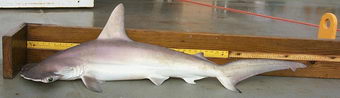
Cryptic hammerhead shark. Photo from http://www.physorg.com/news68994294.html

Cryptic species and cryptid species are two very different beasts. Cryptids are the mysterious, unidentified creatures that cryptozoology deals with. They haven’t been studied in depth by virtue of the fact that they haven’t been tracked, captured, or even well documented. In contrast a cryptic species is one that is morphologically and ecologically indistinguishable from another species, but is genetically distinct. A cryptic species has been under our microscopes the whole time, but has been studied as if it were one species when it is really another. A perfect example of this was a discovery in 2006 of a cryptic species of hammerhead shark, physically identical, but genetically distinct, and sharing territory with the…

Well, what do we call the original species when a cryptic is discovered? As a unit of evolution, both species are technically cryptic. They’re both morphological indistinguishable from each other, yet genetically distinct. Usually, the dominant population keeps the original scientific name. In the case of the hammerhead, the globally distributed population remained Sphyrna lewini while the Atlantic population was designated the cryptic species awaiting reclassification. In other cases, both species are reassigned. Sometimes, one, both, or many new cryptics receive a three word naming scheme.

The hunt for cryptics is often part of a large study to characterize contributors to an ecosystem. As more ecologic studies rely on genetic tools to assess ecologic parameters, more cryptic species are being discovered. The hunt for cryptids is a quest to discover completely new animals that have yet to be described by science.

Share this:

  • Share on Bluesky (Opens in new window) Bluesky
  • Share on Facebook (Opens in new window) Facebook
  • Share on Reddit (Opens in new window) Reddit
  • Share on Threads (Opens in new window) Threads
  • Share on WhatsApp (Opens in new window) WhatsApp
  • Share on Mastodon (Opens in new window) Mastodon

Related

Tags: cryptic cryptid genetics hammerhead shark species

Post navigation

❮ Previous Post: 10 Myths About Social Science
Next Post: Pseudoscience Redux: Greenwashing – Is there really a sustainable Orange Roughy fishery? ❯

You may also like

Conservation
Breaking news: CITES protections for hammerheads, manta rays, and oceanic whitetips proposed
October 5, 2012
Conservation
Better Conservation through Cloning: this cock doesn’t crow
December 7, 2011
Uncategorized
#GivingTuesday, freshwater sharks, and hammerhead schooling: Dear Shark Man, Volume 3
November 28, 2017
Weekly Salvage
Hagfish, chill Puffins, swamp monsters, the mining boat floats, and more! Monday Morning Salvage: April 2, 2018
April 2, 2018

Popular Posts

That's not a blobfish: Deep Sea Social Media is Flooded by AI SlopThat's not a blobfish: Deep Sea Social Media is Flooded by AI SlopDecember 19, 2025Andrew Thaler
What Ocean Ramsey does is not shark science or conservation: some brief thoughts on "the Shark Whisperer" documentaryWhat Ocean Ramsey does is not shark science or conservation: some brief thoughts on "the Shark Whisperer" documentaryJuly 2, 2025David Shiffman
The story of the pride flag made from NASA imagery: Bluesky's most-liked imageThe story of the pride flag made from NASA imagery: Bluesky's most-liked imageSeptember 27, 2024David Shiffman
I can serve on your graduate thesis committee. Here’s what you can expect of me, and what I expect in return.I can serve on your graduate thesis committee. Here’s what you can expect of me, and what I expect in return.October 16, 2025David Shiffman
Shark of Darkness: Wrath of Submarine is a fake documentaryShark of Darkness: Wrath of Submarine is a fake documentaryAugust 10, 2014Michelle Jewell
The plague-busting, prairie-dog-vaccinating, ferret-saving droneThe plague-busting, prairie-dog-vaccinating, ferret-saving droneNovember 1, 2016Andrew Thaler
Screaming into the void - Why your scientific paper doesn’t matterScreaming into the void - Why your scientific paper doesn’t matterJune 18, 2026Chris Parsons
What is a Sand Shark?What is a Sand Shark?November 12, 2017Chuck Bangley
Our favorite sea monsters – Ningen (#4)Our favorite sea monsters – Ningen (#4)September 7, 2010Andrew Thaler
Fun facts and FAQs about Megalodon, Maryland's new (and definitely extinct) official state sharkFun facts and FAQs about Megalodon, Maryland's new (and definitely extinct) official state sharkApril 15, 2026David Shiffman
Subscribe to our RSS Feed for updates whenever new articles are published.

We recommend Feedly for RSS management. It's like Google Reader, except it still exists.

Southern Fried Science

  • Home
  • About SFS
  • Authors
  • Support SFS


If you enjoy Southern Fried Science, consider contributing to our Patreon campaign.

Copyright © 2026 Southern Fried Science.

Theme: Oceanly Premium by ScriptsTown