Skip to content

Southern Fried Science

Over 15 years of ocean science and conservation online

  • Home
  • About SFS
  • Authors
  • Support SFS

Category: Science

Surviving Grad School: What to expect from your stipend

Posted on January 29, 2013January 7, 2020 By Andrew Thaler 10 Comments on Surviving Grad School: What to expect from your stipend
Science

AndrewThumbWelcome to graduate school. If you’re enrolled in a Ph.D. program in the sciences, you should expect to get a stipend. Stipends vary significantly depending on the program and university that you’re enrolled in. Some schools guarantee five years of support, some only guarantee one. Masters programs may or may not provide a stipend. The quality of the stipend is not necessarily a reflection of the quality of your program, but reflect the economic realities of academia.

Often, new students think that any stipend is too good to be true. After all, someone is paying you to go to school! Because of this confusing situation, graduate students may be uncomfortable talking about their stipend or discussing financial issues with their peers and mentors. But that stipend is central to your success as a happy, healthy, successful graduate student for one very simple reason:

Graduate school is a job, and you should expect to be paid for your work.

Read More “Surviving Grad School: What to expect from your stipend” »

More than 100 marine scientists call for protecting the deep sea from trawling. Will you join us?

Posted on January 28, 2013January 28, 2013 By David Shiffman 8 Comments on More than 100 marine scientists call for protecting the deep sea from trawling. Will you join us?
Conservation, Science

davesquare

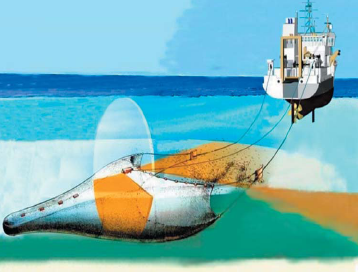
The least-impacted places in the ocean are mainly in the deep sea, but as fishing technology has improved, even seamounts, sponge gardens and deep-sea coral beds are no longer out of reach of our appetites for seafood. Bottom trawling, which involves dragging a heavy weighted net along the seabed, is so destructive to benthic habitats that it has been compared to clear-cutting a forest.  Bottom gillnetting catches almost anything that swims into them (and isn’t smaller than the mesh size), resulting in enormous levels of bycatch.

A (simplified) schematic of a bottom trawl. This one (on the NOAA vessel Henry Bigelow) is used for scientific sampling, not fishing, but it's the same principle on a smaller scale. Image via Wikimedia Commons
A (simplified) schematic of a bottom trawl. This one (on the NOAA vessel Henry Bigelow) is used for scientific sampling, not fishing, but it’s the same principle on a smaller scale.                  Image via Wikimedia Commons


The deep-sea fishing fleet of the European Union is one of the largest in the world, which is why it was so heartening to see the European Commission call for a phase-out of trawls and bottom gillnets recently. The Marine Conservation Institute, a longtime leader in marine protected areas, has obtained over 100 signatures (including mine) from marine scientists supporting a phase-out of bottom trawls and bottom gillnets by the EU fishing fleet. If you are a scientist who supports this measure, please consider adding your signature. This can be done by e-mailing DeepSeaTrawlPetition@Marine-Conservation.org and including your name, institutional affiliation, degree, title, and full mailing address. Please note that MCI is primarily interested in signatures from the scientific community, and that simply posting a comment on this blog post is not equivalent to signing the petition.However, feel free to post a comment letting us know that you contacted MCI!

mci-logo

The full text of the petition can be seen after the jump:

Read More “More than 100 marine scientists call for protecting the deep sea from trawling. Will you join us?” »

This Week in the Deep

Posted on January 26, 2013January 25, 2013 By Andrew Thaler
Science

New and noteworthy publications in deep-sea science for the week of January 21, 2013.

Geobiology: Did life originate from a global chemical reactor?

Many decades of experimental and theoretical research on the origin of life have yielded important discoveries regarding the chemical and physical conditions under which organic compounds can be synthesized and polymerized. However, such conditions often seem mutually exclusive, because they are rarely encountered in a single environmental setting. As such, no convincing models explain how living cells formed from abiotic constituents. Here, we propose a new approach that considers the origin of life within the global context of the Hadean Earth. We review previous ideas and synthesize them in four central hypotheses: (i) Multiple microenvironments contributed to the building blocks of life, and these niches were not necessarily inhabitable by the first organisms; (ii) Mineral catalysts were the backbone of prebiotic reaction networks that led to modern metabolism; (iii) Multiple local and global transport processes were essential for linking reactions occurring in separate locations; (iv) Global diversity and local selection of reactants and products provided mechanisms for the generation of most of the diverse building blocks necessary for life. We conclude that no single environmental setting can offer enough chemical and physical diversity for life to originate. Instead, any plausible model for the origin of life must acknowledge the geological complexity and diversity of the Hadean Earth. Future research may therefore benefit from identifying further linkages between organic precursors, minerals, and fluids in various environmental contexts.

Read More “This Week in the Deep” »

How to tell if a “shark in flooded city streets after a storm” photo is a fake in 5 easy steps

Posted on January 23, 2013August 28, 2017 By David Shiffman 3 Comments on How to tell if a “shark in flooded city streets after a storm” photo is a fake in 5 easy steps
Popular Culture, Science


The combination of increasing extreme weather and social media has created, if you’ll pardon the pun, a perfect storm for sharing photos that show post-hurricane devastation (both real and fake). Many of them take the form of of a shark swimming through flooded city streets. For better or for worse, I’m known as “the shark guy” among my friends and family, which means that every time one of these pictures pops up, I get it e-mailed to me on the order of 50-100 times.

With the hopes of lightening my inbox and edu-ma-cating our loyal readers, presented below is a simple guide to determine if any given “shark after the storm” photo is fake.

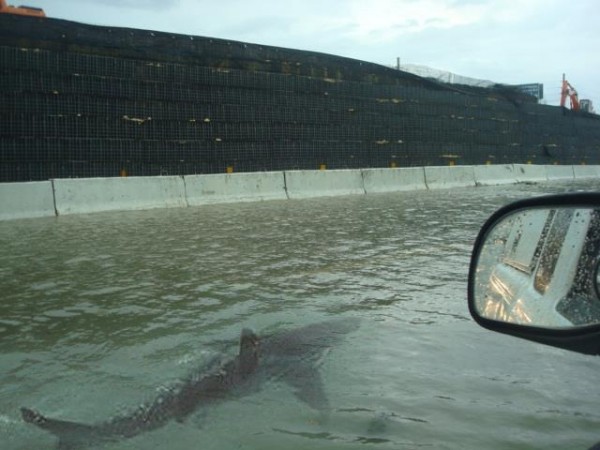
1) Use your vast knowledge of shark biology to determine if a shark that size of that species could possibly be in water that deep.

puertorico

The image above was one of the first “shark after a storm” pictures to go viral. It claimed to show a great white shark swimming through the flooded streets of Puerto Rico after Hurricane Irene in 2011. Take a look at how high the car’s side view mirror is above the water. That means the water level, while more than high enough to be destructive to cars and buildings, is not nearly high enough for a shark of that size to be comfortably swimming in. Also, great white sharks are not typically found in the Caribbean in August.

Read More “How to tell if a “shark in flooded city streets after a storm” photo is a fake in 5 easy steps” »

This Week in the Deep

Posted on January 20, 2013January 28, 2013 By Andrew Thaler
Science

New and noteworthy publications in deep-sea science for the week of January 14, 2013.

Read More “This Week in the Deep” »

Bring the trench to the bench or bring the bench to the trench? The future of deep-sea exploration

Posted on January 15, 2013January 15, 2013 By Andrew Thaler
Science

AndrewThumbNewsweek, in is new and impressive digital format, released a series of articles this week on deep-sea exploration, the challenges of human occupied and remotely-operated vehicles, and the decline in funding for ocean science, particularly in the deep sea. The main article, The Last Dive? Funding for Human Expeditions in the Ocean May Have Run Aground, is a deep, detailed look at the state of deep-sea science, seen through the eyes of Dr. Sylvia Earle and Dr. Robert Ballard, two giants in the ocean community. The follow-up, James Cameron Responds to Robert Ballard on Deep-Sea Exploration, provides insight into the mind of James Cameron, who last year successfully dove the Challenger Deep in his own deep-sea submersible.

Both the articles continue to perpetrate the canard that there is a deep chasm between the human-occupied submersible (HOV) and remotely-operated vehicle (ROV) communities. The reality is that deep-sea scientists use a variety of tools, from mechanical samplers to autonomous robots, to study and understand the deep. The choice comes down to which tool is most efficient, least expensive, and currently available. Absent a sea change, ROV’s will continue to be the workhorses of deep-sea research. And that is a good thing. I sang the praise of my robot underlings the last time this debate breached the public consciousness. I also discussed why basic deep-sea research and training highly skilled ROV pilots is a matter of national security.

Read More “Bring the trench to the bench or bring the bench to the trench? The future of deep-sea exploration” »

This Week in the Deep

Posted on January 12, 2013January 25, 2013 By Andrew Thaler
Science

New and noteworthy publications in deep-sea science for the week of January 7, 2013.

Deep Sea Research Part 1: Oceanographic Research Papers: Discovery of a new hydrothermal vent based on an underwater, high-resolution geophysical survey


A new hydrothermal vent site in the Southern Mariana Trough has been discovered using acoustic and magnetic surveys conducted by the Japan Agency for Marine–Earth Science and Technology’s (JAMSTEC) autonomous underwater vehicle (AUV) Urashima. The high-resolution magnetic survey, part of near-bottom geophysical mapping around a previously known hydrothermal vent site, the Pika site, during YK09-08 cruise in June-July 2009, found that a clear magnetization low extends ~500 m north from the Pika site. Acoustic signals, suggesting hydrothermal plumes, and 10 m-scale chimney-like topographic highs were detected within this low magnetization zone by a 120 kHz side-scan sonar and a 400 kHz multibeam echo sounder. In order to confirm the seafloor sources of the geophysical signals, seafloor observations were carried out using the deep-sea manned submersible Shinkai 6500 during the YK 10-10 cruise in August 2010. These discovered a new hydrothermal vent site (12°55.30′N, 143°38.89′E; at a depth of 2922 m), which we have named the Urashima site. This hydrothermal vent site covers an area of approximately 300 m x 300 m and consists of black and clear smoker chimneys, brownish-colored shimmering chimneys, and inactive chimneys. All of the fluids sampled from the Urashima and Pika sites have chlorinity greater than local ambient seawater, suggesting subseafloor phase separation or leaching from rocks in the hydrothermal reaction zone. End-member compositions of the Urashima and Pika fluids suggest that fluids from two different sources feed the two sites, even though are located on the same knoll and separated by only ~500 m. We demonstrate that investigations on hydrothermal vent sites located in close proximity to one another can provide important insights into subseafloor hydrothermal fluid flow, and also that, while such hydrothermal sites are difficult to detect by conventional plume survey methods, high-resolution underwater geophysical surveys provide an effective means.


Read More “This Week in the Deep” »

Surviving Grad School: A Practical Guide to an Impractical Lifestyle

Posted on January 10, 2013January 10, 2013 By Andrew Thaler 1 Comment on Surviving Grad School: A Practical Guide to an Impractical Lifestyle
Science

Ah, graduate school. For approximately 5 years you will live awash in the intellectual stimulation that comes with the pursuit of knowledge. You will learn more than you ever have before. Now at the forefront of the human data engine, you are not just being taught, but pushing the limits of human understanding imperceptibly, but significantly, … Read More “Surviving Grad School: A Practical Guide to an Impractical Lifestyle” »

This Week in the Deep

Posted on January 5, 2013January 25, 2013 By Andrew Thaler
Science

New and noteworthy publications in deep-sea science for the week of December 31st, 2012.

PLoS One: How Deep-Sea Wood Falls Sustain Chemosynthetic Life

Large organic food falls to the deep sea – such as whale carcasses and wood logs – are known to serve as stepping stones for the dispersal of highly adapted chemosynthetic organisms inhabiting hot vents and cold seeps. Here we investigated the biogeochemical and microbiological processes leading to the development of sulfidic niches by deploying wood colonization experiments at a depth of 1690 m in the Eastern Mediterranean for one year. Wood-boring bivalves of the genus Xylophaga played a key role in the degradation of the wood logs, facilitating the development of anoxic zones and anaerobic microbial processes such as sulfate reduction. Fauna and bacteria associated with the wood included types reported from other deep-sea habitats including chemosynthetic ecosystems, confirming the potential role of large organic food falls as biodiversity hot spots and stepping stones for vent and seep communities. Specific bacterial communities developed on and around the wood falls within one year and were distinct from freshly submerged wood and background sediments. These included sulfate-reducing and cellulolytic bacterial taxa, which are likely to play an important role in the utilization of wood by chemosynthetic life and other deep-sea animals

Read More “This Week in the Deep” »

The ten best and worst events in shark fisheries management of 2012

Posted on January 4, 2013October 27, 2013 By Guest Writer 1 Comment on The ten best and worst events in shark fisheries management of 2012
Conservation, Science
Sonja FordhamPresident, Shark Advocates International
Sonja Fordham
President, Shark Advocates International

SAISonja Fordham founded Shark Advocates International as a project of The Ocean Foundation in 2010 based on her two decades of shark conservation experience at  Ocean Conservancy.  She is Deputy Chair of the IUCN Shark Specialist Group and Conservation Committee Chair for the American Elasmobranch Society, has co-authored numerous publications on shark fisheries management, and serves on most of the U.S. federal and state government advisory panels relevant to sharks and rays.  Her awards include the U.S. Department of Commerce Environmental Hero Award, the Peter Benchley Shark Conservation Award, and the IUCN Harry Messel Award for Conservation Leadership.


The last twelve months added up to another exciting year in shark and ray conservation policy.  We certainly saw and should herald a lot of great progress in 2012.  I think it’s also important to acknowledge what went wrong so we know where we stand and how best to move forward.  I’ve taken a look back and compiled a top ten list of what I see as the best and worst events in shark fisheries management for 2012, based on my work at Shark Advocates International.  I’m starting with the low points, but keep reading!  It ends on a high note.

Read More “The ten best and worst events in shark fisheries management of 2012” »

Posts pagination

Previous 1 … 38 39 40 … 81 Next

Popular Posts

What Ocean Ramsey does is not shark science or conservation: some brief thoughts on "the Shark Whisperer" documentaryWhat Ocean Ramsey does is not shark science or conservation: some brief thoughts on "the Shark Whisperer" documentaryJuly 2, 2025David Shiffman
I can serve on your graduate thesis committee. Here’s what you can expect of me, and what I expect in return.I can serve on your graduate thesis committee. Here’s what you can expect of me, and what I expect in return.October 16, 2025David Shiffman
I turned my woodshop into a personal solar farm.I turned my woodshop into a personal solar farm.June 21, 2021Andrew Thaler
What can the funniest shark memes on the internetz teach us about ocean science and conservation?What can the funniest shark memes on the internetz teach us about ocean science and conservation?November 8, 2013David Shiffman
Shark of Darkness: Wrath of Submarine is a fake documentaryShark of Darkness: Wrath of Submarine is a fake documentaryAugust 10, 2014Michelle Jewell
"Twitter sucks now and all the cool kids are moving to Bluesky:" Our new survey shows that scientists no longer find Twitter professionally useful or pleasant"Twitter sucks now and all the cool kids are moving to Bluesky:" Our new survey shows that scientists no longer find Twitter professionally useful or pleasantAugust 19, 2025David Shiffman
The Trouble with Teacup PigsThe Trouble with Teacup PigsOctober 14, 2012Andrew Thaler
Blackfish: the Science Behind the MovieBlackfish: the Science Behind the MovieSeptember 18, 2013Chris Parsons
Nodules, Lost Mines, and Dark Oxygen: A new documentary on deep-sea mining asks important questions about the future of the industry.Nodules, Lost Mines, and Dark Oxygen: A new documentary on deep-sea mining asks important questions about the future of the industry.July 24, 2025Andrew Thaler
Shark scientists want their research to help save threatened species, but don’t know how. Our new paper can help.Shark scientists want their research to help save threatened species, but don’t know how. Our new paper can help.December 1, 2025David Shiffman
Subscribe to our RSS Feed for updates whenever new articles are published.

We recommend Feedly for RSS management. It's like Google Reader, except it still exists.

Southern Fried Science

  • Home
  • About SFS
  • Authors
  • Support SFS


If you enjoy Southern Fried Science, consider contributing to our Patreon campaign.

Copyright © 2025 Southern Fried Science.

Theme: Oceanly Premium by ScriptsTown