Skip to content

Southern Fried Science

Over 15 years of ocean science and conservation online

  • Home
  • About SFS
  • Authors
  • Support SFS

Category: Science

Five organisms with real super powers that rival their comic book counterparts

Posted on January 2, 2013September 19, 2013 By Andrew Thaler 6 Comments on Five organisms with real super powers that rival their comic book counterparts
Popular Culture, Science

Andrew ThumbThere is no force more creative than the painstakingly slow process of evolution. Ever wanted to walk through walls? Naked mole rats can physically bore through concrete. How about fly? There are a couple dozen different ways to accomplish that goal, even if you’re a squid. Incredible power of regeneration? Flatworms, roundworms, and echinoderms have us beat. Among the vertebrates, species like the axolotl can regrow limbs, organs, and parts of their brain. For practically every super power we can imagine, something on the tree of life has come up with a real-world analog.

Some real super power are more super than others:

1. The immortal rotifer that absorbs the abilities of anything it touches.

Bdelloid Rotifers. photo by Diego Fontaneto

Around 80 million years ago, a small, unassuming group of metazoa decided that sex just wasn’t for them. Instead of going through the effort of recombining their genetic material with a mate every generation to produce a viable offspring with a roughly 50% contribution from each parent, Bdelloid Rotifers started reproducing asexually. Males completely disappeared from class bdelloidea, leaving females to generate genetic duplicates through parthenogenesis. This is not their super power.

Bdelloid rotifers are incredibly tough. When environmental conditions are less than favorable, they can enter a dormant state. In this dormant state,they can survive the worst unscathed. Dehydrated, they can endure extreme temperatures, drought, even ionizing radiation. A bdelloid rotifer in its dormant state can even survive in space. If that isn’t enough, while dormant, these rotifers continue to produce offspring, which also remain  dormant. This is not their super power.

Bdelloid rotifers’ super power appears when they recover from their dormant state. As they rehydrate and repair whatever damage their cells incurred, they incorporate DNA fragments from their environment. This includes partially digested food and any DNA in close proximity to them, even bacterial and archael DNA. It is this ability that allows bdelloid rotifers to overcome the limitations of asexual reproduction and survive for 80 million years without mates. They can literally absorb the attributes of those around them.

Their incredible toughness, celibate lifestyle, and ability to absorb the powers of anything they touch, put Bdelloid Rotifers firmly on par with X-Men perennial favorite: Rogue.

Read More “Five organisms with real super powers that rival their comic book counterparts” »

13 wrong things about sharks that conservation advocates should stop saying in 2013 (and what they should say instead)

Posted on December 27, 2012December 27, 2012 By David Shiffman 64 Comments on 13 wrong things about sharks that conservation advocates should stop saying in 2013 (and what they should say instead)
Conservation, Science

davesquare

While the rest of the scientific and management community and I are grateful for the passionate support of many shark conservation advocates, passion is no substitute for knowledge and accuracy.  Some conservation issues are a matter of opinion and can (and should) be reasonably be discussed by people with different views, but many others are a matter of fact. Presented here, in no particular order, are 13  incorrect statements and arguments commonly made by well-intentioned but uninformed shark conservation advocates, along with the reality of the situation.

From MemeGenerator.net

1) “Shark finning” is synonymous and interchangeable with “the global shark fin trade.” Shark finning is a specific fishing method. It is not the only way to catch sharks, and it is not the only way to provide shark fins for the global fin trade. Stopping shark finning is a worthy goal (that has largely been accomplished already *) because it is a wasteful and brutal fishing method that complicates management, but stopping shark finning does not stop the global shark fin trade. Many people calling for a ban on finning really seem to want no shark fishing and no fin trade of any kind (a viewpoint I disagree with, but regardless, proper terminology matters). For more on the difference between shark fishing and shark finning, see this post from June 2012.

2) 100 million sharks a year are killed for their fins. The origin of this number is still debated, but it was popularized by Sharkwater. While we will likely never know exactly how many sharks are “killed for their fins”, the best scientific estimate of the scope of the fin trade we have comes from a 2006 paper by Dr. Shelley Clarke. She found that the fins of between 26 and 73 million sharks end up in the fin trade each year, with a simulation average of 38 million.  Dr. Clarke wrote an essay for SeaWeb on the misuse of her work, which is worth a read.

3) 1 in 3 species of sharks face extinction. This one is actually relatively close to accurate, and can be fixed with the addition of just two words. An IUCN Shark Specialist Group report found that 1 in 3 species of “open ocean” sharks are Threatened with extinction (Threatened means Vulnerable, Endangered or Critically Endangered according to IUCN Red List standards). 1 in 6 species of shark, skate, ray, or chimera are Threatened- while still a troubling number indicative of a very bad situation, it’s half as bad as claimed by many advocates. Also, please note that I included skates and rays, which are similarly threatened but often ignored by conservation advocates (with one notable exception from 2012).

Read More “13 wrong things about sharks that conservation advocates should stop saying in 2013 (and what they should say instead)” »

PolitiFact calls claims of menhaden declines “Mostly False”, is completely wrong

Posted on December 17, 2012 By David Shiffman 3 Comments on PolitiFact calls claims of menhaden declines “Mostly False”, is completely wrong
Conservation, Science

davesquare

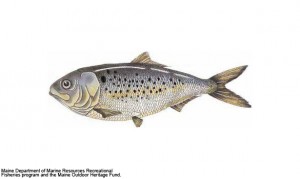
A menhaden, image courtesy Pew Environment Group

Despite their small size and plain appearance, menhaden have been called “the most important fish in the sea” because numerous coastal fish species rely on them for food. Although they aren’t typically eaten by humans, there is still a huge fishery for them for bait, aquaculture food, and oil. That fishery has been essentially unregulated, allowing fishermen to take as many as they want. Recently, there’s been a campaign among certain environmental groups to fix this problem and put catch limits in place for menhaden.

I was surprised to see PolitiFact, a non-partisan political fact-checking website, address this issue. I’ve checked PolitiFact pretty regularly for years, and I’ve never seen them cover a topic like this before. They focused on a claim by the Pew Environment Group that “In recent years, menhaden numbers along our coast have plummeted by 90 percent.” While I admit I am not familiar with specific details of menhaden population trends,  anyone who has paid any attention at all to the ocean knows that we’re overfishing at alarming rates. According to the UN Food and Agriculture Organization, approximately 1/3 of all global fisheries are depleted or overexploited, many by more than the 90% referenced for menhaden. Shockingly, PolitiFact called the claim by Pew “mostly false”. Their reasoning for this ruling is even more ridiculous than the ruling itself:

Read More “PolitiFact calls claims of menhaden declines “Mostly False”, is completely wrong” »

Meet WormCam

Posted on December 5, 2012December 3, 2012 By Guest Writer
Science

Technology in water? That seems a bit counter-intuitive  doesn’t it? Well, Dr. Kersey Sturdivant, during his undergraduate and graduate years, denied the golden rule of electronics and submerged a video camera under water. But this is not your typical Canon Powershot D10. This is WormCam. As much as I love thumbing through magazines and flipping page … Read More “Meet WormCam” »

Math is hard: the use of complex equations decreases the chance a paper will be cited

Posted on November 16, 2012 By David Shiffman 17 Comments on Math is hard: the use of complex equations decreases the chance a paper will be cited
Science

Figure 1- math is hard

How many of you asked “when am I ever going to need to know this” in math class? While basic mathematical literacy is essential for life in the modern world, most people can achieve success in their careers if they can’t remember the difference between pi and apple pie.

One of the exceptions to this comes from my own career path- scientists absolutely, positively need to have strong quantitative skills in order to perform research. However, many scientists struggle with math.  I can’t even count how many conference presentations I’ve attended that included a statement along the lines of “don’t worry about all the complicated equations here”, or how many students or journal club attendees have told me that they just skipped over the section of a paper focusing on models and equations.  See what I did there? Can’t even count? Anyway, while math may be more directly relevant to our jobs than it is to some of yours, we still find it hard.

Read More “Math is hard: the use of complex equations decreases the chance a paper will be cited” »

What does a day of discarded plastic from a molecular lab look like?

Posted on November 14, 2012 By Andrew Thaler
Science

To complement my post earlier today on the need for best practice guidelines to minimize plastic waste in a conservation genetics lab, I asked my labmates to save all of their consumables from a day of molecular benchwork. The above picture (Sharpie for scale) is the result. All told, we produced about 1/2 kilogram of plastic … Read More “What does a day of discarded plastic from a molecular lab look like?” »

Establishing Best Practices to Minimize Waste in a Conservation Genetics Lab

Posted on November 14, 2012 By Andrew Thaler
Conservation, Science

I am, among other things, a conservation geneticist. What that means is that I use the tools of molecular ecology and population genetics to make observations about species and populations in at-risk ecosystems, assess the status of anthropogenically disturbed populations, and generate data that has direct applications to conservation and management issues. Essentially, the only difference between what I do and what a population geneticist or molecular ecologist does is the motivation—I select systems to work in that have a high conservation priority.

This motivation leads to a constant intellectual conflict at the bench. The tools of molecular ecology—PCR, gene sequencing, and, more frequently, high-throughput sequencing—are waste intensive. In order to avoid cross-contamination and practice precise, clean, technique, we use thousands of tiny plastic consumables every day. These come in the form of pipette tips, sterile packaging material, micro-centrifuge tubes, and numerous other plastic widgets. Often, because of the biohazard potential, these consumable cannot be recycled.

So we have a problem. As a conservation geneticist, we need these tools to produce the data necessary to make wise conservation and management decisions. As a sustainability minded individual, I find the massive daily accumulation of plastic waste inexcusable. Do we just accept this waste as the cost of conservation genetics? I believe that the answer is no. I think we can and should develop best practices to minimize the amount of plastic waste produced by a molecular lab while maintaining good, sterile technique. I would like to propose four guidelines, based off the principles of Reduce, Reuse, and Recycle, for minimizing waste in a conservation genetics lab.

Read More “Establishing Best Practices to Minimize Waste in a Conservation Genetics Lab” »

New special issue of elasmobranch nervous systems “highlights the evolutionary relevance” of sharks and rays

Posted on November 1, 2012 By David Shiffman
Science

The journal Brain, Behavior, and Evolution has just released a special issue on the nervous systems of cartilaginous fishes (sharks, skates, rays, and chimeras). The six research articles contained in the special issue  both summarize and greatly expand what’s known about elasmobranch brains. Dr. Kara Yopak, an elasmobranch nervous system expert who served as the editor … Read More “New special issue of elasmobranch nervous systems “highlights the evolutionary relevance” of sharks and rays” »

Alberta, Canada is the proud owner of the largest man-made pyramid on the planet

Posted on October 16, 2012October 16, 2012 By Andrew Thaler
Science

Great Pyramid of Giza. Photo by Nina Aldin Thune.

Pharaoh Khufu must be rolling in his monumental grave. Since its construction in 2560 BC, the Great Pyramid of Giza stood as the largest man-made pyramid ever built*. For 3800 years, it held the title of the tallest man-made structure of any kind. It wasn’t until the Industrial Revolution that our buildings began dwarfing this wonder of the ancient world. Even still, the Great Pyramid is massive, with a volume of 2,580,000 cubic meters. But there is another pyramid, more massive than Giza, and it wasn’t built to entomb a mighty king. It’s not a monument of any kind. The largest (by volume) pyramid in the world resides in Alberta, Canada and it’s made entirely of sulfur.

Wait, what?

Read More “Alberta, Canada is the proud owner of the largest man-made pyramid on the planet” »

The Trouble with Teacup Pigs

Posted on October 14, 2012June 12, 2017 By Andrew Thaler 13 Comments on The Trouble with Teacup Pigs
Popular Culture, Science

I adore Here Comes Honey Boo Boo. That’s right, I said it. There’s a soft spot in my brittle old heart for that whole family, Sugar Bear, Mamma June, and all. Especially Glitzy.

Glitzy the Pig. Image from The Learning Channel.

Glitzy, for those of you who don’t know, is a “Teacup” Pig (as you can tell from the video, pigs don’t like to be held). Pigs are cute. Piglets are super cute. Pigs are very intelligent, highly social, and make surprisingly good, house-trainable pets. Unfortunately, 800-lb hogs are not cute. Over the years, various breeders have tried to create pigs that retain all of the adorableness of a piglet without reaching the potential half ton plus mass of a full grown adult hog. Among the most popular “miniature” is the Vietnamese pot-bellied pig, a delightfully spry porcine that tops the scales at a manageable 300 pounds. When legitimate breeders talk about miniature pigs, they’re talking about these 300-lb cuties. Pot-bellied pigs are surprisingly diverse, and, although extremely rare, adults have been reported as small as 20 pounds (most breeders would regard an adult pig that size to be extremely malnourished). This huge size range prompted many breeders to attempt to create even smaller pig breeds, selecting from only the smallest stock. Enter the teacup pig.

A teacup pig (or a micro pig, nano pig, or any of a half dozen variations of “small”) is supposedly a tiny pig breed. Some breeders claim that their pigs only reach up to 30 pounds in weight. Combined with the intelligence and sociability that pigs possess, it would seem that teacup pigs should make a perfect pet. There is only one problem: there’s no such thing as a teacup pig.

Read More “The Trouble with Teacup Pigs” »

Posts pagination

Previous 1 … 39 40 41 … 81 Next

Popular Posts

What Ocean Ramsey does is not shark science or conservation: some brief thoughts on "the Shark Whisperer" documentaryWhat Ocean Ramsey does is not shark science or conservation: some brief thoughts on "the Shark Whisperer" documentaryJuly 2, 2025David Shiffman
I can serve on your graduate thesis committee. Here’s what you can expect of me, and what I expect in return.I can serve on your graduate thesis committee. Here’s what you can expect of me, and what I expect in return.October 16, 2025David Shiffman
The story of the pride flag made from NASA imagery: Bluesky's most-liked imageThe story of the pride flag made from NASA imagery: Bluesky's most-liked imageSeptember 27, 2024David Shiffman
What can the funniest shark memes on the internetz teach us about ocean science and conservation?What can the funniest shark memes on the internetz teach us about ocean science and conservation?November 8, 2013David Shiffman
Shark of Darkness: Wrath of Submarine is a fake documentaryShark of Darkness: Wrath of Submarine is a fake documentaryAugust 10, 2014Michelle Jewell
The Trouble with Teacup PigsThe Trouble with Teacup PigsOctober 14, 2012Andrew Thaler
I turned my woodshop into a personal solar farm.I turned my woodshop into a personal solar farm.June 21, 2021Andrew Thaler
"Twitter sucks now and all the cool kids are moving to Bluesky:" Our new survey shows that scientists no longer find Twitter professionally useful or pleasant"Twitter sucks now and all the cool kids are moving to Bluesky:" Our new survey shows that scientists no longer find Twitter professionally useful or pleasantAugust 19, 2025David Shiffman
Nodules, Lost Mines, and Dark Oxygen: A new documentary on deep-sea mining asks important questions about the future of the industry.Nodules, Lost Mines, and Dark Oxygen: A new documentary on deep-sea mining asks important questions about the future of the industry.July 24, 2025Andrew Thaler
Blackfish: the Science Behind the MovieBlackfish: the Science Behind the MovieSeptember 18, 2013Chris Parsons
Subscribe to our RSS Feed for updates whenever new articles are published.

We recommend Feedly for RSS management. It's like Google Reader, except it still exists.

Southern Fried Science

  • Home
  • About SFS
  • Authors
  • Support SFS


If you enjoy Southern Fried Science, consider contributing to our Patreon campaign.

Copyright © 2025 Southern Fried Science.

Theme: Oceanly Premium by ScriptsTown