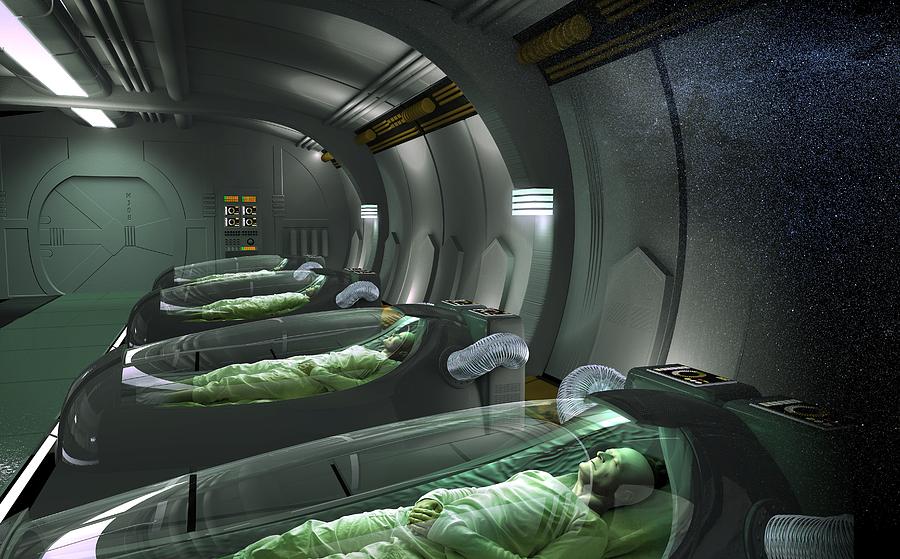
Scientists (and sci-fi fans) have to varying degrees been discussing the concept of suspended animation for years; the idea that the biological functions of the human body can somehow be put on “pause” for a prescribed period of time while preserving the physiological capabilities. If you’ve ever watched any sci-fi movie depicting interstellar travel you have probably seen some iteration of this concept as a way to get around the plot conundrum of the vastness of space and space travel times, relative to natural human aging and human life span. The basic principle of suspended animation already exists within the natural world, associated with the lethargic state of animals or plants that appear, over a period, to be dead but can then “wake-up” or prevail without suffering any apparent harm. This concept is often termed in different contexts: hibernation, dormancy, or anabiosis (this last terms refers to some aquatic invertebrates and plants in scarcity conditions). It is these real-world examples that likely inspire the human imagination of the possibilities for suspended human animation. The concept of suspended human animation is more commonly viewed through the lens of science fiction (and interstellar travel), however, the shift of this concept from scientific fiction to science reality has a more practical human application.
At the University of Maryland Medical Center, a team of medical researchers are using suspended animation to treat acute trama patients. The technique, officially called emergency preservation and resuscitation (EPR), was first successfully tested in pigs in 2000, and moved to the first human trials at the UPMC Presbyterian Hospital in Pittsburgh in 2014, before its current iteration and application at the University of Maryland Medical Center. With EPR, the patient is cooled rapidly by replacing their blood with ice-cold saline causing their body temperature to shift from a normal working temperature of ~98 degrees Fahrenheit down to 50 degrees Fahrenheit. The response to this cooling process is that the heart ceases to beat and brain activity almost completely stops. At normal body temperatures cells need a constant supply of oxygen to remain alive, but in reducing the body temperature by half the chemical reactions occurring in the body’s cells slow or stop, resulting in substantially less oxygen demands.

At normal body temperature and function the human brain can survive for around five minutes without oxygen before damage occurs, but through EPR a surgical team has two hours to work on a patient’s injuries before they are warmed up and their heart is restarted. This approach essentially expands, to a substantial degree, the amount of time medical professionals have to work on someone who arrives at the ER with severe trauma, vastly increasing their chances for survival. As this procedure is refined, improved, and hopefully mastered it has the potential to reshape the effectiveness of medical professionals to respond to acute trauma patients in the near future, and possibly even extend to other approaches of medical care. Currently there are still factors to work through. The application of EPR has been limited to two hours on a human body, however it’s not entirely clear exactly how long a person could remain in suspended animation without suffering any physical side effects. Further research is needed to better understand the nuances of suspended animation and potentially expand the application and usefulness of this methodology.
You can read more about the specifics of this procedure and approach in the International Journal of Surgery and/or watch a short clip (above) that further explains this medical breakthrough.