Skip to content

Southern Fried Science

Over 15 years of ocean science and conservation online

  • Home
  • About SFS
  • Authors
  • Support SFS
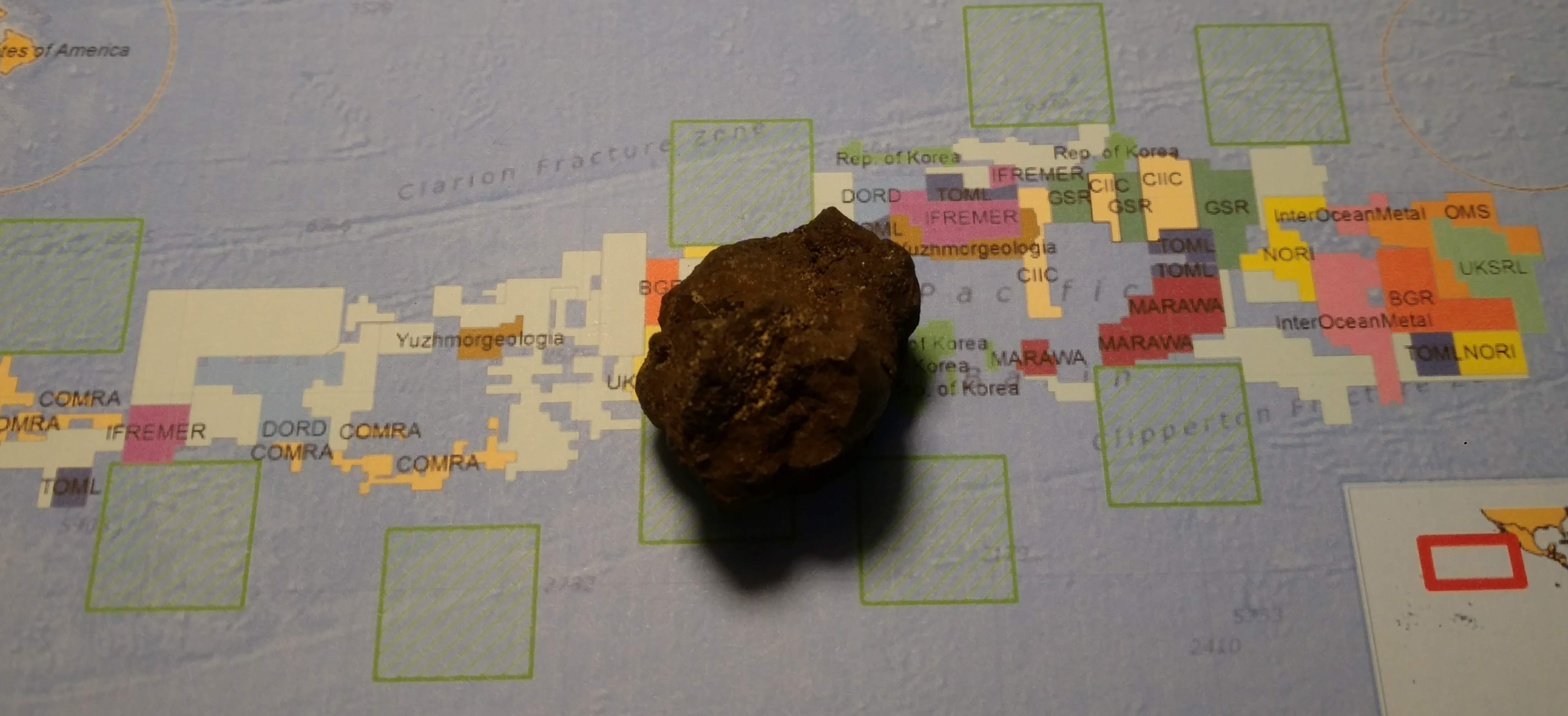
A polymetallic nodule from the Clarion Clipperton Fracture Zone, purchased from an online dealer. 

International Seabed Authority gears up for a leadership challenge at the July meeting.

Posted on May 7, 2024May 8, 2024 By Andrew Thaler
News

The International Seabed Authority is the regulatory body that oversees deep-sea mining in areas beyond national jurisdiction – they’re tasked with develop the mineral resources of the high seas seabed while protecting the marine environment. At the heart of the ISA is the Secretariat, the administrative organ charged with the day-to-day operation of the ISA. The Secretariat is led by the Secretary-General, currently Michael Lodge who is widely regarded as aggressively pursuing the development of the Deep-Sea Mining Code and has been criticized for being dismissive of the ISA’s concurrent mandate to protect the marine environment.

In 2023, Mr. Lodge was accused by the German delegation to the ISA of interfering with the decision-making process of the Authority and overstepping his role as an administrator.

The Secretary-General is up for reelection this year. During the spring ISA meeting, Brazil nominated Leticia Carvalho as their candidate for Secretary General. Carvalho is a marine scientist with the UN Environment Programme. Historically, the Secretary-General has been nominated by their home country (though, there have only been three Secretaries-General, so that precedent doesn’t exactly have deep roots). Lodge was nominated by the UK in 2016 and continued his tenure through a silence procedure implemented during the COVID pandemic in 2020. Curiously, at that same meeting, Lodge was not nominated to continue to serve as Secretary-General.

Rumors were swirling in the ISA backchannels that the UK did not intended to nominate Lodge for a third term. Since 2016, the UK has shifted its position on deep-sea mining, backing calls for a more cautious approach. It would seem that the priorities of the UK government no longer align with Lodge’s leadership.

Those rumors were confirmed yesterday when Todd Woody at Bloomberg revealed that Lodge has officially been nominated to serve a third term as Secretary-General, but not by his home country of the UK. Kiribati, a Pacific island nation (and the only country in the world that can claim to exist in all four hemispheres, simultaneously thanks to its location at both the equator and meridian) who sponsors ISA mining exploration leases, submitted a letter of nomination for Lodge in a diplomatic note on Sunday.

I think it’s unlikely that Secretary-General Lodge will be unseated in July. While the calls for bans, moratoria, and precautionary pauses in the development of deep-sea mining have grown, Lodge still enjoys significant support from ISA member states, particularly those who sponsor deep-sea mining contractors. A leadership change at this juncture in the negotiation process would dramatically alter the trajectory of the mining code deliberation in way that many member states would not be happy with. Losing the support of his home country is surely an ego blow, but I doubt it will have much impact on the outcome of the election of Secretary-General.

It’s no surprise that I have been underwhelmed with Lodge’s leadership, particularly around press access and transparency. Lodge came under fire from accusations that the ISA was inappropriately sharing information with mining contractors. I’m also occasionally frustrated by statements Lodge makes framing the deep-sea mining debate as a conflict between mining companies and environmentalists, ignoring the fact that the vast majority of individuals working within the deep-sea mining industry are, themselves environmentalists. This is an industry fundamentally motivated by the need to break free of fossil fuels and the debate surrounding deep-sea mining is not one in which there are obvious villains, but rather genuine disagreement between people motivated by the long-term survival of our planet navigating the most complex resource management regime yet conceived.

The seabed deserves a Secretary General that can rise to meet that challenge.


Southern Fried Science is free and ad-free. Southern Fried Science and the OpenCTD project are supported by funding from our Patreon Subscribers. If you value these resources, please consider contributing a few dollars to help keep the servers running and the coffee flowing. We have stickers.

Share this:

  • Click to share on Bluesky (Opens in new window) Bluesky
  • Click to share on Facebook (Opens in new window) Facebook
  • Click to share on Reddit (Opens in new window) Reddit
  • Click to share on Threads (Opens in new window) Threads
  • Click to share on WhatsApp (Opens in new window) WhatsApp
  • Click to share on Mastodon (Opens in new window) Mastodon

Related

Tags: deep-sea mining

Post navigation

❮ Previous Post: Independent ocean science requires local support: testing our mobile OpenCTD factory.
Next Post: The world’s leading sustainable seafood certification standard just made some big changes for sharks ❯

You may also like

Weekly Salvage
Farting oysters, bombing sea lions, and a new trash island? It must be the Monday Morning Salvage! November 20, 2017
November 20, 2017
Uncategorized
Japan becomes the first nation to mine a deep-sea hydrothermal vent
September 27, 2017
Weekly Salvage
Twitter Ocean Chess, lessons from the Vaquita, awe of the deep, and more! Monday Morning Salvage: November 13, 2017
November 13, 2017
Blogging
Project 2025, chicken coops, seabed mining, and the classics: 3 Months of readership stats for Southern Fried Science
October 31, 2024

Popular Posts

Shark scientists want their research to help save threatened species, but don’t know how. Our new paper can help.Shark scientists want their research to help save threatened species, but don’t know how. Our new paper can help.December 1, 2025David Shiffman
What Ocean Ramsey does is not shark science or conservation: some brief thoughts on "the Shark Whisperer" documentaryWhat Ocean Ramsey does is not shark science or conservation: some brief thoughts on "the Shark Whisperer" documentaryJuly 2, 2025David Shiffman
Norway and Cook Islands put their deep-sea mining plans on pause.Norway and Cook Islands put their deep-sea mining plans on pause.December 3, 2025Andrew Thaler
What is a Sand Shark?What is a Sand Shark?November 12, 2017Chuck Bangley
Mermaids: The New Evidence is a Fake DocumentaryMermaids: The New Evidence is a Fake DocumentaryMay 28, 2013Andrew Thaler
What we know we don't know: impacts of deep-sea mining on whales, dolphins, sharks, turtles, and other migratory species.What we know we don't know: impacts of deep-sea mining on whales, dolphins, sharks, turtles, and other migratory species.November 20, 2025Andrew Thaler
What can the funniest shark memes on the internetz teach us about ocean science and conservation?What can the funniest shark memes on the internetz teach us about ocean science and conservation?November 8, 2013David Shiffman
10 fish weirder than the fish in the 10 weirdest fish in the world list10 fish weirder than the fish in the 10 weirdest fish in the world listDecember 18, 2013Guest Writer
Build a dirt cheap, tough-as-nails field computer in a Pelican caseBuild a dirt cheap, tough-as-nails field computer in a Pelican caseJuly 21, 2015Andrew Thaler
Breaking News! "Most Comprehensive Estimate of Mortality": Between 63 and 273 Million Sharks Killed Each YearBreaking News! "Most Comprehensive Estimate of Mortality": Between 63 and 273 Million Sharks Killed Each YearMarch 1, 2013David Shiffman
Subscribe to our RSS Feed for updates whenever new articles are published.

We recommend Feedly for RSS management. It's like Google Reader, except it still exists.

Southern Fried Science

  • Home
  • About SFS
  • Authors
  • Support SFS


If you enjoy Southern Fried Science, consider contributing to our Patreon campaign.

Copyright © 2025 Southern Fried Science.

Theme: Oceanly Premium by ScriptsTown