Skip to content

Southern Fried Science

Over 15 years of ocean science and conservation online

  • Home
  • About SFS
  • Authors
  • Support SFS

No bones about it

Posted on February 7, 2014February 13, 2014 By Sarah Keartes 2 Comments on No bones about it
Uncategorized

Hello, dear internets! Thank you for the warm welcome. I am extremely excited to be joining Southern Fried Science—talk about being in good company! For those of you who don’t know me, I am a student at the University of Oregon, where I study marine biology and journalism. I love all things science, but I have a small (ok, not so small) love for shark biology. I look forward to promoting ocean outreach through kick-ass science communication with the rest of the team, here at SFS.

Enough about me, on to some animal insides.

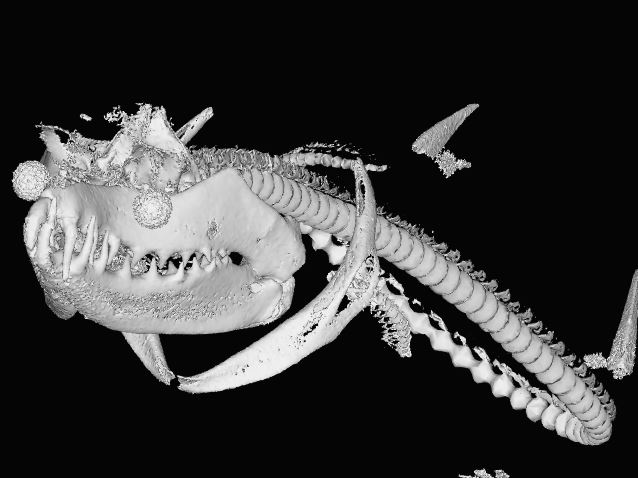
In honor of #unshark week’s end, I return to the awesome that is shark science. Like skates and rays, sharks are chondrichthyans, cartilaginous fishes whose skeletons are made primarily of cartilage rather than bone. Ever wonder what a mostly-boneless skeleton looks like? Sure you have (and if not, you are now thinking about it and the suspense is killing you, I say).

Shark skeletons are complex, beautiful, and thanks to Dr. Gavin Naylor, and his team at College of Charleston Naylor Lab, they are here for you to see.

These amazing 3D images are created from CT scans using Mimics software from Materialise, which allows the scanned images to be segmented piece by piece. The scans are being incorporated into an interactive web interface developed by Jason Davies, which will allow a user to select which portion of the skeleton they wish to explore in the interactive model.

The translation from shark to screen is no easy task–one which takes graduate researcher Callie Crawford over forty hours per specimen to complete. The Naylor team  has been gracious enough to share these images with Southern Fried Science, so please respect their work and attribute them properly.

Go forth and ogle. Can you spot the species from the inside, out?
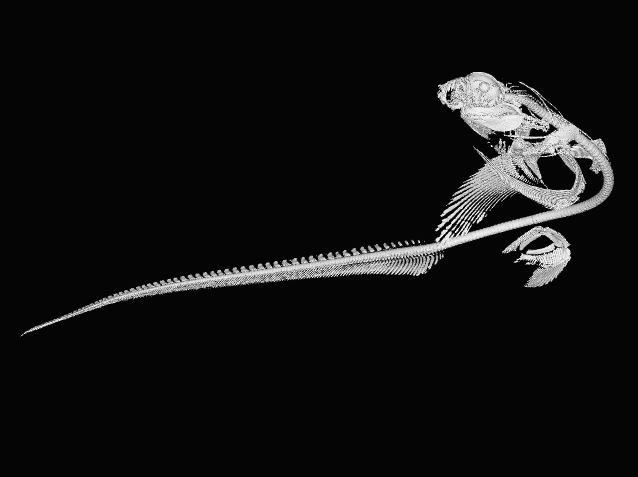
Alopias superciliosus 2

Alopias superciliosus, big-eyed thresher shark. Weaponized tail, ’nuff said.
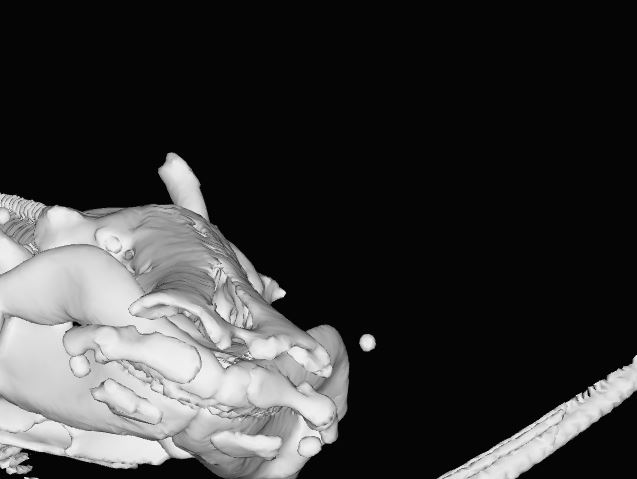
Ginglumostoma cirratum

Ginglumostoma cirratum, nurse shark . What a face.

Trigonognathus kabeyai

Trigonognathus kabeyai, the viper dogfish.
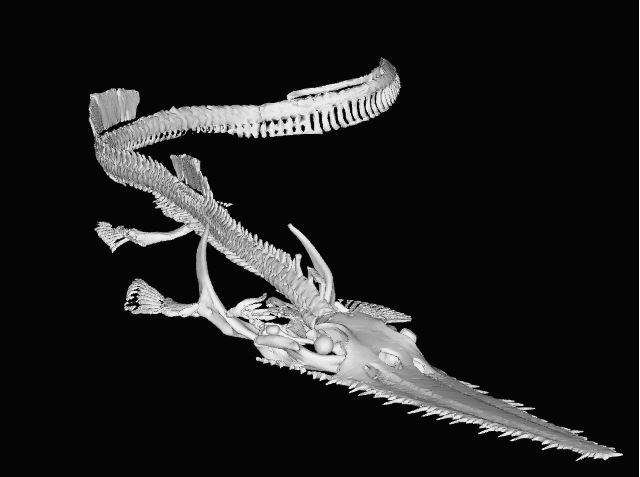
Pristioporus nudipinnis

Pristioporus nudipinnis. The shortnosed sawshark.
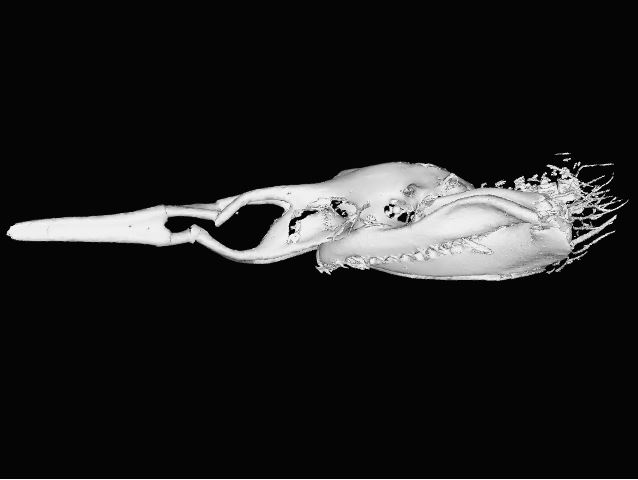
 

Mitsukurina owstoni

The infamous pointed snout of Mitsukurina owstoni, the goblin shark.
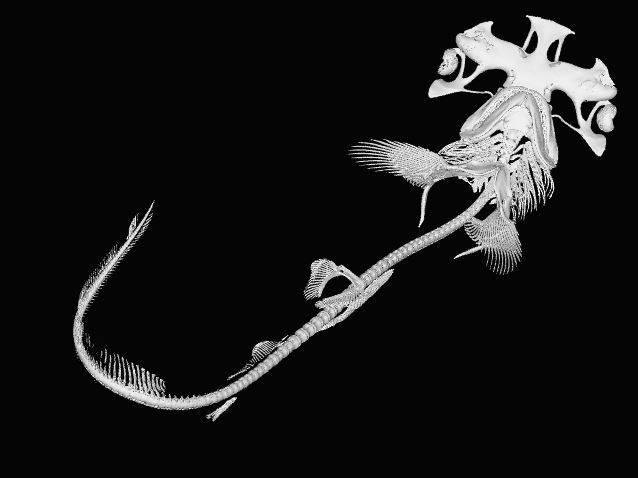
Sphyrna tiburo

The ventral side of Sphyrna tiburo, the bonnethead.
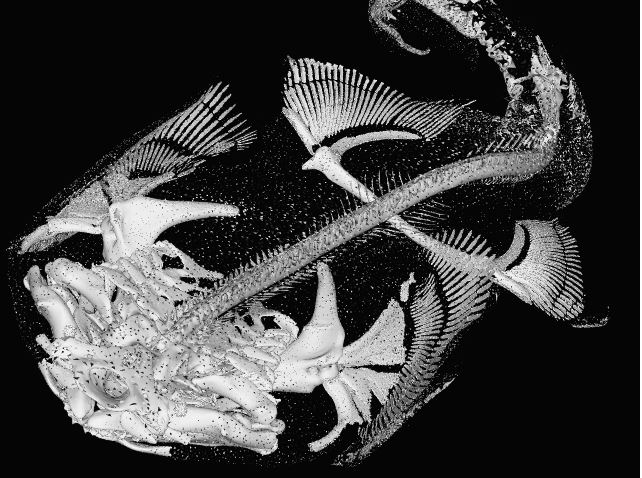
Squatina Nebulosa

Squatina nebulosa, the clouded angel shark.
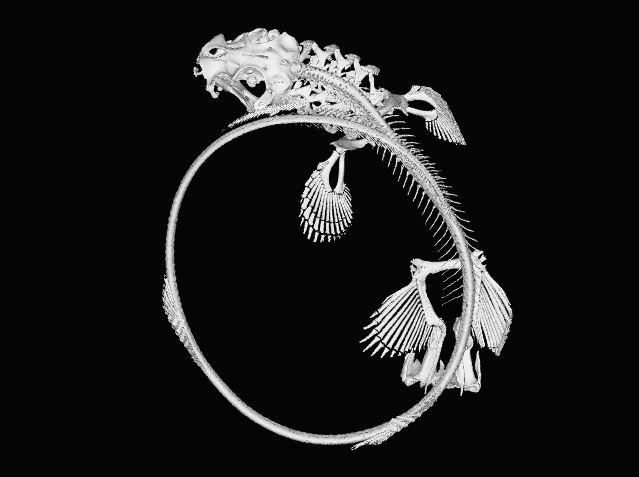
Hemiscyllium ocellatum

Hemiscyllium ocellatum, the epaulette shark (a species of long-tailed carpet shark).
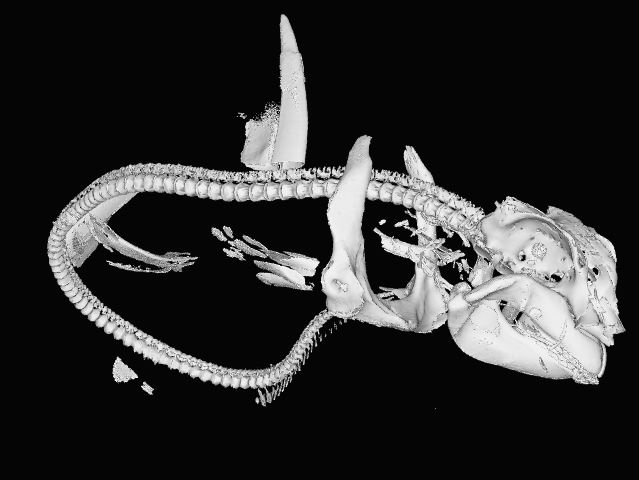
heterodontus francisci

Heterodontus francisci, the horn shark.
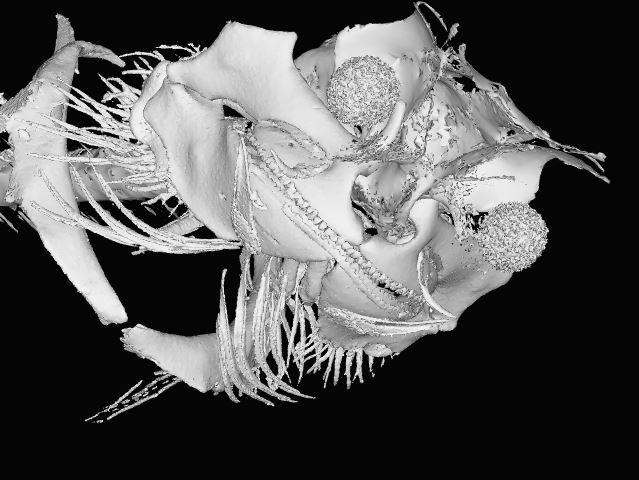
Etomopterus sheikoi

Ohai. Etomopterus sheikoi, the rasptooth dogfish.

All images courtesy of Callie Crawford, Jason Davies, and Gavin Naylor.

Share this:

  • Click to share on Bluesky (Opens in new window) Bluesky
  • Click to share on Facebook (Opens in new window) Facebook
  • Click to share on Reddit (Opens in new window) Reddit
  • Click to share on Threads (Opens in new window) Threads
  • Click to share on WhatsApp (Opens in new window) WhatsApp
  • Click to share on Mastodon (Opens in new window) Mastodon

Related

Tags: evolution marine biology mri naylor lab shark biology

Post navigation

❮ Previous Post: Southern Fried Science needs your help!
Next Post: Changes Proposed for U.S. Fisheries Management: The Good, The Bad, and The Ugly ❯

You may also like

Uncategorized
Weekly dose of TED – Robert Full on engineering and evolution
March 18, 2011
Weekly Salvage
Everything about hagfish is the best thing about hagfish, the battle for the deep-sea heats up, parasitic butt snails, and more! Monday Morning Salvage: December 17, 2017
December 18, 2017
Conservation
The Conservation Context in Population Genetics, Part 1
February 12, 2010
Science
And sense achieved a great victory – 85 years after Scopes
May 25, 2010

2 thoughts on “No bones about it”

  1. Andrew David Thaler says:
    February 9, 2014 at 1:40 pm

    Fantastic first post and welcome to SFS!

  2. Sarah Keartes says:
    February 9, 2014 at 3:05 pm

    Happy to be here! Thank you!

Comments are closed.

Popular Posts

Shark scientists want their research to help save threatened species, but don’t know how. Our new paper can help.Shark scientists want their research to help save threatened species, but don’t know how. Our new paper can help.December 1, 2025David Shiffman
Norway and Cook Islands put their deep-sea mining plans on pause.Norway and Cook Islands put their deep-sea mining plans on pause.December 3, 2025Andrew Thaler
What Ocean Ramsey does is not shark science or conservation: some brief thoughts on "the Shark Whisperer" documentaryWhat Ocean Ramsey does is not shark science or conservation: some brief thoughts on "the Shark Whisperer" documentaryJuly 2, 2025David Shiffman
The Trouble with Teacup PigsThe Trouble with Teacup PigsOctober 14, 2012Andrew Thaler
2025: My year in writing, public speaking, and media interviews2025: My year in writing, public speaking, and media interviewsDecember 3, 2025David Shiffman
What we know we don't know: impacts of deep-sea mining on whales, dolphins, sharks, turtles, and other migratory species.What we know we don't know: impacts of deep-sea mining on whales, dolphins, sharks, turtles, and other migratory species.November 20, 2025Andrew Thaler
Urea and Shark OsmoregulationUrea and Shark OsmoregulationNovember 15, 2010David Shiffman
Shark of Darkness: Wrath of Submarine is a fake documentaryShark of Darkness: Wrath of Submarine is a fake documentaryAugust 10, 2014Michelle Jewell
How tiny satellites are tracking marine wildlifeDecember 1, 2025Andrew Thaler
Build a dirt cheap, tough-as-nails field computer in a Pelican caseBuild a dirt cheap, tough-as-nails field computer in a Pelican caseJuly 21, 2015Andrew Thaler
Subscribe to our RSS Feed for updates whenever new articles are published.

We recommend Feedly for RSS management. It's like Google Reader, except it still exists.

Southern Fried Science

  • Home
  • About SFS
  • Authors
  • Support SFS


If you enjoy Southern Fried Science, consider contributing to our Patreon campaign.

Copyright © 2025 Southern Fried Science.

Theme: Oceanly Premium by ScriptsTown