Skip to content

Southern Fried Science

Over 15 years of ocean science and conservation online

  • Home
  • About SFS
  • Authors
  • Support SFS

Tag: hurricanes

An extremely active hurricane season, collapsing ice sheets, massive oil spills, and sexual harassment in shark science – What’s up with the Ocean this week?

Posted on August 12, 2020August 11, 2020 By Andrew Thaler
News

August 12, 2020 Buckle up and bunker down. NOAA has upgraded its predictions for the 2020 Atlantic Hurricane season to Extremely Active. We enter peak hurricane months without the buffer of a protection dust cloud swirling out of the Sahara, a reminder that climate systems on this planet are profoundly interconnected. We may see up … Read More “An extremely active hurricane season, collapsing ice sheets, massive oil spills, and sexual harassment in shark science – What’s up with the Ocean this week?” »

Amazing fish eyes, the real cost of halibut, and protecting local species: Thursday Afternoon Dredging, December 13, 2018

Posted on December 13, 2018December 13, 2018 By David Shiffman
Uncategorized

Cuttings (short and sweet): Follow UBC’s wildlife conservation economics lab on twitter!  The Deep-Sea Fish with the Telescopic Tubular Eyes. By Craig McClain, for Deep Sea News.  How to take action to help endangered species near you. A Revelator News Podcast by John Platt.  Spoils (long reads and deep dives): Why does halibut cost so … Read More “Amazing fish eyes, the real cost of halibut, and protecting local species: Thursday Afternoon Dredging, December 13, 2018” »

Eat hagfish, work at LUMCON, clone Vaquita, question floating trash collectors, and more! Monday Morning Mega-Salvage: August 13, 2018

Posted on August 13, 2018August 12, 2018 By Andrew Thaler
Weekly Salvage

Foghorn (A Call to Action!)

  • It’s time for Africosh! The annual Africa Open Science and Hardware Summit Heads is in Dar es Salaam, Tanzania this year!
  • LUMCON is hiring! They’re looking for two exceptional coastal and marine science faculty hires in any discipline. And they have the best “come work for us” video!

Flotsam (what we’re obsessed with right now)

  • Hakai Magazine is my jam this month.
    • How an Epidemic Exposed the Ecological Importance of Sea Stars: The near eradication of British Columbia’s sea stars demonstrated the dynamic role they play in regulating kelp forests.
    • How to Dismantle a Blue Whale: In Chile, a team of volunteers confronts stench and gore to ensure a new life for a dead whale. [Warning: Link contains graphic pictures of whale evisceration]
  • I’ve been following this project for almost 2 years. Awesome to see how far they’ve come. NinjaPCR is a WiFi enabled, Opensource DNA Amplifier and Thermocycler for Polymerase Chain Reaction developed by 2 hackers in Tokyo.
  • Plastic wrap made from shellfish and plants is completely compostable.

Hagfish (just Hagfish)

  • Yes, people do eat hagfish. Yum! Snake-like creature writhes, squirms on grill.
  • Hagfish are the emissaries of love, not war. Stop it. Synthetic ‘Slime’ To Help US Navy Trap Enemy Ships.

Read More “Eat hagfish, work at LUMCON, clone Vaquita, question floating trash collectors, and more! Monday Morning Mega-Salvage: August 13, 2018” »

Smart phones are worse than you think, SeaWorld takes a dive, this week in deep-sea mining, and more! Monday Morning Salvage: April 9, 2018

Posted on April 9, 2018April 8, 2018 By Andrew Thaler
Weekly Salvage

Foghorn (A Call to Action!)

  • Stop raising awareness already (and start translating information into action).
  • Scott Pruitt still has a job [As of 16:59 on 4/8/2018 ~Ed.]. A Running List of Wild Shit Scott Pruitt Hasn’t Been Fired For (Yet).
  • What to up you outreach skills? Sign up for Andrew Lewin’s Podcasting for Environmental Communications course.

Flotsam (what we’re obsessed with right now)

  • Smart phones. As you know I have a love/hate relationship with tech and the resources needed to fuel our increasingly demanding hardware. Now, we’ve got the most clear picture yet of the impact of smartphones on the environment and it’s not pretty.
    • Smartphones Are Killing The Planet Faster Than Anyone Expected.
    • Smartphones are warming the planet far more than you think.
GIF by Anthony Antonellis

The Levee (A featured project that emerged from Oceandotcomm)

  • Knitting *and* environmental justice? Sign me up! Stitching Hope for the Coast: Creative pieces that celebrate coastal optimism for Louisiana.

Read More “Smart phones are worse than you think, SeaWorld takes a dive, this week in deep-sea mining, and more! Monday Morning Salvage: April 9, 2018” »

Lessons from Puerto Rico, mutant starfish, pictures of ships, and more! Monday Morning Salvage: October 9, 2017.

Posted on October 9, 2017 By Andrew Thaler
Weekly Salvage

Flotsam (what we’re obsessed with right now)

  • A fish scientist’s 10 tips for surviving a hurricane: Lessons learned from Puerto Rico from our friends at the Fisheries Blog.
  • Commentary: For Hurricane-Hit Puerto Rico, an Insider’s Guide to Disaster Management by gCaptain.
The Military Sealift Command hospital ship USNS Comfort (T-AH 20) arrives in San Juan, Puerto Rico, Oct. 3, 2017. U.S. Navy Photo

Read More “Lessons from Puerto Rico, mutant starfish, pictures of ships, and more! Monday Morning Salvage: October 9, 2017.” »

A shark for all floods, Crowdfunding scams, old fish, bold fish, and more! Monday Morning Salvage: September 18, 2017

Posted on September 18, 2017September 18, 2017 By Andrew Thaler
Weekly Salvage

Fog Horn (A Call to Action)

  • The fight for our Marine National Monuments isn’t over. We finally know *some* of the contents of Zincke’s monument review memo, and it’s not great. The DOI wants to see commercial fishing return to the Pacific Remote Islands and Rose Atoll Marine National Monuments. Longline fishing in these regions has historically been conducted by foreign fishing fleets which have been documented using slave labor. Many ecologists believe that maintaining these protected zones serve as a refuge that boost populations of many important commercial fish and improve the overall health of the fishery.
  • Here’s the good news: Any change to monuments created under the Antiquities Act must be approved by congress. You’ve got a lot of reason to call you representatives this week, so why not add “I opposed the reintroduction of ecologically and economically destructive commercial fishing to the Pacific Remote Islands and Rose Atoll Marine National Monument.” to your script?

Flotsam (what we’re obsessed with right now)

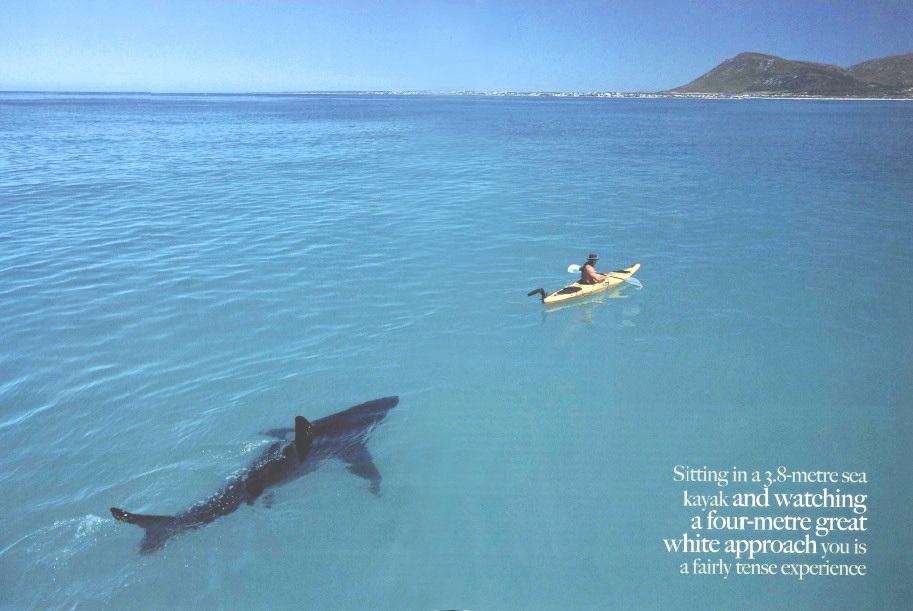
  • Hero Shark, the shark who shows up to every flood, ostensibly to save us all from our own hubris, has a long a fascinating history. “Shark in flooded street” wasn’t even the first time that photo was used for fake news.
Photo by Thomas P. Peschak.
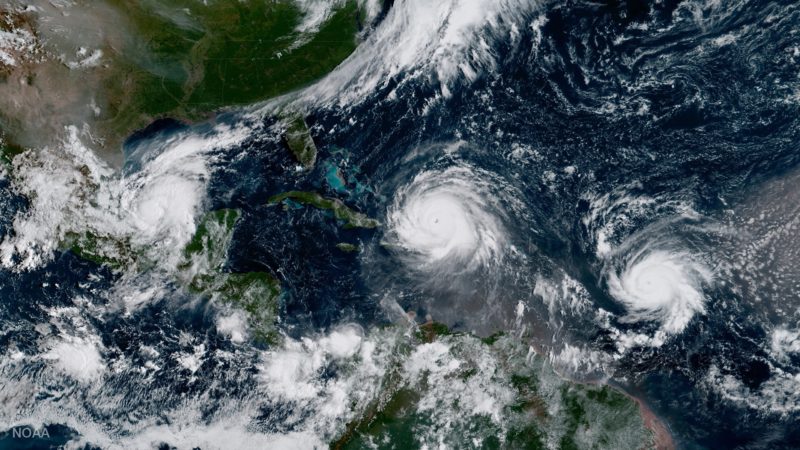
  • NOAA’s New Weather Satellite Captured Stunning Images of Hurricanes Harvey and Irma. These are amazing and terrifying.
GOES-16.
  • Rick MacPherson and I made a bot that generates random ocean conservation solutions from a massive archive of policy jargon. Follow @OceanCon_Bot. It is good.

Read More “A shark for all floods, Crowdfunding scams, old fish, bold fish, and more! Monday Morning Salvage: September 18, 2017” »

This Week in the Deep

Posted on January 26, 2013January 25, 2013 By Andrew Thaler
Science

New and noteworthy publications in deep-sea science for the week of January 21, 2013.

Geobiology: Did life originate from a global chemical reactor?

Many decades of experimental and theoretical research on the origin of life have yielded important discoveries regarding the chemical and physical conditions under which organic compounds can be synthesized and polymerized. However, such conditions often seem mutually exclusive, because they are rarely encountered in a single environmental setting. As such, no convincing models explain how living cells formed from abiotic constituents. Here, we propose a new approach that considers the origin of life within the global context of the Hadean Earth. We review previous ideas and synthesize them in four central hypotheses: (i) Multiple microenvironments contributed to the building blocks of life, and these niches were not necessarily inhabitable by the first organisms; (ii) Mineral catalysts were the backbone of prebiotic reaction networks that led to modern metabolism; (iii) Multiple local and global transport processes were essential for linking reactions occurring in separate locations; (iv) Global diversity and local selection of reactants and products provided mechanisms for the generation of most of the diverse building blocks necessary for life. We conclude that no single environmental setting can offer enough chemical and physical diversity for life to originate. Instead, any plausible model for the origin of life must acknowledge the geological complexity and diversity of the Hadean Earth. Future research may therefore benefit from identifying further linkages between organic precursors, minerals, and fluids in various environmental contexts.

Read More “This Week in the Deep” »

Popular Posts

Shark scientists want their research to help save threatened species, but don’t know how. Our new paper can help.Shark scientists want their research to help save threatened species, but don’t know how. Our new paper can help.December 1, 2025David Shiffman
Norway and Cook Islands put their deep-sea mining plans on pause.Norway and Cook Islands put their deep-sea mining plans on pause.December 3, 2025Andrew Thaler
What Ocean Ramsey does is not shark science or conservation: some brief thoughts on "the Shark Whisperer" documentaryWhat Ocean Ramsey does is not shark science or conservation: some brief thoughts on "the Shark Whisperer" documentaryJuly 2, 2025David Shiffman
The Trouble with Teacup PigsThe Trouble with Teacup PigsOctober 14, 2012Andrew Thaler
What we know we don't know: impacts of deep-sea mining on whales, dolphins, sharks, turtles, and other migratory species.What we know we don't know: impacts of deep-sea mining on whales, dolphins, sharks, turtles, and other migratory species.November 20, 2025Andrew Thaler
2025: My year in writing, public speaking, and media interviews2025: My year in writing, public speaking, and media interviewsDecember 3, 2025David Shiffman
Urea and Shark OsmoregulationUrea and Shark OsmoregulationNovember 15, 2010David Shiffman
Shark of Darkness: Wrath of Submarine is a fake documentaryShark of Darkness: Wrath of Submarine is a fake documentaryAugust 10, 2014Michelle Jewell
How tiny satellites are tracking marine wildlifeDecember 1, 2025Andrew Thaler
Build a dirt cheap, tough-as-nails field computer in a Pelican caseBuild a dirt cheap, tough-as-nails field computer in a Pelican caseJuly 21, 2015Andrew Thaler
Subscribe to our RSS Feed for updates whenever new articles are published.

We recommend Feedly for RSS management. It's like Google Reader, except it still exists.

Southern Fried Science

  • Home
  • About SFS
  • Authors
  • Support SFS


If you enjoy Southern Fried Science, consider contributing to our Patreon campaign.

Copyright © 2025 Southern Fried Science.

Theme: Oceanly Premium by ScriptsTown