

Skip to content

Southern Fried Science

Over 15 years of ocean science and conservation online

  • Home
  • About SFS
  • Authors
  • Support SFS

Tag: social media

“Twitter sucks now and all the cool kids are moving to Bluesky:” Our new survey shows that scientists no longer find Twitter professionally useful or pleasant

Posted on August 19, 2025August 20, 2025 By David Shiffman 3 Comments on “Twitter sucks now and all the cool kids are moving to Bluesky:” Our new survey shows that scientists no longer find Twitter professionally useful or pleasant
“Twitter sucks now and all the cool kids are moving to Bluesky:” Our new survey shows that scientists no longer find Twitter professionally useful or pleasant
Blogging, Education, Featured, Science

My colleague Dr. Julia Wester and I have a new paper out in the journal Integrative and Comparative Biology reporting on the results of a survey distributed to over 800 scientists, science educators, and science communicators. I presented these results at the 2025 Joint Meeting of Ichthyologists and Herpetologists. Our study confirms a trend that’s … Read More ““Twitter sucks now and all the cool kids are moving to Bluesky:” Our new survey shows that scientists no longer find Twitter professionally useful or pleasant” »

This is not an article about epoxy river tables.

Posted on June 4, 2024June 6, 2024 By Andrew Thaler
This is not an article about epoxy river tables.
Built to Last, Featured

Fourteen years ago, when Social Media was fresh and new and full of hope, I started teaching Social Media for Environmental Communications at Duke University. The internet was bursting with potential and we wanted to help ocean campaigners tap into that cognitive surplus for the good of the planet.  This was a data driven course, … Read More “This is not an article about epoxy river tables.” »

An oral history of Ocean Science Twitter

Posted on August 10, 2023May 3, 2024 By Andrew Thaler
An oral history of Ocean Science Twitter
Blogging, Featured

I created my Twitter account in the spring of 2009. Back then, science blogging was new and we all though that using pseudonyms for anonymity was the pragmatic and cool thing to do. Southern Fried Science had been cooking for over a year at that point, and we were excited about the near-limitless potential of … Read More “An oral history of Ocean Science Twitter” »

I am deep-sea ecologist Andrew Thaler and this is where you verify my social media accounts.

Posted on November 7, 2022November 21, 2022 By Andrew Thaler
Blogging

These are my active social media accounts: Twitter (automated posting): https://twitter.com/DrAndrewThaler Facebook: https://www.facebook.com/drandrewthaler Instagram: https://www.instagram.com/drandrewthaler/ TikTok: https://www.tiktok.com/@drandrewthaler Mastodon: https://mastodon.social/@DrAndrewThaler Project Mushroom: https://projectmushroom.social/@DrAndrewThaler

The dark side of “Stop the Scroll”

Posted on June 13, 2019June 13, 2019 By Michelle Jewell
The dark side of “Stop the Scroll”
Uncategorized

I have had the pleasure of working communications roles in several industries over the years.  During this time, I’ve seen the rise of a dubious campaign metric commonly referred to as “Stop the Scroll” (or “Swipe”).  This metric has conscientious roots.  Online communications strategists have less than a second to grab a potential donor, stakeholder, or client’s attention.  Good strategists have read Craig McClain’s paper, as a great visual will make your thumb quiver before scrolling on to a video of dogs doing literally anything.  In this light, stop the scroll seems like a pretty good metric for individual post efficacy.  Time is the currency of experience, after all.

Can we count the seconds people spend learning untrue facts as progress towards our campaign? Or change the campaign goals to justify a resource-heavy shit post? 
Read More “The dark side of “Stop the Scroll”” »

Remembering Walter Munk, a photo on a flash drive in a pile of poo from a seal at the bottom of the sea, lucky vikings, and more! Monday Morning Salvage: February 11, 2019

Posted on February 11, 2019February 11, 2019 By Andrew Thaler
Weekly Salvage

Foghorn (A Call to Action!)

  • Walter Munk, World-Renowned Oceanographer and Revered Scientist has died.

Flotsam (what we’re obsessed with right now)

  • So many mesmerizing videos from Deep Sea News! Experience the Life of the Deep Gulf of Mexico in 20 Videos.
  • This is a staggeringly beautiful image: One Great Shot: The Guillemot and the Iceberg.
Carsten Egevang goes looking for seals in Greenland and finds a photogenic guillemot instead.
  • Did you lose a flash drive? NIWA might have it. They were defrosting leopard seal poo…you won’t believe what happened next!
This photo of a sealion on a Southland beach was found on a USB stick swallowed by a leopard seal. Credit: unknown

Read More “Remembering Walter Munk, a photo on a flash drive in a pile of poo from a seal at the bottom of the sea, lucky vikings, and more! Monday Morning Salvage: February 11, 2019” »

To tweet to whom – a tweeting guide for marine scientists

Posted on December 18, 2018December 19, 2018 By Chris Parsons
Uncategorized

“Logic is a tweeting bird” – Spock, Star Trek

Social media can be a great tool for spreading and disseminating published science. Potentially it can reach a wide audience and for free !

Most platforms allow you to insert links to direct readers to the original paper or publication. If you are working in an area that is relevant to conservation or policy, social media can be a great way of getting papers to the right audience that may need that information (Parsons et al., 2014). Moreover, there is now increasing data that using social media can increase download and citation rates of scientific papers, which in turn is good for the careers of scientists in an academic setting.

Read More “To tweet to whom – a tweeting guide for marine scientists” »

How goats got the bends, a new ship for VIMS, a new deep-sea submersible for all of us, our looming destruction, and more! Monday Morning Salvage: October 15, 2018.

Posted on October 15, 2018 By Andrew Thaler
Weekly Salvage

Foghorn (A Call to Action!)

  • It ain’t going to be easy, but it isn’t over yet and none of us have earned the right to quit. What genuine, no-bullshit ambition on climate change would look like.

Flotsam (what we’re obsessed with right now)

  • Goats are magnificent. We don’t deserve goats. The Dark Story of How Scientists Used Goats to Solve the Bends.

Bends in the foreleg of a goat after experiments performed by physiologist John S. Haldane, published in the Journal of Hygiene Vol. 8, 1908.

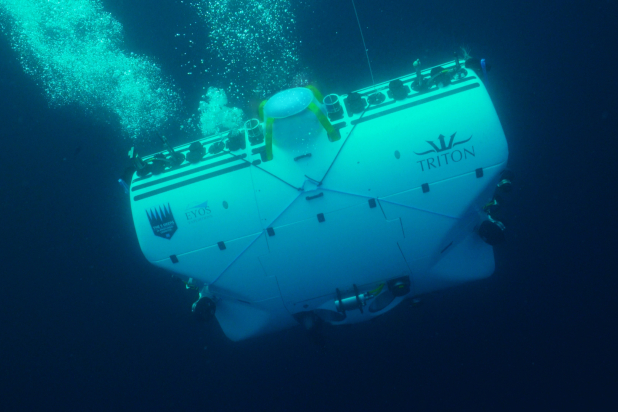
  • There’s a new full-ocean capable submarine in town, and for $50 million, you could buy it! Discovery and Science Channel to Document the Five Deeps Expedition in Limited Series.

Submersible. Photo courtesy Discovery.
Photo courtesy Discovery.

Read More “How goats got the bends, a new ship for VIMS, a new deep-sea submersible for all of us, our looming destruction, and more! Monday Morning Salvage: October 15, 2018.” »

Lions, Whales, and the Web: Transforming Moment Inertia into Conservation Action

Posted on September 14, 2017 By Andrew Thaler
Uncategorized

I have a new paper out today with an incredible team of co-authors: Naomi Rose, Mel Cosentino, and Andrew Wright.

Thaler and friends (2017) Lions, Whales, and the Web: Transforming Moment Inertia into Conservation Action. DOI: 10.3389/fmars.2017.00292.

In it, we look at three case-studies of online and offline reactions to the deaths of specific, charismatic animals, and discuss how preparation, planning, and tactical thinking can be used to promote effective conservation messaging in the wake of these haphazard events. We talk about how outrage, empathy, and curiosity play a role in the global conversation and how to effectively mobilize this attention into conservation action.

Conservation activism following moment inertia is a balancing act between strategic planning and a quick, tactical response. When the catalyst is moral outrage, it is important to allow people to be angry, rather than to try and curb such responses. In these circumstances, it is possible to leverage predictable moral signaling into tangible conservation gains.

Regardless of the emotional reaction—outrage, curiosity, or empathy—the general guidelines for conservationists leveraging moment inertia are the same. First, planning for pseudorandom events is essential to produce meaningful outcomes. Second, understanding the limitations of campaigning on an inertial moment will help establish and achieve concrete, realistic goals. Third, the call to action must be informed by the local context, address local cultural values, and be delivered by those who can connect with the public. Finally, it is critical to maintain a factual basis while acknowledging the emotions involved.

With foresight, a focus on concrete goals, and an understanding of the strengths and limitations inherent in moment inertia, these events can be harnessed to help achieve lasting conservation successes.

Thaler and friends (2017)

What is Moment Inertia: Moment Inertia is a phenomenon that arises from focus of attention around a single, clarifying event, or moment, which propagates, undirected, through media unless acted upon by outside forces.

Read More “Lions, Whales, and the Web: Transforming Moment Inertia into Conservation Action” »

Hone your social media #SciComm skills with ocean science pros.

Posted on April 14, 2017 By Andrew Thaler
Blogging

Looking to boost your ocean outreach skills in a more formal setting? We’ve got two opportunities for social media training with ocean science and ocean communications experts from Southern Fried Science: LUMCON Summer Course: Join me at the Louisiana Universities Marine Consortium on the Gulf Coast for a week-long workshop on Science Communication Using Social Media led by … Read More “Hone your social media #SciComm skills with ocean science pros.” »

Posts pagination

1 2 Next

Popular Posts

Shark scientists want their research to help save threatened species, but don’t know how. Our new paper can help.Shark scientists want their research to help save threatened species, but don’t know how. Our new paper can help.December 1, 2025David Shiffman
Norway and Cook Islands put their deep-sea mining plans on pause.Norway and Cook Islands put their deep-sea mining plans on pause.December 3, 2025Andrew Thaler
What Ocean Ramsey does is not shark science or conservation: some brief thoughts on "the Shark Whisperer" documentaryWhat Ocean Ramsey does is not shark science or conservation: some brief thoughts on "the Shark Whisperer" documentaryJuly 2, 2025David Shiffman
The Trouble with Teacup PigsThe Trouble with Teacup PigsOctober 14, 2012Andrew Thaler
What we know we don't know: impacts of deep-sea mining on whales, dolphins, sharks, turtles, and other migratory species.What we know we don't know: impacts of deep-sea mining on whales, dolphins, sharks, turtles, and other migratory species.November 20, 2025Andrew Thaler
2025: My year in writing, public speaking, and media interviews2025: My year in writing, public speaking, and media interviewsDecember 3, 2025David Shiffman
Urea and Shark OsmoregulationUrea and Shark OsmoregulationNovember 15, 2010David Shiffman
Shark of Darkness: Wrath of Submarine is a fake documentaryShark of Darkness: Wrath of Submarine is a fake documentaryAugust 10, 2014Michelle Jewell
How tiny satellites are tracking marine wildlifeDecember 1, 2025Andrew Thaler
Build a dirt cheap, tough-as-nails field computer in a Pelican caseBuild a dirt cheap, tough-as-nails field computer in a Pelican caseJuly 21, 2015Andrew Thaler
Subscribe to our RSS Feed for updates whenever new articles are published.

We recommend Feedly for RSS management. It's like Google Reader, except it still exists.

Southern Fried Science

  • Home
  • About SFS
  • Authors
  • Support SFS


If you enjoy Southern Fried Science, consider contributing to our Patreon campaign.

Copyright © 2025 Southern Fried Science.

Theme: Oceanly Premium by ScriptsTown