This week, two questions echoed through the hallowed halls of Deep-sea Science. It began, as things these days tend to begin, with a tweet. Dr. Diva Amon challenged deep-sea researchers to show off their shrunken cups from the bottom of the abyss. And we obliged, oh but did we oblige.
Concurrently, though unrelated, Angelo Villagomez announced out symposium on Human Impacts in the Deep Sea and shared several image of the garbage that finds its way to the ocean floor. Cans of cheap beer and pristine Spam littered the deepest reaches of the Mariana Trench, where they will lie forever as they are slowly buried in sediment.
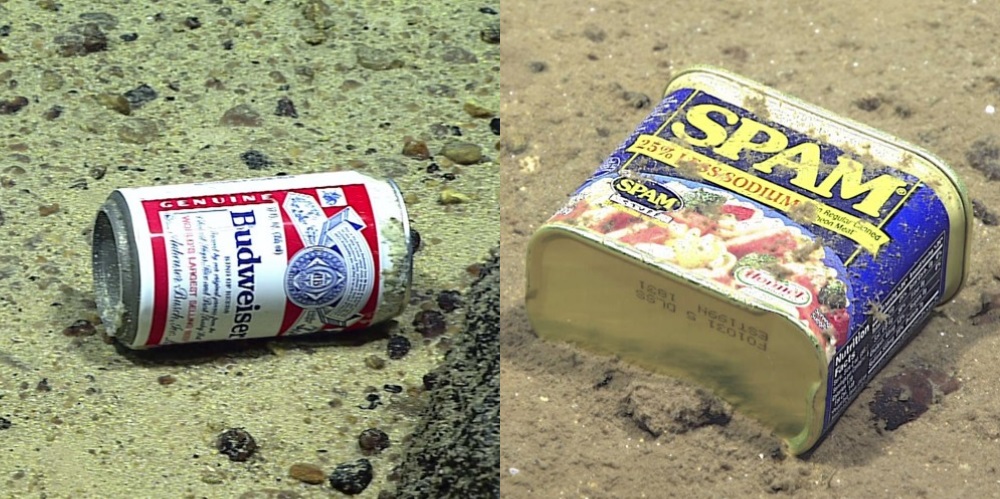
And thus we found ourselves awash in to variations on the same theme: Why did that ocean thing get crushed? and Why didn’t that ocean thing get crushed?
Those Amazing Styrofoam Cups
Styrofoam shrinks under pressure. It’s a rigid, closed-cell foam, which means it’s comprised of tiny, sealed bubbled (unlike, say a sponge, which is formed of open bubbles and absorbs water to equilibrium rather than compressing). So if you fancy up a foam cup and send it into the abyss, you get some nifty shrunken art.
Bonus points if you shrink a horrifying/amazing foam head.
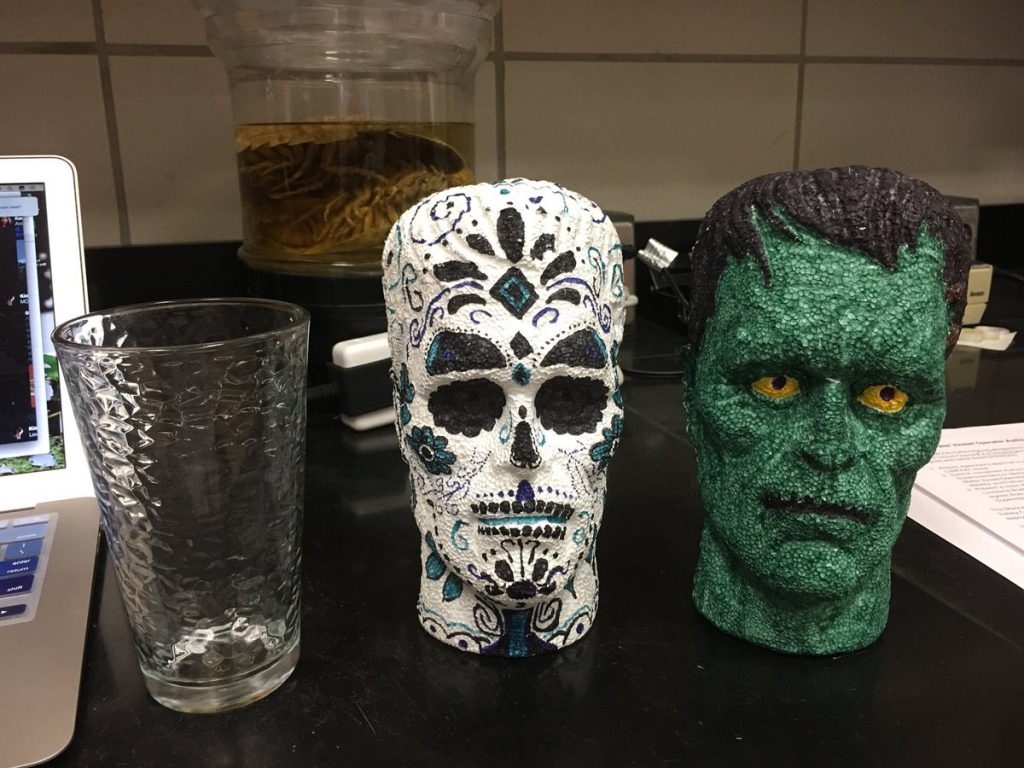
This is why deep-diving submersibles need special, incompressible foam (like, for example, syntactic foam) for buoyancy. They need lift, and to get lift you need a closed-cell foam, but it has to be something that wont crack under pressure.
What’s up with this beer can?
So if any sealed air chamber will crush under extreme pressure, why isn’t that beer can squished? Surely a thin aluminum can can withstand that many bars of pressure?
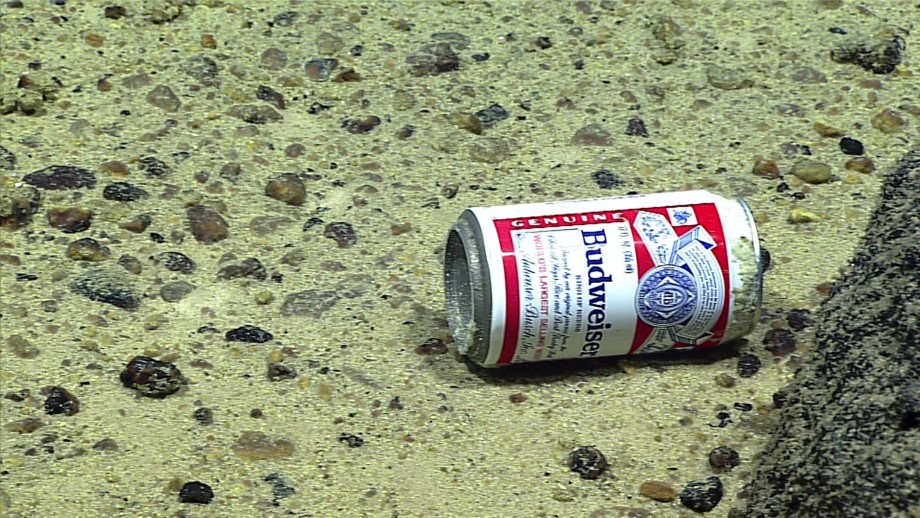
That’s true, and the utterly boring answer is that the can is open. There’s nothing to compress because seawater enters the can, reached equilibrium, and then just sits there. This is the same reason that light bulbs on the wreck of the Titanic didn’t pop: they had a small opening that allowed water to enter. If a beer can is a single closed-cell, an open beer can is the equivalent of a sponge.
Incidentally, you can immediately tell the can is open, even without seeing the top, because sealed thin-walled aluminum cylinders of carbonated liquid float.
Will Spam live forever?
And that brings us to the real mystery: what is up with that can of Spam, why hasn’t it be crushed flat, and is it… still… edible?
There’s two possibilities here. The can of Spam appears, outwardly, to be untampered. It’s possible that the seal broke just slightly, allowing seawater to flood the container. In which case, just like the beer can, the Spam can is open. But, Spam is, functionally speaking, an incompressible fluid. Spam cans are packed well, and if there’s no space for air, or if the can is flexible enough that the tiny air pocket gets compressed. In other words, the can is sealed, resists pressure, and its contents are likely fine.
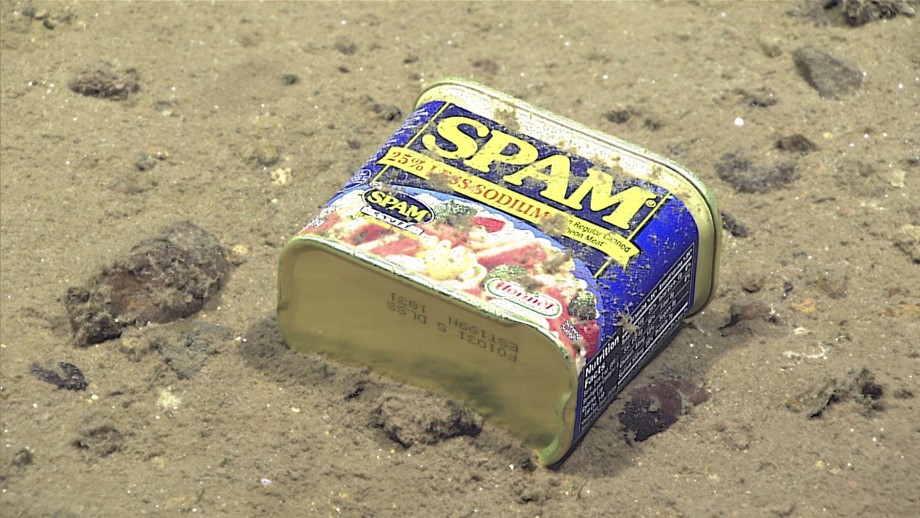
The deep-sea is cold, oxygen poor, and incredibly stable. If it remains sealed, that Spam will remain edible long after you or I fade from human memory. Even if there is seawater intrusion, that will likely only make the Spam more salty.
When the DSV Alvin sunk in the 1960’s, it sat on the seafloor for a year. The pilots’ lunches sunk along with the submarine ans, when finally recovered, it was reported to be “perfectly palatable.” Most of the food looked as fresh as the day it was packed (which says either a lot about preservation of food in the deep sea, or something alarming about the diets of early Alvin pilots. Spam, a notoriously durable shelf-stable protein, would almost certainly maintain its characteristic charm after a few years on the seafloor. Whether the diverse and questionable flavor of some of the more exotic Spam options persist is a different conundrum.
Regardless of the Spam’s longevity, human trash is a growing problem on the seafloor. I cannot remember a single dive anywhere in the world where we didn’t fine discarded cans, plastic bags, helmets, carpet rolls, and, sometimes, entire toilets.
If you enjoy Southern Fried Science, consider contributing to our Patreon campaign. For just $5 per month, you can support the SFS Writers Fund, which helps compensate your favorite ocean science and conservation bloggers for their efforts.