Skip to content

Southern Fried Science

Over 15 years of ocean science and conservation online

  • Home
  • About SFS
  • Authors
  • Support SFS

For science communication, hashtag games are a scientist’s secret weapon.

Posted on December 15, 2015 By Andrew Thaler
Uncategorized

#ExplainAFilmPlotBadly, #StupidCommonNames, #LOTRyourResearch.

Hashtag games. A few times a week, these weird, funny, quirky wordplay challenges explode across twitter, driving the most serious, and sometimes even super-serious, tweeters to pause for a moment of levity and let you know what they think Jaws is really about.
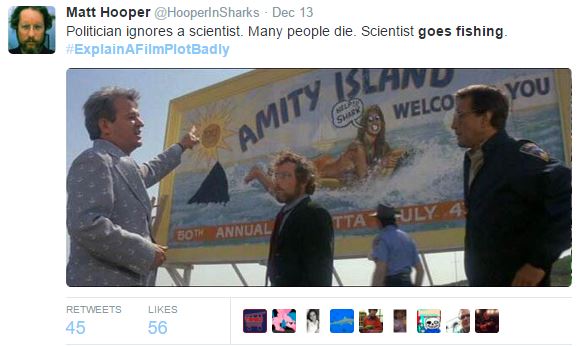
jaws

Goofy, whimsical, and extremely silly, one might wonder why scientists and science communicators would want to jump into these games, potentially compromising the reputation they’ve built up as a Serious Scientist (TM), unswayed by such foolishness.

The answer is simple: Playing hashtag games makes you a better communicator of science.

Online outreach is as much an art as a science (though you can read some of the science I’ve published on digital communications and online science outreach in two peer-reviewed papers: Digital environmentalism: tools and strategies for the evolving online ecosystem and Fish tales: Combating fake science in popular media). Reaching people on twitter requires a good writer to compress complex topics into short, easily understood statements, and carry on conversations in 140 character chunks. This is a hard skill to master, which is often why so many scientists decide that platforms like Twitter aren’t for them (note: that’s totally fine, every science and science communicator doesn’t have to be great at every single platform).

This month, Randal Munroe of the popular XKCD published Thing Explainer, a guide to science using only the ten hundred most common words. His Thing Explainer website, where writers can challenge themselves to craft their own ten hundred word explanations, has been up for a few years. While Thing Explainer is great for learning how to bust jargon and simplify language, it’s not actually a particularly good tool for learning how to write well for a diverse and non-expert audience.

I’m sure you can guess what I think is a great way to develop those pithy, brief, and informative tweets: Hashtag games.

Hashtag games let you experiment with language, practice turning complex concepts into engaging , entertaining, and informative tweets, and develop your own online voice. In addition to being tremendously useful writing exercises, they also help expand your audience and make personal connections with your readers.

And, if you’re really clever, you can use them to make important, challenging concepts immediately relatable.
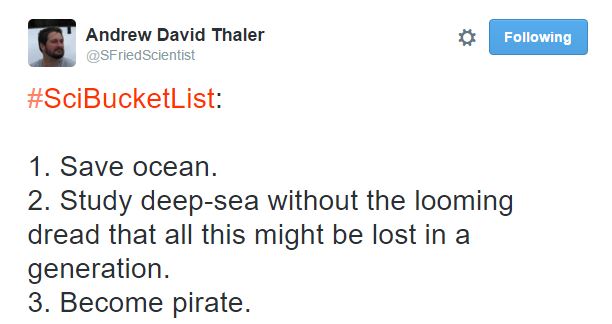
bucket

So aspiring science communicators and Twitter veterans looking to polish your skills, go forth and play hashtag games. It’s good for us all.

Share this:

  • Share on Bluesky (Opens in new window) Bluesky
  • Share on Facebook (Opens in new window) Facebook
  • Share on Reddit (Opens in new window) Reddit
  • Share on Threads (Opens in new window) Threads
  • Share on WhatsApp (Opens in new window) WhatsApp
  • Share on Mastodon (Opens in new window) Mastodon

Related

Tags: twitter

Post navigation

❮ Previous Post: Scientific Stockholm Syndrome
Next Post: Meet the Elasmobranch Society diversity scholarship winners ❯

You may also like

Built to Last
This is not an article about epoxy river tables.
June 4, 2024
Blogging
A Guide to Tweeting at Scientific Meetings for Social Media Veterans
December 13, 2013
Blogging
Housekeeping note regarding weird torrent files
September 23, 2013
Uncategorized
Combating fake science in popular media – six months later
September 28, 2015

Popular Posts

What Ocean Ramsey does is not shark science or conservation: some brief thoughts on "the Shark Whisperer" documentaryWhat Ocean Ramsey does is not shark science or conservation: some brief thoughts on "the Shark Whisperer" documentaryJuly 2, 2025David Shiffman
Zombie ideas in conservation: trophy hunting and conservationZombie ideas in conservation: trophy hunting and conservationAugust 6, 2026Ali Gaster
What is a Sand Shark?What is a Sand Shark?November 12, 2017Chuck Bangley
Shark of Darkness: Wrath of Submarine is a fake documentaryShark of Darkness: Wrath of Submarine is a fake documentaryAugust 10, 2014Michelle Jewell
Is Academic Publishing is breaking conservation science?Is Academic Publishing is breaking conservation science?August 10, 2026Chris Parsons
How the Bluespotted Ribbontail Stingray got its SpotsHow the Bluespotted Ribbontail Stingray got its SpotsMarch 28, 2024David Shiffman
Considering writing a popular science book? Here's my adviceConsidering writing a popular science book? Here's my adviceJuly 7, 2025David Shiffman
That's not a blobfish: Deep Sea Social Media is Flooded by AI SlopThat's not a blobfish: Deep Sea Social Media is Flooded by AI SlopDecember 19, 2025Andrew Thaler
Emergency room conservation: why waiting for the Endangered Species Act to save a species is a fiscal disasterEmergency room conservation: why waiting for the Endangered Species Act to save a species is a fiscal disasterAugust 11, 2026Ali Gaster
At least 74 practicing shark researchers: How a silly thing I said online raised thousands for conservationAt least 74 practicing shark researchers: How a silly thing I said online raised thousands for conservationFebruary 26, 2025David Shiffman
Subscribe to our RSS Feed for updates whenever new articles are published.

We recommend Feedly for RSS management. It's like Google Reader, except it still exists.

Southern Fried Science

  • Home
  • About SFS
  • Authors
  • Support SFS


If you enjoy Southern Fried Science, consider contributing to our Patreon campaign.

Copyright © 2026 Southern Fried Science.

Theme: Oceanly Premium by ScriptsTown