Skip to content

Southern Fried Science

Over 15 years of ocean science and conservation online

  • Home
  • About SFS
  • Authors
  • Support SFS

Time to release the Kraken ! Addressing controversial questions in marine conservation

Posted on September 30, 2016October 2, 2016 By Chris Parsons
Conservation, Uncategorized

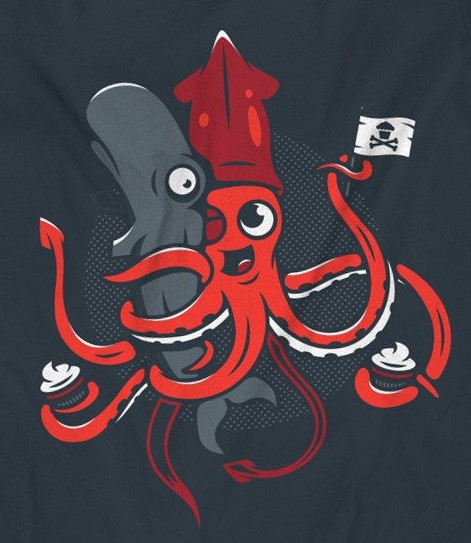
A few years ago, we organized a group of marine conservation scientists to meet to discuss, and list,  the most urgent issues that need to be studied. The resulting paper  came up with 71 questions which urgently needed to be addressed, because a lack of an answer was severely impeding marine conservation. However, during this exercise we also came up with a list of other questions – these were issues that were controversial, that everyone  knew were important, but were unwilling to raise as being an issue. These were the Voldemorts of marine conservation questions (they that shall not be named), the elephant (or elephant seal) in the room questions …. or as we more aquatically termed them: “the kraken in the aquarium” questions.
love-a-kraken

These questions came under the topic headings of “Human nature” such as:

Does compromising as part of the marine planning process fail marine conservation? 

and

Academic, political, and research funding cycles tend to be much shorter than ecological cycles. How can these cycles acknowledge and incorporate the temporal scales of biological and ecological change and conservation success evaluation?

We all know that to really evaluate marine systems we may need decades to truly pick up trends, and to convince coastal human communities that marine conservation is in their interest and to change their behavior, takes much, much longer than can be funded in a 2 year grant.

The problem of “entrenched interests” was discussed are – we holding onto tools that are either ineffective (or even conservation detrimental) or are not effective as we often make them out to be (such as MSYR and MPAs).

The strangle-hold that corporations and special interests have on conservation and ocean policy was discussed, with questions raised such as:

How can we break through the overwhelming media superiority of large corporations and facilitate the spread of accurate conservation science?

and

The burden of proof to identify potentially significant economic, ecological, or cultural impacts for activities that may have negative environmental impacts is usually on those that provide the mitigation and management strategies to combat the negative impacts, instead of on those that proposed the potentially harmful activities. How do we switch the burden of proof to those who propose the activities?

Then there were questions related to global economics:

How expensive should resources be if all externalities were considered?

How can we reconcile the corporate/financial requirement of perpetual economic growth with the limited capacity of ecosystems to provide resources?

Finally, we also looked to the marine conservation community. Are there significant problems closer to home? For example, one of the questions asked was:

How can aquariums and zoos be best used and supported to forward marine conservation? What is their role?

This recognizes that despite the assumption that zoos and aquariums aid conservation, there is actually precious little scientific evidence that zoos and aquariums play a major role in promoting pro-conservation behavior (in fact some studies suggest that they can do the opposite) and despite zoos and aquariums being a multi-billion dollar industry, the amount they contribute to marine conservation in the wild is often just a few percent (or even lower) of their revenues.

A final question was one that particularly resonated with me:

To what degree should marine scientists serve as advocates for nature?

There are still marine conservation scientists that argue marine conservation scientists should produce papers, but should neither advocate for their science or get involved in helping NGOs or other groups highlight the important issues in their work (i.e. activism and/or outreach). Effectively, that like Victorian children, marine conservation scientists should be seen (via papers) but not heard (via advocacy or activism/outreach). I situation I believe is massively detrimental to marine conservation.


Image result for victorian children

“Please sir, can we have some marine conservation?”

These kraken in the aquarium questions will hopefully lead to marine conservation scientists thinking a bit more outside the box, start challenging  dogma and most importantly start RELEASING THE KRAKEN !

keep-calm-and-release-the-kraken

References

Cigliano JA, Bauer A, Draheim MM, Foley MM, Lundquist CJ, McCarthy, Patterson KW, Wright AJ and Parsons ECM (2016) The Kraken in the Aquarium: Questions that Urgently Need to be Addressed in Order to Advance Marine Conservation.Front. Mar. Sci. 3:174. doi: 10.3389/fmars.2016.00174

Parsons, E. C. M., Favaro, B., Draheim, M., McCarthy, J. B., Aguirre, A. A., Bauer, A. L., et al. (2014a). Seventy-one important questions for the conservation of marine biodiversity. Conserv. Biol. 28, 1206–1214. doi: 10.1111/cobi.12303


Share this:

  • Share on Bluesky (Opens in new window) Bluesky
  • Share on Facebook (Opens in new window) Facebook
  • Share on Reddit (Opens in new window) Reddit
  • Share on Threads (Opens in new window) Threads
  • Share on WhatsApp (Opens in new window) WhatsApp
  • Share on Mastodon (Opens in new window) Mastodon

Related

Tags: conflict corporations dogma Kraken marine conservation MPAs MSY science advocacy science funding special interests stakeholders

Post navigation

❮ Previous Post: The international gill plate trade: a highway to hell for devil rays?
Next Post: The 3D-Printed Giant Deep-sea Isopod You Always Wanted. ❯

You may also like

Weekly Salvage
Voyaging canoes, failed sea-steading sea states, breaching ocean plastic, deep-sea mining, and more! Monday Morning Salvage: July 2, 2018
July 2, 2018
Conservation
Tweets from the Society for Conservation Biology: Marine conservation sessions
July 29, 2013
Science
Pseudoscience Redux: Maximum (un)Sustainable Yield
October 5, 2011
Conservation
So what might Scottish independence mean for marine conservation ?
September 17, 2014

Popular Posts

What Ocean Ramsey does is not shark science or conservation: some brief thoughts on "the Shark Whisperer" documentaryWhat Ocean Ramsey does is not shark science or conservation: some brief thoughts on "the Shark Whisperer" documentaryJuly 2, 2025David Shiffman
At least 74 practicing shark researchers: How a silly thing I said online raised thousands for conservationAt least 74 practicing shark researchers: How a silly thing I said online raised thousands for conservationFebruary 26, 2025David Shiffman
Alberta, Canada is the proud owner of the largest man-made pyramid on the planetAlberta, Canada is the proud owner of the largest man-made pyramid on the planetOctober 16, 2012Andrew Thaler
That's not a blobfish: Deep Sea Social Media is Flooded by AI SlopThat's not a blobfish: Deep Sea Social Media is Flooded by AI SlopDecember 19, 2025Andrew Thaler
Shark of Darkness: Wrath of Submarine is a fake documentaryShark of Darkness: Wrath of Submarine is a fake documentaryAugust 10, 2014Michelle Jewell
Here are some ocean conservation technologies that I'm excited aboutHere are some ocean conservation technologies that I'm excited aboutFebruary 19, 2026David Shiffman
The story of the pride flag made from NASA imagery: Bluesky's most-liked imageThe story of the pride flag made from NASA imagery: Bluesky's most-liked imageSeptember 27, 2024David Shiffman
Here's what I teach my students about finding jobs in marine biology and conservationHere's what I teach my students about finding jobs in marine biology and conservationApril 10, 2024David Shiffman
A quick and dirty guide to making custom feeds on BlueskyA quick and dirty guide to making custom feeds on BlueskyFebruary 7, 2024Andrew Thaler
Oarfish: The true tale of the fish we can’t seem to get enough ofOarfish: The true tale of the fish we can’t seem to get enough ofAugust 19, 2015Guest Writer
Subscribe to our RSS Feed for updates whenever new articles are published.

We recommend Feedly for RSS management. It's like Google Reader, except it still exists.

Southern Fried Science

  • Home
  • About SFS
  • Authors
  • Support SFS


If you enjoy Southern Fried Science, consider contributing to our Patreon campaign.

Copyright © 2026 Southern Fried Science.

Theme: Oceanly Premium by ScriptsTown