I recently unveiled a new tier of Patreon rewards: 3D printed shark and ray models! For $17 per month, you will get a monthly 3D printed educational model of different shark or ray parts in the mail, and you’ll be supporting my efforts to provide these models to schools for free.
This month’s reward is a model of a horn shark (Heterodontus francisci) and a horn shark egg case!
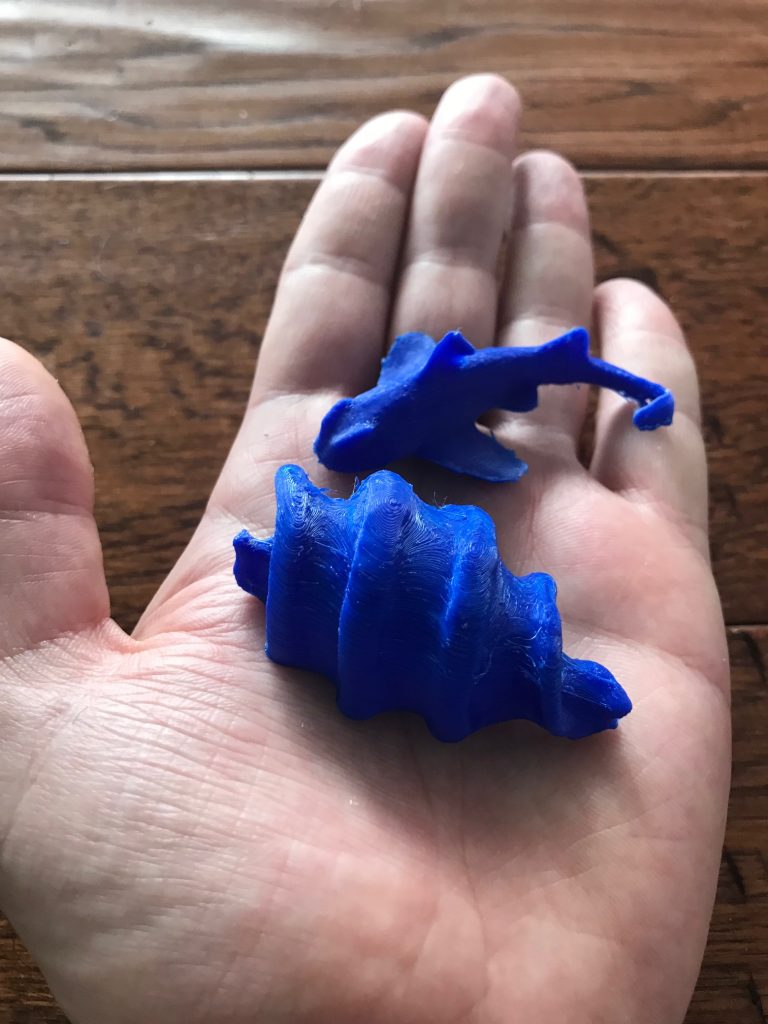
It comes from Alex Warneke, the Science Education Coordinator of Cabrillo National Monument! “”Using 3D printing technology has not only changed the way we educate the public, but it has broadened our perspective on what is possible in National Parks,” Alex told me. “We have been able to connect students to nature from an entirely different angle and provide them the tools and context they will need to succeed as scientists of the next generation.” This individual horn shark comes from the ichthyology collection at Cabrillo, and has been used for public education as well as research. The egg case is one of many that wash up on California beaches.
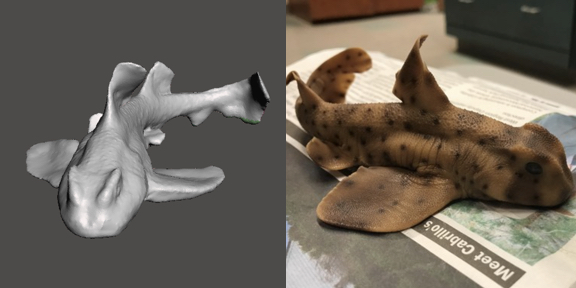
Learn more about horn sharks and their egg cases below!
1. These small, benthic sharks live in shallow coastal waters off the coast of southern California and Mexico. Though they can go deeper, they are most commonly seen in depths of 2-11 meters, and are frequently encountered by SCUBA divers in these regions. Younger horn sharks tend to live in much deeper water than adults.

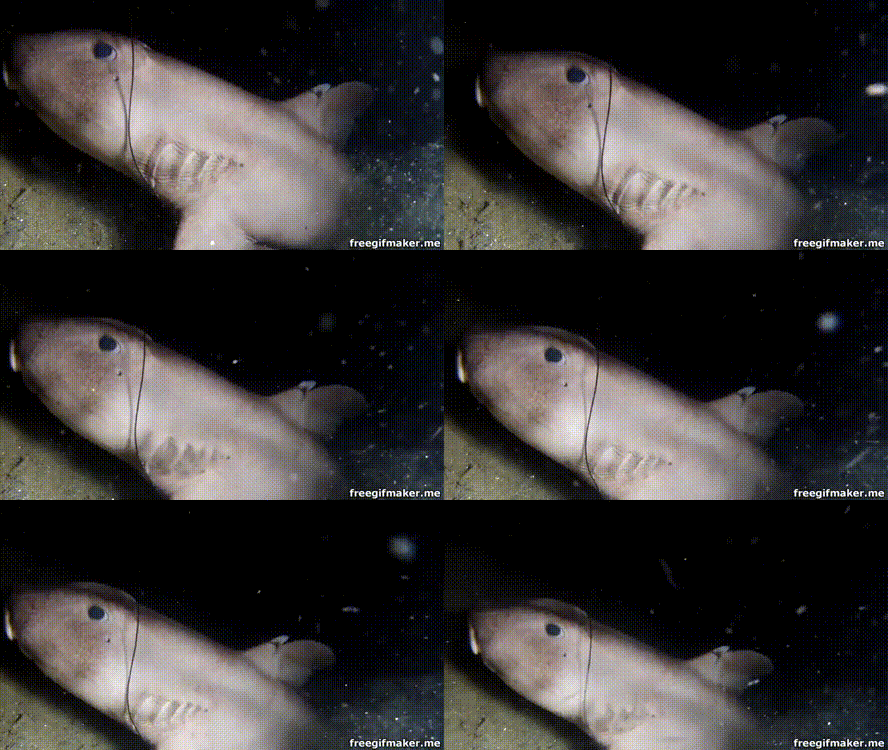
2. Their maximum size is only around 4 feet. Though they generally do not pose any kind of safety risk to humans, their powerful jaws, which are used for munching through the tough spines and tests of sea urchins, could cause injury if provoked. They have different kinds of teeth (which is actually what “Hetero Dontus” means), including sharp front teeth and flat, crushing teeth in the back of their mouth. They usually just rest during the day and are more active at night. (No, not all sharks need to constantly swim in order to breathe!)
3. Like many species of sharks and their relatives, horn sharks lay eggs. Three families of sharks lay eggs: Heterodontidae (which include horn sharks as well as Port Jackson sharks), Scyliorhinidae (catsharks), and Orectolobidae (wobbegongs). Elasmobranch egg cases, sometimes called “mermaid’s purses,” vary widely in size, shape, and color, and the ridges on the horn shark egg case help wedge it between rocks. “Egg cases deposited by oviparous, or egg-laying, sharks are reminiscent of space ships from Roddenberry’s Star Trek,” Meaghan McCord-Grey, scientist and director of the South African Shark Conservancy told me. “Perfectly alien, beautifully shaped and impeccably designed by nature to ensure the delicate embryonic shark survives the months that it takes to develop before a fully formed, miniature shark hatches.Many egg laying sharks select the ‘nursery’ area, depositing their eggs in habitats that perfectly camouflage them from predators. For believe it or not, during early life, snails remain some of the biggest predators of the embryonic developing sharks.”
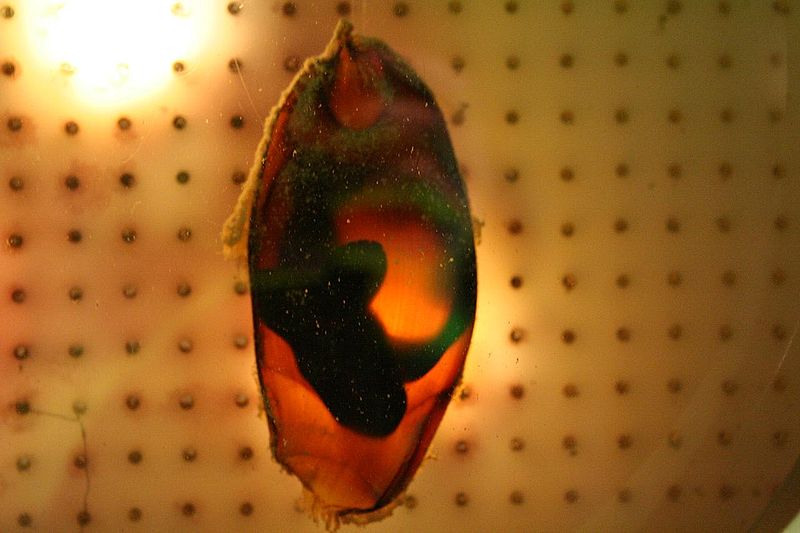
4. Once the eggs are laid, it takes between several months to over a year for them to hatch (6-9 months for horn sharks), during which time they are vulnerable to predators. Other shark species have a variety of other reproductive methods, including live birth and parthenogenesis (essentially a female self-cloning without the aid of a male). Fertilization is internal for both egg-laying and live-bearing sharks, sharks do not spawn.
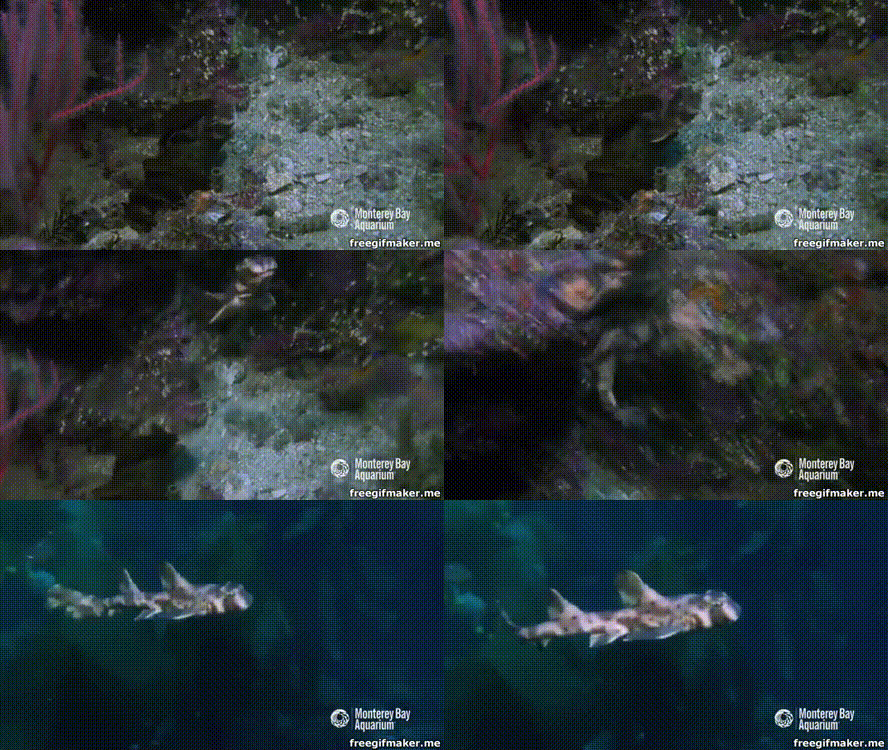
5. Like many species of sharks, horn sharks are assessed as “Data Deficient” by the IUCN Red List. This just means that there isn’t enough evidence to say one way or the other whether they are threatened. However, the Red List assessment notes that there aren’t any major threats for these sharks other than some bycatch (in traps and trawls) and some small-scale consumption in Mexico. These adorable little weirdos will probably be swimming in the Eastern Pacific for a long time.
Want to get your own model horn shark and horn shark egg case? Support me on Patreon! This reward is only available to US residents, but other rewards, including exclusive access to my shark science and conservation newsletter, are available to all.