As in-person negotiations on the future of exploitation in the deep ocean resume this week in Kingston Jamaica, we reflect back on the last two years of development as reported on our sister site, the Deep-sea Mining Observer. This article first appeared two years ago, on March 18, 2020.
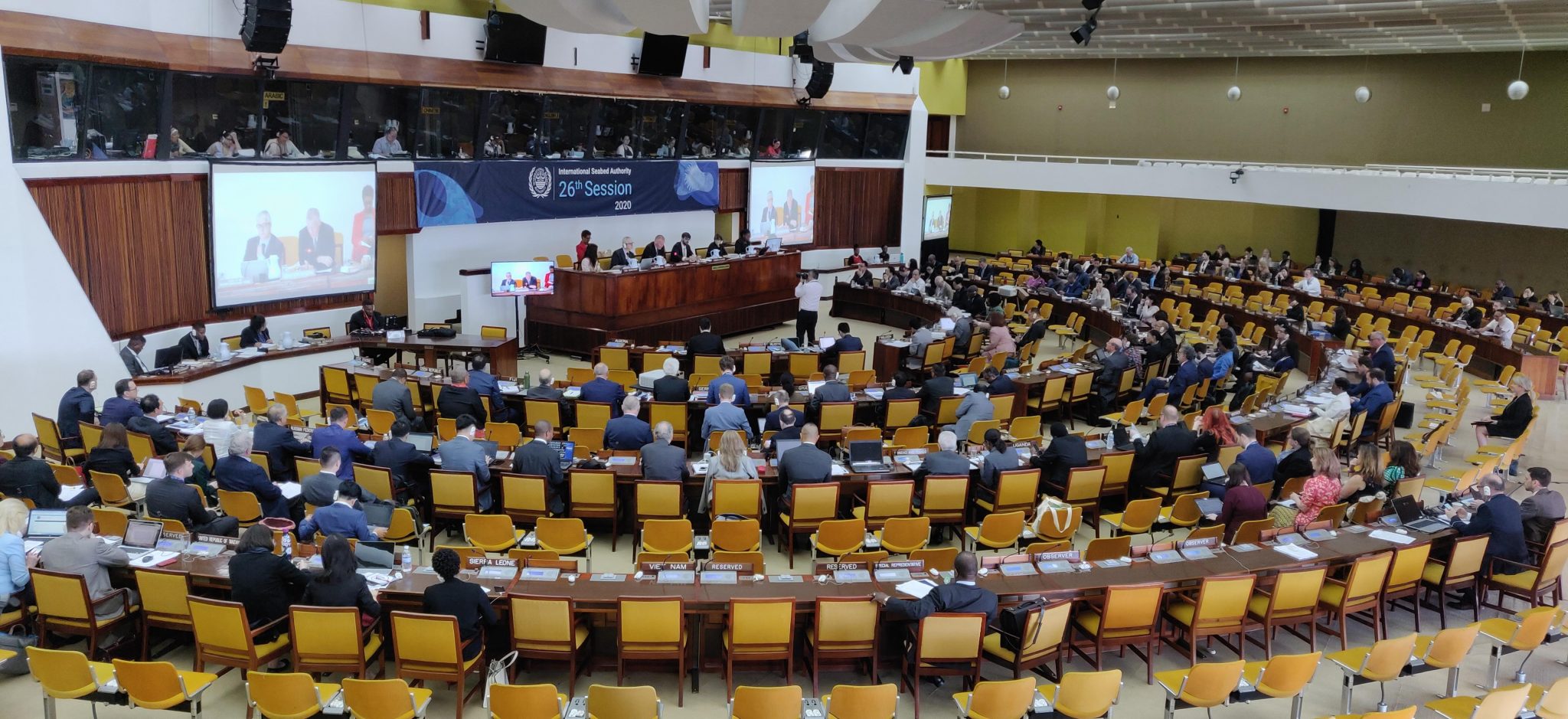
When the first part of 26th Session of the International Seabed Authority convened last month, there was a new stakeholder impacting the pace of deliberations. COVID-19 had just begun to spread beyond China and nations across the world were limiting travel in the hopes of containing the outbreak. With Jamaica imposing a 14-day quarantine on any traveler coming from China, the Chinese delegation was notably absent, with a delegation from the New York mission standing in for their colleagues. But they weren’t the only delegation affected. Multiple delegates whose travel was supported by the Commonwealth we’re also unable to attend.
Though those absences did slow down deliberations and cast a pallor over the proceedings, they were nothing compared with what happened next.
Earlier this week, Forbes published a contributor article entitled “Will Ocean Seabed Mining Delay The Discovery Of Potential Coronavirus Vaccines?” Though hyperbolic in its reaction to an industry which has yet to even begin production, ironically Forbes may have gotten the situation reversed: long before deep-sea mining has even the remote potential to delay the development of novel pharmaceuticals, the COVID-19 pandemic will almost certainly delay the development of deep-sea mining.
As entire nations enter quarantine, restrict travel, and close non-essential businesses, development, particularly the technology development which requires large, international teams working in well-equipped labs and can’t be facilitated through remote work, grind to a halt. The same is true for the teams doing environmental assessment work for contractors. With universities closing, sending their students home, and restricting access to communal facilities, those projects go on indefinite hold.
Most concerning for the industry is the rapid downward spiral of world economic markets. Several representatives for deep-sea mining contractors have indicated, anonymously, that continued investment is contingent on a timely completion of the Mining Code. With both a slowdown in advancing the mining code and an economic downturn pushing investors towards safer financial bets, many contractors may find themselves making hard decisions about their progress, capacity, and current burn rate.
“As someone who has led a globally distributed organisation for some years,” says Gerard Barron, CEO of DeepGreen, “ I remain hopeful that we will be able to continue to make progress whether the meeting takes place in person or not. In fact, since the February Council meeting we have been busy aligning parties around a variety of topics and with some pleasing results. Maybe there will be a silver lining to some of the new restrictive rules.”
“We require the code to be in place by end of Q2 2022,” Barron continues, “so we can safely submit our application for an exploitation license. Of course financial investors would like to see the code there today, but they are also well used to the workings of organisations like the ISA and the U.N. We can meet our targeted timelines providing our next environmental cruise sets sail before September 30th 2020.”
Other fallout from the pandemic will have lasting implications for the ongoing negotiations. Throughout February’s Council meeting, member states expressed a desire not to formalize the mining code until after the Biodiversity Beyond National Jurisdiction negotiations were complete, ensuring that the Mining Code was in legal and philosophical agreement with the forthcoming BBNJ treaty. BBNJ negotiations are now suspended, with no clear timeline for when the conference will resume.
“With all travel off the table for the next 2-3 months,” says Dr. Diva Amon of the Deep Ocean Stewardship Initiative, “I’m concerned that keeping up the momentum for oceans will be incredibly difficult.”
Featured Photo: A noticeably less well-attended ISA Council Meeting. Photo by author.