Skip to content

Southern Fried Science

Over 15 years of ocean science and conservation online

  • Home
  • About SFS
  • Authors
  • Support SFS

Ocean: From the Shore to the Abyss

Posted on October 9, 2025October 9, 2025 By Andrew Thaler
Education

I am extremely pleased to announce that a book I contributed to is now available for pre-order. Ocean: From Shore to Abyss, led by the legendary Dr. Asha de Vos, is a visual journey through the oceans, from sandy beaches to the deepest trenches. I, along with Tony Martin, Helen Scales, Peter Godfrey-Smith, and Rebecca Helm, contributed chapters on our favorite regions. Through a series of small vignettes, readers will experience the ideas, animals, and adventures that we love about the ocean.
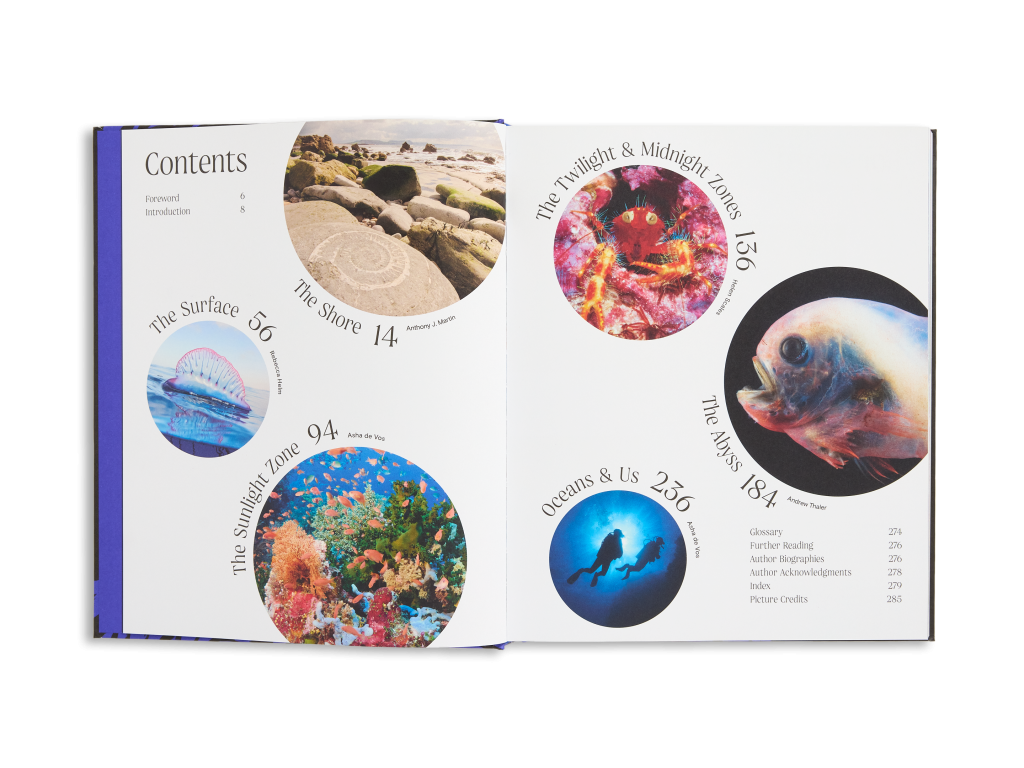
Not surprisingly, I tackled the section on earth’s deepest places: The Abyss. I’ve written a lot about the deep ocean, but one thing I haven’t written about here is Point Nemo. Below is a small section from my chapter, on one of the oddest ways humans exploit the deep sea.


Point Nemo

There is a point in the middle of the Pacific that is further from inhabited land than any other place on the planet. It is so remote and so inaccessible, that it became the target for one of the strangest uses of the deep sea. Its name is Point Nemo and it is a graveyard for starships.

Nemo, Latin for No One, is the alias used by the eponymous captain in Jules Verne’s 20,000 Leagues Under the Sea and Point Nemo is the place in the ocean furthest from any person. At 2700 kilometers from the nearest land, Point Nemo is so remote that when the International Space Station passes overhead, the astronauts onboard are, by a wide margin, the closest humans to the point.

And the International Space Station does pass overhead, several times per day, along with the majority of satellites in orbit. When a large spacecraft, space station, or satellite reaches the end of its operational life, it must be deorbited and surrender its journey to Earth’s gravity well. Small satellites in low-earth orbit will simply burn up from the heat of reentry, but larger objects will come crashing back into the world. To avoid raining debris upon a populated area, the international community of space faring nations aims their spacecraft at Point Nemo.

Point Nemo was identified by the US and the Soviet Union during the zenith of the space race as an acceptable target for deorbiting. Since then, dozens of satellites, several space stations, and multiple other orbital assets, some classified, have made their final descent towards Point Nemo, ensuring that these falling objects would make planetfall far from human habitation.

Point Nemo has become the maritime graveyard of the space age. 263 spacecraft have been disposed of at Point Nemo since 1971. When the International Space Station is finally decommissioned and deorbited in 2031, it too will be laid to rest at Point Nemo.


Ocean: From Shore to Abyss is available in the UK and will be available in the US on January 20, 2026. Pre-order today!

Share this:

  • Share on Bluesky (Opens in new window) Bluesky
  • Share on Facebook (Opens in new window) Facebook
  • Share on Reddit (Opens in new window) Reddit
  • Share on Threads (Opens in new window) Threads
  • Share on WhatsApp (Opens in new window) WhatsApp
  • Share on Mastodon (Opens in new window) Mastodon

Related

Tags: deep-sea mining sharks

Post navigation

❮ Previous Post: Teaching with D&D: My favorite source books for running a great Dungeons & Dragons campaign.
Next Post: I can serve on your graduate thesis committee. Here’s what you can expect of me, and what I expect in return. ❯

You may also like

Cut rock samples from the Rio Grande Rise show Fe-Mn crusts (black and gray) growing on various types of iron-rich substrate rocks (pale to dark brown). Photo credit: Kira Mizell, USGS.
Science
A lost continent, rich in cobalt crusts, could create a challenging precedent for mineral extraction in the high seas.
January 18, 2019
Weekly Salvage
Monday Morning Salvage: February 20, 2017
February 20, 2017
Weekly Salvage
The ongoing wonder of hagfish, deep-sea mining’s race to the bottom, saving whales with lineless lobster traps, and more! Monday Morning Salvage: January 21, 2019
January 21, 2019
Weekly Salvage
I want you to have amazing adventures with underwater robots, protecting the oceans like national parks, songs of a ice and warming, cannibals, and more! Monday Morning Salvage: October 22, 2018.
October 22, 2018

Popular Posts

What Ocean Ramsey does is not shark science or conservation: some brief thoughts on "the Shark Whisperer" documentaryWhat Ocean Ramsey does is not shark science or conservation: some brief thoughts on "the Shark Whisperer" documentaryJuly 2, 2025David Shiffman
Some upcoming public talks on shark science and conservationSome upcoming public talks on shark science and conservationJune 29, 2026David Shiffman
What is a Sand Shark?What is a Sand Shark?November 12, 2017Chuck Bangley
The story of the pride flag made from NASA imagery: Bluesky's most-liked imageThe story of the pride flag made from NASA imagery: Bluesky's most-liked imageSeptember 27, 2024David Shiffman
That's not a blobfish: Deep Sea Social Media is Flooded by AI SlopThat's not a blobfish: Deep Sea Social Media is Flooded by AI SlopDecember 19, 2025Andrew Thaler
Tagging Bull Sharks in the Neuse RiverTagging Bull Sharks in the Neuse RiverAugust 4, 2011Guest Writer
Shark of Darkness: Wrath of Submarine is a fake documentaryShark of Darkness: Wrath of Submarine is a fake documentaryAugust 10, 2014Michelle Jewell
The next OpenCTD is here!The next OpenCTD is here!June 22, 2026Andrew Thaler
Rice’s whale and the curious case of the disappearing species.Rice’s whale and the curious case of the disappearing species.June 25, 2026Southern Fried Science
The Case Against Shark Fin Trade BansThe Case Against Shark Fin Trade BansMay 12, 2017David Shiffman
Subscribe to our RSS Feed for updates whenever new articles are published.

We recommend Feedly for RSS management. It's like Google Reader, except it still exists.

Southern Fried Science

  • Home
  • About SFS
  • Authors
  • Support SFS


If you enjoy Southern Fried Science, consider contributing to our Patreon campaign.

Copyright © 2026 Southern Fried Science.

Theme: Oceanly Premium by ScriptsTown