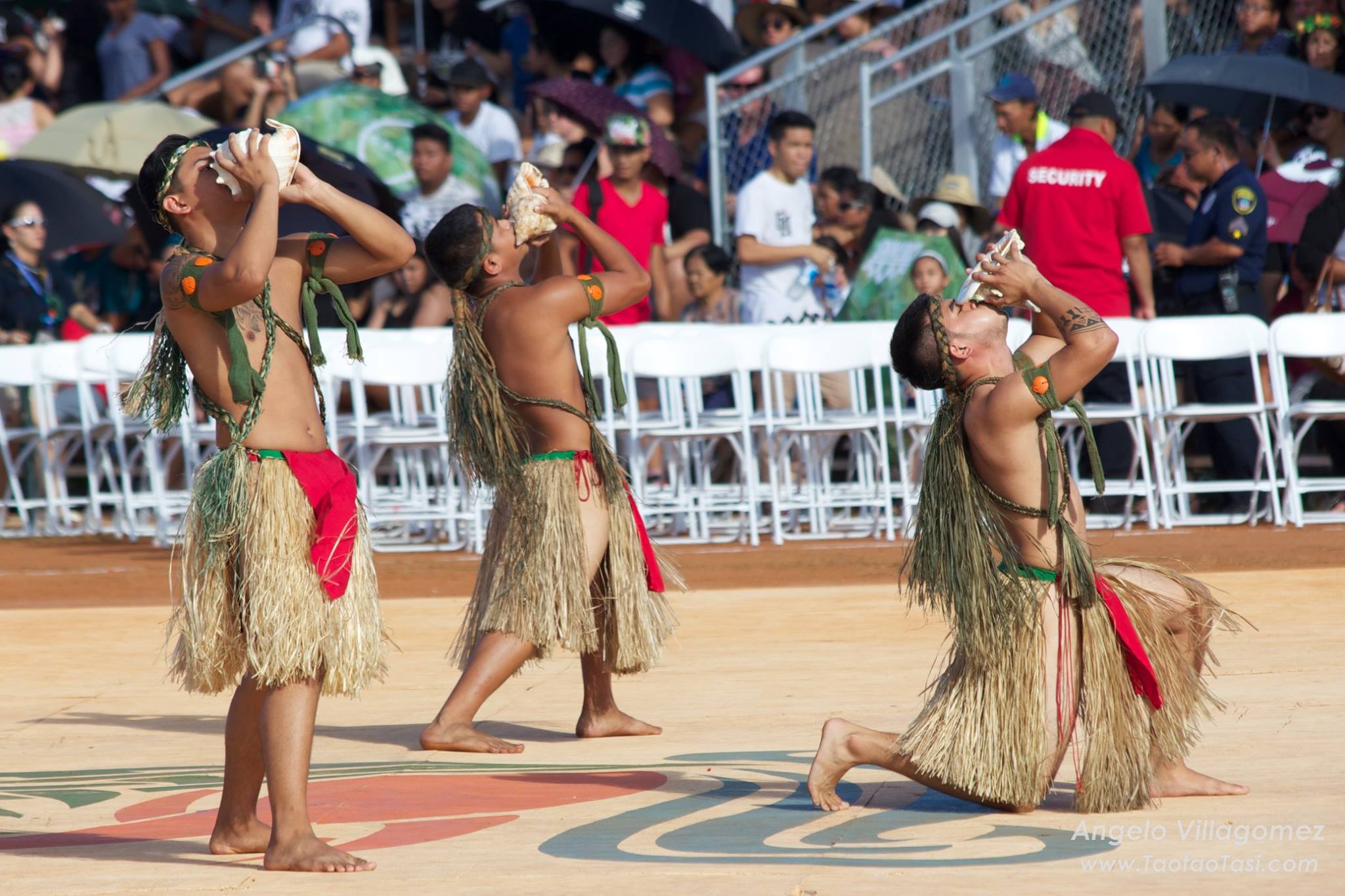
The Trump administration argues that opening America’s seafloor to deep sea mining is essential for strengthening our economy and securing our energy future. But from a Pacific Islander perspective, this rush to extract metals from the ocean – especially near the Mariana Trench and American Samoa – ignores hard-earned lessons and risks repeating past mistakes.
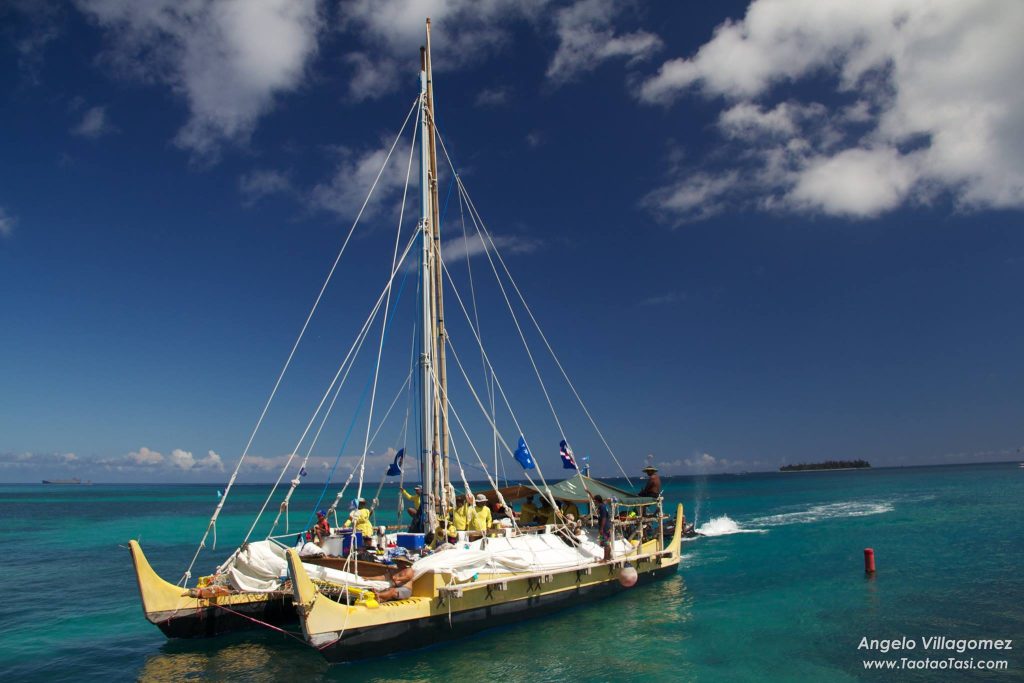
In many Pacific cultures, including my own Chamorro heritage, we navigate our world by “walking backwards into the future.” Pacific voyagers do this as they navigate across vast ocean spaces by reading the stars and waves. Hundreds or even thousands of miles from land, by looking behind the canoe to assess the direction and speed of the wake, they can determine where they’ve been, and this helps them know where they are going. This is an important skill because misreading a current could force a canoe hundreds of miles off course, which can be devastating when trying to find a low atoll that may only be a few miles across. Ignoring the lessons of history can likewise lead us astray.
In our worldview the past appears in front of us because it is visible and full of knowledge, learned in our lifetimes, but also passed down from our ancestors. The future, unseen and unpredictable, is behind us. Navigating the world involves keeping our eyes on the past, while walking backwards into the unknown future. This way of thinking and experiencing leads Pacific Islanders to be very skeptical of the Trump administration’s plans to mine the seafloor.
History is clear: Time and again, when the United States has tested technologies or extracted resources on Indigenous lands, our communities have paid the price while others benefit. The pattern is unmistakable, from uranium mining on Tribal lands that left generations dealing with environmental contamination, severe health impacts, and cultural disruption, to nuclear weapons testing in Johnston Atoll, Marshall Islands, Kiribati, and French Polynesia that rained nuclear fallout onto nearby populated islands. As my colleague Steven Mana‘oakamai Johnson at Cornell wrote in his comment to the Bureau of Ocean Energy Management, “Deep-sea mining represents the latest in a long history of the Pacific being treated as a testing ground for extractive industries and experimental technologies.”
Deep-sea mining is not a proven technology. Scientists warn that disturbing fragile ecosystems miles below the surface could cause irreversible harm to biodiversity and disrupt ocean processes that regulate our climate. Once damaged, these ecosystems may never recover, and certainly not in our lifetimes. We can look in front of us to places like the Peru Basin and Blake Plateau, mined more than half a century ago, which still have not recovered. And while others benefit, it is our communities left with the carnage. There are currently no pathways for the local islands to benefit economically from the leasing of these resources.
This is going to be a defining ocean conservation fight for the next decade, and we are woefully unprepared and underfunded. The area under consideration for destruction in the Pacific is twenty five times larger than the biggest marine sanctuary designated under President Biden – and our communities received no notice that this was happening and were provided only 60 days to comment before this moves forward. The environmental damage—and the cultural loss—could be catastrophic.
Walking backwards into the future means moving intentionally with caution, guided by the wisdom of experience. The Trump proposals for deep-sea mining fail that test. Deep sea mining in American Samoa and the Marianas Islands must stop until a commitment can be made to inclusive, community led decision making, where people in our island communities are able to share the benefits, not just the risks, of these proposals.
The Trump administration’s push for deep sea mining in the US Pacific territories asks us to charge blindly into an uncertain future, ignoring the wake of history. In the Pacific, we know that the best way to act is with great care, guided by what we can see and what we have learned. Walking backwards into the future means honoring the wisdom of our ancestors and the lived experiences of our communities.
Angelo Villagomez is an ocean conservation expert who was raised on an island near the Mariana Trench. He wrote this for InsideSources.com.