Skip to content

Southern Fried Science

Over 15 years of ocean science and conservation online

  • Home
  • About SFS
  • Authors
  • Support SFS

How close did the world’s first deep-sea mining come to the dredging the world’s largest cold-water coral reef?

Posted on March 17, 2026March 18, 2026 By Andrew Thaler
Conservation, Exploration, Featured

The Blake Plateau, off the coast of South Carolina, Georgia, and Florida, is one of the most remarkable ecosystems in the United States. It is home to the world’s largest cold water coral reef, a coral complex larger than the state of Vermont, which may be the single largest contiguous ecosystem in the continental US. It is also the site of the world’s first deep-sea nodule mining experiment.

As a testament to just how vast and unexplored the deep ocean truly is, the Deepsea Ventures Inc. mining test occurred nearly 50 year before the discovery of the Blake Plateau Coral Reef.

The mining test came perilously close to strip mining this unique ecosystem half-a-century before its discovery. Something that I’ve wondered about over the last few years is just how close that near miss was.

Using the few maps provided by NOAA and BOEM, I pinpointed the location of that first test mine.
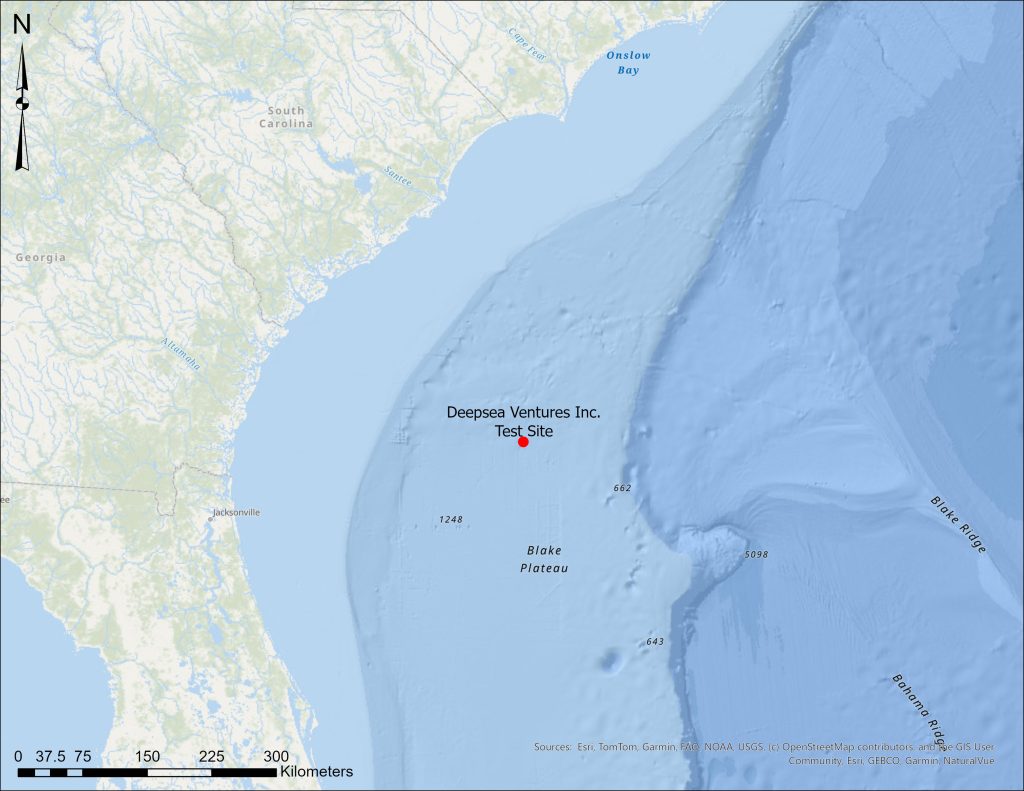
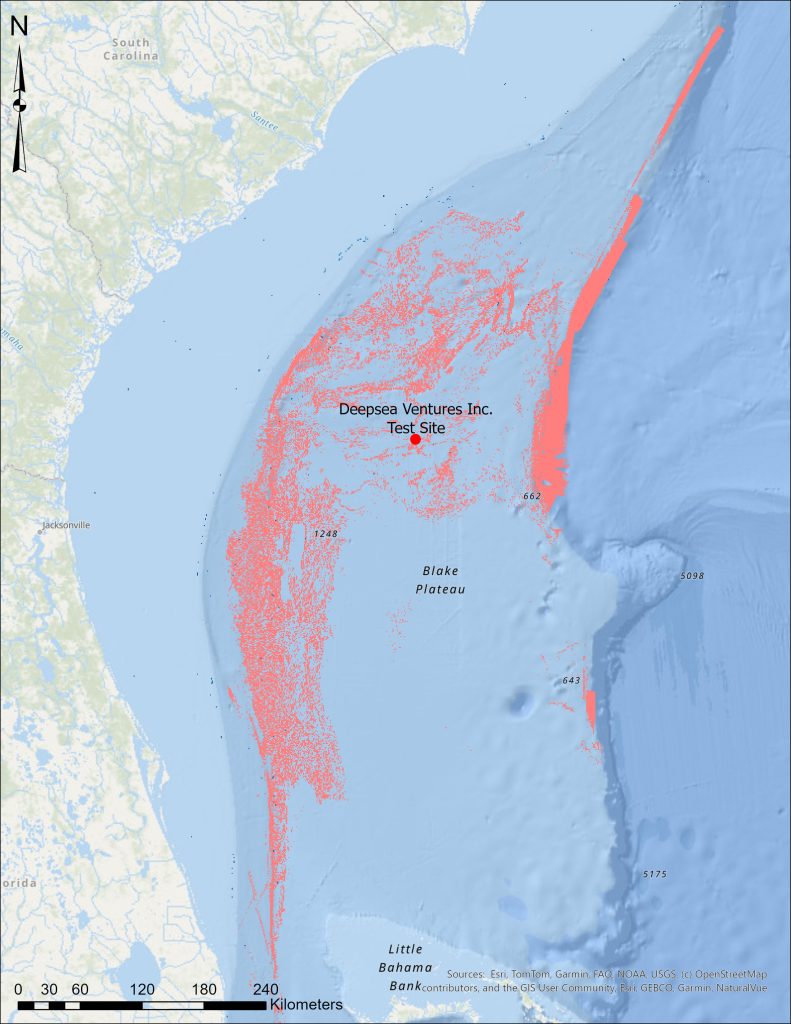
From there, I pulled the data on Atlantic Coral and Hardbottom estimates from the Southeast Conservation Adaptation Strategy Atlas and separated out just the layers for predicted cold-water coral mounds.
Overlaying the bathymetric maps from USGS and aligning it with features on the seafloor shows us exactly where the test occurred and how close it was to these coral mounds.
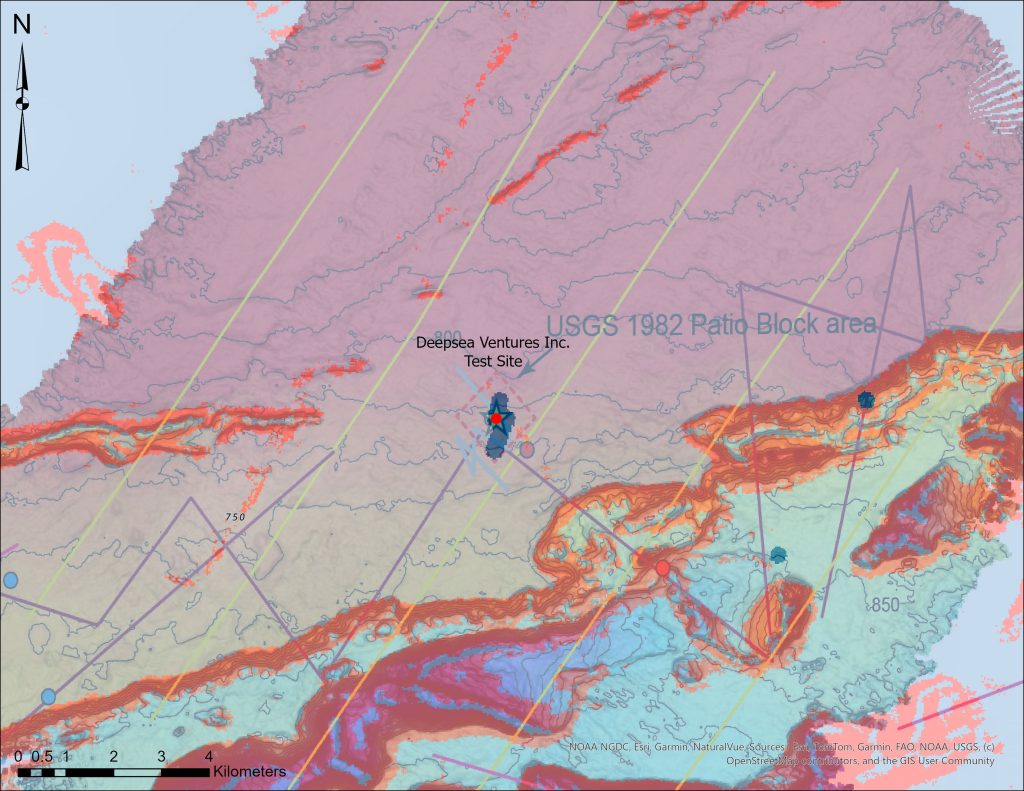
Previously, I’ve played it safe, arguing from broader scale charts that the first experimental deep-sea mining test occurred “within 100 kilometers of the densest portion of the cold-water coral reef and falling just south of the upper span of the designated Habitat Area of Particular Concern”. The reality is far more stark.

Those first mining tests came within less than two kilometers of coral reefs on the Blake Plateau.


Southern Fried Science is free and ad-free. Southern Fried Science and the OpenCTD project are supported by funding from our Patreon Subscribers. If you value these resources, please consider contributing a few dollars to help keep the servers running and the coffee flowing. We have stickers.

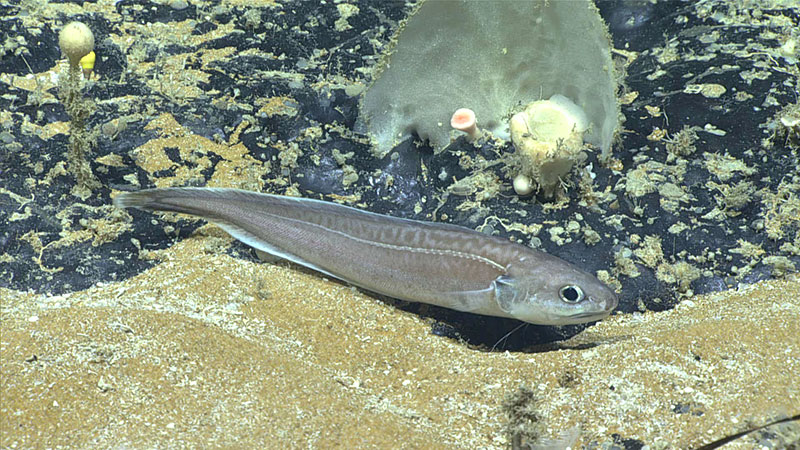
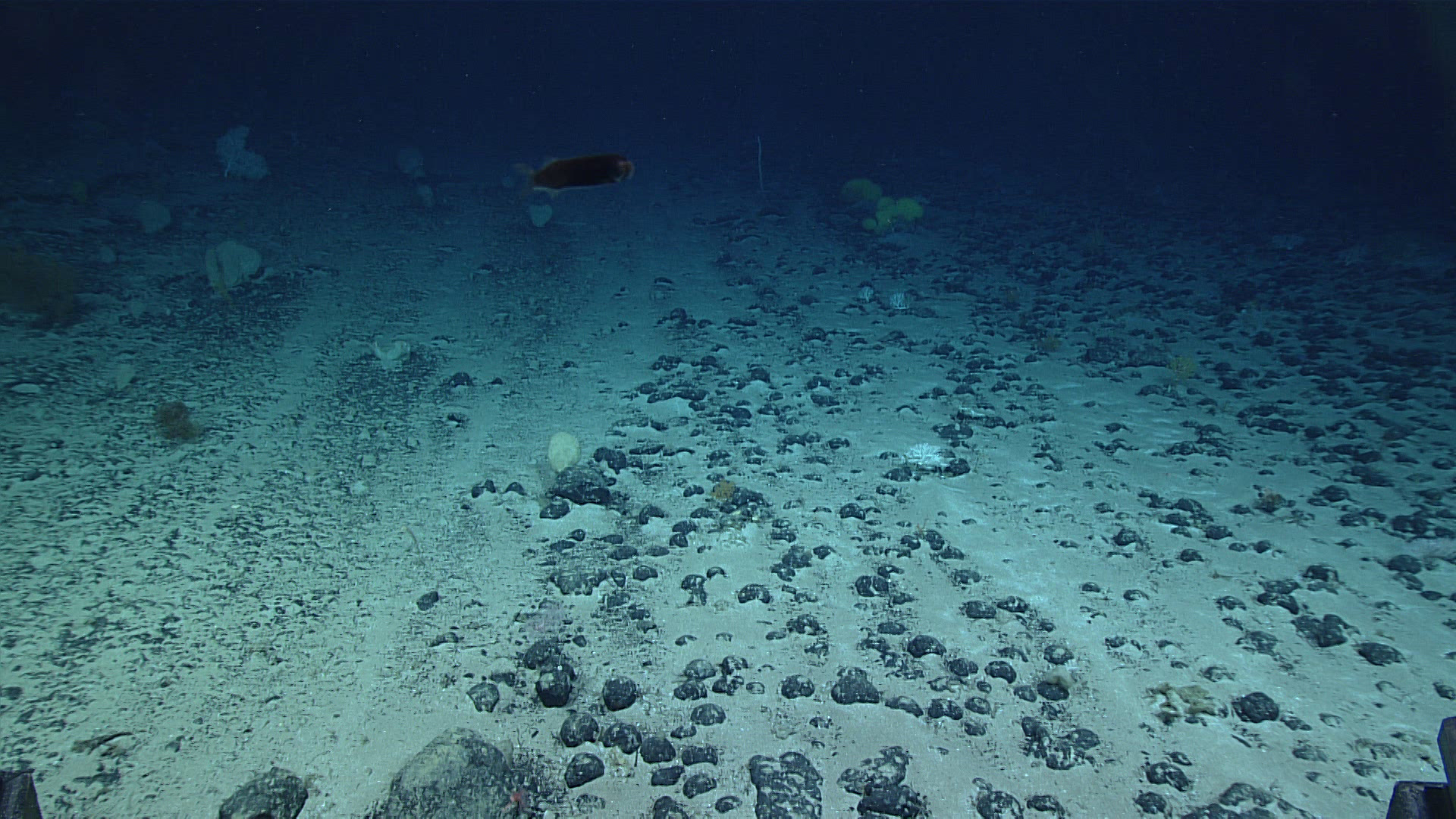
Featured Image: A cusk eel swims along the seafloor in the area of the Deep Sea Ventures site during Dive 07 of the 2019 Southeastern U.S. Deep-sea Exploration. Image courtesy of the NOAA Office of Ocean Exploration and Research, 2019 Southeastern U.S. Deep-sea Exploration.
Share this:

  • Share on Bluesky (Opens in new window) Bluesky
  • Share on Facebook (Opens in new window) Facebook
  • Share on Reddit (Opens in new window) Reddit
  • Share on Threads (Opens in new window) Threads
  • Share on WhatsApp (Opens in new window) WhatsApp
  • Share on Mastodon (Opens in new window) Mastodon

Related

Tags: Blake Plateau deep-sea mining

Post navigation

❮ Previous Post: Tales from the Limitless Abyss: House Cats and Hydrothermal Vents
Next Post: Join Me at Upwell: A Wave of Ocean Justice — Our Fourth Year! ❯

You may also like

Science
No, the deep-sea mining debate is not “gone”
April 20, 2023
Blogging
Deep-sea mining, marine protected areas, and the eternal struggle to open doors: This Week in Andrew (and Angelo) Doing Podcasts
May 7, 2025
Uncategorized
Japan becomes the first nation to mine a deep-sea hydrothermal vent
September 27, 2017
Weekly Salvage
Deep-sea mining, octopus cities, a world without ozone, and more! Monday Morning Salvage: October 2, 2017
October 2, 2017

Popular Posts

Fun facts and FAQs about Megalodon, Maryland's new (and definitely extinct) official state sharkFun facts and FAQs about Megalodon, Maryland's new (and definitely extinct) official state sharkApril 15, 2026David Shiffman
What Ocean Ramsey does is not shark science or conservation: some brief thoughts on "the Shark Whisperer" documentaryWhat Ocean Ramsey does is not shark science or conservation: some brief thoughts on "the Shark Whisperer" documentaryJuly 2, 2025David Shiffman
Shark of Darkness: Wrath of Submarine is a fake documentaryShark of Darkness: Wrath of Submarine is a fake documentaryAugust 10, 2014Michelle Jewell
I'm coming to Sharks International! Let's chat!I'm coming to Sharks International! Let's chat!April 16, 2026David Shiffman
That's not a blobfish: Deep Sea Social Media is Flooded by AI SlopThat's not a blobfish: Deep Sea Social Media is Flooded by AI SlopDecember 19, 2025Andrew Thaler
Here's what I teach my students about finding jobs in marine biology and conservationHere's what I teach my students about finding jobs in marine biology and conservationApril 10, 2024David Shiffman
How to tell if a "shark in flooded city streets after a storm" photo is a fake in 5 easy stepsHow to tell if a "shark in flooded city streets after a storm" photo is a fake in 5 easy stepsJanuary 23, 2013David Shiffman
Ocean scientists need to learn a lesson from NASAOcean scientists need to learn a lesson from NASAApril 14, 2026Chris Parsons
The Sex Lives of Spoonworms: 10 marine animals with parasitic, dwarf, and otherwise reduced malesMay 31, 2013Andrew Thaler
What can the funniest shark memes on the internetz teach us about ocean science and conservation?What can the funniest shark memes on the internetz teach us about ocean science and conservation?November 8, 2013David Shiffman
Subscribe to our RSS Feed for updates whenever new articles are published.

We recommend Feedly for RSS management. It's like Google Reader, except it still exists.

Southern Fried Science

  • Home
  • About SFS
  • Authors
  • Support SFS


If you enjoy Southern Fried Science, consider contributing to our Patreon campaign.

Copyright © 2026 Southern Fried Science.

Theme: Oceanly Premium by ScriptsTown