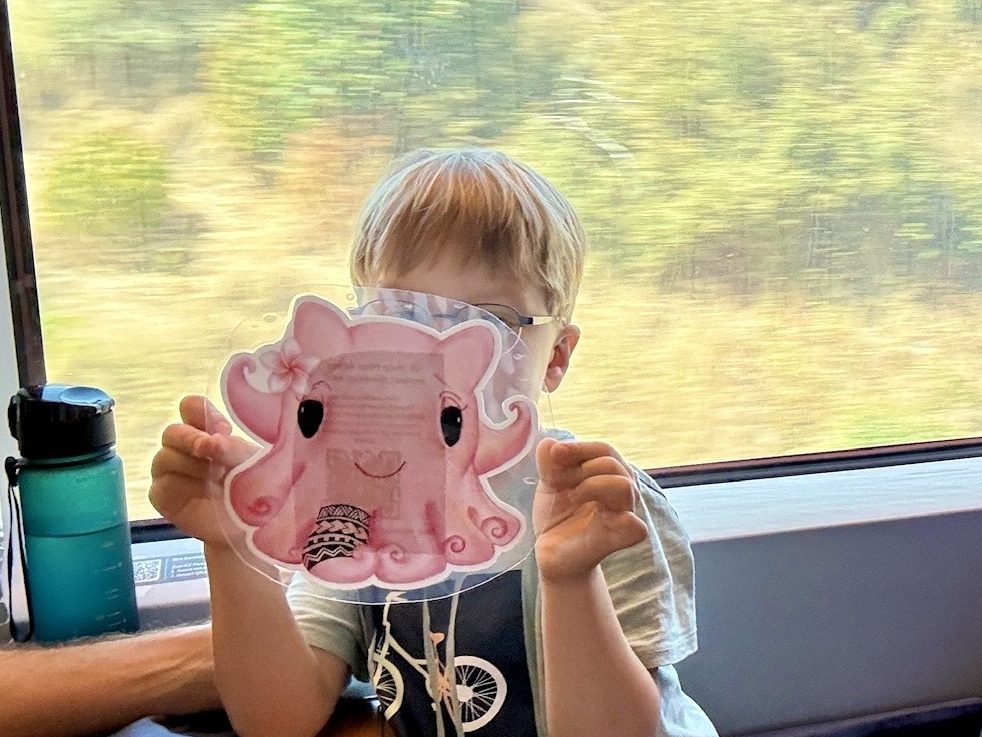
A small, friendly Dumbo Octopus named Miss Abyss is currently traveling across the United States, and she needs your help. Miss Abyss carries a message of urgent importance for the future of our oceans. As she makes her journey, she is gathering allies from every corner of the country to oppose the looming threat of deep-sea mining in the waters of American Samoa and the Northern Mariana Islands.
Miss Abyss is building a gallery of support to prove that our public waters belong to the people, not corporations looking to strip-mine our future. We invite you to join this nationwide movement. By participating in the “Miss Abyss Deep Sea Defense Tour,” you can help shine a light on the darkness of the deep sea. Download the cutout, take a photo of her in an iconic place that represents your home, and share it online with #MissAbyss
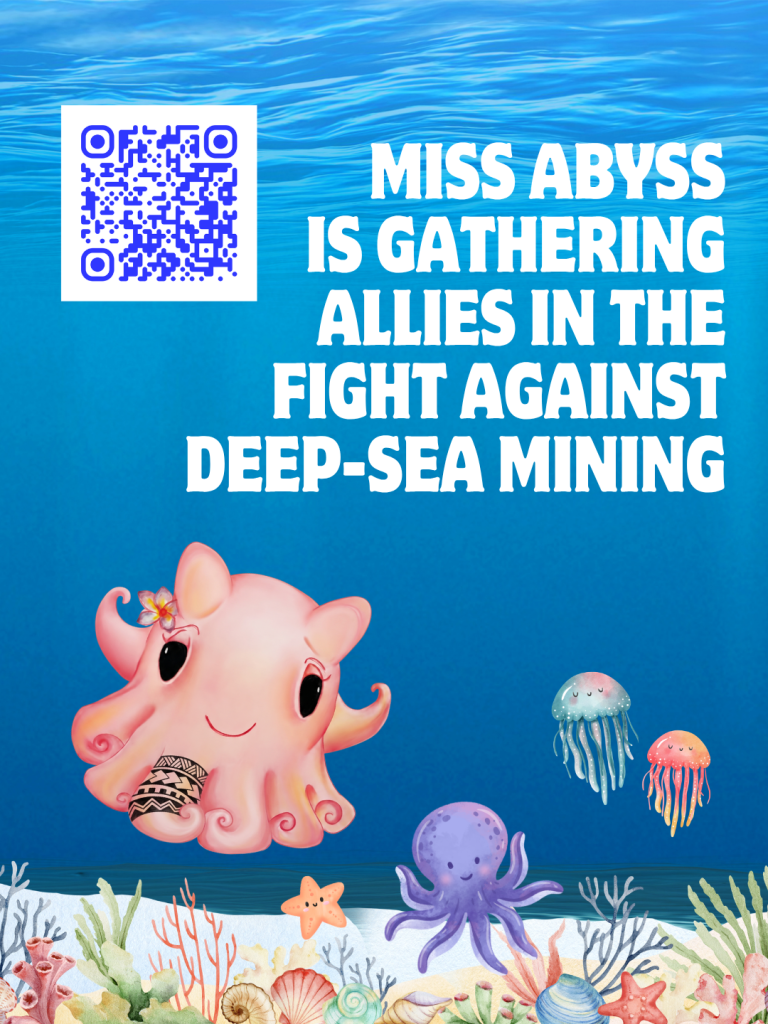
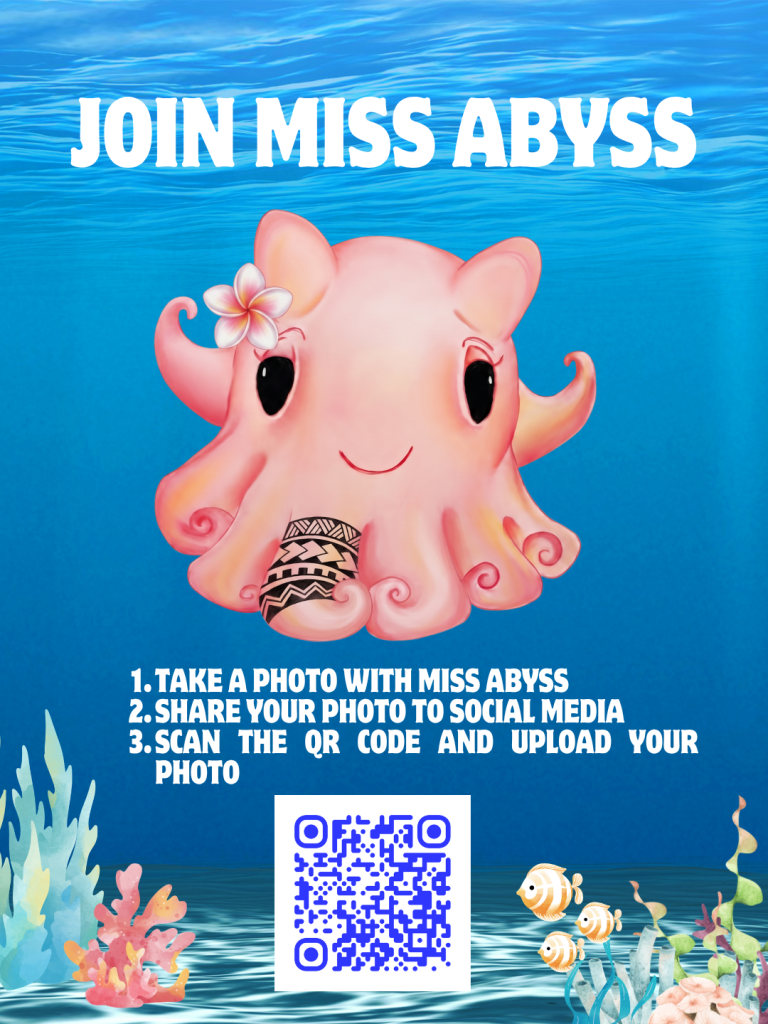
How to show your support for Miss Abyss:
- Print and cut out Miss Abyss: [Download here]
- Take a photo or video: Capture a picture or video of yourself, your friends, or your community holding the cutout in a place that represents your state or home. We encourage you to highlight your personality and local culture!
- Share online: Post your content on your social networks (Facebook, Bluesky, Instagram). Tag your post with #MissAbyss and send a collaboration request to @MissAbyssOctopus if you’re posting on Instagram.
- Spread the word: Encourage your followers to join the movement.
- Submit your story: Once you’ve posted your content, please submit your photo through our online form.
- Stay Informed: Sign petitions and support local efforts like those led by the Friends of the Mariana Trench, Micronesia Climate Change Alliance, Finafinau, Right to Democracy, and the America the Beautiful for All Coalition.
Miss Abyss represents a growing movement that refuses to let corporate interests destroy some of the most fragile and culturally significant ecosystems on Earth. The proposed mining operations, pushed by the current Trump administration over the protests of the Indigneous peoples of these islands, represent a reckless gamble with our planet’s future. Deep-sea mining threatens to disturb the seabed, releasing toxic sediment plumes that can travel for miles, potentially devastating the unique “oases of life” that NOAA has documented in the Mariana Islands. Hydrothermal vents and cobalt-rich seamounts are not just hotspots for endemic species; they are essential nurseries for commercial fisheries and home to species we are only beginning to understand.
Beyond the clear environmental risks, this initiative is a direct affront to Indigenous sovereignty. For the Chamorro and Refaluwasch people of the Marianas, and the communities of American Samoa, the ocean is the heart of their identity, navigation traditions, and spirituality. Unilaterally opening these waters to extraction echoes historical colonialism, treating the Pacific as a frontier for exploitation rather than a home. Furthermore, the economic justifications provided are flimsy at best. In the Marianas, the proposed areas contain no nodule fields of significant commercial value; mining appears to be a mere pretext for testing prototype equipment for future operations elsewhere, leaving local communities to shoulder 100% of the environmental and social burden.
I so TOTALLY AGREE with your assessment, and to me it is only common sense…If they want to mine, then go to our space, plenty there, and not much to life as we know it to destroy…Many Thanks Dr. Thaler…I am with you %100…All The Best …Jhil