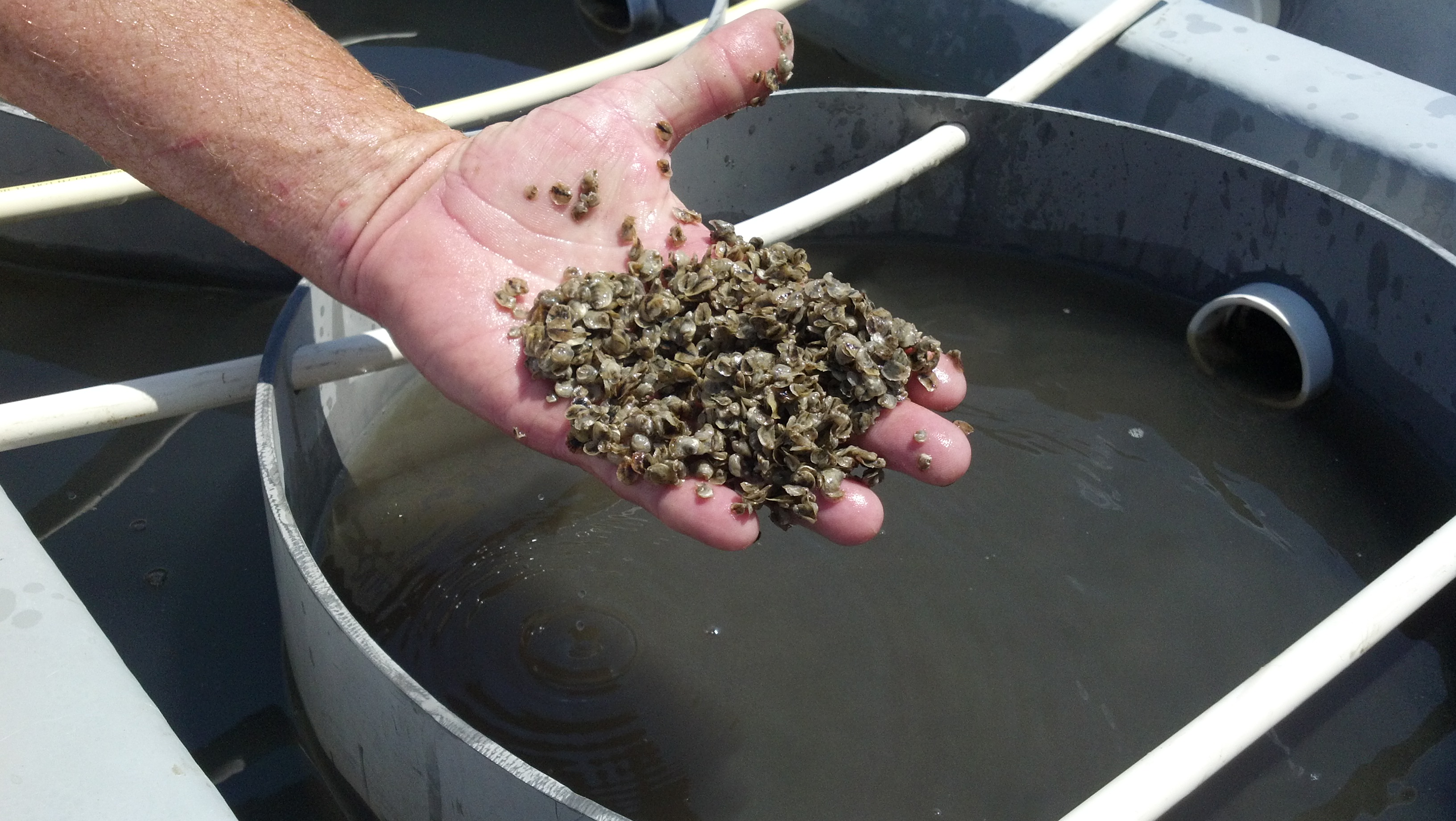
 Jimmy Morris is the only hatchery in North Carolina, serving aquaculture operations all along the East Coast and the state’s oyster restoration program. The process would he easy, he says, except that crops of larvae die periodically – for a variety of unknown reasons. Figuring out how to cater to the sensitivities of these shelly babies is a skill few-and-far between in the world of aquaculture and that makes his operation one of the most important businesses in both the region and the industry.
Last fall Hurricane Irene made landfall in the nearby town of Harker’s Island, sending storm surge through the town of Sealevel that took out a sizeable fraction of the houses there. The waterfront hatchery didn’t fair that well either – the building remained, but all of the raceways holding oysters and clams were destroyed. Millpoint Aquaculture is bouncing back and anticipating future hurricanes and sea level rise by lifting the raceways about 6 feet off the ground on a large deck. As of now, he’s not even to half the capacity that he was pre-Irene, but the operation is again producing a variety of oyster and clam types for growers in New Jersey, Virginia, and locally in North Carolina.
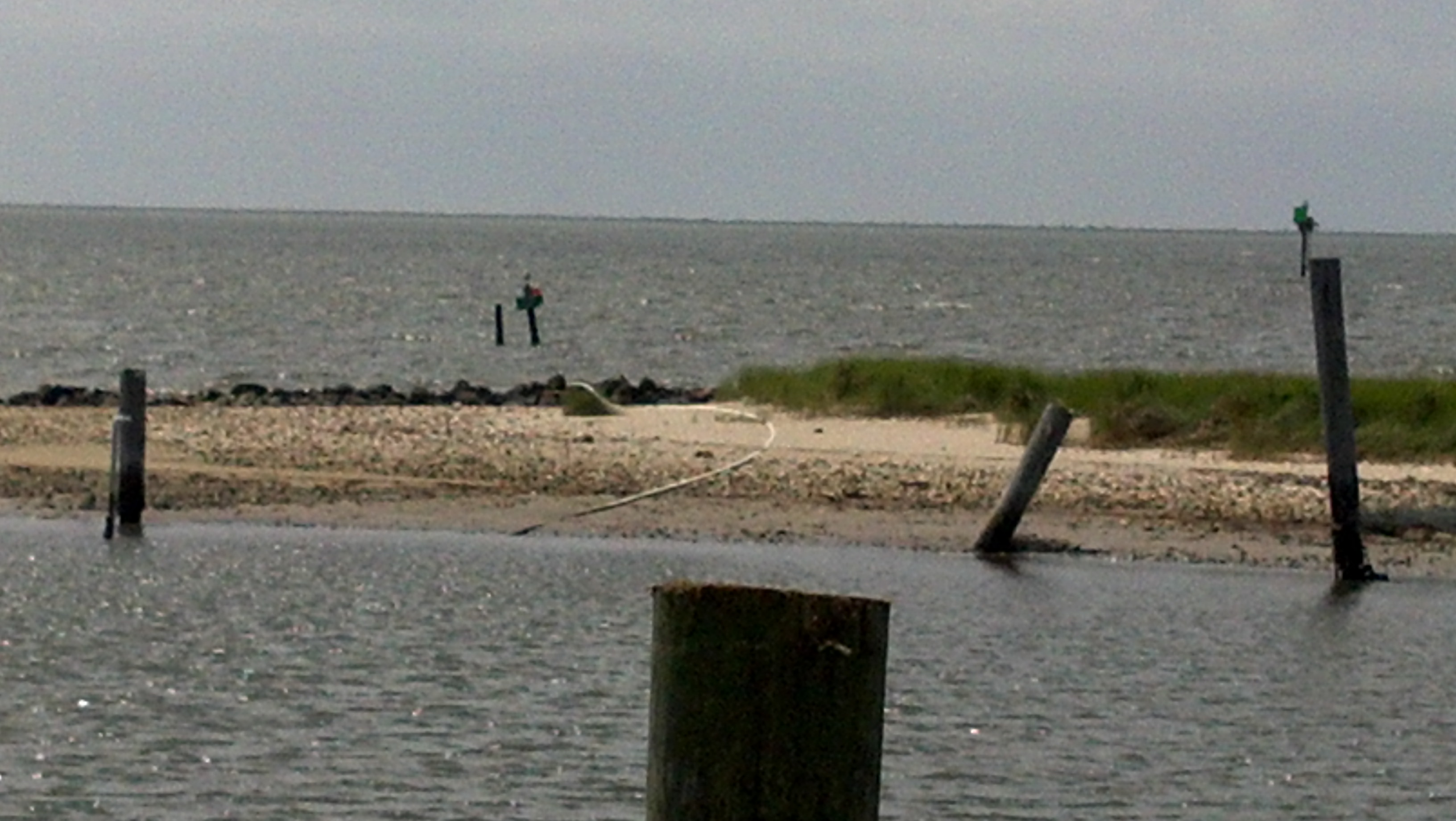
Despite a seaside location, water quality remains a primary concern, so Morris has plumbed an extensive flow-through system pulling water from as far out in the flowing sea as possible, attempting to avoid runoff from land. He’s also recently installed a large charcoal filter, recharged with each new spawning. Still, during times of algae blooms and heavy rains, the larvae have trouble.
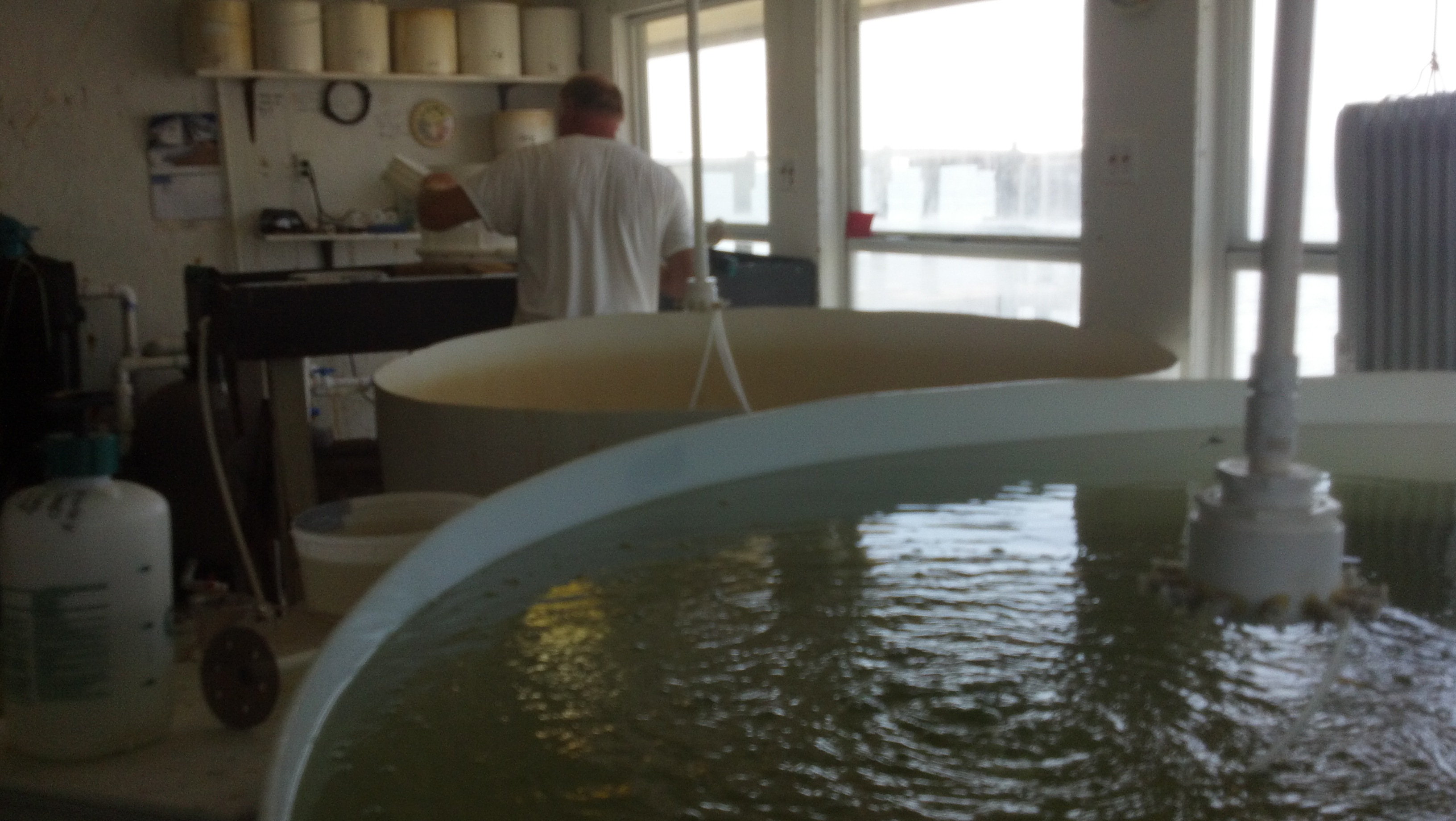
Morris grows oysters up to 4mm in length before shipping them to growers, who will place them on their lease. Today, he’s got a small tank of millions of larvae putting out a crystal that looks like slime on top of the water. That means these little specks are ready to be moved to one of the larger tanks seen in the picture for further growth. He doesn’t know if they’ll survive, but hopes so. The last two batches of clams didn’t, taking 6 weeks of staff time with them, but oysters are hardier. Morris used to grow up to 40 million oysters a year for North Carolina’s oyster restoration program, but the lack of continued funding for the program means no more starting spat is needed. Over the years, shifting demand and growing conditions has pushed Morris between an emphasis on clams, oysters, and bay scallops. Oysters seem the most promising these days.
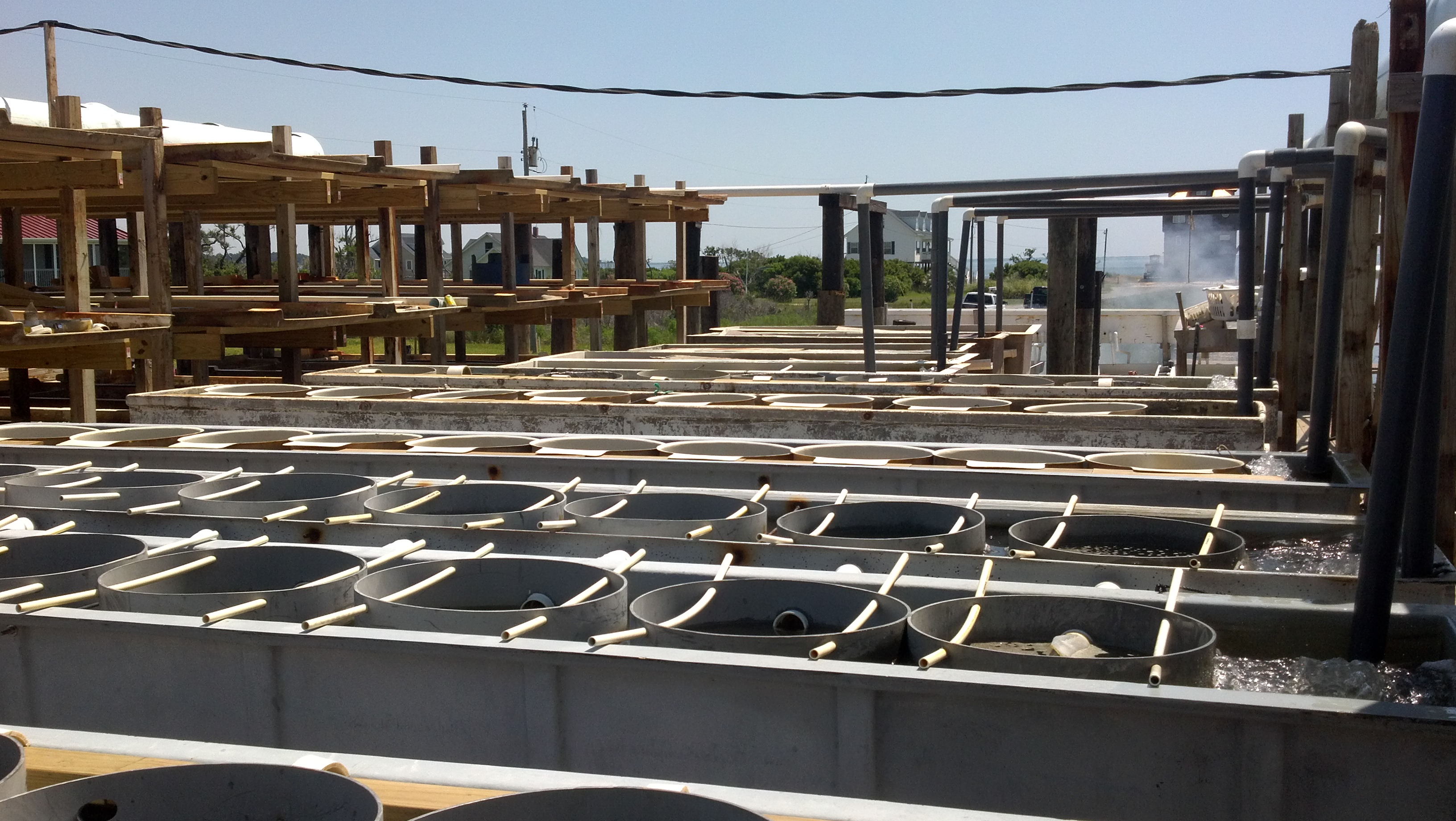
Once the oysters grow, they are moved outside to raceways, which is what you see in the photo above and the photo at the very beginning of the article. The oysters in that first picture are ready to be shipped out to a grower, who will place them in baskets to grow to market size. If they’re triploid, this will take 12-18 months. If not, it will take about 3 years. In this picture you can also see, off to the left, the new construction where future oysters and clams will be grown. These tanks must be washed out every day to remove algae that comes in through the filtered seawater system – a task that takes two and a half hours.
Most of the mariculture operations featured in this series, in the past and future, mentioned Jimmy Morris as a source of really good information on both the habitat and community of eastern North Carolina, but also on the ins and outs of the aquaculture industry. He is widely regarded as an innovator and forward-thinking entrepreneur critical to the development of a stable mariculture industry in the region.
“Jimmy Morris is the only hatchery in North Carolina”
Did the oyster hatchery at Carteret Community College shut down? It was an auxillary facility supposed to be replaced by a facility at the PKS branch of the NC aquarium, but I don’t know if that ever got built. Both were/were intended to support the state oyster programs.
From what I understand, the guy who ran the one other hatchery moved back to Oregon. The state’s no longer contracting for oyster spat until they receive more funding, so this semester the students at the community college are doing other things. They still have the capability, but no one’s working on it (to my knowledge and for now).
I’d be interested to know why such an important facility is operated out in the open weather, and why it is not running a RAS system to get better control. Simply filtering sea water isn’t controlling temperature or salinity, and the early-growth tanks appear to be completely unprotected. No wonder they are experiencing “unexplained” mortality…
Perhaps I wasn’t clear as to what’s inside and what’s out – only the clams and oysters nearly ready for shipping live outside; these are healthy. The sensitive larvae are housed inside, where the filtered water is brought to the indoor temperature. Since he’s pulling straight seawater, it’s a consistent 35 ppt salinity. That’s part of why he ran the intake line out that far. Every couple of weeks, each 450 gallon tank gets a scrub-down and brand new water between batches of hatchlings, this is where the difference in water quality and survival comes in.
In this article I read “These tanks must be washed out every day to remove algae that comes in through the filtered seawater system – a task that takes two and a half hours.” Is it posible to use an algacide or a paint containing an algacide?
CW