Skip to content

Southern Fried Science

Over 15 years of ocean science and conservation online

  • Home
  • About SFS
  • Authors
  • Support SFS

Author: Bluegrass Blue Crab

Does Knowledge Equal Power?

Posted on May 10, 2011May 10, 2011 By Bluegrass Blue Crab
Uncategorized

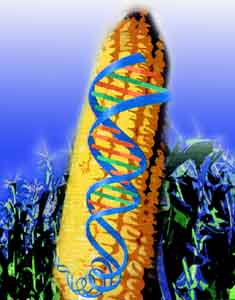
knowledge of plants has mean money, if not power, www.mindfully.org

Foucault saw the concepts of knowledge and power as one entity, which he called “pouvoir-savoir”, based on the philosophy that knowledge and power are co-evolved. There are a number of examples where Foucault’s assertion seem to be correct. In France, a group of patients with muscular dystrophy coordinated and collected vast amounts of collective data on the rare disease by detailed recordkeeping by family members. They even held their own conferences and shared information, eventually bringing in a couple of doctors to do standard medical analysis on their data. Armed with knowledge of the disease, they were able to confront the medical establishment, which had previously ignored their cases because so little was known about the disease and the doctors did not want to look ignorant. Public attention brought by these events also brought funding to an otherwise unprofitable treatment regiment (Rabeharisoa and Callon in Jasanoff 2004). In other parts of the world, knowledge of medicinal plants and other helpful plant genotypes has been linked to indigenous rights movement through intellectual property (Whatmore 2002). Plant germplasms have become a way for communities to connect to international groups supporting biodiversity, which in turn helps secure indigenous rights over both intellectual and land properties.
Read More “Does Knowledge Equal Power?” »

Biodiversity Wednesday: Yellowstone Geysers

Posted on May 4, 2011May 4, 2011 By Bluegrass Blue Crab
Science
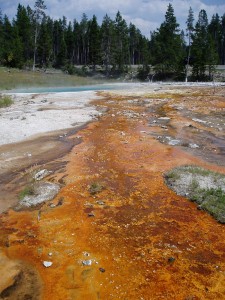
www.princeton.edu

Yellowstone National Park was established to preserve the American West, largely held up as the iconic American landscape. Picturesque Yellowstone houses the hopes and dreams of the frontier, the wilderness that is a large part of American heritage, and the final refuge for North American wildlife. Despite such a colorful and large part of American history, Yellowstone should perhaps be famous not for its astounding trees and bouncing elk, but instead for the ecosystems that depend on Yellowstone’s geysers. They are the unsung heroes of modern biotechnology and place Yellowstone’s wilderness leaps and bounds above other temperate forests in terms of biodiversity.

Read More “Biodiversity Wednesday: Yellowstone Geysers” »

Why Listen to the Local Guy?

Posted on May 3, 2011May 3, 2011 By Bluegrass Blue Crab 2 Comments on Why Listen to the Local Guy?
Uncategorized

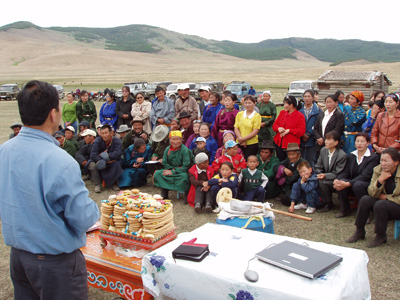
policymaking during comanagement in Mongolia, rcinet.ca

Two of Ostrom’s (1990) institutional design principles emphasize the role of the local –rules must be adapted to local conditions and resource users must participate in the rulemaking process. These principles were determined empirically through cross-site analysis, but a large body of research from science studies supports these finding theoretically as well. The most clear example of including the community in management is through comanagement, which works at the collective level to shift how and where rules are made (Jentoft, McCay et al. 1998). The comanagement process also highlights the importance of different types of knowledge to the policy process by providing a more complete base of information on which to make decisions.

The supporting theory reaches back to early studies in game theory that determined the fairness of a rule was one of the critical factors in determining if cooperation would emerge (Axelrod 1984). Fairness does not necessarily mean that every citizen benefits equally, but instead that people are punished according to their transgressions and benefit according to their contributions. However, the perception of fairness matters more than actual fairness when people evaluate a policy. That perception depends on transparency of the policymaking process. Gusterson goes so far as to say “instead of seeking a definitive technical judgment, then, we should ask about the processes by which judgments come to be considered definitive and their authors authoritative” (Nader 1996). People are more likely to consider a policy fair if they consider the process fair. One way, arguably the best way, to make the process transparent and therefore fair is to involve citizens in that process.

Read More “Why Listen to the Local Guy?” »

Comment of the Week

Posted on April 25, 2011April 25, 2011 By Bluegrass Blue Crab 5 Comments on Comment of the Week
Uncategorized

This week’s comment of the week is in response to last week’s open thread.  Mark Gibson gave a thoughtful response to the challenges of high seas governance, ending with the following strategy: End fishing subsidies at the WTO. Fishing subsidies have greatly distorted the world’s fishing capacity. By one study, the global fishing fleet needs … Read More “Comment of the Week” »

What is it about food?

Posted on April 21, 2011April 21, 2011 By Bluegrass Blue Crab 2 Comments on What is it about food?
Uncategorized

The squishiness of the term sustainability also offers people pick of what they choose to think about and what kinds of changes they want to make in their lives. I return this week from a week of thinking about spaces of sustainability during the American Assocation of Geographers conference, where the series of sessions entitled “food alterity” was standing room only. One of the speakers started off her talk with the question “why are we all so obsessed with food, what it is about food that gets people excited where we really should be excited about energy”. She went on to give a fascinating talk about who gets to write the grower’s manual for organic strawberries (literally, it’s apparently a power struggle over legitimate knowledge). But her first question really stuck with me.

Read More “What is it about food?” »

Resource Dependent Communities in a Globalizing World

Posted on April 19, 2011April 8, 2011 By Bluegrass Blue Crab
Uncategorized

perhaps the most notorious New York City bankers, Bernie Madeoff, thewrap.com

All people are still dependent on natural resources, but centuries of development complete with urbanization and globalization have removed a large proportion of the world’s population from the production of those natural resources both physically and psychologically. Take, for example, a New York City investment banker. He gets up in the morning, puts on his suit, grabs his coffee and bagel to go, and takes the subway to work where he will trade shares of largely transnational companies. However, each step of his day is connected to and supported by a network of natural resource-based communities: one in India that grew and spun his suit, one in Columbia that grew his coffee, one in North Dakota that grew the wheat for his bagel, and countless others that produce the raw materials for the company he trades. This process of separation means that natural resource dependent communities face both forces of marginalization and empowerment.

Read More “Resource Dependent Communities in a Globalizing World” »

Sustainability in Rural Areas

Posted on April 14, 2011April 14, 2011 By Bluegrass Blue Crab 2 Comments on Sustainability in Rural Areas
Uncategorized

Being a “green” person nowadays means that you compost, ride your bike everywhere, eat organic and local, drink tap water, and try to consume less. Visions of this person generally conjure the image of the urbanite, however, sometimes spilling into other aspects of life such as an activist job and vegan diet. Never do we think of the poor rural citizen either as the target of “greening” or as someone who might already be green.

Read More “Sustainability in Rural Areas” »

Biodiversity Wednesday: Emerging Habitats

Posted on April 13, 2011April 13, 2011 By Bluegrass Blue Crab
Uncategorized

A growing number of scholars now say that we live in an era known as the Anthropocene. Yes, this means that something fundamental about how the earth and its ecosystems function has shifted because of human activities. A quick history of the term shows that admitting to this shift also means admitting to the blame that humans arguably deserve. However, step away from that finger-pointing blame stance for a minute. If humans have fundamentally changed the earth’s geology, doesn’t that mean we’re looking at all sorts of new habitats and opportunities for evolution to create new critters? Yes, yes it does.

Read More “Biodiversity Wednesday: Emerging Habitats” »

Assumptions on Human Behavior

Posted on April 12, 2011April 12, 2011 By Bluegrass Blue Crab
Uncategorized

Sustainability is as much about personal decisions as it is about broad social movements or top-down government rules. Those personal decisions are rooted deeply in how we behave as human beings, and that is something that science is far from understanding.

Adam Smith once said “we are not ready to suspect any person of being defective in selfishness (Smith 1804). In many neoclassical economics studies, humans are assumed to act rationally – that is, they act in their own self-interest (known as rational choice theory. Self-interest is generally calculated by financial gain, but more progressive economists will include other factors in the formation of their utility curves such as time resources. The idea spreads beyond economics, however, into other disciplines such as evolutionary biology. For example, Richard Dawkins has argued for the “selfish gene”(2006) attributing all animal behavior to propagation of their genes. He goes so far as to say that any observed “altruism” is actually benefitting individuals with shared genes, so is still essentially selfish behavior.


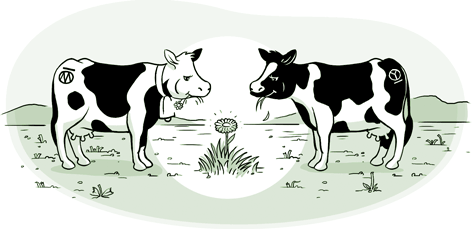
Hardin's original example: cows sharing a field, cred.columbia.edu

Perhaps the most cited example of the rational actor is Garrett Hardin’s “Tragedy of the Commons” (1968). Hardin describes the scenario of a common field in which people have the opportunity to graze their cows. Each person adding an additional cow degrades the field a little more, but the costs are split among all users while the benefits go solely to the owner of the cow. According to the rational choice model of human behavior, people then have the incentive to add more and more cows until the field is no longer useable. He concludes his analysis by implying only two solutions – privatization or strong central governmental control.

Read More “Assumptions on Human Behavior” »

An Alaskan Lesson

Posted on April 6, 2011April 6, 2011 By Bluegrass Blue Crab 4 Comments on An Alaskan Lesson
Uncategorized

The pig to clean the pipeline, http://www.fotopedia.com/items/flickr-3906190629

Every time I see the slogan “drill baby drill” appear as a response to recent rises in gas prices, I think back to the short time I lived in Alaska. Spanning the summer of 2007, my short adventure in Fairbanks left me with much to think about. One of the most surprising was the lessons learned from $5.30 gas prices – in a state that pays its residents dividends from its large oil production.

Long story short, Alaskan oil isn’t the cleanest – in fact, refineries in the U.S. don’t touch the stuff. Alaskan oil is thick and heavy, to the point where the pipeline has a special cleaning tool known as a pig to keep the oil flowing. Most of the oil is then shipped to relatively nearby markets in Japan and Korea, while oil in Alaska itself is either put through a more rigorous processing or shipped from elsewhere in the world.

Read More “An Alaskan Lesson” »

Posts pagination

Previous 1 … 7 8 9 … 24 Next

Popular Posts

Playing God - How the ESA "God Squad" just voted for the extinction of a uniquely American whalePlaying God - How the ESA "God Squad" just voted for the extinction of a uniquely American whaleApril 9, 2026Southern Fried Science
The story of the pride flag made from NASA imagery: Bluesky's most-liked imageThe story of the pride flag made from NASA imagery: Bluesky's most-liked imageSeptember 27, 2024David Shiffman
Here's how to join my IMCC8 symposium, "Ocean Science Communication: What's New and What's Next?"Here's how to join my IMCC8 symposium, "Ocean Science Communication: What's New and What's Next?"April 22, 2026David Shiffman
What Ocean Ramsey does is not shark science or conservation: some brief thoughts on "the Shark Whisperer" documentaryWhat Ocean Ramsey does is not shark science or conservation: some brief thoughts on "the Shark Whisperer" documentaryJuly 2, 2025David Shiffman
Our favorite sea monsters – Ningen (#4)Our favorite sea monsters – Ningen (#4)September 7, 2010Andrew Thaler
Join Me at Upwell: A Wave of Ocean Justice — Our Fourth Year!Join Me at Upwell: A Wave of Ocean Justice — Our Fourth Year!March 24, 2026Angelo Villagomez
On the clarity of animals: the art and science of clearing and stainingOn the clarity of animals: the art and science of clearing and stainingDecember 17, 2013Guest Writer
Shark of Darkness: Wrath of Submarine is a fake documentaryShark of Darkness: Wrath of Submarine is a fake documentaryAugust 10, 2014Michelle Jewell
What can the funniest shark memes on the internetz teach us about ocean science and conservation?What can the funniest shark memes on the internetz teach us about ocean science and conservation?November 8, 2013David Shiffman
That's not a blobfish: Deep Sea Social Media is Flooded by AI SlopThat's not a blobfish: Deep Sea Social Media is Flooded by AI SlopDecember 19, 2025Andrew Thaler
Subscribe to our RSS Feed for updates whenever new articles are published.

We recommend Feedly for RSS management. It's like Google Reader, except it still exists.

Southern Fried Science

  • Home
  • About SFS
  • Authors
  • Support SFS


If you enjoy Southern Fried Science, consider contributing to our Patreon campaign.

Copyright © 2026 Southern Fried Science.

Theme: Oceanly Premium by ScriptsTown