Skip to content

Southern Fried Science

Over 15 years of ocean science and conservation online

  • Home
  • About SFS
  • Authors
  • Support SFS

Author: Chris Parsons

Dr. Chris Parsons has been involved in whale and dolphin research for over two decades and has been involved in projects on every continent. Dr. Parsons is an Associate Professor at George Mason University as well as the undergraduate coordinator for their environmental science program. He’s a member of the scientific committee of the International Whaling Commission (IWC), has been involved in organizing four of the International Marine Conservation Congresses (IMCC) (the world’s largest academic marine conservation conference) and two of the International Congresses for Conservation Biology. He was a Governor of the Society for Conservation Biology (SCB) for nearly a decade and also served two terms as the president of the SCB Marine Section. and he's currently on the Board of Directors of the American Cetacean Society, the Society for Marine Mammalogy and the SCB Conservation Marketing Working Group. In addition, Dr. Parsons has published over 140 scientific papers and book chapters and has written a textbook on marine mammal biology & conservation and co-edited a book on marine wildlife conflict resolution.

Why we need ACTIVISTS not WHACKTIVISTS !

Posted on November 4, 2014November 22, 2016 By Chris Parsons
Conservation

My lazy Sunday morning was ruined by a “whacktivist” on a friend’s Facebook page on whale and dolphin issues.

To explain what I mean, here are some definitions:

ACTIVIST – someone who tries to draw public attention and concern to an issue they consider to be important. This typically involves trying to convert an uncaring or unaware public into a public that is aware of and likewise concerned about the issue.

Activists are an important part of society. Activists often lead major societal shifts that have changed things for the better. Civil rights and environmental activists were responsible for encouraging ground breaking laws and societal changes in the 1960s and 1970s.

WHACKTIVIST – someone who tries to convert the public into caring about an issue using inappropriate means, such as insulting those who do not agree with them and using arguments that are illogical or factually incorrect. Whacktivists often do not respect the rights of those who are opposed to them – they use bullying, harassing, and threatening violence and other criminal acts. Whacktivists often see issues in black and white and are resistant to opinions and facts that do not fit their world view.

Read More “Why we need ACTIVISTS not WHACKTIVISTS !” »

Wailing about whaling – the 2014 International Whaling Commission meeting

Posted on October 17, 2014October 21, 2014 By Chris Parsons 1 Comment on Wailing about whaling – the 2014 International Whaling Commission meeting
Conservation

???????????????????????????????

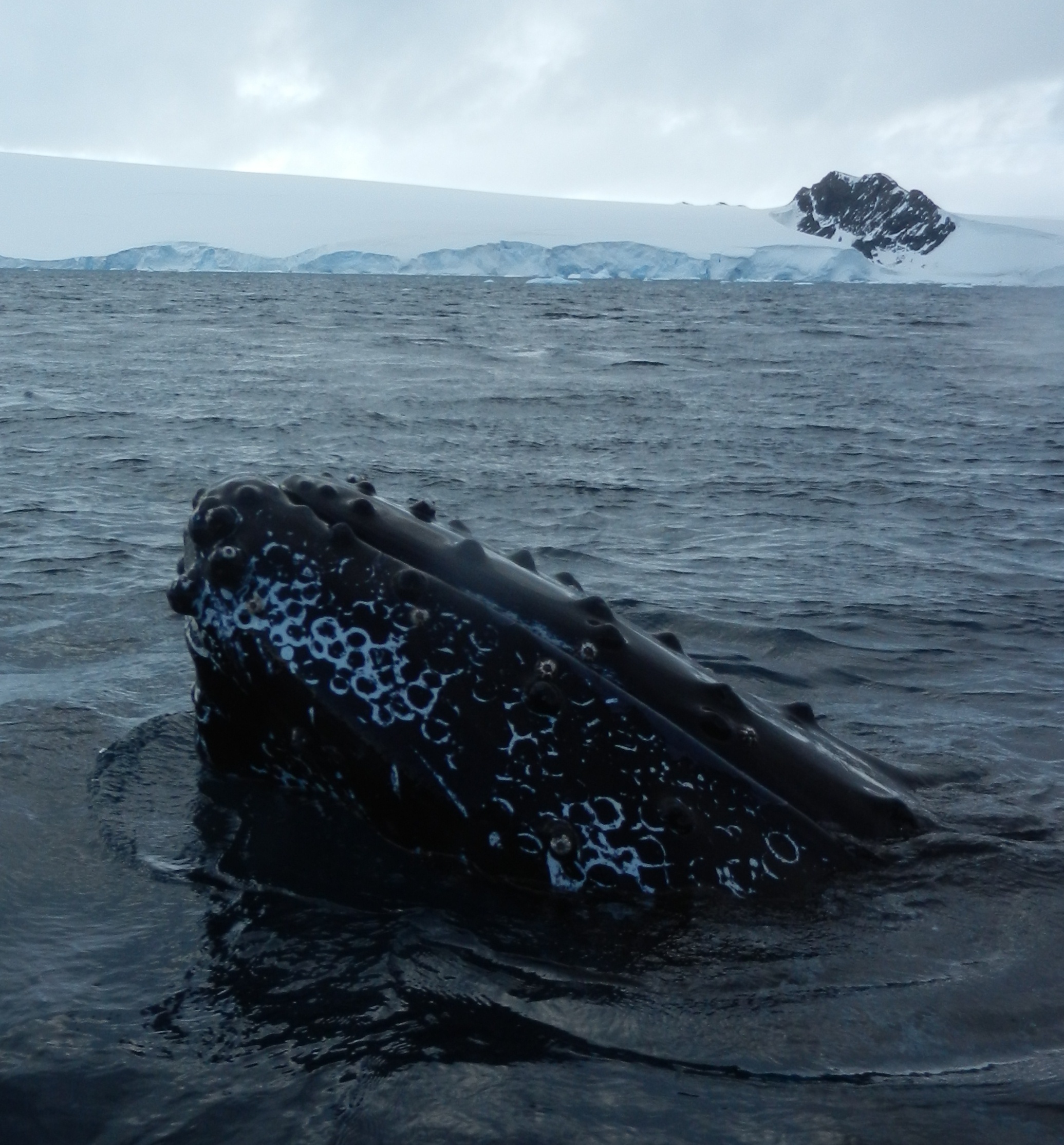
A humpback whale in Antarctica (photo credit: Chris Parsons)


Earlier this year the International Court of Justice (ICJ) ruled that Japan’s so-called “scientific whaling” in Antarctica (the JARPA II research program, to give its official title) was illegal. Article VIII of the International Convention on the Regulation of Whaling allows the lethal take of whales for scientific research purposes by “special permit.” The ICJ ruled, however, that the Japanese program was in violation of this provision, because JARPA II was not bona fide scientific research but was instead de facto commercial whaling.

The Japanese Government initially stated that it would abide by the ICJ’s decision and discontinue JARPA II, but then later announced it would conduct a new research program in the Antarctic (JARPA III?). This sudden turnabout was less based on science or market forces than politics, no doubt – sales of whale meat in Japan have been declining and there is currently a warehoused surplus. It may have also been influenced by NGOs (specifically Sea Shepherd) publicly claiming to have “defeated” the Japanese Government and forced them to end the Antarctic hunt (for the record, Sea Shepherd was not involved in the ICJ court case at all, and can claim no responsibility for the outcome). For the fiercely proud and nationalistic Japanese politicians, to have a small NGO – which they have labelled a “terrorist organization” – beat them would be politically untenable.

Read More “Wailing about whaling – the 2014 International Whaling Commission meeting” »

Mr Darcy’s Guide to Conference Etiquette – Part 2

Posted on October 1, 2014October 8, 2014 By Chris Parsons 1 Comment on Mr Darcy’s Guide to Conference Etiquette – Part 2
Uncategorized

(click to see part 1)

It is indeed most vexing when an uninvited guest appears on one’s doorstep unexpectedly. So why is turning up at a conference without registering considered to be acceptable? When invited to dinner, one is expected to RSVP so that the host knows to expect one, and it is common courtesy to do the same for a conference – by registering early the organizers can plan in advance for catering, for transportation, for room sizes – a whole host of activities where knowing numbers in advance is helpful. If one does not register until the last moment, one cannot complain if rooms for presentations are fully scheduled with no space for additions, or they run out of biscuits at the coffee break. Late registrations are also more expensive, so unless one’s attendance at the meeting was literally a last moment decision, one has just wasted one’s own money purely because one was not organized.

Even worse is the person who “gatecrashes” a conference. Many meetings are organized by professional societies and/ or charities. Yet I have observed with mine own eyes people who exploit the open nature of conferences and attend sessions, parties and other activities without having paid, even to the extent of eating and drinking fare that others have paid for. Such people are the worst of scoundrels and are in effect stealing large amounts of money from said charities. Conferences are expensive to run and someone has to pay for the food that freeloading cad is eating. That is money that could have been spent, for example, on grants for participants who are students or from developing countries, but that now has to be spent paying for the shortfall caused by stowaway delegates.

Read More “Mr Darcy’s Guide to Conference Etiquette – Part 2” »

No you’re not paranoid – there is a bias against publishing marine conservation papers

Posted on September 24, 2014September 27, 2014 By Chris Parsons 4 Comments on No you’re not paranoid – there is a bias against publishing marine conservation papers
Science

How many times have you submitted a marine conservation paper to a journal only to have it rejected because it is “too marine”, of “too narrow a focus” or “of limited interest to our readers”?  Despite the oceans making up 71% of Earth’s surface and 99% of the know biosphere, it sometimes seems that there’s a bias against marine articles in some of the leading ecology and conservation journals. Well you’d be right.

Kochin and Levin (2003, 2004) noted that marine conservation got short thrift in conservation journals. For example, on average marine papers comprise less than 11% of leading conservation biology journal papers, whereas 61% were terrestrial (Kochin and Levin, 2004). Marine content ranged from less than 3% in Conservation Ecology to 40% in Aquatic Conservation – even though oceans and sea ice make up 97% of the water on the planet, freshwater ecosystems still dominated the aquatic conservation literature even then.

Read More “No you’re not paranoid – there is a bias against publishing marine conservation papers” »

So what might Scottish independence mean for marine conservation ?

Posted on September 17, 2014September 17, 2014 By Chris Parsons 3 Comments on So what might Scottish independence mean for marine conservation ?
Conservation

Tina's otter 2

A Scottish otter (which lives in the marine environment)

As the referendum for Scotland leaving the United Kingdom (which besides Scotland current includes Northern Ireland and Wales in addition to England, although you would be forgiven from all the media coverage to think that it only included the former and latter) approaches, I’ve been asked what would independence for Scotland mean for marine conservation? Well in some ways, not a lot. Nature Conservation in Scotland is largely a devolved issue anyway, dealt with by Scottish Natural Heritage, and numerous laws related to the marine environment have been passed by the Scottish parliament over the past decade or so.

Marine issues have had a slightly higher political profile in Scotland compared to south of the border, probably because of the large fishing industry, extensive marine natural resources and a large large marine tourism industry. From public surveys, it appears that the Scottish public actually has a reasonably good knowledge about the marine environment and many species within, and is greatly concerned about its conservation (1). With greater budgetary freedom, it’s possible that a fully independent Scottish government may allocate more financial resources to oceans.

Read More “So what might Scottish independence mean for marine conservation ?” »

Ocean Optimism and Aliens

Posted on September 5, 2014September 5, 2014 By Chris Parsons 1 Comment on Ocean Optimism and Aliens
Conservation

Ripley: How long after we’re declared overdue can we expect a rescue? Hicks: … Seventeen days. Hudson: Seventeen days? Hey man, I don’t wanna rain on your parade, but we’re not gonna last seventeen hours! Those things are gonna come in here just like they did before. And they’re gonna come in here… Ripley: Hudson! Hudson: …and … Read More “Ocean Optimism and Aliens” »

Mr Darcy’s Guide to Conference Etiquette – Part 1

Posted on September 4, 2014September 5, 2014 By Chris Parsons
Blogging

It is a truth universally acknowledged that conferences are a necessity for the professional growth of an academic. They are important occurrences for learning about the methods and results of peers in one’s field, cutting edge techniques and the latest information that could be incorporated into one’s own studies and papers. With the vast quantity of scientific publications now available that would fill library upon library in my family seat of Pemberley, conferences veritably serve up a buffet of the latest and most relevant research results, saving one weeks of searching and heaven forbid, reading. Conferences are also opportunities for informal colloquies where one can receive and give advice, share ideas and develop research and writing partnerships. Many of these latter activities occur, of course, outside of the lecture halls, over a bottle of claret or a glass of port – or, for the less refined, a dram of Scotch whisky. Rare is the conference where one does not come home with a leather-bound notebook full of contacts with whom to correspond, studies to cite and methods to apply to one’s own work. Occasionally conferences have even been known to foster romantic liaisons, and there has been more than one highly advantageous and amicable marriage that has resulted from an academic meeting.

Oh yes, conferences are also places where one may share one’s own work. They give one a chance to share data and ideas with academic peers, to receive support, or possibly criticism, so that one can strengthen and refine one’s analysis and one’s interpretation of data.

However, it is becoming all too common that, for many, the latter is the only reason to go to a conference. Moreover, an oral presentation is increasingly the only format of worth and if one’s abstract is not accepted, or if one is offered “merely” an alternative format, such as a poster, one will refuse to attend.

Quite frankly, I view any academics who would refuse to attend a conference on their own specialist topic because they are denied an oral presentation, as poor and narrow-minded. Nothing grows in a vacuum, and innovative science is no exception. To refuse to attend a meeting because one is not presenting a talk is to figuratively cut off one’s nose to spite one’s face. It is the academic who suffers who denies himself the latest research results from, and direct interaction with, the best scholars in his field.

I recognize that there are many academic institutions that will provide funding for conferences only when one has an oral presentation accepted, but if one belongs to such an institution, then work to change its policy! Such institutions are stifling academic growth, and moreover ultimately reducing their visibility, reputation and enrollment. Each academic that goes to a conference is potentially an opportunity to market and advertise a university, and potentially attract and recruit students. The tuition from just a single graduate student persuaded to come to a university or college by talking to a conference goer, pays back the expenses of sending that person to the conference tenfold. This also encompasses funding graduate students, as potential students would as likely, if not more so, listen to their peers about an institution. A single happy, enthusiastic graduate student at a conference could potentially attract dozens of other students to apply to a college or university, a fact that many academic administrators overlook to their financial disadvantage.

Moreover, do not look down upon alternative presentation formats. Posters give one a unique ability to talk directly to conference goers, often while they are well flown on a glass or two of wine, in a depth one cannot achieve with the audience at an oral presentation. A single good, well-designed poster is also very memorable, much more so than dozens of slides in an oral presentation. Speed presentations likewise are excellent conveyors of certain types of information, such as innovative ideas or hypotheses, and like the poster can often be more memorable. Moreover, if one can describe one’s research in a three minute window clearly and concisely, one can also present one’s information in a way that might be more palatable to the general public, the press or policy makers. If one has a project that needs to reach a wider audience – for example, research on the conservation of an endangered species, or highlighting a new threat to the environment – a speed presentation might indeed be the best format.

As for other aspects of participating in conferences, if one volunteers to review abstracts, please do so promptly. Many people are waiting to make travel plans and visa applications, or finalize grant applications based on these decisions. By dilly-dallying, one may not only frustrate the organizers (who very often are senior members of one’s field who will likely remember those who are reliable and efficient reviewers and those who are lazy wastrels who do not live up to their commitments – I certainly do!) but also deny colleagues the chance of attending the conference, ultimately impacting their careers. Also, when and if reviewing, be ethical. If one is given the abstract of a colleague in one’s department, a student or similar, or even a competitor, and one clearly has a conflict of interest, do the right thing and declare it.  The organizers will respect honesty and professional integrity, and one will earn their respect, whereas if one’s conflict is not declared and is later discovered, it could be extremely detrimental, even ruinous, to one’s professional reputation.

If one’s submitted abstract is not accepted, do not write to organizers an angry tirade. “Do you not know who I am!” emails will not work, as they can easily see who one is – an entitled ego-ridden oik! Threats that one will not attend, or that one will tell one’s colleagues not to attend either, unless one’s abstract is accepted, will also not work. The organizers will likely respond not to let the carriage door hit one on the nether regions on the way out. Their job is already difficult, and having a recognized childish and obnoxious attendee at their meeting will not make their job any easier, or more pleasant for the other attendees. Moreover, such behavior is an attempt to circumvent the peer-review process. Peer-review is one of the foundations of academic quality control. Peer-review may have its faults, but it is the best feedback process academia has. Trying to circumvent peer-review by bullying and threats will only make one appear unethical and unprofessional in the eyes of the organizers, who as noted above, are likely to be senior. Most certainly they will be well connected, and will likely tell others about one’s unethical and unprofessional behavior (this again I have seen all too frequently).

It has also become all too common for would-be presenters to berate the scientific program committee if their presentation was chosen as an alternate format, even though the presenter indicated said format was their preferred alternate. Often such admonishments are accompanied with polemics along the lines of “there is no way I can convey the magnificence of my work in a speed presentation” or “I can guarantee that everyone will want to see my talk because it is so important/innovative/will single-handedly save the world/will change our understanding of the universe as we know it, so how can it be relegated to a poster.” Oh the arrogance…

However, people often must cancel attendance at conferences, and presentation slots may become available at the eleventh hour. If one would really prefer a different format for one’s presentation or a chance to present if rejected, politely (and I emphasize politely) contact the organizers and ask if one might be placed in a queue of some sort to take advantage of such last minute cancellations. A polite, good natured request is remembered, whereas an angry tirade… well, it too will be remembered but not in an advantageous way.

Assuming that all goes well and one’s abstract is accepted (even if it is not one’s first choice of format), one should note that many conferences require presenters to register in advance of the meeting, often by the early registration deadline to provide time for the organizers to build the program, and to contact wait-listed presenters in a timely manner. It is simply one’s own fault if one ignores email notifications and does not read submission instructions, and arrives at a meeting to find that one does not have one’s presentation in the program, because one did not register as required; a mistake which might be financially costly.

If the meeting approaches and one realizes that one cannot attend, do tell the organizers as quickly as possible. Conferences typically have a limited number of presentation slots and a queue of hopeful attendees, as noted above. If one informs the organizers swiftly, it will mean that perhaps someone else can present a talk in one’s absence, and as funding is often (sadly) dependent on presenting, perhaps even attend the meeting. By procrastinating and not informing organizers that one cannot attend, one has basically denied colleagues the potential to progress their careers, and for conservation meetings, perhaps even to help protect the environment. Moreover, do not pass on one’s work for another to present in one’s stead (another troubling trend). They will not be able to present it as well and will not be able to answer any questions appropriately. Again this is more likely to reflect badly upon oneself, as well as irritate the organizers who could have gifted one’s presentation slot to someone else, as noted above.

In my next installment I will describe the proper etiquette once a conference is actually upon one. But for now I must be away as my butler tells me that members of the local gentry are calling and I must play the gracious host. I only hope that they do not have a half of unmarried daughters in tow, looking for a suitable husband of means. Sometimes it is truly wearisome to have such a large and sought-after endowment.

???????????????????????????????

Marine Conservation, Inspiration and a Great Big Geek

Posted on September 3, 2014September 3, 2014 By Chris Parsons 1 Comment on Marine Conservation, Inspiration and a Great Big Geek
Conservation

From 14-18th August 2014, the 3rd International Marine Conservation Congress was held in Glasgow, Scotland. The IMCC meetings are the largest international academic conferences on marine conservation. IMCC3 had over 700 presentations ranging from fisheries science to how marine scientists could better interact with the media, from Marine Protected Area effectiveness to the ethical treatment … Read More “Marine Conservation, Inspiration and a Great Big Geek” »

The Dark Side of Academia

Posted on August 7, 2014September 2, 2014 By Chris Parsons
Blogging, Science

ParsonsDr. Chris Parsons has been involved in whale and dolphin research for over two decades and has been involved in research projects in every continent except Antarctica. Dr. Parsons is an Associate Professor at George Mason University as well as the undergraduate coordinator for their environmental science program. He’s a member of the scientific committee of the International Whaling Commission (IWC), has been involved in organizing the International Marine Conservation Congress (IMCC) (the world’s  largest academic marine conservation conference) and is currently the Conference Chair and a Governor of the Society for Conservation Biology. In addition, Dr. Parsons has published over 100 scientific papers and book chapters and has written a textbook on marine mammal biology & conservation.

Listen, my Sith apprentice, strong in knowledge you are but there are those who are stronger and more intelligent than you, but to persevere and gain in status, strong in the dark side you must become. In these times funding is limited, tenured positions are few, and competition is great. Graduate students are many, and many of these have ideas for new research and new hypotheses that pose a threat to the current order. The hierarchy must be maintained with us at the apex, and no competition must be allowed.  Nurturing, cooperation, and egalitarianism -those are the characteristics of the light side and the light side is weak, and progress on the light side is slow. So my Sith apprentice, here is my advice to you to progress and succeed, especially when there are those around you who are more innovative, knowledgeable and intelligent than you.

Read More “The Dark Side of Academia” »

Distracted by abstracts: Tips for writing a good abstract for a scientific conference

Posted on April 7, 2014September 2, 2014 By Chris Parsons 4 Comments on Distracted by abstracts: Tips for writing a good abstract for a scientific conference
Blogging, Science

ParsonsDr. Chris Parsons has been involved in whale and dolphin research for over two decades and has been involved in research projects in every continent except Antarctica. Dr. Parsons is an Associate Professor at George Mason University as well as the undergraduate coordinator for their environmental science program. He’s a member of the scientific committee of the International Whaling Commission (IWC), has been involved in organizing the International Marine Conservation Congress (IMCC) (the world’s  largest academic marine conservation conference) and is currently the Conference Chair and a Governor of the Society for Conservation Biology. In addition, Dr. Parsons has published over 100 scientific papers and book chapters and has written a textbook on marine mammal biology & conservation.

I have just read and reviewed through close to 100 scientific abstracts for a conference, and my main conclusion is that ” ‘abstract’ – this does not mean what you think it means!”

An abstract is supposed to be a concise summary of your entire paper or study. Basically a written version of the 30 second “elevator pitch”. In these days of information overload there is so much emphasis on publishing, and so many journals willing to accommodate, the number of articles in scientific fields has increased rapidly. As a result, academics are increasingly reading no further than the abstract, and often only reading the title. To test this I looked at some of my papers where the website they were hosted by kindly provided statistics on abstract page views and actual download rates. The download rates were approximately only 10% that of the abstract views across the papers (and I am naively hopeful that at least some of a downloaded paper will be read). The figures were similar for other articles, so it wasn’t just my papers. So 90% of people who see your work probably won’t go beyond your abstract. This makes it vitally important that all the information you want to convey about your work is in the abstract.

However, in a frighteningly high proportion of abstracts the key results and conclusions of studies are not even mentioned. One of the abstracts I read in this latest batch noted that the methods, results  and the conclusions of the study “would be discussed”. As an abstract this is useless. Too frequently place holder abstracts are submitted to conferences, with the assumption that results will magically appear before the meeting. But if you don’t manage to get that analysis done, you’ll be giving a presentation that will be lacking, will embarrassing you and damage your career. Moreover, a lot more people will see your abstract than will actually get to your presentation, so professional opinions may be made on you by the quality of your abstract rather than the final presentation. Plus abstract books are physical entities, whether electronic or hard copy, and will be around a lot longer than your 10 minute presentation.   So for your professional image and also for the sake of communicating your study it is in your interests to produce a good abstract.

With that in mind, here are some suggestions on abstract structure.

Read More “Distracted by abstracts: Tips for writing a good abstract for a scientific conference” »

Posts pagination

Previous 1 … 5 6 7 Next

Popular Posts

Shark scientists want their research to help save threatened species, but don’t know how. Our new paper can help.Shark scientists want their research to help save threatened species, but don’t know how. Our new paper can help.December 1, 2025David Shiffman
Norway and Cook Islands put their deep-sea mining plans on pause.Norway and Cook Islands put their deep-sea mining plans on pause.December 3, 2025Andrew Thaler
What Ocean Ramsey does is not shark science or conservation: some brief thoughts on "the Shark Whisperer" documentaryWhat Ocean Ramsey does is not shark science or conservation: some brief thoughts on "the Shark Whisperer" documentaryJuly 2, 2025David Shiffman
2025: My year in writing, public speaking, and media interviews2025: My year in writing, public speaking, and media interviewsDecember 3, 2025David Shiffman
What we know we don't know: impacts of deep-sea mining on whales, dolphins, sharks, turtles, and other migratory species.What we know we don't know: impacts of deep-sea mining on whales, dolphins, sharks, turtles, and other migratory species.November 20, 2025Andrew Thaler
The Trouble with Teacup PigsThe Trouble with Teacup PigsOctober 14, 2012Andrew Thaler
Urea and Shark OsmoregulationUrea and Shark OsmoregulationNovember 15, 2010David Shiffman
How tiny satellites are tracking marine wildlifeDecember 1, 2025Andrew Thaler
Shark of Darkness: Wrath of Submarine is a fake documentaryShark of Darkness: Wrath of Submarine is a fake documentaryAugust 10, 2014Michelle Jewell
Build a dirt cheap, tough-as-nails field computer in a Pelican caseBuild a dirt cheap, tough-as-nails field computer in a Pelican caseJuly 21, 2015Andrew Thaler
Subscribe to our RSS Feed for updates whenever new articles are published.

We recommend Feedly for RSS management. It's like Google Reader, except it still exists.

Southern Fried Science

  • Home
  • About SFS
  • Authors
  • Support SFS


If you enjoy Southern Fried Science, consider contributing to our Patreon campaign.

Copyright © 2025 Southern Fried Science.

Theme: Oceanly Premium by ScriptsTown