 While a large percentage of the world’s shark fins pass through Hong Kong fish markets, most come from far-away countries and little attention has been paid to shark populations in adjacent waters. An important new paper, appropriately titled “The sharks of South East Asia – unknown, unmonitored and unmanaged” provides new insight into this problem.
One of the most challenging problems facing natural resource managers (including those who manage fisheries) is lack of baseline data. If we don’t know how many animals there used to be, it’s hard to know how bad things are in comparison. This kind of data exists for very few fisheries. Fortunately (at least from a baseline reconstruction perspective) most of the overfishing of sharks has taken place within the lifetime of the average adult- which means that interviewing older fishermen is a valid option.
For this study, the authors attempted to reconstruct the historical population of sharks in the South China Sea by analyzing written records and interviewing fishermen. They also assessed current shark populations by determining what locally-caught species were for sale in the markets of Hong Kong.
The authors found that the South China Sea had impressive shark diversity around the time that my parents were born- a total of 109 species spent some or all of their time in this relatively small corner of the world. For comparison, 33 species of shark spend some of all of their time in the waters off the coast of South Carolina where I do my sampling.
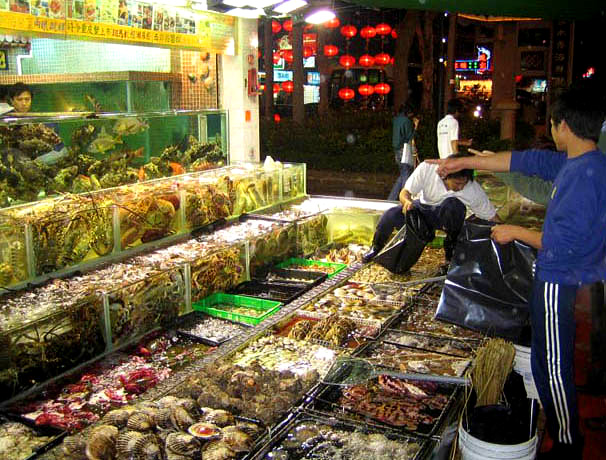
The number of locally-caught species presently found in Hong Kong’s markets (a reasonable proxy for the number of species found in the adjacent waters because of a total lack of restrictions on what species fishermen can catch) is terrifying in comparison. Just 18 species are presently found in high enough numbers to make an appearance in the fish markets.
Even more terrifying is the size of these sharks- 65% of individuals were well below the size of reproductive maturity, which means they were killed before they could reproduce. Killing a fish before it can reproduce is a major sustainability no-no even when you’re talking about fish that can withstand heavy fishing pressure. Since sharks have a life history that makes them extremely vulnerable to overfishing even when they are harvested above the size of reproductive maturity (they mature slowly and have few young), this is particularly scary.
It’s no wonder that the Hong Kong fish markets are forced to import shark from the far reaches of the Earth- many local populations are almost wiped out. The scale of modern industrial fisheries means that if we aren’t careful, the same thing could easily happen to shark populations worldwide.

Lam, V., & Sadovy de Mitcheson, Y. (2010). The sharks of South East Asia – unknown, unmonitored and unmanaged Fish and Fisheries DOI: 10.1111/j.1467-2979.2010.00383.x