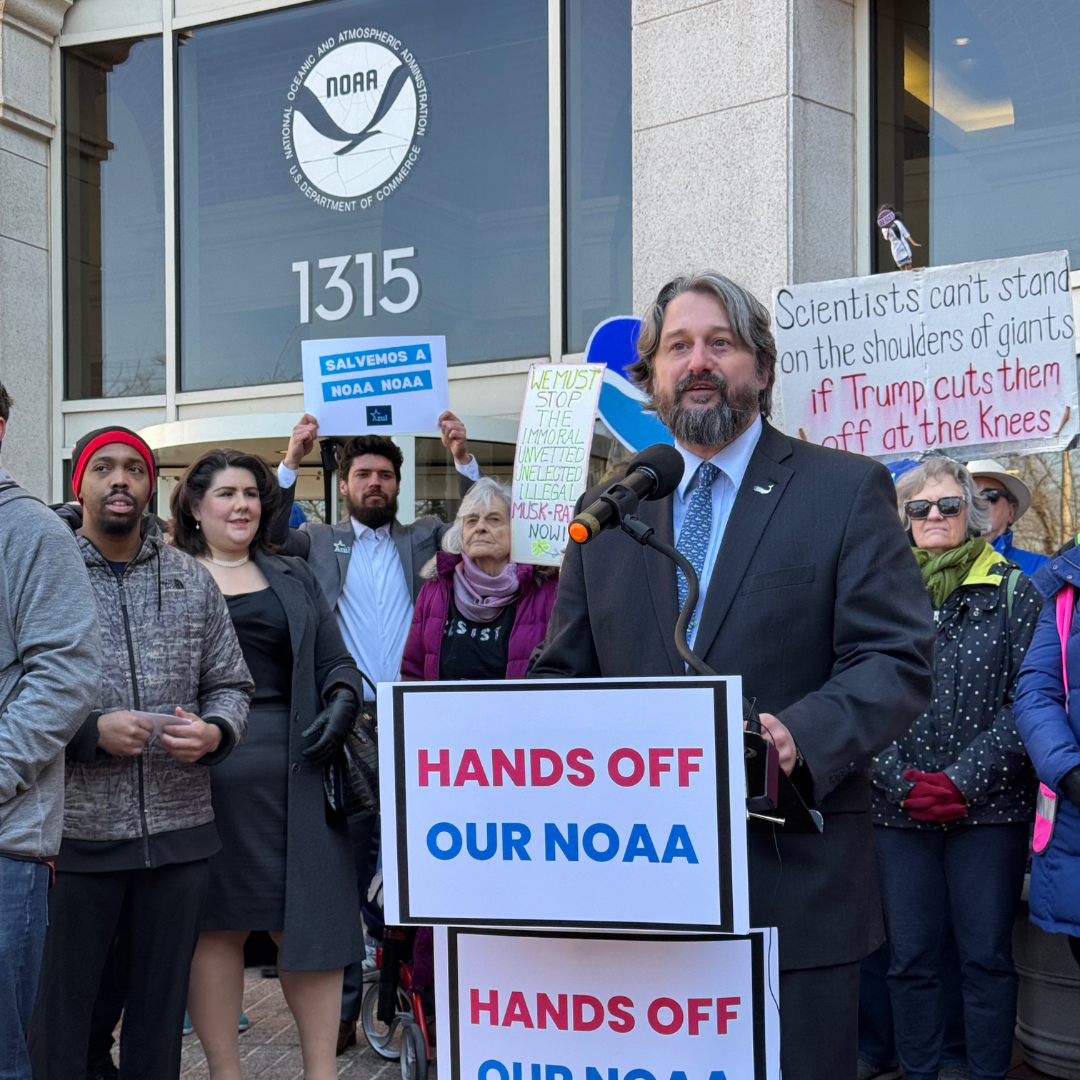
Hopefully many of our faithful readers have seen the sad announcement that the NOAA lab in Beaufort, NC may be no more. The main reason cited for the potential closure is financial – the cost of maintaining an aging building. Our friends over at the fisheries blog have written a sound debunking of this reasoning, also lamenting the loss of an institution over a century old and hub of fisheries research for the mid-Atlantic. In short, the Beaufort Lab represents a strong history of productive research, recent investment into infrastructure, and a critical part of a much larger marine science community in the region. It’s fair to say that the lab is the founding member and backbone of a marine science consortium with the Rachel Carson National Estuarine Research Reserves, Duke University, NC State, the University of North Carolina, NC Division of Marine Fisheries, and Carteret Community College.
Beyond the institutions in a list, the Beaufort lab cements a broader community and economy of Carteret County, which is still largely based on fishing. While relations with the universities and state fisheries enforcement can sometimes be strained, NOAA rises above as a voice of reason and glue of collaboration around protecting our marine resources for food, economy, and society. If you believe me, there are steps you should take right now to voice your support for the lab by contacting local Congressional representation – those with the power to stop the closure: Congressman Walter Jones, Senator Kay Hagen, and Senator Richard Burr – and write a public comment to the House Committee currently reviewing the decision. For those who need a little more context and information, read on for some personal testimony demonstrating the value of the Beaufort lab I observed during my dissertation work in the area, which was focused on collaborative fisheries research. In a nutshell, I’ve observed how the Beaufort lab builds relationships between scientists and fishermen and therefore, indirectly, trust in NOAA.
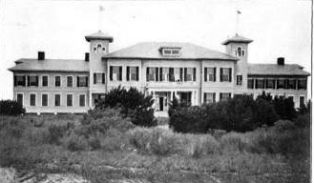
The researchers at the Beaufort lab are integral members of the Carteret County community and take the original motivation for the location of the lab to heart – it’s a great place to collaborate with and support the local fishing community. I’ll highlight a few cases I’ve observed through collaborating with researchers there. I’m sure there are tons more cases if I stopped to ask around more systematically.
Dr. David Evans took me under his wing while working on a project looking at mercury and PCBs in the local fishery catch. Not only did he, out of the goodness of his heart, help a local graduate student, but did so specifically because it was in collaboration with local fishermen curious about mercury (his specialty). In the past, he’d tested the hair of some commercial and subsistence fishermen concerned about their high level of personal seafood consumption and its potential health impacts (turns out, they’re all healthy). His work also ties into the recreational fishing community, taking samples from the Big Rock Marlin tournament to investigate the somewhat curious mercury patterns in marlin tissues. His research and ties to the local community are irreplaceable – and in short – the fishing community (both commercial and recreational) knows and loves Dr. Evans.
The Beaufort lab hosts, through NOAA and co-housed National Estuarine Research Reserve staff, a number of collaborative research projects. For instance, Dr. Chris Taylor joined the Beaufort lab after completing his dissertation work down the road at NC State’s Center for Marine Science and Technology, where he worked closely with commercial fishermen. I got to know Dr. Taylor during an interview as part of my dissertation research, investigating the impact of collaborative research. Chris stated that fishery collaborations allowed him to create a novel dissertation and appreciated that his position at NOAA allowed him to stay in touch with those fishermen through the years. The NERRS staff also hold community education events and work with a wide array of local researchers and stakeholders to better understand the estuary.
Lionfish guru Dr. Morris is a native of Carteret County, where his family can trace roots back to colonial America. That family today runs a successful oyster hatchery and aquaculture facility as well as a small fleet of family fishing boats. The Morris family are strong community organizers and are active in creating new economic opportunities for the area, committed to maintaining the heritage of “downeast”, the eastern part of Carteret County. Dr. Morris’ role in this effort is as a strong member of the scientific community, mentoring students from local universities and being a stellar example of outreach done well. Dr. Morris has given local talks, worked closely with local dive shops, and partnered with the culinary program at Carteret Community college to raise awareness about invasive lionfish and create potential solutions.
Finally, the Beaufort lab staff are community members for the length of their career. They are helping to build upon a century-long history of research in the area and are in the perfect location to research the ecologically fascinating and economically important mid-Atlantic ecosystem in the area. They help and watch graduate students in the area learn and grow and often, move on to career opportunities in other parts of the country. So the Beaufort lab research stands as a shining example of long-term research understanding and supporting marine ecosystems, which in turn, support vibrant coastal communities and their maritime heritage. To see NOAA disappear from this community would not only be a huge loss to the scientific foundation of the area but it would unravel many deep community ties that are critical to creating a healthy, sustainable future for both the ocean and its humans.