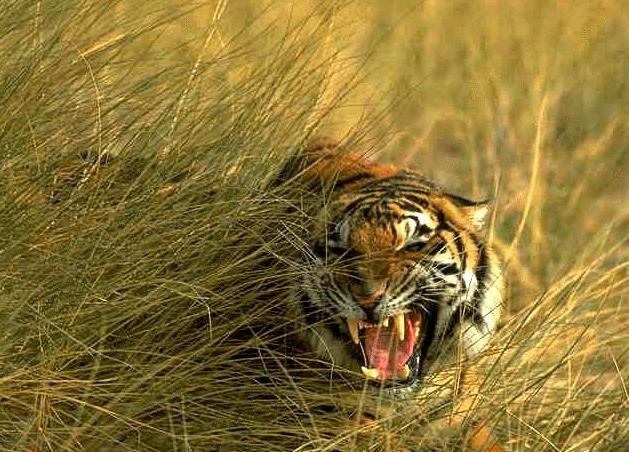
 This week for Biodiversity Wednesday, we bring you to the Sundarbans of Bangladesh and eastern India. They’re wild, wet, and full of mangroves and tigers. In fact, it’s the world’s largest mangrove forest at 140,000 hectares and is a UNESCO World Heritage Site for cultural and ecological value. The area is perhaps most famous for housing the charismatic Bengal tiger, estuarine crocodile and Indian python among a habitat of endangered flora and fauna.
The Sundarbans are protected primarily for their unique ecological processes, making it on our list for their special kind of biodiversity. These processes include monsoon rains, flooding, delta formation, tidal influence, and plant colonization that are all part of the life of a dynamic mangrove forest.
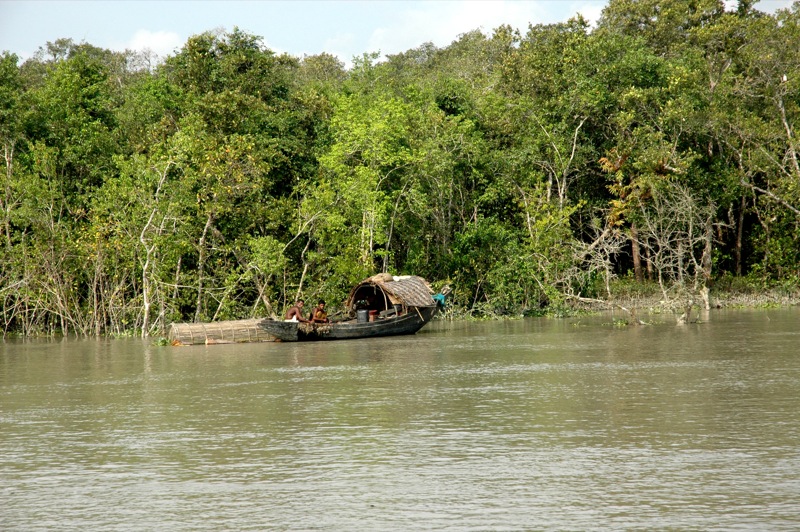
The World Heritage Site is inscribed in three sections, mapped interactively by UNESCO (West, East, and South). It lies at the delta of the holy Ganges, Brahmaputra, and Meghna rivers in a dynamic system of islands and river channels. The water is largely brackish, as the slow flows from the rivers mix with the Bay of Bengal, brought to the scene by diurnal tidal flow. The dynamic water flow of the rivers, Bay, and monsoon rains, create ever-moving chars out of sand and mud flats out of silt.
Adding to the biodiversity is the society of char dwellers, a semi-nomadic people that live on top of the ever-moving river islands of the delta (known as char in Bengali). Numbering 600,000, they are a good example of culture integrated into the nature they live in, adapted to the ecology of the mangroves. They move between chars as they disappear and reappear during the monsoon season. They’ve even domesticated the smooth-coated otter to drive fish into their nets. Providing such nomadic people has made it hard to provide a supply of fresh water, electricity, or education. Such a lack of services and opportunities make the char dwellers the poorest of Bangladeshi citizens, making meager earnings from fishing, rice, and shrimp farming.
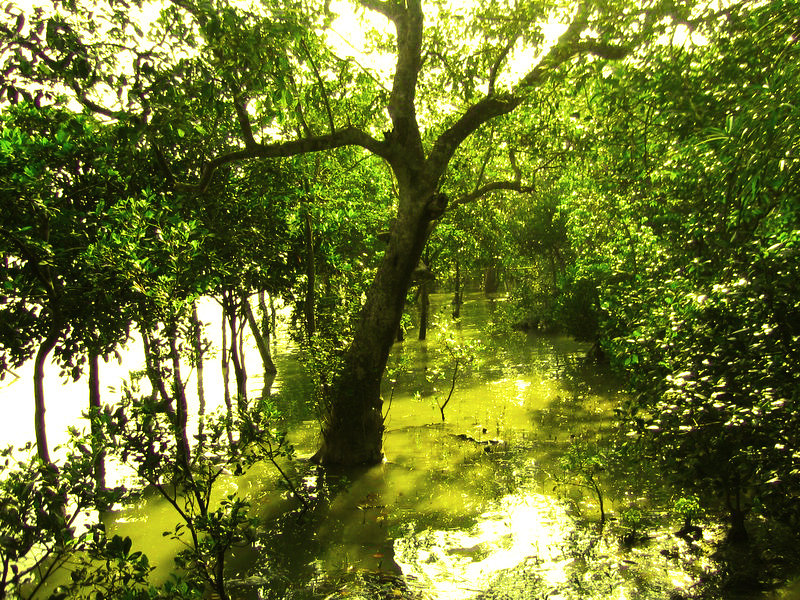
There are 27 species of mangrove that define the ecology of the Sundarbans and house a number of other endangered species by offering what is now rare habitat. The most common trees are Sundri and Gewu mangroves interspersed by Nypa palm patches. They house over 315 species of bird, 53 reptile, 8 amphibian, and 49 species of mammal, including 350 Bengal tigers, spotted deer, wild boar, three species of wild cat, Ganges River dolphin, and three species of otter.
The Sundarbans are threatened by the need for fuelwood and fresh water for the large and growing local populations of the Ganges/Brahmaputra delta region, which includes the megacities of New Delhi and Dhaka. Fuel wood use in the region is on the decline as people move to cities and upgrade stoves to propane or kerosene. Fresh water demand, though, is expected to rise as population continues to increase due to both fertility and migration to cities. The use and diversion of freshwater in the mangroves is leading to saltwater intrusion from the Bay of Bengal and resultant salt stress on the endangered flora and fauna preserved in the island of nature known as the Sundarbans.
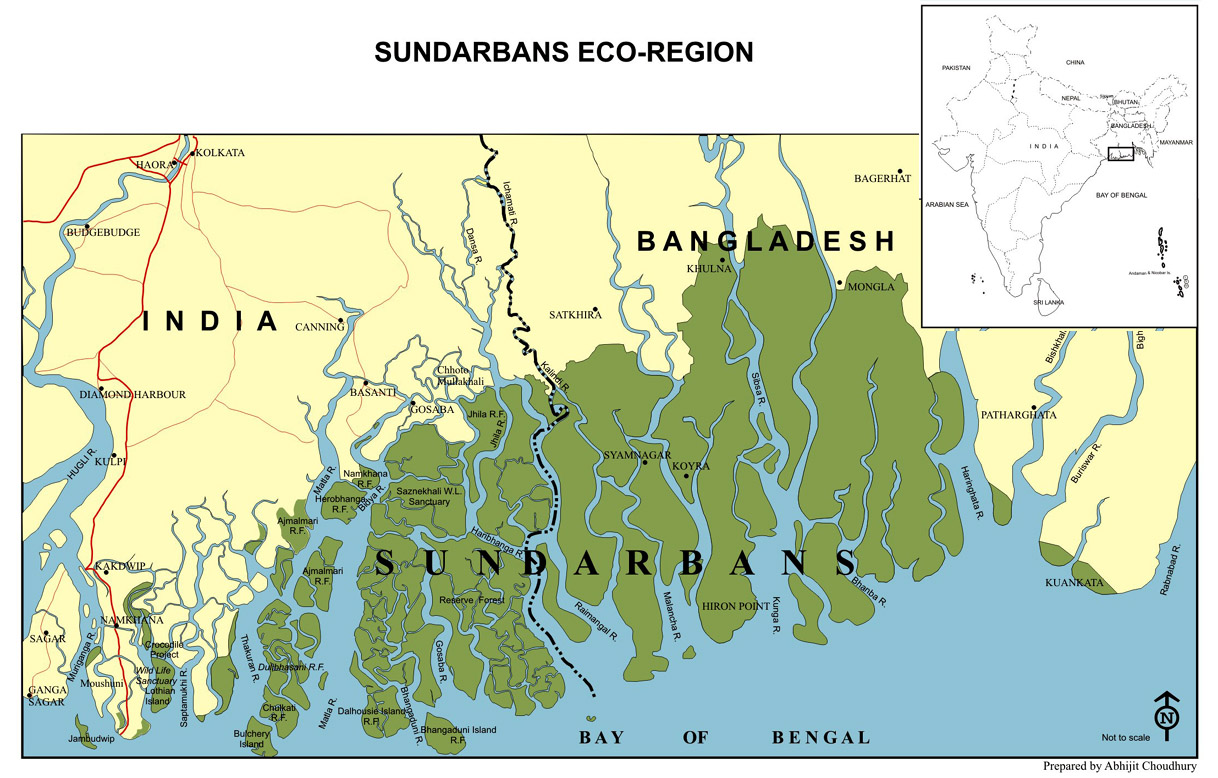 A final threat to the Sundarbans is to note that the system is protected by a number of agencies in various smaller sections. These sections are barely big enough to support large megafauna such as tigers, rhinos, and the char-dwellers. As the edges are encroached upon by development, habitat fragmentation may play a larger role in the future of these creatures.
To end on a final note of optimism, the Sundarbans are used as a prime case-study of ecosystem resilience, maintaining biodiversity in the face of dynamism and supporting the co-existence of humans in nature, therefore cultural diversity. Though the Sundarbans are nestled in the most populated region of the world, they have outlasted threats thus far and hopefully in the future, the Sundarbans and their people will continue their creative and dynamic existence.
Sources: The UNESCO website, Somen 2020, IRIN Asia
beautiful