Skip to content

Southern Fried Science

Over 15 years of ocean science and conservation online

  • Home
  • About SFS
  • Authors
  • Support SFS

Category: Popular Culture

Hail hydra ! Taking a super villain approach to conservation #scicomm

Posted on February 19, 2015February 20, 2015 By Chris Parsons
Conservation, Popular Culture, Uncategorized

Hydra

Rarely do conservation or environmental issues solely deal with just one group of homogenous people. Most who deal with “on the ground” conservation realize that typically issues have multiple, often conflicting, groups with multiple view points and values. So why do so many attempts as conservation science communication just have one line of attack?

Read More “Hail hydra ! Taking a super villain approach to conservation #scicomm” »

Bioshock Oceanographic: The Problem with Buried at Sea

Posted on February 18, 2015February 17, 2015 By Andrew Thaler
Popular Culture

Previously on “Andrew takes a piece of pop culture and over-analyzes it to death“: we went to Rapture, the city under the sea in Bioshock and Bioshock 2 (and, briefly, Bioshock Infinite) to figure out exactly where and how deep the city was. In the end, I came up with a respectable if underwhelming, maximum depth of 150 meters. Deep, but not crush-your-sub, deep.

And then I played Bioshock Infinite: Burial at Sea 2 and Glomar Challenger, we have a problem.

Read More “Bioshock Oceanographic: The Problem with Buried at Sea” »

Bioshock Oceanographic: How deep is Rapture?

Posted on February 11, 2015February 17, 2015 By Andrew Thaler 5 Comments on Bioshock Oceanographic: How deep is Rapture?
Popular Culture, Science

“To build a city at the bottom of the sea! Insanity. But where else could we be free from the clutching hand of the Parasites? Where else could we build an economy that they would not try to control, a society that they would not try to destroy? It was not impossible to build Rapture at the bottom of the sea. It was impossible to build it anywhere else.”

Andrew Ryan, Bioshock

Rapture, a city beneath the sea, the crowning achievement of Randian industrialist Andrew Ryan. This atmospheric world of technological wonder and urban decay serves as the setting for one of the greatest video games of all time, Bioshock. The player, finding themselves stranded at sea in a fiery plane crash, makes their way towards a lonely lighthouse, descends into the sunken, desolate city, and unlocks the mysteries surrounding the creation and destruction of a most unusual city.

Rapture. From Bioshock.

Though many questions are answered as the player journeys into the heart of Rapture, collecting audio diaries of its residents along the way, one question still eludes: How deep is Rapture and where, exactly, is it?

Read More “Bioshock Oceanographic: How deep is Rapture?” »

An open letter to new Discovery Channel President Rich Ross from a shark scientist

Posted on January 9, 2015January 9, 2015 By David Shiffman 1 Comment on An open letter to new Discovery Channel President Rich Ross from a shark scientist
Conservation, Popular Culture, Science

Dear Rich Ross, new President of the Discovery Channel,

I was excited to learn about your commitment to no longer show fake documentaries on the Discovery Channel. These shows have been incredibly damaging not only to Discovery’s goals of being the “number one non-fiction media company in the world” by”telling compelling and accurate stories,” but to public understanding of science and conservation. In recent years, the Discovery Channel has tried hard to actively muddle the fact that these documentaries were fake, including hiding vague disclaimers at the very end.  I’ve spoken to hundreds of schoolchildren about sharks, and every time someone asks me about megalodon or mermaids.  Viewers believed that they were real, and your channel actively bragged about the fact that people believed that they were real.

By claiming that megalodon isn’t extinct and mermaids are real but the government is covering this up, these shows resulted in scientists receiving threats and harassment,  and resulted in important government agencies getting so many angry phone calls that they had to issue public statements. Producers for some of these shows intentionally lied to scientists to convince them to appear onscreen, intentionally lied to journalists about the facts behind them,  and intentionally caused a real-life public panic. They actually showed a documentary about a legendary (read as “fake”)  shark called Hitler. In short, I will be glad to see Shark Week and the Discovery Channel return to your roots of fact-based programming.

However, while “we won’t actively lie to viewers anymore” is an important step that I applaud, Shark Week and other Discovery Communications programs have many other problems that should be addressed. Shark Week 2014’s “Zombie Sharks” glorified wildlife harassment for no reason, as the entire stated goal of the show was for a non-scientist with a history of wildlife harassment to try to answer a question that scientists have known the answer to for decades. This problem is not limited to Zombie Sharks, but pervades Discovery Communications shows.

Read More “An open letter to new Discovery Channel President Rich Ross from a shark scientist” »

Southern California is basically Mordor: Climate forcing effects in Middle Earth

Posted on December 24, 2014December 23, 2014 By Andrew Thaler
Popular Culture, Science

“It is a barren wasteland, riddled with fire and ash and dust, the very air you breathe is a poisonous fume.” Boromir, The Lord of the Rings Mordor, the seat of the Dark Lord’s power, a barren wasteland crawling with orcs, dry and desolate. Or at least, that’s what we’re led to believe thanks to … Read More “Southern California is basically Mordor: Climate forcing effects in Middle Earth” »

Warg extirpation and the destabilization of eagle colonies in Middle Earth

Posted on December 23, 2014December 23, 2014 By Andrew Thaler
Popular Culture, Science

“Eagles! The eagles are coming!” Pippin, Return of the King “I came from the end of bag, but no bag went over me. I am the friend of bears and the guest of eagles. I am Ring-winner and Luckwearer; and I am Barrel-rider.” Bilbo Bagins, The Hobbit Truly, in this late age, is there anything … Read More “Warg extirpation and the destabilization of eagle colonies in Middle Earth” »

Middle Earth could have been saved by the Endangered Species Act

Posted on December 22, 2014December 21, 2014 By Andrew Thaler 2 Comments on Middle Earth could have been saved by the Endangered Species Act
Popular Culture, Science
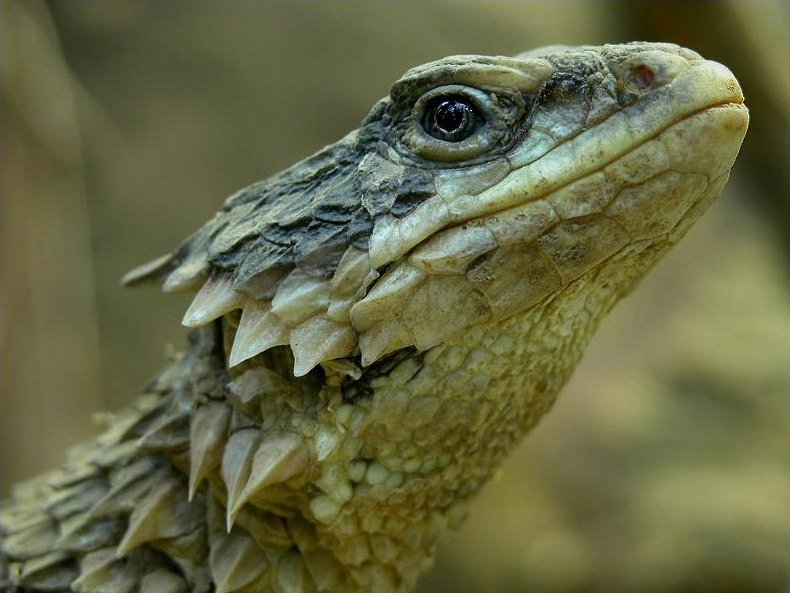
Smaug gigan
Smaug gigananteus syn. Cordylus giganteus, the Giant Girdled Lizard, because of course there’s an actual species named Smaug. Photo by Wilfried Berns.

In a cave in the Lonely Mountain there lived a dragon. Not a gnarly, goblin-stuffed, slimy cave, filled with the bowels of orcs and fishy creepers, nor yet an empty, granite, echo-less cave with nothing in it to lie down on or horde: it was a dragon-cave, and that meant gold. At least it did, until a nasty band of poachers found Lonesome Smaug, the last of his species, alone, asleep, threatening none, and smote his genus from the red ledger, stripping Middle Earth of critical biodiversity.

The ecologists of Carsondell would say, of the age of war that followed, that the men and dwarves and elves and hobbits brought the darkness upon themselves. Indeed, as the Dark Lord raised his army, denuded the forests, and belched carbon from the factories of Mordor, Gandalf the Grey, one of the more powerful, though among the least conservation-minded, of the wizards would remark: “It has been said that dragon-fire could melt and consume the Rings of Power, but there is not now any dragon left on earth in which the old fire is hot enough.”

The Grey Wizard failed to mention that, were it not for his callousness, there would be*.

Read More “Middle Earth could have been saved by the Endangered Species Act” »

What can Cloudy with a Chance of Meatballs teach us about ecology, sustainability and conservation?

Posted on December 21, 2014 By David Shiffman
Conservation, Popular Culture

Cloudy_with_a_chance_of_meatballs_theataposterMy family loves to watch movies, which presents a problem during the few times we’re all together: there are very few good movies that none of us have already seen. This past Thanksgiving, we resolved that dilemma by watching some “based on a true story” garbage starring Nicholas Cage and the star of High School Musical, a plot-less but action packed shoot ’em up starring the governator and Sawyer from Lost, and “Cloudy with a Chance of Meatballs.”

Based on a popular children’s book, Cloudy with a Chance of Meatballs tells the story of Flint Lockwood, a young inventor who keeps trying to make life better for people in his small island town of Swallow Falls. His inventions always backfire, including the titular invention that makes the sky rain food. In the sequel, which I watched this past weekend because shut up I enjoyed the first one leave me alone, we learn that some of the food has become sentient.  Swallow Falls is now home to a unique ecosystem that includes watermel-ephants, taco-diles, fla-mangos, and many other hybrids called foodimals. In addition to featuring some of the best puns I’ve ever seen, these movies also raise some interesting questions about ecology, sustainability and conservation.

Read More “What can Cloudy with a Chance of Meatballs teach us about ecology, sustainability and conservation?” »

Watch Outbreak Wednesday at 8 and tweet along with public health experts!

Posted on November 10, 2014 By David Shiffman
Popular Culture, Science

Much of the public panic about the current ebola situation can be contact traced to the 1995 movie “Outbreak.” This fictional movie is based on the supposedly true story “the Hot Zone” by Richard Preston , though an important new analysis by infectious disease researcher Dr. Tara Smith shows that the Hot Zone has some major factual … Read More “Watch Outbreak Wednesday at 8 and tweet along with public health experts!” »

Breaching Blue Chapter 5: The Hunters

Posted on September 5, 2014 By Andrew Thaler
Popular Culture

breakingblueAll week I’m posting the first five chapters from my absurd work-in-progress, Breaching Blue. Check out Chapters 1, 2, 3, and 4. This concludes our week long mermaid adventure. Enjoy. And, if you don’t enjoy, blame Shiffman.


The reef made them strong. Janthina no longer hesitated to swim above the sunbreak, to explore the illuminated waters above. Each morning, as the sunlight penetrated the twilight waters of the reef, Janthina would rise into the realm of light. The animals that lived in the sun were new. They were active, vibrant, powerful. They moved as if the whole ocean was theirs to command.

Janthina spied Tornus below. The arch of her back was unmistakable. She had grown into a powerful, confident mermaid, broad across the shoulders and strong. Resting on the seafloor, she look like nothing so much as a massive boulder. Tornus sat in a circle with Simnia, Luidia, and several others, fashioning spearheads from a pile of discarded stingray carcasses, their meal from the previous day. The long, jagged barbs were perfect for hunting. They could puncture the toughest scales and would remain lodged until their prey went limp.

The barbs were cheap. The spears, though, required great effort to prepare. The instructions for their manufacture were scattered across the reef. It took nearly a full lunar cycle for Tornus and her compatriots to find enough driftwood, another cycle to grind them down into long, sturdy shafts.  They were solid and  stout. There were none to spare.

Janthina swam down to greet her sisters.

Read More “Breaching Blue Chapter 5: The Hunters” »

Posts pagination

Previous 1 … 5 6 7 … 20 Next

Popular Posts

Florida angler catches (and likely kills) Endangered great hammerhead sharkFlorida angler catches (and likely kills) Endangered great hammerhead sharkFebruary 13, 2012David Shiffman
10 misrepresentations about climate change10 misrepresentations about climate changeOctober 3, 2011David Shiffman
At least 74 practicing shark researchers: How a silly thing I said online raised thousands for conservationAt least 74 practicing shark researchers: How a silly thing I said online raised thousands for conservationFebruary 26, 2025David Shiffman
What shark finning means (and doesn't mean): a primer and quizWhat shark finning means (and doesn't mean): a primer and quizJune 18, 2012David Shiffman
Why the new Trump order to shoot wolves is both illegal and a dreadful precedent for endangered speciesWhy the new Trump order to shoot wolves is both illegal and a dreadful precedent for endangered speciesSeptember 5, 2026Ali Gaster
That's not a blobfish: Deep Sea Social Media is Flooded by AI SlopThat's not a blobfish: Deep Sea Social Media is Flooded by AI SlopDecember 19, 2025Andrew Thaler
Is Sea Shepherd really saving whales?Is Sea Shepherd really saving whales?June 7, 2010Andrew Thaler
Have we found the city of Atlantis?Have we found the city of Atlantis?September 1, 2026Chris Parsons
When is a take not a take? Yet another attack on Endangered Species by the Trump AdministrationWhen is a take not a take? Yet another attack on Endangered Species by the Trump AdministrationSeptember 22, 2026Ali Gaster
The Trump Administration’s latest attack on endangered speciesThe Trump Administration’s latest attack on endangered speciesSeptember 17, 2026Ali Gaster
Subscribe to our RSS Feed for updates whenever new articles are published.

We recommend Feedly for RSS management. It's like Google Reader, except it still exists.

Southern Fried Science

  • Home
  • About SFS
  • Authors
  • Support SFS


If you enjoy Southern Fried Science, consider contributing to our Patreon campaign.

Copyright © 2026 Southern Fried Science.

Theme: Oceanly Premium by ScriptsTown