Skip to content

Southern Fried Science

Over 15 years of ocean science and conservation online

  • Home
  • About SFS
  • Authors
  • Support SFS

Category: Popular Culture

Breaching Blue: Because Mermaids are the new Vampires.

Posted on September 1, 2014September 1, 2014 By Andrew Thaler 2 Comments on Breaching Blue: Because Mermaids are the new Vampires.
Popular Culture

breakingblueOriginally posted here: Attack of the paranormal mermaid romance novel: Why you should never, ever lose a bet to David Shiffman, the mermaid novel has taken some surprising turns in the last few months. I recognition, I’ve decided to repost the significantly revised first chapter to entertain. Happy Labor Day, US readers!


They drifted, mindlessly, in an eternal, ocean-spanning arc, bare particles of life, unassuming among the myriad. They drifted, wordlessly, no mouths to speak nor eyes to see. No hands to grasp, not that there was anything to grasp in the great circling gyre. They drifted, aimlessly, their purpose obscured by the haze of their own perception, brains unformed, uninformed ganglia pressing against a translucent carapace. They drifted, ruthlessly, the indomitable walls of baleen sheets, the brutal rasp of gill rakers, the insatiable grasp of dangling tentacles, winnowing their numbers. They drifted, together, a cohort growing stronger even as their siblings fell to the inevitable fate of prey among the flotsam. They drifted until they could drift no more, until their bodies, no longer mindless particles, but tiny facsimiles of their future selves, could challenge the current, assert their dominance over the drift.

No longer drifting, they sought refuge.

***

The reef was old. It rose from the seamount, a honeycomb of chambers stacked one on top of the other. They swam around the perimeter, cautiously. The Ocean was a dangerous place. Who knew what strange predators lurked inside the labyrinthine palace? Janthina went first. She squeezed through a small opening, close to the sea floor. The once generous entrance was overgrown with corals, generation stacked upon generation, each polyp building upon the skeletal remains of its ancestors. Whatever creatures carved this chamber, they abandoned it long ago.

Read More “Breaching Blue: Because Mermaids are the new Vampires.” »

Shark Week 2014: documentary reviews, tweets, and media coverage

Posted on August 26, 2014 By David Shiffman 3 Comments on Shark Week 2014: documentary reviews, tweets, and media coverage
Blogging, Popular Culture, Reviews and Interviews, Science

Another Shark Week has come and gone, and despite being out of the country at the time, I’ve managed to keep up my record of never having missed a single Shark Week documentary. I gotta tell you, though, some of them are really hard to watch. While there there is undoubtedly some great educational programming focusing on science, natural history and conservation, the Discovery Channel is doubling down on the troubling recent trend of blatantly lying to viewers with fake documentaries that use actor playing scientists and CGI video. In a time when public misunderstanding and distrust of science and scientists is already high, the Discovery Channel has decided to actively perpetuate misunderstanding and distrust of science and scientists. I’ve included my reviews (which originally were posted on my Facebook page after each show) of each of the documentaries below, along with a link to the Storify of my twitter reactions and links to some of the media coverage.

Upwell held another successful Sharkinar, bringing together scientists, conservationists, communicators and educators to talk about how “Team Ocean” can best take advantage of the increased public interest in sharks during Shark Week. Indeed, many members of Team Ocean were able to use the temporary increase in public interest in sharks to get important messages out to the media, and I’ve linked to and summarized some of the best examples below, but imagine how much more effective we could be if we didn’t have to first debunk the lies aired on a supposedly educational non-fiction television channel?

Read More “Shark Week 2014: documentary reviews, tweets, and media coverage” »

Shark of Darkness: Wrath of Submarine is a fake documentary

Posted on August 10, 2014March 18, 2015 By Michelle Jewell 119 Comments on Shark of Darkness: Wrath of Submarine is a fake documentary
Popular Culture, Science

Shark Week has done it again with their Shark of Darkness nonsense.  This show goes after everyone, from the whale watching industry, to shark cage diving, to South Africa as a country, and literally broke my heart to watch.

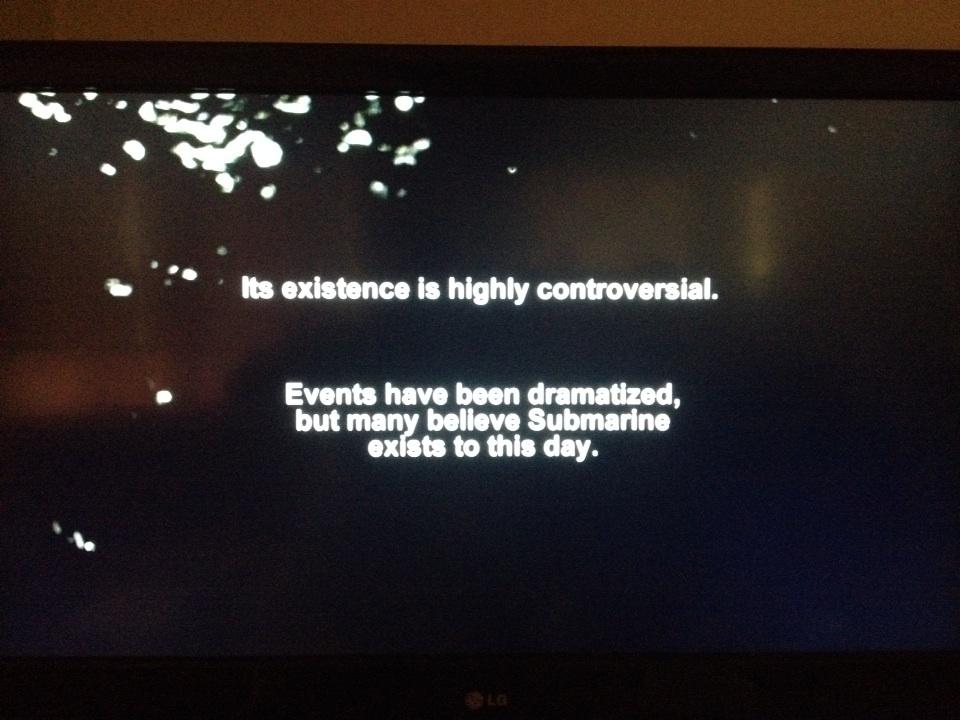
As always, a brief and vague disclaimer appears after all the credits have rolled.
As always, a brief and vague disclaimer appears during the show.

The fake-u-mentary is supposedly based in Hout Bay, but continually shows a map of Dyer Island and Geyser Rock and refers to Shark Alley that are all in Gansbaai, ~100km to the east.  So why would they say Hout Bay?  If you google “boat capsized in Hout Bay”, you will find that there was a boat which capsized outside of Hout Bay in 2012, killing 2 passengers onboard.  This boat was capsized by heavy swell in the middle of the day and had nothing to do with a shark, let alone a mythical one.  So I can only assume that Discovery Channel chose to include this very real tragedy in order to somehow legitimize their fake-u-mentary.  This is horribly insensitive.

Read More “Shark of Darkness: Wrath of Submarine is a fake documentary” »

Megalodon: the New Evidence is a fake documentary

Posted on August 7, 2014 By David Shiffman 3 Comments on Megalodon: the New Evidence is a fake documentary
Blogging, Popular Culture, Science

So was last year’s “Megalodon: the monster shark lives.”  Both Shark Week specials claim to show evidence that Carcharocles megalodon, the largest predatory shark that ever lived, is still alive. In both cases, the evidence is 100% completely and totally fake. A disclaimer from “the monster shark lives” Video evidence is CGI, images are photoshopped, and … Read More “Megalodon: the New Evidence is a fake documentary” »

Cascading planetary-wide ecosystem effects of the extirpation of apex predatory Krayt dragons on Tatooine

Posted on July 22, 2014 By David Shiffman
Blogging, Conservation, Popular Culture, Science

Author’s note: this post is part of the “Science of Tatooine” blog carnival. Though obviously about science fiction and not the real world, it includes real ecological theories,  and it uses some real peer-reviewed scientific papers as references. Whenever possible, I’ve linked to accessible copies of those papers and explainers of these ecological terms. Many of the same issues are associated with shark population declines. 

ABSTRACT

Predators play an important role in structuring ecosystems, with predator population declines being linked to a variety of negative ecological effects. Here, we present evidence that the planet Tatooine, famous throughout the Galaxy for being a desert planet, experienced desertification as a result of unintended changes in herbivore populations caused by the intentional large-scale killing of apex predators by offworld colonists. Fossil evidence and interviews showing traditional ecological knowledge suggest that once-abundant Krayt dragons were hunted to near extinction by early human colonists. As a result of the decline in predation, populations of large herbivorous banthas populations grew out of control and overgrazed the plants once found throughout Tatooine.

INTRODUCTION

Studies of numerous ecosystems have consistently shown the importance of intact populations predators to healthy ecosystems, with a recent review (Estes et al. 2011 “trophic downgrading of planet Earth”) noting that “the loss of apex consumers is arguably humankind’s most pervasive influence on the natural world.” Population declines of top predators can cause a trophic cascade, resulting in unintended consequences that ripple through a food chain. Sea otter population declines in the Pacific Northwest of the United States resulted in predation release of otter prey (sea urchins), and an overabundance of sea urchins destroyed entire kelp forest ecosystems by overgrazing (Estes et al. 1998 “killer whale predation on sea otters linking oceanic and nearshore systems.) Wolf population declines in Yellowstone National Park resulted in predation release of wolf prey (elk,) and an overabundance of elk destroyed aspen pine forests by overgrazing (Ripple et al. 2011 “trophic cascades among wolves, elk, and aspen on Yellowstone National Park’s northern range.”)  Ecosystem-wide effects stemming from the loss of predators has also been listed as the proximate cause of disease outbreaks (Pongsiri et al. 2009 “biodiversity loss affects global disease ecology,”), increasing destructive wildfires (Perrings et al. 1997 “biodiversity resilience and the control of ecological-economic systems: the case of fire-driven rangelands,”) and overall biodiversity loss (Paine 1969, “Pisaster-tegular interaction: prey patches, predator food preference, and intertidal community structure.”)

Though the planet Tatooine in the Tatoo system of the Outer Rim is known by researchers to have once been covered by oceans and lush vegetation, it is commonly known now as a desert planet (source). While it is famous in Republic circles primarily for being the home of Jedi Master Skywalker, Tatooine also has native sentient species, including Jawas and Tusken Raiders (the latter are derisively referred to by locals as “sand people” ).  Native non-sentient animals include banthas (large herbivores used as beasts of burden) and the now mostly extinct Krayt dragon (a large predatory species that fed on banthas).

Read More “Cascading planetary-wide ecosystem effects of the extirpation of apex predatory Krayt dragons on Tatooine” »

The incredible biodiversity of Aquaman: the grand finale

Posted on May 12, 2014May 12, 2014 By Andrew Thaler
Popular Culture, Science
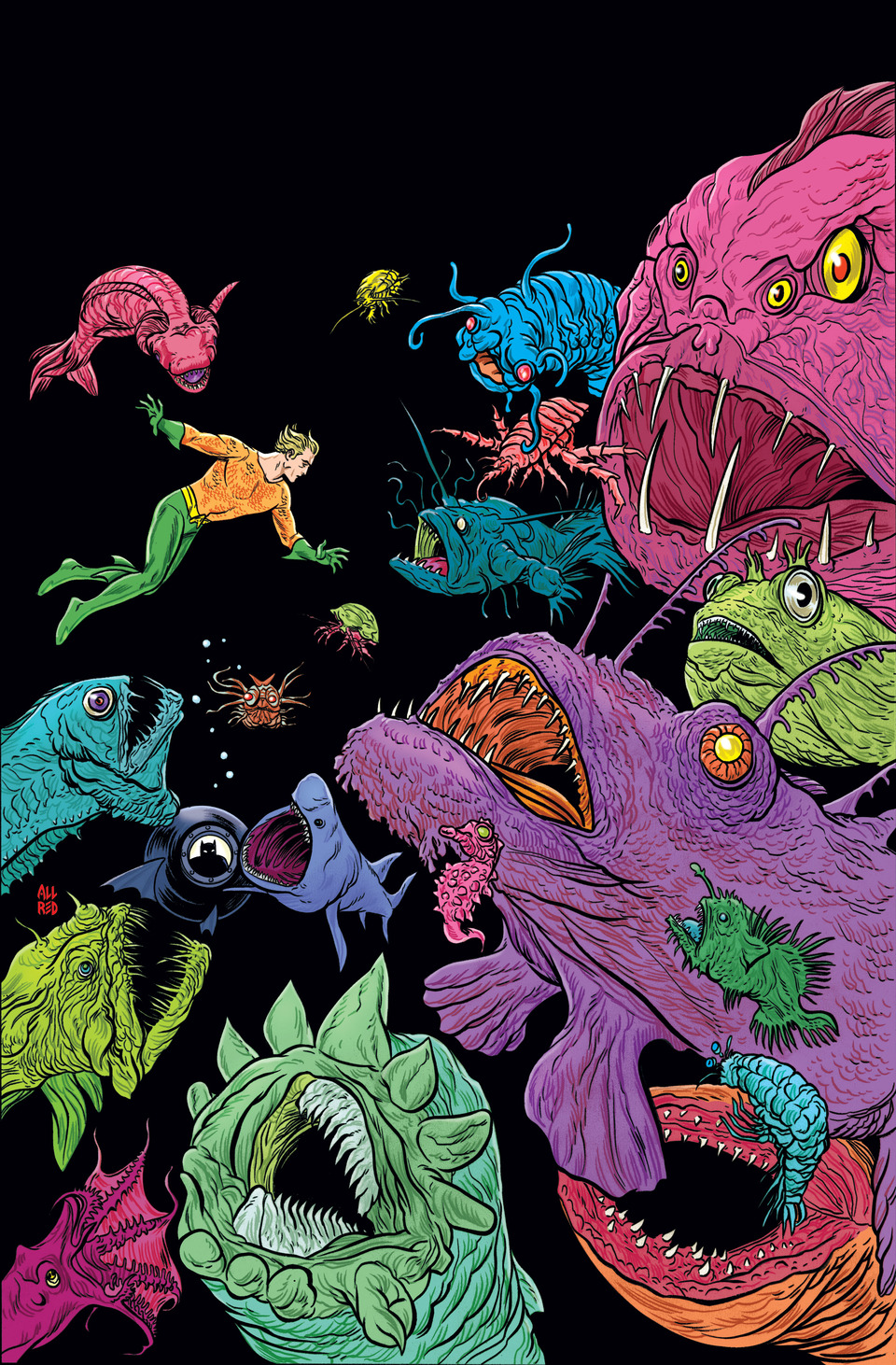
Aquaman #31 variant cover. Art by Mike Allred.

We’ve traveled far, this last week. From gentle basking sharks gliding across the surface of the North Sea to titanically tiny worms dwelling in the deep. The variant cover for Aquaman #31 is a fantastically diverse sampling of real ocean organisms, many of them not only profoundly weird but also almost entirely unstudied. Mike Allred’s is a small taste of the unknown still waiting to be explored.

I saved the best for last, including my favorite squid and scale worm. Before we dive into these final identifications, let’s take a moment to review.

Read More “The incredible biodiversity of Aquaman: the grand finale” »

The penultimate installment of the incredible biodiversity of Aquaman’s variant cover

Posted on May 9, 2014May 9, 2014 By Andrew Thaler
Popular Culture, Science

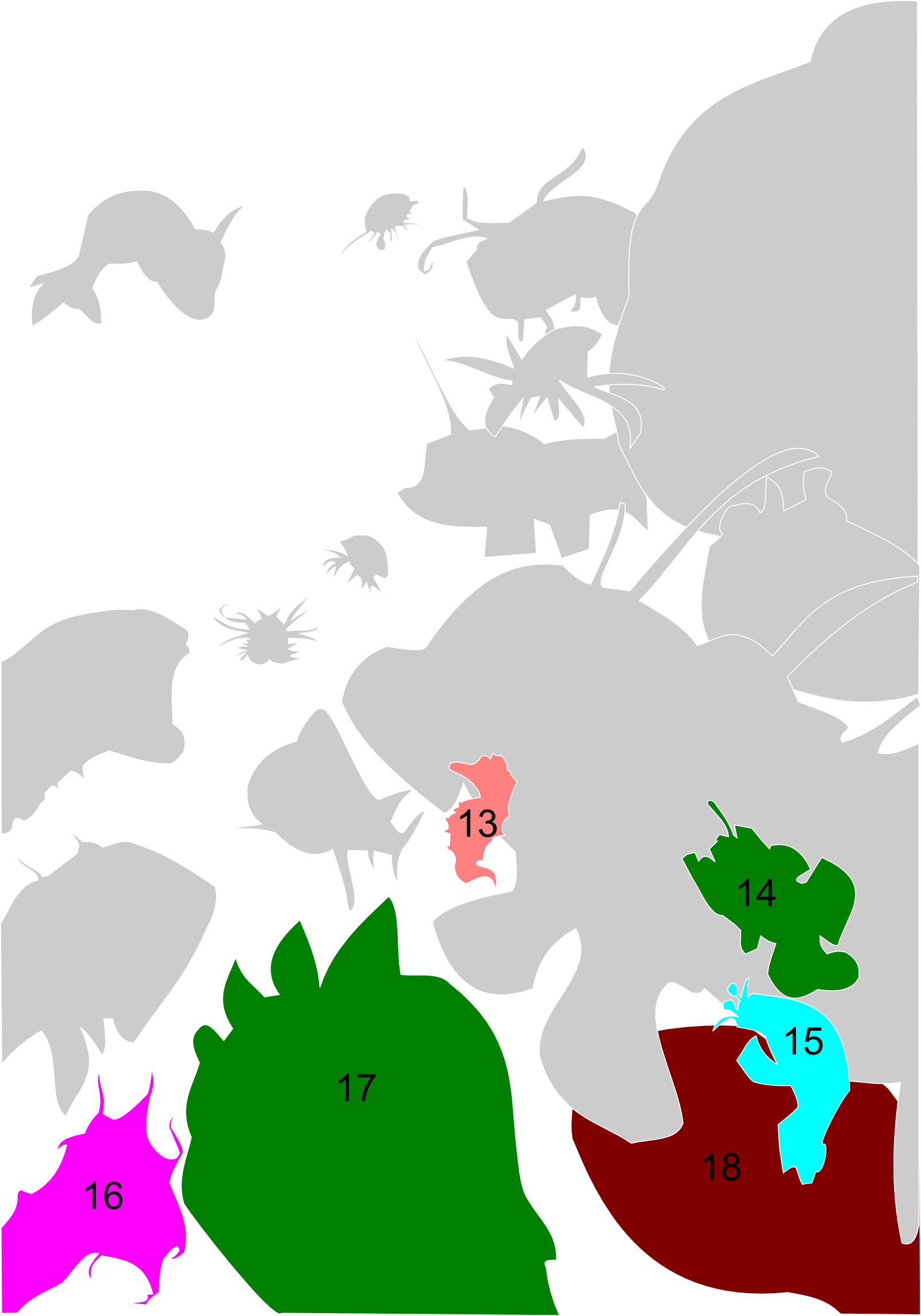
aquapurged5We are approaching the home stretch, with the second to last installment of our tour through this amazing Aquaman cover. Have you been following along? How many have you guessed so far?

If you haven’t been following along, you can catch up with the previous installments, below:

  • The incredible biodiversity of Aquaman’s variant cover
  • The incredible biodiversity of Aquaman’s variant cover: Episode 2
  • The incredible biodiversity of Aquaman’s variant cover: Halfway Home
  • The incredible biodiversity of Aquaman’s variant cover: Part four of a six part trilogy

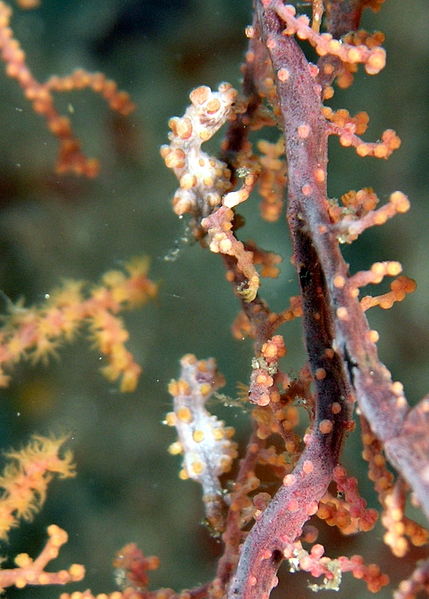
13. Pygmy Seahorse (Hippocampus bargibanti)

429px-Hippocampus_bargibanti3
Pygmy Seahorse. Photo by Jens Petersen.

seahorseI started my career in marine science working with seahorses, so these goofy, thoroughly un-fish-like fish, hold a special place in my heart. All seahorses are pretty weird, but pygmy seahorses might be the weirdest. These tiny animals, barely 2 centimeters long, live exclusively on gorgonian corals, their lump profile allows them to blend perfectly into the backdrop. Their bulbous protrusions will assume the color of their host coral.

Read More “The penultimate installment of the incredible biodiversity of Aquaman’s variant cover” »

The incredible biodiversity of Aquaman’s variant cover: Part four of a six part trilogy.

Posted on May 8, 2014May 8, 2014 By Andrew Thaler
Popular Culture, Science

aquapurged4Welcome to day four of our delightful tour through the weird, wonderful creatures on Michael Allred’s incredible Aquaman cover. It’s all fish today!

Since we’re at the halfway point, now seems like a good time to reflect on why this cover matters so much. I’ve been a fan of Aquaman for a long time, and for all the amazing visuals in the latest iteration of our Atlantean hero, the deep sea remains noticeably underrepresented. Comic books mirror life and it is rare to see deep-sea creatures feature in art, let alone popular art. To have so many deep-sea organisms featured prominently on a piece of genre-crossing pop art is a rare and welcome opportunity to share my love for fangtooths, vampire squid, vent worms, monkfish, fringeheads, and isopods with a new and diverse audience.

Downward with the bestiary of barotollerant glory!

Read More “The incredible biodiversity of Aquaman’s variant cover: Part four of a six part trilogy.” »

The incredible biodiversity of Aquaman’s variant cover: Halfway Home

Posted on May 7, 2014May 8, 2014 By Andrew Thaler
Popular Culture, Science

aquapurged3It’s day three of our epic journey through the wonderful deep-sea creatures featured on this variant cover for Aquaman #31. Have you taken a shot at naming all 18 species, yet? We identified species 1, 2, and 3 on Monday and 4, 5, and 6 on Tuesday.

Today we continue with 7, 8, and 9, one of which is is a major fishery.

Read More “The incredible biodiversity of Aquaman’s variant cover: Halfway Home” »

The incredible biodiversity of Aquaman’s variant cover: Episode 2

Posted on May 6, 2014May 5, 2014 By Andrew Thaler
Popular Culture, Science

Welcome back to another exciting installment of the incredible biodiversity of this incredible Aquaman cover. Today we’re investigating species 4 through 6, where we’ll meet one of my favorite mid-water fish.

aquapurged2

fangtooth4. Fangtooth (Anoplogaster cornuta)

With the largest tooth-length-to-body ratio of any fish, the fangtooth has earned its menacing name. Unfortunately, this intimidating creature barely reaches 18 centimeters in length, hardly the massive, Batman-swallowing maw illustrated to the right. Fangtooths are among the deepest swimming fish. They can be found as far as 5000 meters down, though they are more common in the midwater (200-2000 meters).

Read More “The incredible biodiversity of Aquaman’s variant cover: Episode 2” »

Posts pagination

Previous 1 … 6 7 8 … 20 Next

Popular Posts

The story of the pride flag made from NASA imagery: Bluesky's most-liked imageThe story of the pride flag made from NASA imagery: Bluesky's most-liked imageSeptember 27, 2024David Shiffman
"Why Sustainable Seafood Matters" is now available for preorder! Here's what it's about, and why I decided to write it."Why Sustainable Seafood Matters" is now available for preorder! Here's what it's about, and why I decided to write it.June 8, 2026David Shiffman
I just told 850 shark scientists a hard truth: We’re not communicating shark conservation correctly.I just told 850 shark scientists a hard truth: We’re not communicating shark conservation correctly.June 1, 2026David Shiffman
What Ocean Ramsey does is not shark science or conservation: some brief thoughts on "the Shark Whisperer" documentaryWhat Ocean Ramsey does is not shark science or conservation: some brief thoughts on "the Shark Whisperer" documentaryJuly 2, 2025David Shiffman
Deep-sea Mining, Domestic Cats, Star Trek, and Ocean Exploration: Andrew's mid-year podcast round-up.Deep-sea Mining, Domestic Cats, Star Trek, and Ocean Exploration: Andrew's mid-year podcast round-up.June 6, 2026Andrew Thaler
Shark of Darkness: Wrath of Submarine is a fake documentaryShark of Darkness: Wrath of Submarine is a fake documentaryAugust 10, 2014Michelle Jewell
Why ocean science is still one of the worst-funded scientific fields worldwideWhy ocean science is still one of the worst-funded scientific fields worldwideJune 3, 2026Chris Parsons
That's not a blobfish: Deep Sea Social Media is Flooded by AI SlopThat's not a blobfish: Deep Sea Social Media is Flooded by AI SlopDecember 19, 2025Andrew Thaler
What is a Sand Shark?What is a Sand Shark?November 12, 2017Chuck Bangley
Here's how to join my IMCC8 symposium, "Ocean Science Communication: What's New and What's Next?"Here's how to join my IMCC8 symposium, "Ocean Science Communication: What's New and What's Next?"April 22, 2026David Shiffman
Subscribe to our RSS Feed for updates whenever new articles are published.

We recommend Feedly for RSS management. It's like Google Reader, except it still exists.

Southern Fried Science

  • Home
  • About SFS
  • Authors
  • Support SFS


If you enjoy Southern Fried Science, consider contributing to our Patreon campaign.

Copyright © 2026 Southern Fried Science.

Theme: Oceanly Premium by ScriptsTown