After reading some of the reviews from our Readers’ Survey, many people list these among their favorite posts, while many others consider them their least favorite. So, we’ve decided to change the posting schedule for Finding Melville’s Whale. From now on, one or two new entries will appear every Sunday, instead of Tuesdays and Thursdays. We hope you will continue reading along with us as we dive deeper in Melville’s masterpiece.
Check out some of the fantastic swag you could win during the Southern Fried Science Readers’ Survey! All of this is stuffed into the rare and highly coveted Science Online 2010 tote bag. In addition, you could win an exclusive DVD of WhySharksMatter’s Four Things Everyone should know about Sharks documentary and every Shark Science … Read More “Win fantastic prizes in our reader survey!” »
That marine mammals have a rich sonic life has been well understood for several decades. What we didn’t understand until recently is how much we’ve changed the ocean soundscape, and how much we will continue to change the soundscape. Many of our new alternative energy plans involve maritime structures – offshore wind farms, wave energy … Read More “Weekly dose of TED – Peter Tyack: The intriguing sound of marine mammals” »
Sunglasses are a critical piece of gear if you plan on spending prolonged periods of time in the sun. Not only do they protect your eyes, but the right pair can help you spot marine-life swimming below the surface or boost your bird-watching prowess. An enormous, multi-billion dollar industry has formed to produce and market the right sunglasses to the right people.
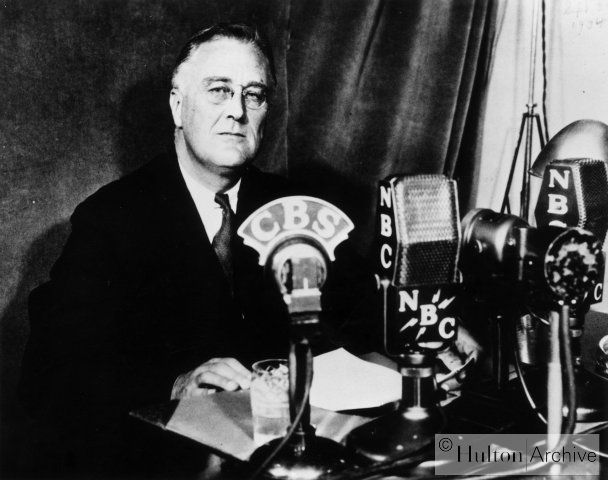
FDR, sometimes credited as a benevolent dictator, brought the US out of the Great Depression through his New Deal
Effective management of any landscape or seascape must attend to context such as unique attributes of the ecosystem, local cultural values and norms, and broader governance constructs. Conservation managers often joke that the best way to incorporate this context is to install a benevolent dictator at the helm. His or her role would be to see the big picture and make decisions based on expected community benefits. Others would call the term benevolent dictator an oxymoron – but there have been some documented cases of such idealistic planning. Sadly, it seems such “high modernism” is not the answer. In his book Seeing Like A State, James Scott documents cases of agricultural land, cityscapes, and whole communities that ended up having unexpected consequences to high modernist rule due to incomplete foresight and incorrect prediction of people’s reactions. He cites these examples as warnings for the modern conservation movement as they choose between philosophies to move forward.
The time has come for Southern Fried Science to get its report card. At the top of the page there is a link to the Reader Survey. We want to here from you, find out what you like, what you don’t like, and how you think this site could improve. Please take the survey, it … Read More “Take the Southern Fried Science Readers Survey, win fantastic prizes!” »
As Science Online kicks into high gear, I’d like to give a shout out to the three new blogs that have joined the Gam this week! First up is the long-awaited People, Policy, Planet by Lyndell. The blogs focuses on environmental policy, science research, and ecology. Read her introductory posts Politics and Policy. Next up … Read More “Welcome three new blogs to our network!” »
I had the pleasure of seeing Roz Savage speak at the Nicholas School of the Environment last year. That talk was a slightly longer version of the one above, with the addition that she had finished her Pacific voyage in Papua New Guinea. The question I pose to our readers is, what effect do these … Read More “Weekly dose of TED – Roz Savage: Why I’m rowing across the Pacific” »
Any good field scientist needs a good camera. At the very least you have to document your sampling sites, record samples, and get good photographs of your methods for the inevitable presentations. A field camera needs to be compact, flexible, easy to use, light on batteries, and durable. Of course, the more advanced photographer may scale up to a robust Digital SLR, but at that point, you already know what you need. For the rest of us, a smaller point-and-shoot will suffice.
I shoot with both a heavy duty DSLR and a light-weight point-and-shoot, depending on the conditions, how much space I have available, and how much gear I have to lug around. When it came time to replace my 6-year-old point-and-shoot with something a little more modern, I wanted something that had more flexibility than the run-of-the-mill pointers while still being small enough to carry around in a pocket. I also put a priority on optical zoom (which is definately not the same as digital zoom). I chose the Cannon Power Shot SX130 IS.
Thanks to everyone who stuck around during our blog vacation. Our adventure into Moby Dick continues with chapters 37 and 38 – Sunset and Dusk. These two chapters have been consolidated from two soliloquies to a dialog between Ahab and Starbuck. Read along with us and discuss this chapter or the book as a whole … Read More “Finding Melville’s Whale: Sunset and Dusk (Chapters 37 and 38)” »
 Sunglasses are a critical piece of gear if you plan on spending prolonged periods of time in the sun. Not only do they protect your eyes, but the right pair can help you spot marine-life swimming below the surface or boost your bird-watching prowess. An enormous, multi-billion dollar industry has formed to produce and market the right sunglasses to the right people.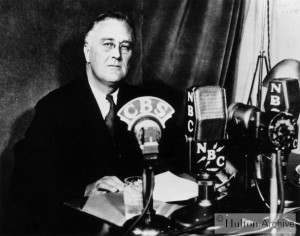
 Effective management of any landscape or seascape must attend to context such as unique attributes of the ecosystem, local cultural values and norms, and broader governance constructs. Conservation managers often joke that the best way to incorporate this context is to install a benevolent dictator at the helm. His or her role would be to see the big picture and make decisions based on expected community benefits. Others would call the term benevolent dictator an oxymoron – but there have been some documented cases of such idealistic planning. Sadly, it seems such “high modernism” is not the answer. In his book Seeing Like A State, James Scott documents cases of agricultural land, cityscapes, and whole communities that ended up having unexpected consequences to high modernist rule due to incomplete foresight and incorrect prediction of people’s reactions. He cites these examples as warnings for the modern conservation movement as they choose between philosophies to move forward.