Let’s talk about a pervasive zombie idea (a disproven idea that refuses to die) that continues to shamble through the halls of resource management. This is the belief that we shouldn’t spend money on conservation until a species is officially, legally designated as Threatened or Endangered.
The logic behind this delay usually wears a suit and carries a calculator. Bureaucrats and industries argue that preemptive conservation is an unnecessary expense. They claim we should wait for the data to become ironclad, complete the exhaustive administrative reviews, and let the regulatory framework of the Endangered Species Act (ESA) trigger funding when things are actually dire. It sounds like fiscal responsibility, but it is actually complete economic foolishness.
Waiting for a species to qualify for the ESA is the ecological equivalent of refusing to buy a $10 bottle of blood pressure medication, waiting until you have a massive stroke, and then expecting a multi-million-dollar triple-bypass surgery to fix everything on the taxpayer’s dime. It is a financial disaster. Preventative medicine is far cheaper than the cost of a medical crisis. But, like medical insurance companies, people make money by gambling on letting the patient (or endangered species) simply get critically ill and quickly dying without having to pay a penny, rather than fork out small amounts of money early on in order to prevent that from happening.
Early conservation action (i.e., as soon as a population decline is detected) is not just better for the planet; it is vastly cheaper.
The exponential curve of extinction economics
Focusing on ocean ecosystems, when a marine population begins to slide, the cost to fix the problem tracks on an exponential curve. Initially the species is still relatively abundant, but monitoring networks show numbers are dropping. The fixes here are cheap and surgical. You adjust a localized fishing quota, mandate a simple, low-cost gear modification like a Turtle Excluder Device, or protect a specific, well-known spawning aggregation site. The ecosystem remains intact, and the animals do the heavy lifting of reproducing on their own.
Then there’s the “waiting period”, a bureaucratic vacuum where we waste years. As populations plummet, we fight over listings, litigate over data gaps, and watch political appointees attempt to gut habitat protections or roll back environmental baselines. By the time a marine species is officially listed, its population is usually decimated, often numbering in the few hundreds or dozens. It’s the end of the extinction curve. To come back to the medical analogy, it’s in the Intensive Care Unit and the prognosis is not good.
Once you hit the ICU phase, the cheap fixes are gone. You are no longer just adjusting fishing rules. Now, you are paying for hyper-expensive, last-ditch triage: captive breeding programs; intensive genomic sequencing to manage inbreeding depression; continuous satellite tracking; and sweeping, multi-state critical habitat litigation.
Listing delays: a corporate policy
The legal history of laws such as the ESA reveals a recurring, multi-decade strategy where extractive industries use litigation to intentionally stall species from being listed. These delays successfully buy time for short-term resource exploitation by industry, pillaging as many resources and making as much money as they can before the gates close (and protections are enacted). Then they ultimately shift massive financial burdens they have caused onto the American taxpayer. The primary legal pathways of this “delay-to-exploit” dynamic, and their compounding financial consequences, show exactly how this strategy operates.
Industry groups (primarily representing oil and gas, logging, commercial fishing, and real estate development) frequently use the judicial system to challenge the scientific data underlying proposed listings. Under Section 4 of the ESA, the federal government is legally bound to strict timelines to evaluate species. To disrupt this process, industry coalitions deploy several legal tactics to cause “paralysis by analysis” and listing delays:
- Plaintiffs sue federal agencies like the U.S. Fish and Wildlife Service (FWS) or National Marine Fisheries Service (NMFS), claiming that the “best available science” used for a listing is insufficient or politically motivated.
- While transparency is critical, industry firms sometimes launch massive, coordinated FOIA requests and subsequent lawsuits over internal records to tie up agency staff in administrative red tape.
- When sympathetic administrations weaken rules (such as recent actions to rescind historical definitions of “harm” or allow economic impacts to dictate critical habitat designations), industries aggressively defend these changes in court. This locks the government into years of circular litigation, keeping protective conservation policies completely frozen.
Every month a listing is delayed represents a lucrative window for extractive industries to maximize profits before strict regulations take effect. If a marine or terrestrial area is formally designated as critical habitat, federal agencies must ensure public actions do not jeopardize the species. Delays via litigation allow companies to secure drilling permits, expand logging leases, or build coastal developments while the area remains legally unprotected. By the time a court finally orders the government to proceed with a listing, the habitat has often already been fragmented or degraded. The industry has extracted the resource and moved on, leaving an impoverished ecosystem behind.
Then the taxpayer foots the bill…
While private industries externalize their environmental costs to generate profit, the financial burden of managing the fallout falls squarely on the taxpayer. Extensive industry litigation forces federal agencies to spend millions of dollars defending their regulatory decisions in court instead of using those funds for actual habitat restoration. Government attorneys, court costs, and administrative reviews consume massive portions of an already strained wildlife management budget.
The paperwork alone to navigate these legal battles is extraordinarily expensive. According to historical FWS data, a basic 12-month finding costs roughly $100,000, while a final listing rule burdened by complex critical habitat disputes easily exceeds $300,000. When a species is forced into a multi-year backlog due to litigation, these bureaucratic fees multiply exponentially.
When looming extinction becomes a financial crisis
This is where the real economic disaster occurs. When industry litigation successfully delays protections, populations drop to dangerously low levels. Letting a species drop past its natural tipping point transforms a low-cost regulatory tweak into a multi-million-dollar taxpayer crisis. Minor gear adjustments or small zoning tweaks are no longer sufficient. When a population collapses completely, the public must fund high-intensity interventions like captive breeding facilities, specialized veterinary support, and highly regulated, multi-state recovery plans. This is in addition to paying the costs of numerous court cases by industry at every stage. This is ultimately funded by the taxpayer.
To compound the issue, Governmental conservation agencies, such as the FWS and NMFS, have seen their resource management budget slashed. A Center for Conservation Innovation analysis noted that the FWS routinely receives only about 40% of the funding it actually needs to properly implement the ESA. Meanwhile the total number of listed species grows. This leaves agencies perpetually underfunded, meaning taxpayers are paying more money for less effective, emergency-room style results.
The example of Rice’s whale
The financial madness of waiting doesn’t stop at the species’ own recovery budget. Turning again to the ocean as an ecosystem example, when a marine animal drops to near-extinction levels, the economic fallout bleeds into surrounding industries.
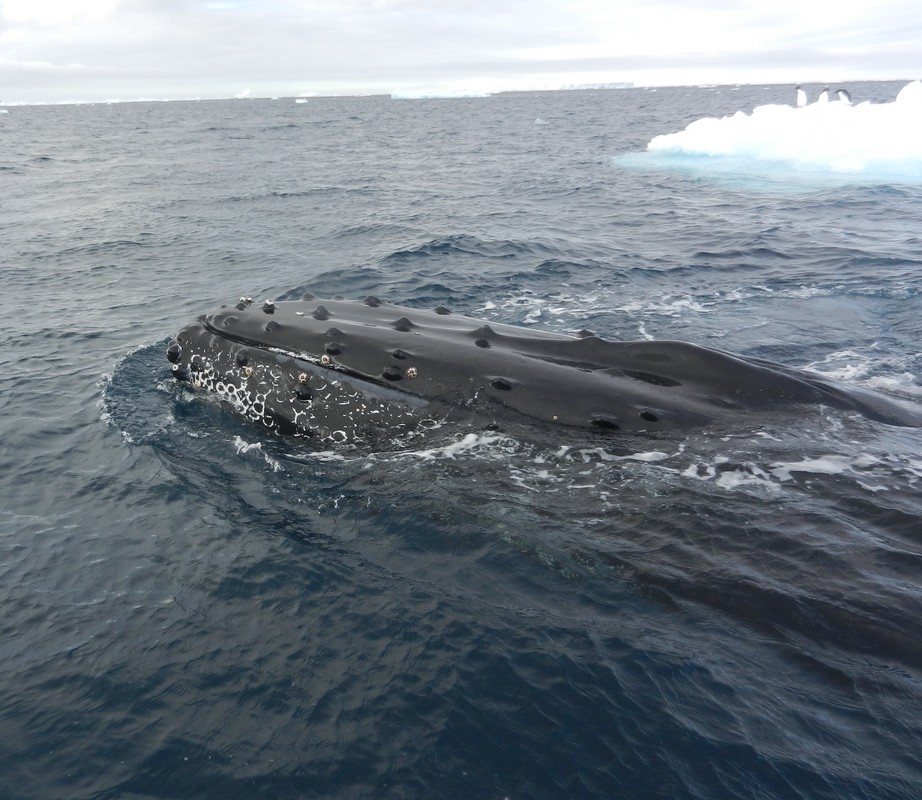
Consider the critically endangered Rice’s whale in the Gulf of Mexico, where fewer than 50 individuals remain. Because the population was allowed to get so terrifyingly low, any single human-caused incident (a ship strike, an oil spill, exposure to seismic testing) could trigger total extinction. As a result, the regulatory measures required to protect them must be absolute, sparking massive, expensive legal battles between conservation groups, the government, and Gulf industries.
If we had stepped in decades ago when the whales (then considered a sub-species of Bryde’s whale) first showed clear signs of localized decline, regional protections could have been integrated smoothly into ocean planning. Instead, waiting for the absolute brink has created a high-stakes, litigious nightmare where millions of dollars are spent on lawyers rather than habitat.
Act sooner, not later
When you starve a system of resources, chasing the ambulance becomes unsustainable. Spending finite conservation dollars on emergency room triage and costly interventions, for a handful of functionally extinct species, leaves nothing left to keep the remaining, moderately healthy (for now) ecosystems from collapsing.
We need to stop treating proactive conservation as an expensive luxury. Conservation should work more like health care in most of the world: prevention is almost always cheaper than emergency treatment. Acting when a species first shows signs of decline is like getting a health problem checked early, when a relatively simple intervention may be enough to put things right. Wait until a species is critically endangered, and we are effectively waiting for the patient to arrive in the emergency room. Treatment becomes more complicated, more expensive, and far less likely to succeed. If we want to save both biodiversity and our wallets, we need to invest in conservation while the patient is still healthy enough to save, rather than waiting until we are paying for intensive care.