Let’s not mince words: current federal ocean conservation policy is a cocktail of chaos and disaster, with a generous sprinkle of incompetence. Following a brutal stretch of legislative and regulatory rollbacks (including the completely indefensible bureaucratic magic trick of removing habitat destruction from the Endangered Species Act’s definition of “harm”) Capitol Hill decided to double down on ecological absurdity.
Recently the House Subcommittee on Water, Wildlife, and Fisheries met in the Longworth House Office Building to hold a legislative hearing on H.R. 9621, grandiosely titled the “Northwest Endangered Salmon Predation Prevention Act of 2026”.
If you aren’t fluent in D.C. euphemisms, let me translate this for you: the “We blocked the rivers with concrete, destroyed the salmon’s spawning habitat, overfished for decades, polluted the estuaries, so now we’re going to blame and shoot the sea lions Act” (it IS 2026, so that part is accurate).
What’s more, instead of trying to fix the legislative devastation inflicted by MAGA Republicans, many Democrats are equally supportive of this dreadful bill.
What does H.R. 9621 actually do?
Introduced on July 9 by Representatives Michael Baumgartner (Republican-WA) and Emily Randall (Democrat-WA), this bipartisan bill aims a legislative harpoon directly at the Marine Mammal Protection Act (MMPA), one of our most successful environmental laws.
Currently, Section 120 of the MMPA allows state and tribal wildlife managers to apply for highly restrictive permits to lethally remove California and Steller sea lions in the Columbia River Basin at places like Bonneville Dam.
Bear in mind that the sea lions are simply feeding on historic prey species, that the fish are endangered due to humans damaging and polluting their habitat, overfishing and changing their climate, AND these areas where these sea lions are feeding on concentrated salmon are the result of humans poorly engineering the river, basically creating a sushi conveyor belt for hungry predators at artificial pinch points.
Section 120 of the MMPA was a bureaucratic band aid, first passed in 1994 and heavily amended in 2018 to fix a problem humans caused in the first place.
However, H.R. 9621 takes a chainsaw to this section of the MMPA. The bill seeks to:
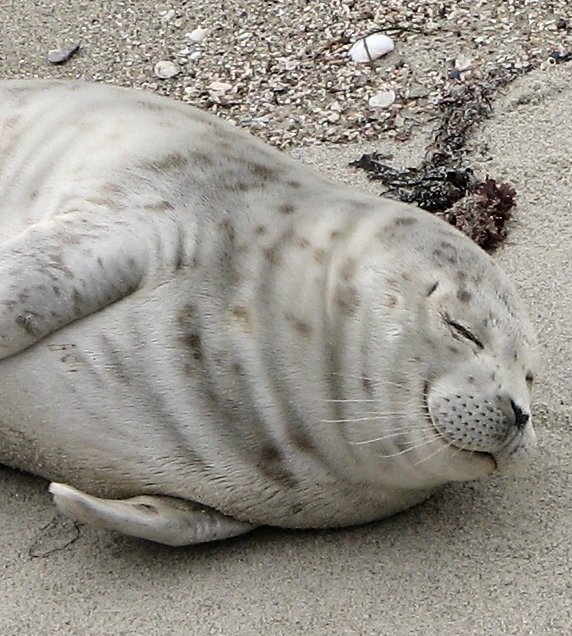
- Kill more species. It moves beyond killing California and Steller sea lions to include harbor seals.
- Expands killing areas. It lifts the restriction limiting kills to designated areas of the river system, opening up killing seals and sea lions to the entire Columbia River Basin and across all of Puget Sound and the Washington coast.
- Increases the number of animals that can be killed. The bill authorizes an unlimited number of seals and sea lions to be killed in the river basin and 10% of the Potential Biological Removal level everywhere else in Washington—establishing what amounts to a cull.
This intentional mortality, on top of existing threats facing seals and sea lions (such as commercial fishery bycatch, ocean noise, and climate change), places unnecessary stress on these marine mammals in this region.
Seals as scapegoats
This bill’s rhetoric is particularly frustrating. Its proponents (including commercial and recreational fishers, state managers, and tribes) argue that booming seal and sea lion populations are eating all of the threatened and endangered salmon before humans can get to them.
However, the actual science (based on data rather than gut feelings and “common sense”) says that this is fantasy. Marine mammal research groups (e.g. Sealife Response, Rehabilitation & Research) have clarified that killing seals and sea lions will not recover salmon populations.
Why? Because ecosystems are complicated. As the Washington State Academy of Sciences recently pointed out, there is a massive hole in the simplified “kill seals, more salmon” logic. Sea lions don’t just eat salmon; they also eat the predatory fish that prey on juvenile salmon.Killing too many sea lions means that these mid-level predators (such as Pacific hake and dogfish) increase, decimating juvenile salmon (and potentially other species). This might trigger a trophic cascade that could lead to an increase in these mid-level predators, which will then turn around and devour millions more salmon smolts than seals and sea lions ever did.
This simplified, but wrong, logic has been used by countries such as Japan and Norway to defend their “kill whales, more fish” arguments, which have been shown time and again to be wrong, leading to depletion of marine mammal populations, but with absolutely no benefit to commercial fish stocks.
The concrete elephant in the room
The Congressional supporters of the bill have been acting like pinniped predation is the primary driver of salmon depletion, willfully ignoring the massive elephant in the room.
Salmon are depleted and not recovering because:
- Humans destroyed riverside vegetation and woodland that were part of the salmon’s critical spawning habitat, through logging, agriculture and urban development.
- Dams and culverts continue to block access to thousands of miles of spawning grounds.
- Climate change is increasing water temperatures—in the ocean and the rivers—past threshold levels that are lethal to salmon.
- Urban and agricultural runoff contaminated with pollutants (such as the tire wear protector 6PPD-quinone) is systematically wiping out coho salmon runs.
- Industrial fishing is killing vast numbers of salmon via bycatch.
- Some salmon are still legally fished by commercial and recreational anglers
However, strategically removing some dams, treating stormwater, cutting carbon emissions, and reducing fishing effort are expensive and require fighting powerful industries. Passing a bill that lets people shoot seals and sea lions in Puget Sound? That’s cheap, it allows politicians to say to lobbyists and voters that they have done something , and it gives the illusion of a problem fixed. But it won’t fix anything.
If anything, killing seals and sea lions on a coastline what is very dependent upon tourism for jobs will likely have much more significant impacts. Research has found that tourists will boycott areas where seals are culled to “protect fisheries” potentially leading to economic impacts and job losses far, far higher than the entire local fishing industry contributes. In addition, if shooting is allowed, injured (and dead) gunshot victims washing up on shore will be a political black eye for everyone supporting this bill.
What happens next?
Because H.R. 9621 has bipartisan backing from Pacific Northwest lawmakers facing immense pressure from the fishing industry and tribes, it has real legs. If it clears the Committee on Natural Resources, it will head toward a full vote on the House floor.
If we have learned anything from the last fifty years of ”predator control,” it is that human manipulation of food webs via killing apex predators almost always blows up in our faces. We tried it with wolves, we tried it with coyotes, we tried it with sea otters, and doing it with seals and sea lions won’t magically make the salmon return to river habitats that humans have fragmented and destroyed.
If you care about actual, science-based ocean conservation, keep a sharp eye on the House Committee on Natural Resources tracker. Write to, and call, Congress and tell them to stop using wildlife as a meat-shield for decades of human environmental failures.