Skip to content

Southern Fried Science

Over 15 years of ocean science and conservation online

  • Home
  • About SFS
  • Authors
  • Support SFS

Tag: bycatch

Invisible squid and fish with glowing eye spikes: Thursday Afternoon Dredging, April 5th, 2018

Posted on April 5, 2018April 2, 2018 By David Shiffman
Uncategorized

Cuttings (short and sweet):  Follow Louise Chavarie, an Arctic aquatic ecologist, on twitter! A squid-skin inspired invisibility cloak. From Nature News research updates. Underwater noise pollution disturbs fish, too. From CBC News. NOAA publishes list of global fisheries and their risks to marine mammals. By John Cannon, for MongaBay Antarctic ice melting faster than thought. By … Read More “Invisible squid and fish with glowing eye spikes: Thursday Afternoon Dredging, April 5th, 2018” »

15 important shark conservation and management terms explained with memes

Posted on April 1, 2013April 2, 2013 By David Shiffman 9 Comments on 15 important shark conservation and management terms explained with memes
Conservation, Popular Culture, Science

davesquare

inigo-montoya-you-keep-using-that-word-i-dont-think-it-means-what-you-th-3b4b2920-sz625x625-animateIf interested citizens want to get involved in conservation and management policy, it’s absolutely vital to use proper terminology. The policy world can be full of confusing jargon, but there are few ways to discredit yourself in the eyes of decision makers as quickly as using a critical term incorrectly. In fact, it isn’t uncommon for a decision maker’s response to a petition or public comment to consist entirely of correcting  inaccurate terminology, if a response is issued at all. There are well over 100 acronyms and terms that I’ve seen regularly used, but in the interest of brevity, I’ve selected what I believe to be the 15 most important terms that I’ve seen people repeatedly use incorrectly.

For each term, I’ve provided a definition from a scientific paper or technical report whenever possible.  I have also  provided some additional explanation in my own words, and some assistance from familiar memes. Whenever possible, I’ve linked to blog posts, articles, or websites that provide even more information. Most of these terms are broadly applicable to fisheries management policy, but some are specific to shark fisheries. It is not my intention with this post to strongly advocate for or against any specific policy (I do plenty of that with other posts), but to make sure everyone is speaking the same language.

Read More “15 important shark conservation and management terms explained with memes” »
Mermaids do not exist, and five other important things people should, but do not, know about the ocean

Posted on June 5, 2012September 2, 2013 By David Shiffman 12 Comments on Mermaids do not exist, and five other important things people should, but do not, know about the ocean
Science

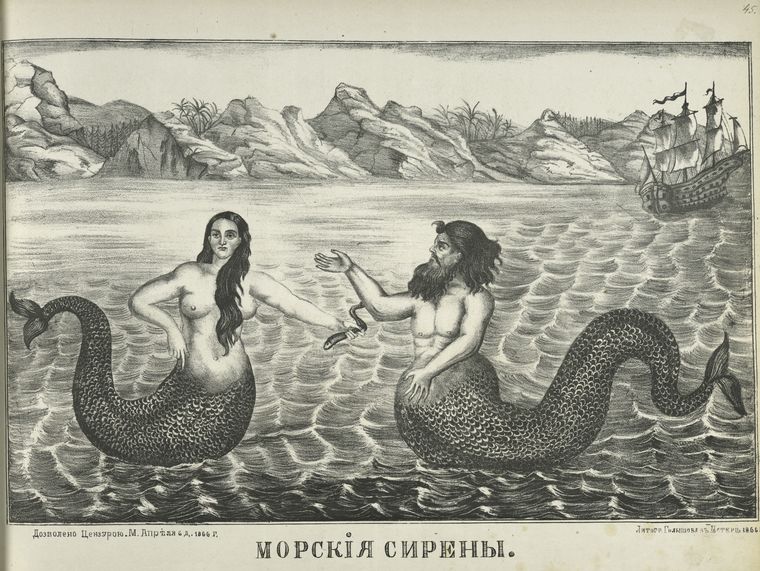
Mermaids depicted by a Russian folk artist. Image courtesy Wikimedia Commons via New York Public Library

Last week, Animal Planet aired a fictional mockumentary about mermaids. From an educational perspective, it was a disaster that was rightfully described as “the rotting carcass of science television” by Brian Switek. As Dr. M on Deep Sea News pointed out, one of the troubling results of this TV special was the discovery that some people believe that mermaids are real.

When I pointed out on Facebook and twitter that mermaids do not exist and that I hoped none of my friends believe otherwise, it inspired a long and interesting discussion. Someone asked why it matters if people believe in mermaids, as they felt that a sense of whimsy among the public is a good thing. Someone pointed out that scientists are discovering amazing new species all the time. More than a few people said “anything is possible.”

Sure, scientists discover new species all the time, but while finding a new species of monkey, orchid, or jellyfish can be interesting, it is not proof that “anything is possible” and it is not the same thing as finding a species of talking, thinking humanoids with fish tails on the lower half of their bodies.  There’s a big and important difference between enjoying fantasy novels and wishing that certain fantastical creatures exist (i.e. having a sense of whimsy) and genuinely believing that those creatures really do exist.

These people don’t believe that in the vast and unexplored ocean, there may be some bizarre undiscovered species still out there. They believe that talking, thinking humanoids with fish tails on the lower half of their bodies exist and are acknowledged as existing by the scientific community. This displays a troubling lack of awareness of reality that likely is not limited to a belief in mermaids. For the benefit of those who have paid so little attention to what’s going on in the real world that they believe mermaids exist, here are five other things that you should, but likely do not, know about the oceans.

Read More “Mermaids do not exist, and five other important things people should, but do not, know about the ocean” »

Swordfish, certifications, and sustainable seafood

Posted on May 1, 2012October 27, 2013 By Guest Writer 4 Comments on Swordfish, certifications, and sustainable seafood
Science

Jordan Nikoloyuk is the Sustainable Fisheries Coordinator of the Ecology Action Centre, a membership-based community environmental organization based in Nova Scotia, Canada. The Marine Issues Committee of the EAC was founded in 1995 after the collapse of the Atlantic Canadian groundfish stocks and works towards conserving and protecting marine ecosystems and maintaining sustainable fisheries and vibrant coastal communities.

As part of its sustainable seafood work and through its Friends of Hector campaign – www.friendsofhector.org – the EAC has participated in many Marine Stewardship Council assessments for Atlantic Canadian fisheries and encouraged retailers to support certified fisheries. Jordan has written this guest post to share his recent experiences with a certification that has left the EAC and other conservation organizations wondering whether seafood certification can contribute to sustainable fisheries management in the long term, or if the conflict between keeping an eco-label rigorous on the one hand and expanding its market appeal on the other is just too difficult to manage. What do you think?

The best way to buy seafood responsibly is to read a sustainable seafood guide and ask your retailer the two big questions: where is this from and how was it caught? When getting these answers is tough, many people turn to eco-certifications and labelling. Despite some increasingly controversial certifications, the Marine Stewardship Council (MSC) is considered to be the most trusted and reliable label, but how many unsustainable fishery certifications will it take to ruin this credibility?

Last week, after lengthy and widespread opposition, the MSC approved certification of the Atlantic Canadian longline swordfish fishery, which catches 100,000 sharks and 1,400 endangered sea turtles every year. The Ecology Action Centre spent almost two years working to oppose this greenwashing. Now we are left asking: how can we promote sustainable fisheries with organizations the size of the MSC working against us? When a definition of sustainability is so weak that it lets the status quo continue, can this be seen as an effective ‘market-driven solution’?

Read More “Swordfish, certifications, and sustainable seafood” »

Bad news for whale sharks: The world’s largest fish are being killed for bait and billboards

Posted on April 5, 2012April 5, 2012 By David Shiffman 17 Comments on Bad news for whale sharks: The world’s largest fish are being killed for bait and billboards
Science

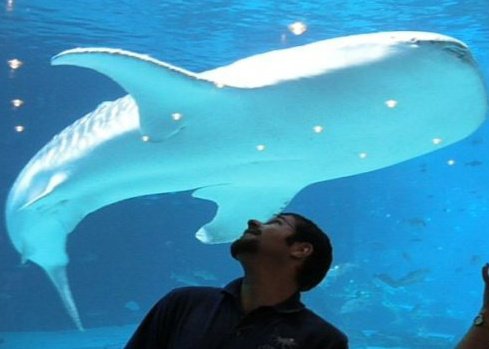
WhySharksMatter and a whale shark at the Georgia Aquarium

The world’s largest shark eats only plankton, couldn’t bite a human if it wanted to, and is one of the few sharks that could be reasonably described as beautiful. Globally, SCUBA divers pay an estimated $50 million each year for the chance to swim with these incredible fish. Their long migrations through international waters makes international cooperation necessary to protect them, which is particularly important because the 30 years it can take for these animals to reach reproductive maturity means that populations will take a long time to recover if they are overexploited. They’re listed by the IUCN Shark Specialist Group as Vulnerable globally. Between their charismatic nature, their inability to harm humans, and their value to ecotourism, it should be easy to convince governments to protect whale sharks *, making two recent reports all the more shocking.

Read More “Bad news for whale sharks: The world’s largest fish are being killed for bait and billboards” »

Proposed fishery increase could harm critically endangered thorny skates

Posted on September 15, 2011 By David Shiffman 14 Comments on Proposed fishery increase could harm critically endangered thorny skates
Conservation, Science

In response to new analyses estimating  that greater numbers of some skate species can be safely fished,  the National Marine Fisheries Service has proposed an “emergency” increase in the catch limit for the Northeast Skate Complex Fishery. While its good news that some skate populations may be doing well enough to support increased fishing, this doesn’t tell the whole story of the Northeast Skate Complex.

Read More “Proposed fishery increase could harm critically endangered thorny skates” »

Shark Science Monday: Jen Caselle discusses the recovery of shark populations in California

Posted on September 12, 2011September 11, 2011 By David Shiffman 1 Comment on Shark Science Monday: Jen Caselle discusses the recovery of shark populations in California
Science

In this week’s edition of Shark Science Monday, Jen Caselle of UC Santa Barbara discusses how the banning of gill nets in Southern California led to population recoveries of several species of sharks. If you have a question for Jen, leave it below and I’ll make sure she gets it.

Beneath the Waves Film Festival: Shifting Gears

Posted on April 18, 2011April 18, 2011 By David Shiffman
Conservation, Science

This 2011 Beneath the Waves Film Festival entry comes from the Pew Charitable Trusts. Shifting Gears tells the story of longlining in the Gulf of Mexico. If you have a question for the filmmakers, please leave it as a comment below and I’ll make sure they get it.  

MSC considering granting sustainable status to a fishery with high shark bycatch

Posted on April 6, 2011April 6, 2011 By David Shiffman 11 Comments on MSC considering granting sustainable status to a fishery with high shark bycatch
Conservation, Science

In a world where greenwashing, overfishing, bycatch and pirate fishing run rampant, it can be difficult for eco-conscious consumers to know what to buy. Many eco-certification agencies exist, but they often offer conflicting advice. Who should you listen to?

Read More “MSC considering granting sustainable status to a fishery with high shark bycatch” »

Indian Ocean Tuna Commission Rejects Shark Conservation Policies

Posted on March 24, 2011 By David Shiffman 1 Comment on Indian Ocean Tuna Commission Rejects Shark Conservation Policies
Conservation, Science

Last week, the Indian Ocean Tuna Commission held their annual meeting in Sri Lanka. As one of the few international fisheries policy organizations in the region, the IOTC is also responsible for management of billfish and sharks. Several new shark conservation policies were proposed this year. These included species-specific protections for hammerhead and oceanic whitetip sharks, closing loopholes in existing policies that ban finning sharks and discarding the bodies at sea, and requiring fishermen to collect and report more types of data on their shark bycatch. All of these proposals were rejected.

Read More “Indian Ocean Tuna Commission Rejects Shark Conservation Policies” »

Posts pagination

1 2 Next

Popular Posts

Shark scientists want their research to help save threatened species, but don’t know how. Our new paper can help.Shark scientists want their research to help save threatened species, but don’t know how. Our new paper can help.December 1, 2025David Shiffman
Norway and Cook Islands put their deep-sea mining plans on pause.Norway and Cook Islands put their deep-sea mining plans on pause.December 3, 2025Andrew Thaler
What Ocean Ramsey does is not shark science or conservation: some brief thoughts on "the Shark Whisperer" documentaryWhat Ocean Ramsey does is not shark science or conservation: some brief thoughts on "the Shark Whisperer" documentaryJuly 2, 2025David Shiffman
The Trouble with Teacup PigsThe Trouble with Teacup PigsOctober 14, 2012Andrew Thaler
What we know we don't know: impacts of deep-sea mining on whales, dolphins, sharks, turtles, and other migratory species.What we know we don't know: impacts of deep-sea mining on whales, dolphins, sharks, turtles, and other migratory species.November 20, 2025Andrew Thaler
2025: My year in writing, public speaking, and media interviews2025: My year in writing, public speaking, and media interviewsDecember 3, 2025David Shiffman
Urea and Shark OsmoregulationUrea and Shark OsmoregulationNovember 15, 2010David Shiffman
Shark of Darkness: Wrath of Submarine is a fake documentaryShark of Darkness: Wrath of Submarine is a fake documentaryAugust 10, 2014Michelle Jewell
How tiny satellites are tracking marine wildlifeDecember 1, 2025Andrew Thaler
Build a dirt cheap, tough-as-nails field computer in a Pelican caseBuild a dirt cheap, tough-as-nails field computer in a Pelican caseJuly 21, 2015Andrew Thaler
Subscribe to our RSS Feed for updates whenever new articles are published.

We recommend Feedly for RSS management. It's like Google Reader, except it still exists.

Southern Fried Science

  • Home
  • About SFS
  • Authors
  • Support SFS


If you enjoy Southern Fried Science, consider contributing to our Patreon campaign.

Copyright © 2025 Southern Fried Science.

Theme: Oceanly Premium by ScriptsTown