Skip to content

Southern Fried Science

Over 15 years of ocean science and conservation online

  • Home
  • About SFS
  • Authors
  • Support SFS

Tag: carnivorous plants

Carnivorous plants respond to increased soil nitrogen, eco-news websites completely miss the point

Posted on June 10, 2012 By Andrew Thaler 1 Comment on Carnivorous plants respond to increased soil nitrogen, eco-news websites completely miss the point
Science

Flowers of a venus flytrap. Photo by Andrew David Thaler.

Late last week, inspired by our newly flowering Venus Flytraps, I posted pictures of Amy and my carnivorous plant collection on twitter and on the Southern Fried Science Facebook page. After David’s recent post on a nurse shark that underwent major dietary changes following traumatic surgery and captivity, our wonderful readers must have been on high alert for trophic shifts following anthropogenic disturbance-type articles (or, more casually, “stuff that eats stuff now eats different stuff”), because this morning my inbox was filled with links to variations on the following article: Pollution makes carnivorous plants go vegetarian. Whenever human activity alters trophic interactions, there is potential for major ecological changes in an ecosystem. While ecosystems are dynamic, shape by continuous variation in community structure and resource and habitat variability, rapid changes can result in total collapse or permanent shifts to functional states.

Unfortunately, these “eating different stuff” articles rarely reflect the deep and nuance ecologic reality of trophic interactions and instead capitalize on the narrative of “even animals are going veggie to save the planet!” Allow me to revel in my cultural roots with a hearty “Oy vey!”
Read More “Carnivorous plants respond to increased soil nitrogen, eco-news websites completely miss the point” »

Biodiversity Wednesday: Flesh eaters of the Savanna

Posted on February 16, 2011February 16, 2011 By Andrew Thaler
Uncategorized

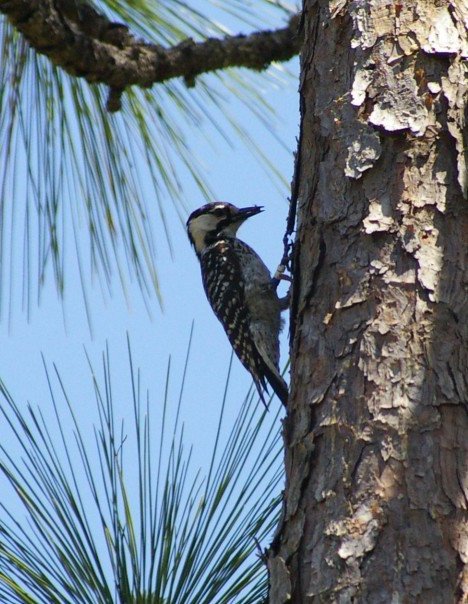
Red-cockaded Woodpecker in Croatan Forest. Photograph by Andrew David Thaler.

The wet, temperate understory of a longleaf pine savanna, is not the first place one would thing to search for some of nature’s most fearsome predators. These maritime ecosystems stretch down the Atlantic seaboard, from southern Virginia to northern Georgia, but are most common in North and South Carolina. Boomerang-shaped bays, called Carolina bays, formed behind ancient sand dunes, provide the foundation for these biodiversity rich regions. More than 50 endangered species are native to the Carolina lonfleaf pine savannas, including the Cape Fear Threetoothed land snail and the iconic Red-cockaded Woodpecker, but among the most evocative inhabitants of these pocosin wild-lands are the many-jawed monsters of the the understory – the Venus Flytrap.

Read More “Biodiversity Wednesday: Flesh eaters of the Savanna” »

Popular Posts

How close did the world's first deep-sea mining come to the dredging the world's largest cold-water coral reef?How close did the world's first deep-sea mining come to the dredging the world's largest cold-water coral reef?March 17, 2026Andrew Thaler
What Ocean Ramsey does is not shark science or conservation: some brief thoughts on "the Shark Whisperer" documentaryWhat Ocean Ramsey does is not shark science or conservation: some brief thoughts on "the Shark Whisperer" documentaryJuly 2, 2025David Shiffman
That's not a blobfish: Deep Sea Social Media is Flooded by AI SlopThat's not a blobfish: Deep Sea Social Media is Flooded by AI SlopDecember 19, 2025Andrew Thaler
Urea and Shark OsmoregulationUrea and Shark OsmoregulationNovember 15, 2010David Shiffman
Here's what I teach my students about finding jobs in marine biology and conservationHere's what I teach my students about finding jobs in marine biology and conservationApril 10, 2024David Shiffman
At least 74 practicing shark researchers: How a silly thing I said online raised thousands for conservationAt least 74 practicing shark researchers: How a silly thing I said online raised thousands for conservationFebruary 26, 2025David Shiffman
I turned my woodshop into a personal solar farm.I turned my woodshop into a personal solar farm.June 21, 2021Andrew Thaler
Here are some ocean conservation technologies that I'm excited aboutHere are some ocean conservation technologies that I'm excited aboutFebruary 19, 2026David Shiffman
Alberta, Canada is the proud owner of the largest man-made pyramid on the planetAlberta, Canada is the proud owner of the largest man-made pyramid on the planetOctober 16, 2012Andrew Thaler
America's Second-Largest Estuary is a Lagoon Full of SharksAmerica's Second-Largest Estuary is a Lagoon Full of SharksApril 12, 2018Chuck Bangley
Subscribe to our RSS Feed for updates whenever new articles are published.

We recommend Feedly for RSS management. It's like Google Reader, except it still exists.

Southern Fried Science

  • Home
  • About SFS
  • Authors
  • Support SFS


If you enjoy Southern Fried Science, consider contributing to our Patreon campaign.

Copyright © 2026 Southern Fried Science.

Theme: Oceanly Premium by ScriptsTown