Skip to content

Southern Fried Science

Over 15 years of ocean science and conservation online

  • Home
  • About SFS
  • Authors
  • Support SFS

Tag: nick dulvy

The international gill plate trade: a highway to hell for devil rays?

Posted on September 29, 2016September 29, 2016 By Guest Writer 1 Comment on The international gill plate trade: a highway to hell for devil rays?
Science

sebphoto2Seb Pardo is a biologist currently doing a PhD at Simon Fraser University in Canada. He is broadly interested in the biology, ecology, and conservation of sharks and rays. At present, his research is focused on borrowing tools from evolutionary biology to predict the biology and extinction risk of poorly studied sharks and rays. By using these data-poor methods, he hopes to make the most out of currently available data to inform policy decisions relevant for the sustainable management of sharks and rays. His twitter handle is @sebpardo
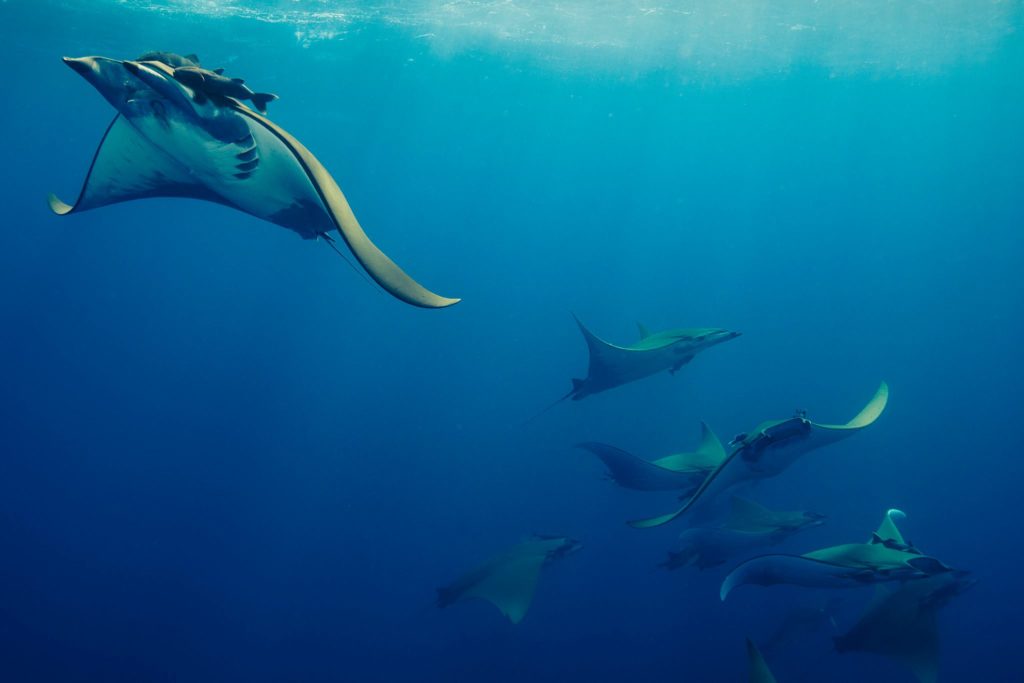
Chilean Devil Rays (Mobula tarapacana) swimming in the Azores. © Daniel Van Duinkerken — http://danielvandphoto.com — Instagram: daniel.van.d
Chilean Devil Rays (Mobula tarapacana) swimming in the Azores.
© Daniel Van Duinkerken — http://danielvandphoto.com — Instagram: daniel.van.d

Rays rarely get the same amount of attention as sharks do. Perhaps the most notable exception are the manta rays (genus Manta), which are charismatic, filter-feeding rays that inhabit warm waters throughout the world’s oceans. Their closest relatives, the devil rays (genus Mobula), are not nearly as “famous” — even though they are the only other members of the family Mobulidae. There are nine species of devil rays found throughout the world’s tropical and temperate oceans, and while they are smaller than mantas (only reach over 3 metres in width), devil and manta rays are so similar that they are sometimes confused with each other. Because devil rays garner less public interest, the are very few studies on their basic biology and ecology, hindering our ability to assess their status.

Devil and manta rays face similar threats. Both are often caught as bycatch in industrial and artisanal fishing operations, which may result in considerable mortality even after being released. On top of this, there has been an increase in the international demand for their gill plates, which are used a health tonic in Chinese medicine. This has increased targeted fishing and bycatch retention in many places around the world. However, because of the lack of information on devil rays, it is very difficult assess whether this level of catch and trade is sustainable. This is the key question we set out to answer.

Read More “The international gill plate trade: a highway to hell for devil rays?” »
First systematic threat analysis reveals that 1/4 of sharks, rays, and chimaeras are threatened with extinction

Posted on January 21, 2014 By David Shiffman
Conservation, Science

It took a team of over 300 scientists nearly two decades, but the first systematic analysis of the conservation status of chondrichthyans (sharks, rays and chimaeras) has been completed. The results, published today (open access) in a paper titled “Extinction risk and conservation of the world’s sharks and rays,” are chilling.

“Our unprecedented analysis shows that sharks and their relatives – which make up one of the earth’s oldest and most ecologically diverse groups of animals  —  are facing an alarmingly elevated risk of extinction,” said Dr. Nick Dulvy, IUCN SSG Co-Chair and Professor at Simon Fraser University in British Columbia.

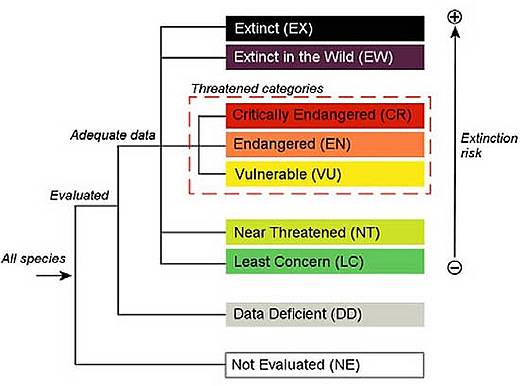
As of the writing of this paper, the IUCN Shark Specialist Group recognized 1,041 species of chondrichthyans. However,  a new species is described, on average, every two or three weeks! Out of these 1,041 species of chondrichthyans, approximately one in four are considered “Threatened” by IUCN Red List criteria;  113 species are Vulnerable, 43 are Endangered, and 25 species are Critically Endangered. 487 species are considered Data Deficient, but the IUCN Shark Specialist Group estimates that 68 of them are likely to be Threatened as well! Most alarmingly, only 23% of known chondrichthyan species are considered Least Concern, the lowest percentage out of any group of vertebrates on land or sea!

A hierarchy of IUCN Red List categories. Note that "Threatened" includes Vulnerable, Endangered, and Critically Endangered
A hierarchy of IUCN Red List categories. Note that “Threatened” includes Vulnerable, Endangered, and Critically Endangered

One of the two main factors influencing Threatened status is the size of the animal. Larger bodied species are sensitive to overfishing because they typically have a life history with slow growth, late age at maturity, and relatively few offspring. Additionally, living in coastal habitats (in other words, close to humans) makes a species more likely to be Threatened.

Read More “First systematic threat analysis reveals that 1/4 of sharks, rays, and chimaeras are threatened with extinction” »

Saving Nemo: 1 out of 6 species that appear in Finding Nemo are threatened with extinction

Posted on December 12, 2011December 13, 2011 By David Shiffman 3 Comments on Saving Nemo: 1 out of 6 species that appear in Finding Nemo are threatened with extinction
Conservation, Popular Culture, Science

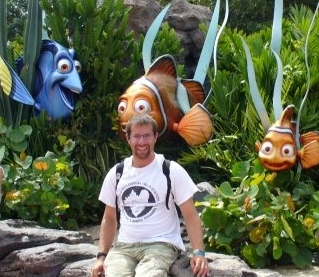
WhySharksMatter found Nemo at Disney's Living Seas Aquarium

Like most marine biology geeks, I’m a huge fan of Disney/Pixar’s “Finding Nemo”. In addition to a heartwarming story of a father trying to bring his son home to their aneme…anemeneme… amenememe… anemone,  the film showcases an enormous variety of beautiful real-life coral reef species. According to  research published today in Conservation Letters, however, we may soon only be able to see some of these animals in the movies. The paper, titled “Extinction Risk and Bottlenecks in the Conservation of Charismatic Marine Species”, concluded that many of the stars of Finding Nemo are in deep trouble.

Read More “Saving Nemo: 1 out of 6 species that appear in Finding Nemo are threatened with extinction” »

Threatened gentle giants: both species of manta ray added to the IUCN Red List

Posted on November 14, 2011December 9, 2011 By David Shiffman 14 Comments on Threatened gentle giants: both species of manta ray added to the IUCN Red List
Conservation, Science

Manta rays are true gentle giants; though they can grow more than 20 feet wide from wingtip to wingtip, they eat only plankton. Swimming with these animals is a rare thrill for SCUBA divers, and manta-viewing ecotourism is worth over $100 million each year. Like many species of sharks, manta rays grow slowly and reproduce … Read More “Threatened gentle giants: both species of manta ray added to the IUCN Red List” »

Shark Science Monday: the Known Unknowns of Shark Conservation

Posted on October 31, 2011December 9, 2011 By David Shiffman 7 Comments on Shark Science Monday: the Known Unknowns of Shark Conservation
Science

“There are known knowns; there are things we know we know. We also know there are known unknowns, that is to say we know there are some things we do not know. But there are also unknown unknowns – the ones we don’t know we don’t know.” – Former U.S. Secretary of Defense Donald Rumsfeld.

As nature documentary viewers often hear, there is a lot about sharks and rays that scientists don’t know… but what are the most important things that we need to know? A new paper written by Colin Simpfendorfer, Will White, and former Shark Science Monday interview subjects Michelle Heupel and Nick Dulvy attempts to identify these “known unknowns” of shark and ray conservation. “The importance of research and public opinion to conservation management of sharks and rays: a synthesis”, which arose out of the 2010 Sharks International conference, is the most complete record ever created of the research questions that we need to answer in order to better conserve and manage these animals. For young shark researchers eager to work on projects with practical conservation importance, this paper is a great place to start looking for ideas. Additionally, future published work that claims to be important for conservation and management would do well to cite it, and anyone interested in this subject should read it.

Read More “Shark Science Monday: the Known Unknowns of Shark Conservation” »

Shark Science Monday: Nick Dulvy talks about determining shark’s conservation status

Posted on February 21, 2011 By David Shiffman 2 Comments on Shark Science Monday: Nick Dulvy talks about determining shark’s conservation status
Conservation, Science

In this week’s edition of Shark Science Monday, Nick Dulvy, co-chair of the IUCN Shark Specialist Group, discusses how researchers determine the conservation status of shark species. If you have a question for Nick, leave it below and I’ll make sure he sees it.

Popular Posts

Shark scientists want their research to help save threatened species, but don’t know how. Our new paper can help.Shark scientists want their research to help save threatened species, but don’t know how. Our new paper can help.December 1, 2025David Shiffman
Norway and Cook Islands put their deep-sea mining plans on pause.Norway and Cook Islands put their deep-sea mining plans on pause.December 3, 2025Andrew Thaler
What Ocean Ramsey does is not shark science or conservation: some brief thoughts on "the Shark Whisperer" documentaryWhat Ocean Ramsey does is not shark science or conservation: some brief thoughts on "the Shark Whisperer" documentaryJuly 2, 2025David Shiffman
What we know we don't know: impacts of deep-sea mining on whales, dolphins, sharks, turtles, and other migratory species.What we know we don't know: impacts of deep-sea mining on whales, dolphins, sharks, turtles, and other migratory species.November 20, 2025Andrew Thaler
2025: My year in writing, public speaking, and media interviews2025: My year in writing, public speaking, and media interviewsDecember 3, 2025David Shiffman
The Trouble with Teacup PigsThe Trouble with Teacup PigsOctober 14, 2012Andrew Thaler
Urea and Shark OsmoregulationUrea and Shark OsmoregulationNovember 15, 2010David Shiffman
How tiny satellites are tracking marine wildlifeDecember 1, 2025Andrew Thaler
Shark of Darkness: Wrath of Submarine is a fake documentaryShark of Darkness: Wrath of Submarine is a fake documentaryAugust 10, 2014Michelle Jewell
Quick Tips for Graduate Student Life - Write a Book ReviewJanuary 23, 2014Andrew Thaler
Subscribe to our RSS Feed for updates whenever new articles are published.

We recommend Feedly for RSS management. It's like Google Reader, except it still exists.

Southern Fried Science

  • Home
  • About SFS
  • Authors
  • Support SFS


If you enjoy Southern Fried Science, consider contributing to our Patreon campaign.

Copyright © 2025 Southern Fried Science.

Theme: Oceanly Premium by ScriptsTown