Skip to content

Southern Fried Science

Over 15 years of ocean science and conservation online

  • Home
  • About SFS
  • Authors
  • Support SFS

Tag: OpenROV

Marine Ecology via Remote Observation: an update from #ROV2PNG

Posted on November 12, 2014November 12, 2014 By Andrew Thaler
Science

Note: we’re home after an exceptional 3 weeks of work in Papua New Guinea. Sadly, the course was so intense that we weren’t able to produce updates during the program. Instead, please accept these time-shifted updates from #ROV2PNG. After more than a week of building robots, developing research proposals, presenting and defending their proposals to … Read More “Marine Ecology via Remote Observation: an update from #ROV2PNG” »

Newly-build robots face many sea trials: an update from #ROV2PNG

Posted on November 10, 2014 By Andrew Thaler
Science

Note: we’re home after an exceptional 3 weeks of work in Papua New Guinea. Sadly, the course was so intense that we weren’t able to produce updates during the program. Instead, please accept these time-shifted updates from #ROV2PNG.
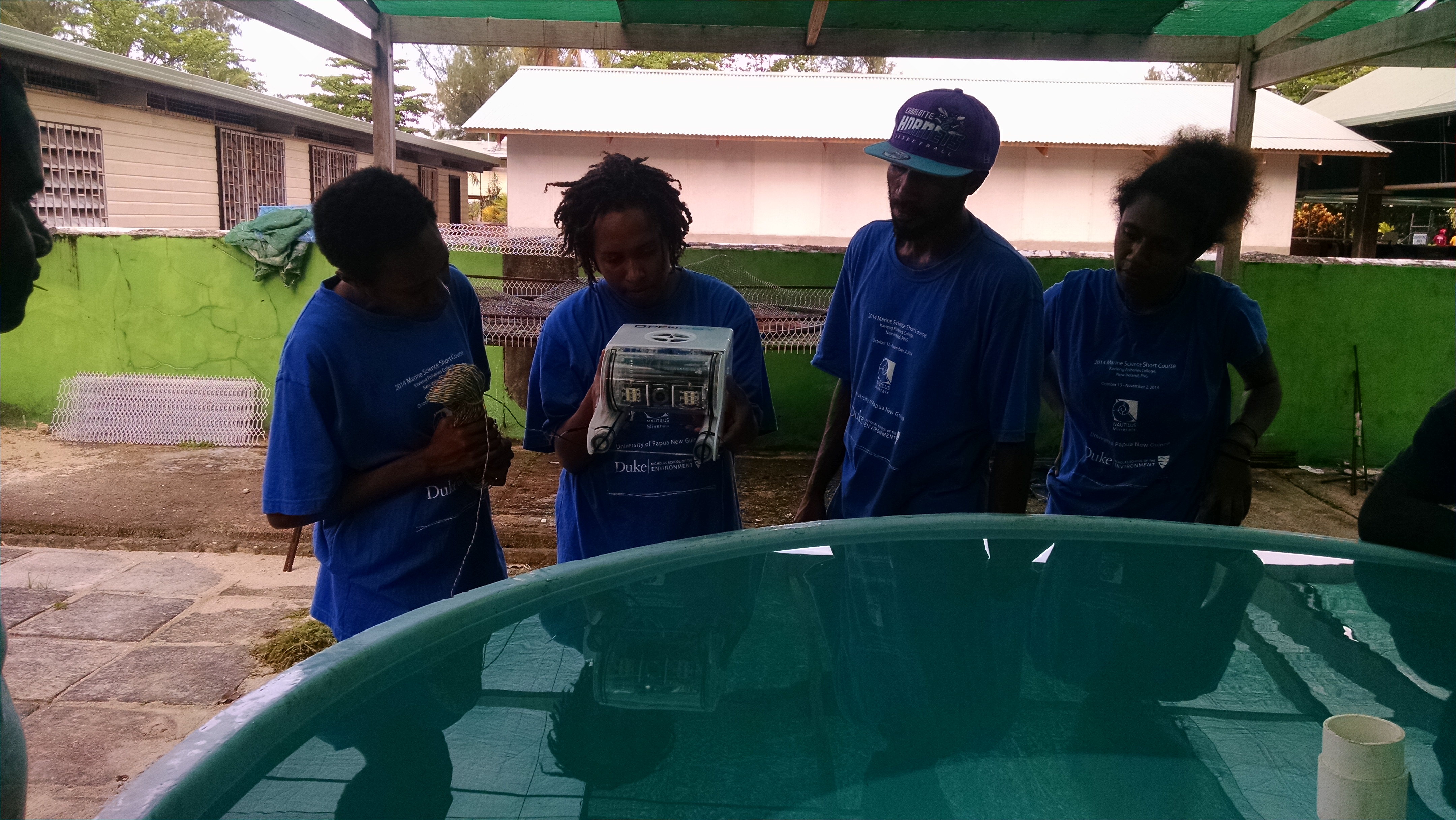
Students prepare for Pilot Academy.

With a week of robot building behind us, it’s time to put our robots, and our newly minted robot pilots to the test. Monday began with a day of tether management and pilot training. The OpenROV does not come with its own, pre-built tether management system; operators must design their own and adapt it to the unique challenges of their field environment. So we set the team off to develop their own tether management systems and the results were astounding, artistic, and clever.
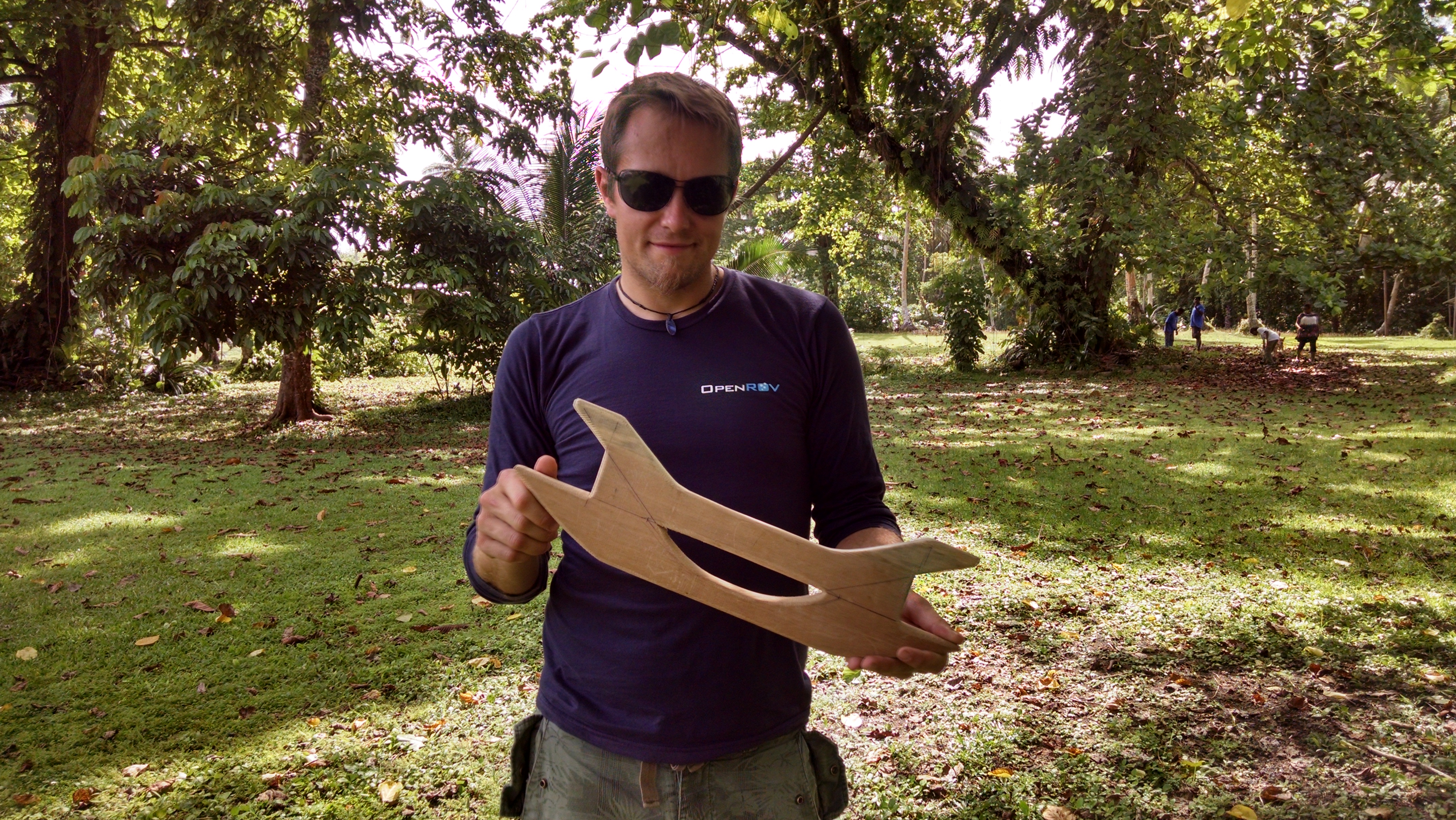
One of several innovative tether management systems.

With tethers securely managed, it was time for Erika’s Pilot Academy. As some teams continued to perform maintenance and troubleshooting, and some worked on their ecology projects, others were led, group by group, to the test tank, where Erika and Dominik had built a challenge course for them to fly. Without looking at the tank or robot, each student had to pilot an ROV around the tank, collect a weighted target, and bring it to the surface. Even for veteran OpenROV pilots, this exercise can be challenging. We closed out the first day of pilot training with 23 skilled pilots.

Read More “Newly-build robots face many sea trials: an update from #ROV2PNG” »
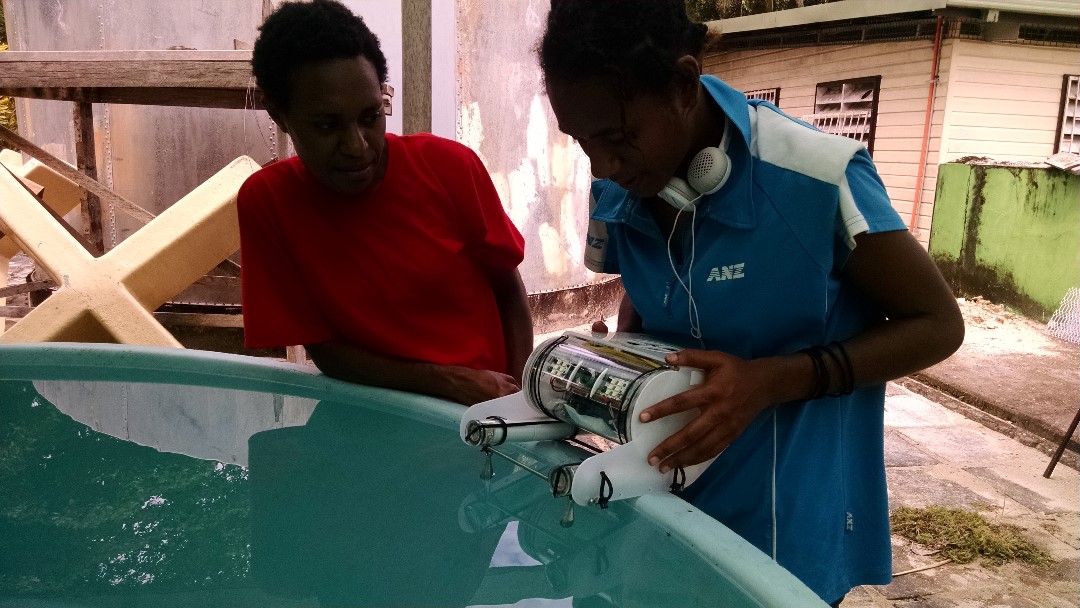
Six new robots join Papua New Guinea’s marine science assets: an update from #ROV2PNG

Posted on November 7, 2014November 6, 2014 By Andrew Thaler 1 Comment on Six new robots join Papua New Guinea’s marine science assets: an update from #ROV2PNG
Science

Note: we’re home after an exceptional 3 weeks of work in Papua New Guinea. Sadly, the course was so intense that we weren’t able to produce updates during the program. Instead, please accept these time-shifted updates from #ROV2PNG.


Students prepare to soak test their ROV.

After a long week of intensive robot building, six brand new OpenROVs went into the water on Friday. Our student’s hard work paid off as their robots dove into the freshwater test tank. There are few things more rewarding than watching students, who’ve sweated over a difficult build while learning challenging new skills for 12 hours or more every day, launch their completed robots drive them around the test tank for the first time.

Of course, failure is part of our pedagogy, and two robots will require another day of troubleshooting before they can be released into the sea.

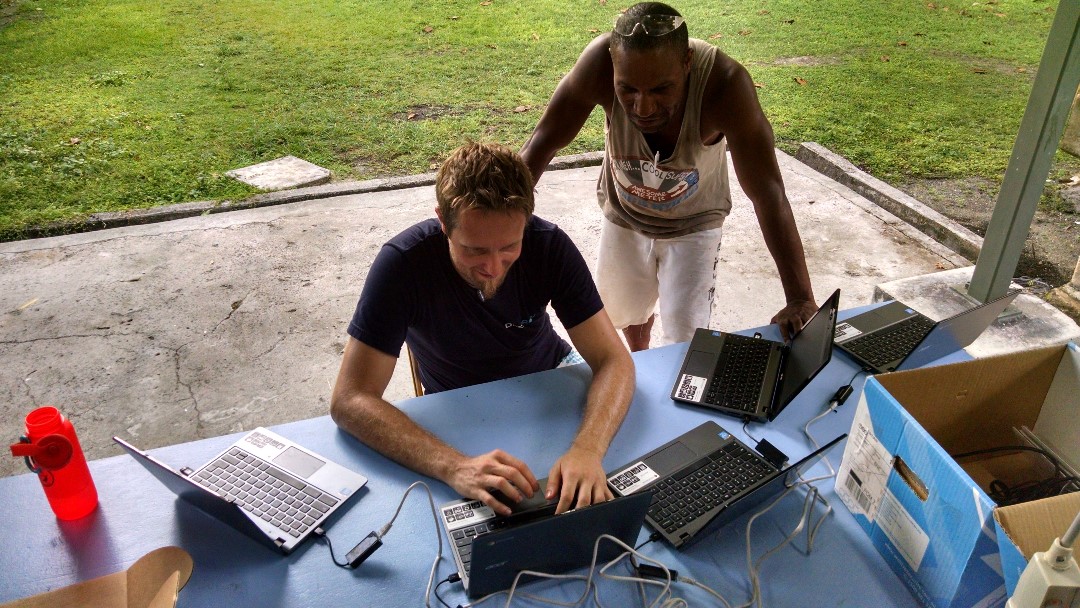
Dominik sets up the Chromebooks for their first flight.
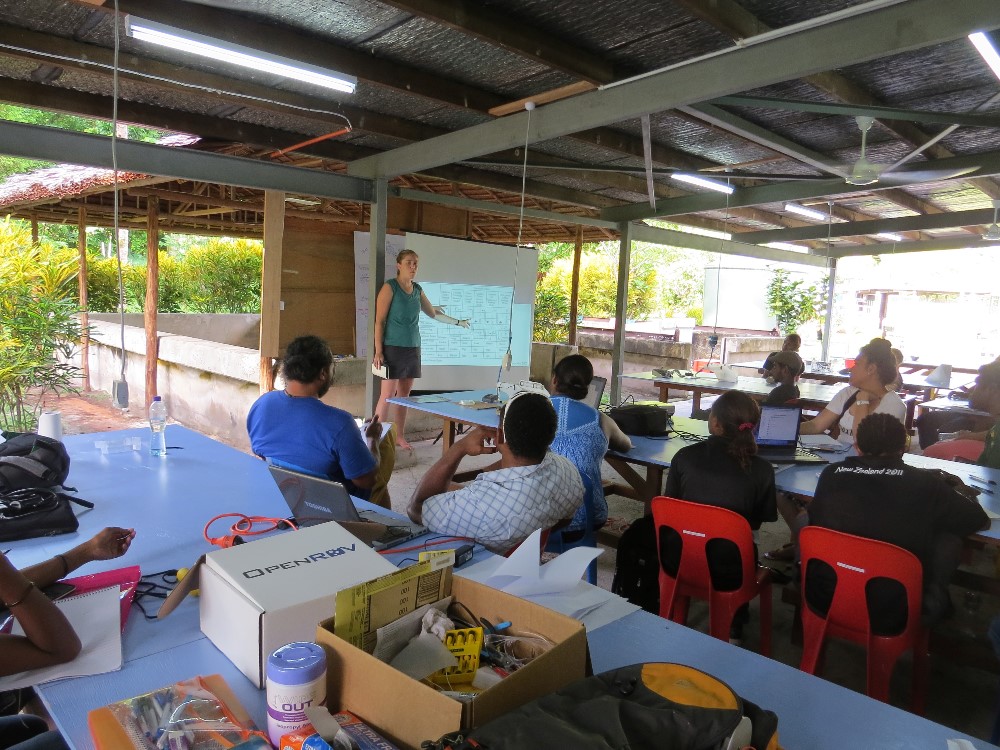
Amy delivers a talk on Human Ecology.

Read More “Six new robots join Papua New Guinea’s marine science assets: an update from #ROV2PNG” »

Building robots in Papua New Guinea: update from #ROV2PNG

Posted on October 24, 2014 By Andrew Thaler
Science
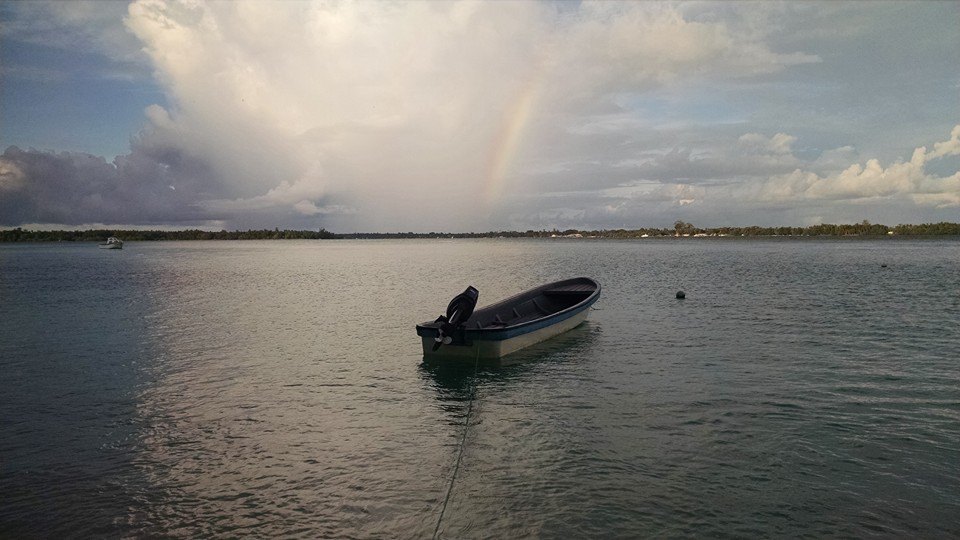
The view from our morning commute between Nusa and Nago.

Hello from the warm, sunny island of Nago, home of the National Fisheries College field station and staging ground for Marine Ecology via Remote Observation, part of the Marine Science Short Course. My team and I arrived in Port Morseby on Friday, where we met with Jamie on her way home and and caught up with my former student, now lecturer at UPNG, Freddie Alei, who joins us for the next week of class. Another day of travel brought us to the shores of Nusa Island. We had our first chance to meet the students on Sunday, during a walk around the local beach, followed by an afternoon flying Independent Lee, one of our demonstration robots, from the Fisheries’ jetty. It was a nice warm up for an intensive week of robotics and marine ecology.

There are two major components to the #ROV2PNG portion of the Marine Science Short Course. The first, and most visible, is the construction and operation of the OpenROV, an open-source underwater robot that is incredibly adaptable and expandable. Over the last three days, students have learned how to solder, weld acrylic, test electronics, use epoxy resins, and work together to assemble the chassis, endcaps, battery tubes, motors, and brain of the robot. Excitement is mounting as we approach the moment when we can power up the ROVs for the first time.

Read More “Building robots in Papua New Guinea: update from #ROV2PNG” »

The next era of ocean exploration begins in Papua New Guinea

Posted on September 22, 2014September 22, 2014 By Andrew Thaler
Blogging, Science
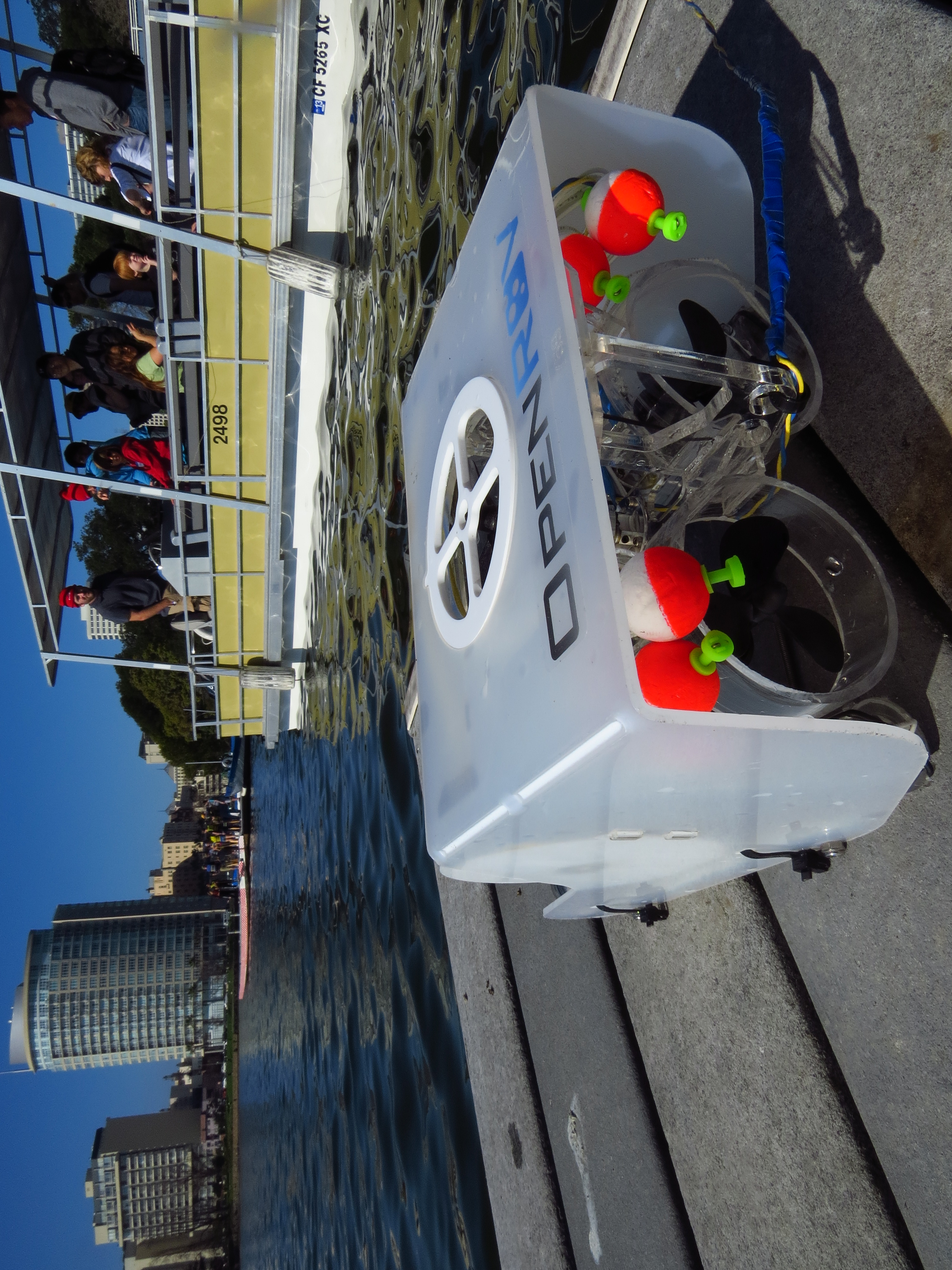
An OpenROV at Lake Merrit.
An OpenROV at Lake Merritt. Photo by author.

In 1946, Jacques Yves Cousteau and Émile Gagnan released the Aqualung, forever changing the way humans interact with the oceans. No longer tethered to the surface, entombed in thick, restrictive helmets, we could dive deeper, stay down longer, and explore the dark places snorkelers and free divers feared to fin. The Aqualung opened up the ocean to an entirely new cohort. Ocean exploration, once the domain of well-resourced scientists, career explorers, and the wealthy elite, was now within the reach of the global middle class.

Buoyed by the Aqualung, Marine Science exploded. Marine life could be studied alive and in situ. Behavior could be observed rather than inferred from the stressed and shredded samples of a trawl. The ranks of marine biologists, oceanographers, and explores swelled to numbers that began to gradually approach the relative significance of the ocean to the living world.

We’re just getting started.

Marine science is on the brink of the greatest sea change since JYC and Gagnan introduced the Aqualung to the world.

Read More “The next era of ocean exploration begins in Papua New Guinea” »

OpenROV is changing the way we think about ocean outreach and citizen science

Posted on August 16, 2014 By Andrew Thaler
Conservation

The SS Tahoe, once the only means of travel across Lake Tahoe, lies in 150 meters of icy, alpine water, scuttled after she outlived her usefulness. The remote lake presents an extreme technical challenge for divers and the wreck has spent her afterlife relatively undisturbed. Only a few dive teams have ever visited her.

Naturally, she makes the perfect target to test out the new, deeper-diving OpenROV.

OpenROV from Fallen Leaf Films on Vimeo.

Read More “OpenROV is changing the way we think about ocean outreach and citizen science” »

Bring the trench to the bench or bring the bench to the trench? The future of deep-sea exploration

Posted on January 15, 2013January 15, 2013 By Andrew Thaler
Science

AndrewThumbNewsweek, in is new and impressive digital format, released a series of articles this week on deep-sea exploration, the challenges of human occupied and remotely-operated vehicles, and the decline in funding for ocean science, particularly in the deep sea. The main article, The Last Dive? Funding for Human Expeditions in the Ocean May Have Run Aground, is a deep, detailed look at the state of deep-sea science, seen through the eyes of Dr. Sylvia Earle and Dr. Robert Ballard, two giants in the ocean community. The follow-up, James Cameron Responds to Robert Ballard on Deep-Sea Exploration, provides insight into the mind of James Cameron, who last year successfully dove the Challenger Deep in his own deep-sea submersible.

Both the articles continue to perpetrate the canard that there is a deep chasm between the human-occupied submersible (HOV) and remotely-operated vehicle (ROV) communities. The reality is that deep-sea scientists use a variety of tools, from mechanical samplers to autonomous robots, to study and understand the deep. The choice comes down to which tool is most efficient, least expensive, and currently available. Absent a sea change, ROV’s will continue to be the workhorses of deep-sea research. And that is a good thing. I sang the praise of my robot underlings the last time this debate breached the public consciousness. I also discussed why basic deep-sea research and training highly skilled ROV pilots is a matter of national security.

Read More “Bring the trench to the bench or bring the bench to the trench? The future of deep-sea exploration” »

Watch Blue Pints Episode 5: 2012 in review, what’s in store for 2013

Posted on January 4, 2013October 27, 2013 By Andrew Thaler
Uncategorized

httpv://www.youtube.com/watch?v=3vuOrHXkMuk&feature=plcp

A revolution in underwater exploration for everyone: the open source underwater robot

Posted on June 29, 2012June 29, 2012 By Andrew Thaler

If you’ve been following me on twitter, checking out some of my YouTube videos, or reading this blog, you probably have a good sense about how enthusiastic I am about ROV’s and how excited I am about the current wave of cheap, easy to build and maintain, functional ROV’s for outreach, teaching, and recreational exploration. Inexpensive, high quality ROV’s can provide us with previously unheard of access to the ocean.

So I’m really excited that OpenROV, an open source project to develop a robotic submarine that anyone can build and use, has  launched their kickstarter page to develop and distribute the OpenROV kit. From the project page:

Read More “A revolution in underwater exploration for everyone: the open source underwater robot” »

Posts pagination

Previous 1 … 3 4

Popular Posts

Shark scientists want their research to help save threatened species, but don’t know how. Our new paper can help.Shark scientists want their research to help save threatened species, but don’t know how. Our new paper can help.December 1, 2025David Shiffman
Norway and Cook Islands put their deep-sea mining plans on pause.Norway and Cook Islands put their deep-sea mining plans on pause.December 3, 2025Andrew Thaler
What Ocean Ramsey does is not shark science or conservation: some brief thoughts on "the Shark Whisperer" documentaryWhat Ocean Ramsey does is not shark science or conservation: some brief thoughts on "the Shark Whisperer" documentaryJuly 2, 2025David Shiffman
What we know we don't know: impacts of deep-sea mining on whales, dolphins, sharks, turtles, and other migratory species.What we know we don't know: impacts of deep-sea mining on whales, dolphins, sharks, turtles, and other migratory species.November 20, 2025Andrew Thaler
2025: My year in writing, public speaking, and media interviews2025: My year in writing, public speaking, and media interviewsDecember 3, 2025David Shiffman
The Trouble with Teacup PigsThe Trouble with Teacup PigsOctober 14, 2012Andrew Thaler
Urea and Shark OsmoregulationUrea and Shark OsmoregulationNovember 15, 2010David Shiffman
How tiny satellites are tracking marine wildlifeDecember 1, 2025Andrew Thaler
What is a Sand Shark?What is a Sand Shark?November 12, 2017Chuck Bangley
Shark of Darkness: Wrath of Submarine is a fake documentaryShark of Darkness: Wrath of Submarine is a fake documentaryAugust 10, 2014Michelle Jewell
Subscribe to our RSS Feed for updates whenever new articles are published.

We recommend Feedly for RSS management. It's like Google Reader, except it still exists.

Southern Fried Science

  • Home
  • About SFS
  • Authors
  • Support SFS


If you enjoy Southern Fried Science, consider contributing to our Patreon campaign.

Copyright © 2025 Southern Fried Science.

Theme: Oceanly Premium by ScriptsTown