Skip to content

Southern Fried Science

Over 15 years of ocean science and conservation online

  • Home
  • About SFS
  • Authors
  • Support SFS

Tag: plastic pollution

Angry Canadian Crabs and Extinct Australian Sea Stars: Thursday Afternoon Dredging, September 27(8)th 2018

Posted on September 28, 2018 By David Shiffman
Uncategorized

  It’s a special Friday morning edition of Thursday Afternoon Dredging because I was traveling! Cuttings (short and sweet): Follow Nova the White Shark, a great white shark tagged in Canada by OCEARCH, on twitter! The day after Nova was tagged, I spent a day with the OCEARCH team- check out this Facebook live interview. … Read More “Angry Canadian Crabs and Extinct Australian Sea Stars: Thursday Afternoon Dredging, September 27(8)th 2018” »

Red tide, whale poop, and vanishing puffins: Thursday Afternoon Dredging, August 30th, 2018

Posted on August 30, 2018 By David Shiffman
Uncategorized

Cuttings (short and sweet): Follow the official account of the US Sawfish Recovery Team on twitter! The harmful algal blooms in Florida, explained. From the Ocean Conservancy blog. This environmental news story has resulted in not only heartbreak, but confusion. This explainer post by Ocean Conservancy experts answers many of the questions that folks have … Read More “Red tide, whale poop, and vanishing puffins: Thursday Afternoon Dredging, August 30th, 2018” »

I asked 15 ocean plastic pollution experts about the Ocean Cleanup project, and they have concerns

Posted on June 13, 2018June 14, 2018 By David Shiffman
Conservation, Science

The online ocean science community has been vocally skeptical about the Ocean Cleanup, a device that aims to physically remove plastic pollution from the ocean. Drs. Kim Martini and Miriam Goldstein published a technical review of its feasibility over at Deep Sea News, and Andrew asked some important questions that have yet to be answered. Also, be sure to read environmental journalist Chris Clarke’s thorough overview of these concerns.

Overall concerns include a lack of understanding of the problem (including but not limited to the fact that much of the harmful ocean plastic is small and well-dispersed), insufficient structural integrity for a large object that will be deployed in the open ocean (which would result in the object breaking and creating even more ocean garbage), and the fact that this device is designed to aggregate objects of a certain size to remove them from the water but cannot distinguish between plastic and living things.

Mainstream media coverage has been noticeably less critical of the Ocean Cleanup, often presenting the idea as revolutionary and it’s creator as a genius.
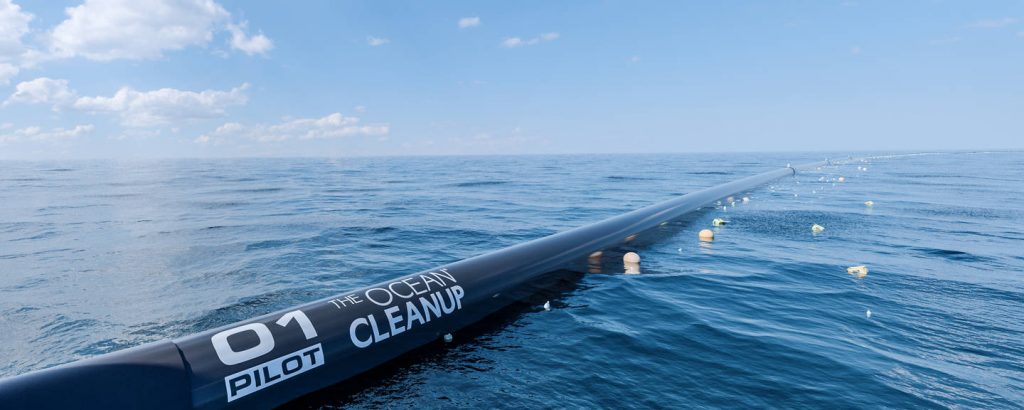
Artist’s conception of the Ocean Cleanup, from TheOceanCleanup.com

I am not an expert in ocean plastic pollution. However, the uncritical tone of most mainstream media coverage of the Ocean Cleanup does not seem to correspond with my impression of expert opinion on this matter from speaking with expert colleagues who study this.

Through professional contacts, I developed a list of 51 ocean plastic pollution experts who work in academia, government, and the environmental non-profit sector, and I sent them some questions about the Ocean Cleanup. 15 (4 in academia, 5 each in government and the non-profit sector, and 1 in industry) agreed to participate in an anonymous survey. While this is not (and not intended to be) an exhaustive survey of the entire field of ocean plastic pollution, the broad agreement among a diverse group of experts is telling. Below, please see what they had to say through some representative quotes. Some respondents chose to provide an on-the-record quote, while many chose to remain anonymous out of concerns about reprisal.

I also asked Lonneke Holierhoek, COO of the Ocean Cleanup, to respond to these concerns. Her comments are included in each section.


Read More “I asked 15 ocean plastic pollution experts about the Ocean Cleanup project, and they have concerns” »

Obama’s ocean monuments, deep diving seals, and sustainable US fisheries: Thursday Afternoon Dredging, May 24th, 2018

Posted on May 24, 2018May 24, 2018 By David Shiffman
Uncategorized

Cuttings (short and sweet):  Follow Canadian ocean science communicator Kayla Glynn on twitter. NOAA’s status of stocks. By Steve Midway, for the Fisheries Blog. Antarctic seals recruited to measure the effects of climate change. By Alex Fox, for Nature News. 15,000 lionfish removed from Florida waters. By Ed Killer, for the Treasure Coast Palm. Plastic bag … Read More “Obama’s ocean monuments, deep diving seals, and sustainable US fisheries: Thursday Afternoon Dredging, May 24th, 2018” »

Plastic Free Fish, Chainsaw Lobsters, and Artificial Horseshoe Crab Blood: Thursday Afternoon Dredging, May 17th 2018

Posted on May 17, 2018May 17, 2018 By David Shiffman
Uncategorized

Cuttings (short and sweet):  Follow the Pacific salmon network on twitter! Looking for plastic free fish? Here’s one to put on the menu! By Maggie Gillis, for CBC news Scientists find new deep sea species off Java. BBC slideshow. Unexpected walruses crowd Alaska beach. By the Associated Press. The bigger the mother fish, the more babies … Read More “Plastic Free Fish, Chainsaw Lobsters, and Artificial Horseshoe Crab Blood: Thursday Afternoon Dredging, May 17th 2018” »

Intertidal spiders and starfish night vision: Thursday Afternoon Dredging, February 22nd, 2018

Posted on February 22, 2018February 22, 2018 By David Shiffman
Uncategorized

Cuttings (short and sweet):  Follow Jessica Meeuwig, the Director of the UWA Centre for Marine Futures, on twitter. Check out #WowScienceFact, a science communication hashtag game that I started!  Ocean tides could have driven ancient fish to walk. By Alexandra Witze, for Nature News. Spoils (long reads and deep dives): Webs under water: the bizarre lives … Read More “Intertidal spiders and starfish night vision: Thursday Afternoon Dredging, February 22nd, 2018” »

Tweets from the Society for Conservation Biology: Marine conservation sessions

Posted on July 29, 2013 By David Shiffman
Conservation

davesquare

SCB logoThe Society for Conservation Biology’s International Congress for Conservation Biology took place from July 21-25th in Baltimore, MD.  Over 1,500 scientists and conservationists from more than 60 countries participated. Below are selected tweets from marine conservation (and related) sessions. Talks are in no particular chronological order.

Read More “Tweets from the Society for Conservation Biology: Marine conservation sessions” »

Popular Posts

What Ocean Ramsey does is not shark science or conservation: some brief thoughts on "the Shark Whisperer" documentaryWhat Ocean Ramsey does is not shark science or conservation: some brief thoughts on "the Shark Whisperer" documentaryJuly 2, 2025David Shiffman
I can serve on your graduate thesis committee. Here’s what you can expect of me, and what I expect in return.I can serve on your graduate thesis committee. Here’s what you can expect of me, and what I expect in return.October 16, 2025David Shiffman
I turned my woodshop into a personal solar farm.I turned my woodshop into a personal solar farm.June 21, 2021Andrew Thaler
What can the funniest shark memes on the internetz teach us about ocean science and conservation?What can the funniest shark memes on the internetz teach us about ocean science and conservation?November 8, 2013David Shiffman
Shark of Darkness: Wrath of Submarine is a fake documentaryShark of Darkness: Wrath of Submarine is a fake documentaryAugust 10, 2014Michelle Jewell
"Twitter sucks now and all the cool kids are moving to Bluesky:" Our new survey shows that scientists no longer find Twitter professionally useful or pleasant"Twitter sucks now and all the cool kids are moving to Bluesky:" Our new survey shows that scientists no longer find Twitter professionally useful or pleasantAugust 19, 2025David Shiffman
The Trouble with Teacup PigsThe Trouble with Teacup PigsOctober 14, 2012Andrew Thaler
Blackfish: the Science Behind the MovieBlackfish: the Science Behind the MovieSeptember 18, 2013Chris Parsons
Nodules, Lost Mines, and Dark Oxygen: A new documentary on deep-sea mining asks important questions about the future of the industry.Nodules, Lost Mines, and Dark Oxygen: A new documentary on deep-sea mining asks important questions about the future of the industry.July 24, 2025Andrew Thaler
Shark scientists want their research to help save threatened species, but don’t know how. Our new paper can help.Shark scientists want their research to help save threatened species, but don’t know how. Our new paper can help.December 1, 2025David Shiffman
Subscribe to our RSS Feed for updates whenever new articles are published.

We recommend Feedly for RSS management. It's like Google Reader, except it still exists.

Southern Fried Science

  • Home
  • About SFS
  • Authors
  • Support SFS


If you enjoy Southern Fried Science, consider contributing to our Patreon campaign.

Copyright © 2025 Southern Fried Science.

Theme: Oceanly Premium by ScriptsTown