Skip to content

Southern Fried Science

Over 15 years of ocean science and conservation online

  • Home
  • About SFS
  • Authors
  • Support SFS

Tag: predation

See a Great White Shark from the inside with OpenROV, Vaquita, Narwhals, and more! Monday Morning Salvage: November 6, 2017

Posted on November 6, 2017November 6, 2017 By Andrew Thaler
Weekly Salvage

Fog Horn (A Call to Action)

  • Science Communication folks! Are you ready for OceanDotComm? Register now!

Flotsam (what we’re obsessed with right now)

  • Go shark diving with OpenROV Trident and maybe get a bit too close an personal with a great white shark.
  • Yes, that is the esophagus of a great white shark, in the wild. No, you should not attempt to replicate this experience.
Read More “See a Great White Shark from the inside with OpenROV, Vaquita, Narwhals, and more! Monday Morning Salvage: November 6, 2017” »

A new Gulf oil spill, opposition to deep-sea mining, DIY drop cameras, and more! Massive Monday Morning Salvage: October 30, 2017

Posted on October 30, 2017October 29, 2017 By Andrew Thaler
Weekly Salvage

I’ve been away for 2 weeks, so it’s a super-massive edition of the Monday Morning Salvage!

Fog Horn (A Call to Action)

  • There’s still an unimaginable amount of work to do in Dominica and across the Caribbean. Support the Rebuild Dominica Hurricane Relief fund or any of the other funds from our list: How to help our island colleagues in the wake of total devastation.

Flotsam (what we’re obsessed with right now)

  • This is such a cool story: A Trail of Rocks Traces Historical Steamship Routes. We can track old steamship routes from rocks scraped out of the furnaces and tossed overboard.
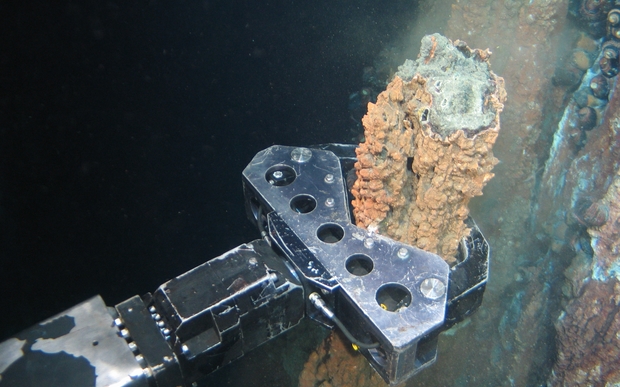
  • Former Papua New Guinea Attorney General attacks deep sea mining project. They always pick pictures for these articles that don’t show how much life is right around the vents.
Sampling SMS under the sea Photo: Nautilus Minerals
  • Whose ecological footprint is bigger: Medics, economists, or environmentalists? Spoilers: conservationists still have an impact, but they sure ain’t number 1.

Jetsam (what we’re enjoying from around the web)

  • There’s a fresh oil spill in the Gulf of Mexico, and it’s pretty darn huge:
    • Coast Guard Responding to 300,000 Gallon Crude Oil Spill in Gulf of Mexico.
    • Gulf of Mexico Oil Spill May Be Biggest Since 2010.
    • New Estimate Doubles the Size of Last Week’s Oil Spill in the Gulf of Mexico.
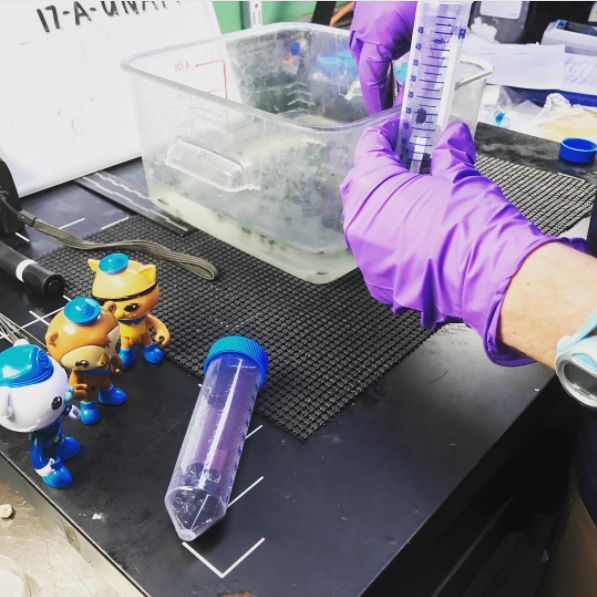
  • Some fun from Deep Sea News: When real-life marine biologist and mom goes to sea, she takes the octonauts with her.

  • This is fine: Report on U.S. Marine Sanctuary Oil Drilling Sent to White House, Not Released to Public. This is totally fine: Trump Administration Proposes Largest Oil and Gas Lease Sale in U.S. History.
  • Alaska’s Oyster Farmers Are Filling an Acidification-Driven Void. The state’s oyster farming industry is gaining ground as growers elsewhere struggle. From Hakai Magazine, which is great.
  • Nature is one of the most under-appreciated tools for reigning in carbon. From Anthropocene, which is fast becoming my favorite environmental print magazine. Sorry, Orion.
  • Thousands of penguin chicks starve in Antarctica.

Hey, Andrew, how about you give us at least *some* good news today? Ok, fine.

Read More “A new Gulf oil spill, opposition to deep-sea mining, DIY drop cameras, and more! Massive Monday Morning Salvage: October 30, 2017” »

Cascading planetary-wide ecosystem effects of the extirpation of apex predatory Krayt dragons on Tatooine

Posted on July 22, 2014 By David Shiffman
Blogging, Conservation, Popular Culture, Science

Author’s note: this post is part of the “Science of Tatooine” blog carnival. Though obviously about science fiction and not the real world, it includes real ecological theories,  and it uses some real peer-reviewed scientific papers as references. Whenever possible, I’ve linked to accessible copies of those papers and explainers of these ecological terms. Many of the same issues are associated with shark population declines. 

ABSTRACT

Predators play an important role in structuring ecosystems, with predator population declines being linked to a variety of negative ecological effects. Here, we present evidence that the planet Tatooine, famous throughout the Galaxy for being a desert planet, experienced desertification as a result of unintended changes in herbivore populations caused by the intentional large-scale killing of apex predators by offworld colonists. Fossil evidence and interviews showing traditional ecological knowledge suggest that once-abundant Krayt dragons were hunted to near extinction by early human colonists. As a result of the decline in predation, populations of large herbivorous banthas populations grew out of control and overgrazed the plants once found throughout Tatooine.

INTRODUCTION

Studies of numerous ecosystems have consistently shown the importance of intact populations predators to healthy ecosystems, with a recent review (Estes et al. 2011 “trophic downgrading of planet Earth”) noting that “the loss of apex consumers is arguably humankind’s most pervasive influence on the natural world.” Population declines of top predators can cause a trophic cascade, resulting in unintended consequences that ripple through a food chain. Sea otter population declines in the Pacific Northwest of the United States resulted in predation release of otter prey (sea urchins), and an overabundance of sea urchins destroyed entire kelp forest ecosystems by overgrazing (Estes et al. 1998 “killer whale predation on sea otters linking oceanic and nearshore systems.) Wolf population declines in Yellowstone National Park resulted in predation release of wolf prey (elk,) and an overabundance of elk destroyed aspen pine forests by overgrazing (Ripple et al. 2011 “trophic cascades among wolves, elk, and aspen on Yellowstone National Park’s northern range.”)  Ecosystem-wide effects stemming from the loss of predators has also been listed as the proximate cause of disease outbreaks (Pongsiri et al. 2009 “biodiversity loss affects global disease ecology,”), increasing destructive wildfires (Perrings et al. 1997 “biodiversity resilience and the control of ecological-economic systems: the case of fire-driven rangelands,”) and overall biodiversity loss (Paine 1969, “Pisaster-tegular interaction: prey patches, predator food preference, and intertidal community structure.”)

Though the planet Tatooine in the Tatoo system of the Outer Rim is known by researchers to have once been covered by oceans and lush vegetation, it is commonly known now as a desert planet (source). While it is famous in Republic circles primarily for being the home of Jedi Master Skywalker, Tatooine also has native sentient species, including Jawas and Tusken Raiders (the latter are derisively referred to by locals as “sand people” ).  Native non-sentient animals include banthas (large herbivores used as beasts of burden) and the now mostly extinct Krayt dragon (a large predatory species that fed on banthas).

Read More “Cascading planetary-wide ecosystem effects of the extirpation of apex predatory Krayt dragons on Tatooine” »

Predation Matters

Posted on May 7, 2013October 28, 2013 By Chuck Bangley 1 Comment on Predation Matters
Uncategorized

Today, Pew unleashed a mini-media blitz on the importance of predation in fisheries management.  This got my attention because the interaction between marine predators and fisheries is one of my major research interests.  They do a great (and slickly-designed) job explaining the basics of why paying attention to predation matters in fisheries management, and bonus … Read More “Predation Matters” »

Popular Posts

Shark scientists want their research to help save threatened species, but don’t know how. Our new paper can help.Shark scientists want their research to help save threatened species, but don’t know how. Our new paper can help.December 1, 2025David Shiffman
Norway and Cook Islands put their deep-sea mining plans on pause.Norway and Cook Islands put their deep-sea mining plans on pause.December 3, 2025Andrew Thaler
What Ocean Ramsey does is not shark science or conservation: some brief thoughts on "the Shark Whisperer" documentaryWhat Ocean Ramsey does is not shark science or conservation: some brief thoughts on "the Shark Whisperer" documentaryJuly 2, 2025David Shiffman
What we know we don't know: impacts of deep-sea mining on whales, dolphins, sharks, turtles, and other migratory species.What we know we don't know: impacts of deep-sea mining on whales, dolphins, sharks, turtles, and other migratory species.November 20, 2025Andrew Thaler
2025: My year in writing, public speaking, and media interviews2025: My year in writing, public speaking, and media interviewsDecember 3, 2025David Shiffman
The Trouble with Teacup PigsThe Trouble with Teacup PigsOctober 14, 2012Andrew Thaler
Urea and Shark OsmoregulationUrea and Shark OsmoregulationNovember 15, 2010David Shiffman
How tiny satellites are tracking marine wildlifeDecember 1, 2025Andrew Thaler
Shark of Darkness: Wrath of Submarine is a fake documentaryShark of Darkness: Wrath of Submarine is a fake documentaryAugust 10, 2014Michelle Jewell
Quick Tips for Graduate Student Life - Write a Book ReviewJanuary 23, 2014Andrew Thaler
Subscribe to our RSS Feed for updates whenever new articles are published.

We recommend Feedly for RSS management. It's like Google Reader, except it still exists.

Southern Fried Science

  • Home
  • About SFS
  • Authors
  • Support SFS


If you enjoy Southern Fried Science, consider contributing to our Patreon campaign.

Copyright © 2025 Southern Fried Science.

Theme: Oceanly Premium by ScriptsTown