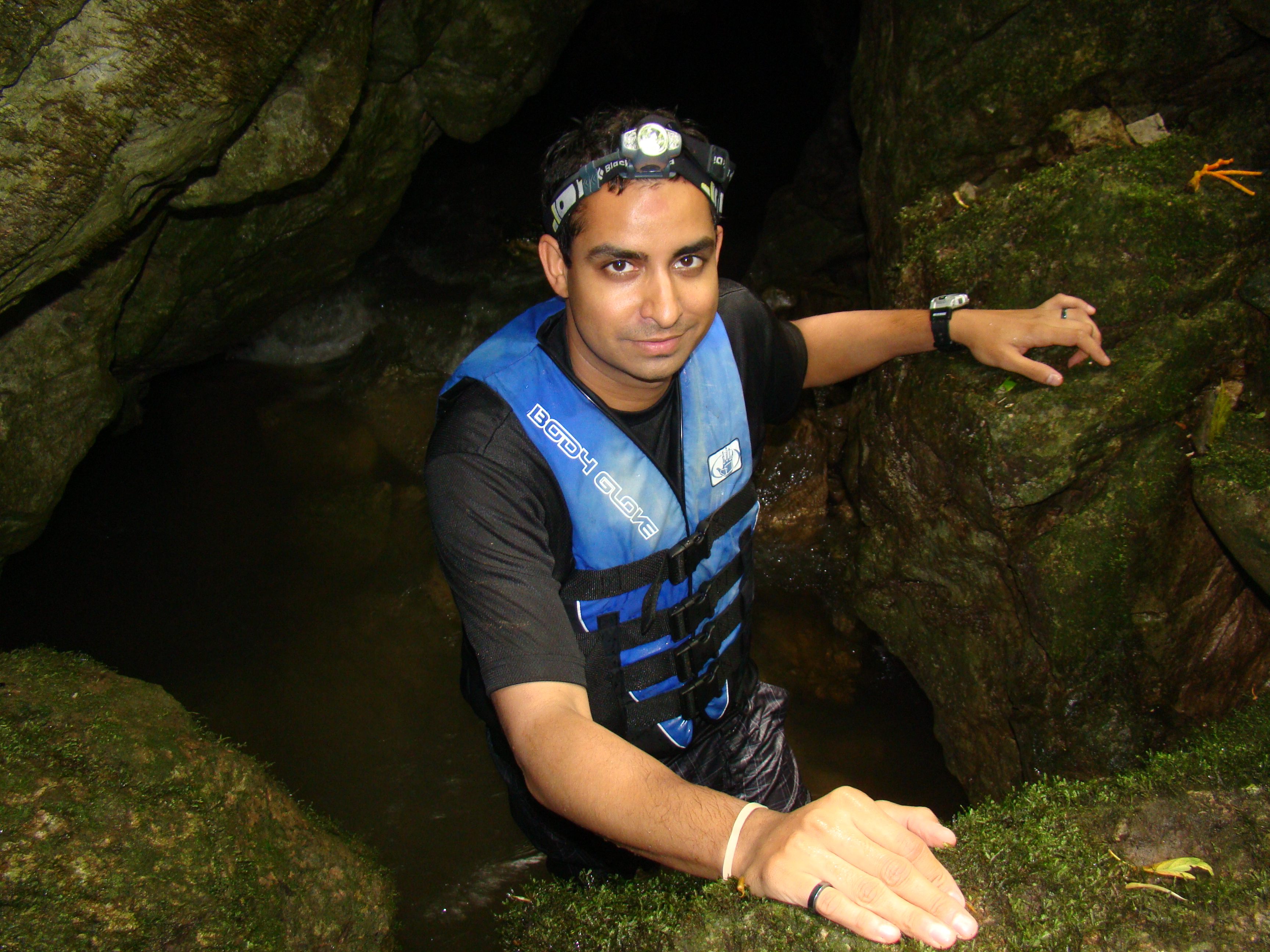
 Dr.Prosanta Chakrabarty is an Assistant Professor at Louisiana State University and an ichthyologist and evolutionary biologist. He is also Curator of Fishes at LSU’s Museum of Natural Science. You can learn more about him from his website www.prosanta.net and follow him on Twitter @LSU_FISH.
A recent piece in Science (Minteer et al. 2014) titled “Avoiding (Re)extinction” advocated avoiding collecting specimens for the sake of confirming the existence of a species. In lieu of killing and collecting the animal the authors suggest using “high-resolution photography, audio recording, and nonlethal sampling.” As a natural history curator of fishes I found this to be a pretty bad idea.
I don’t like killing animals, I was a strict vegetarian for 10 years (now I just eat sustainable seafood – hey, I live in Louisiana). I certainly wouldn’t want to endanger a species by over collecting it. I know of no scientific collectors who kill rare animals just so he or she can say they have it in their collections. We collect for a few simple reasons: because specimens are not available otherwise via loan, or additional specimens are needed for a comparative study, or because we need vouchers as evidence of the existence of the taxon.
I’ve collected rare species in the past, particularly some of the cavefishes I work on. For one of these species, Typhleotris mararybe, we collected the only two specimens we or anyone ever saw. We were in a very remote part of Madagascar and we were only allowed to collect two specimens from any given locality. I knew these individuals were part of a species new to science as soon as I looked at them. Did removing two samples place this species at risk of extinction? Guessing the population was much larger than what we found just at the surface, I would suppose not. What were we to do? Not collect them and just take pictures? We wouldn’t have been able to do the necessary comparative descriptive analysis to actually prove their novelty required by the ICZN (International Commission of Zoological Nomenclature). We collected these specimens so that we could formally describe this new and fantastic new species so that the world can be aware of their existence and so that measures can be put in place to conserve them and study them further.