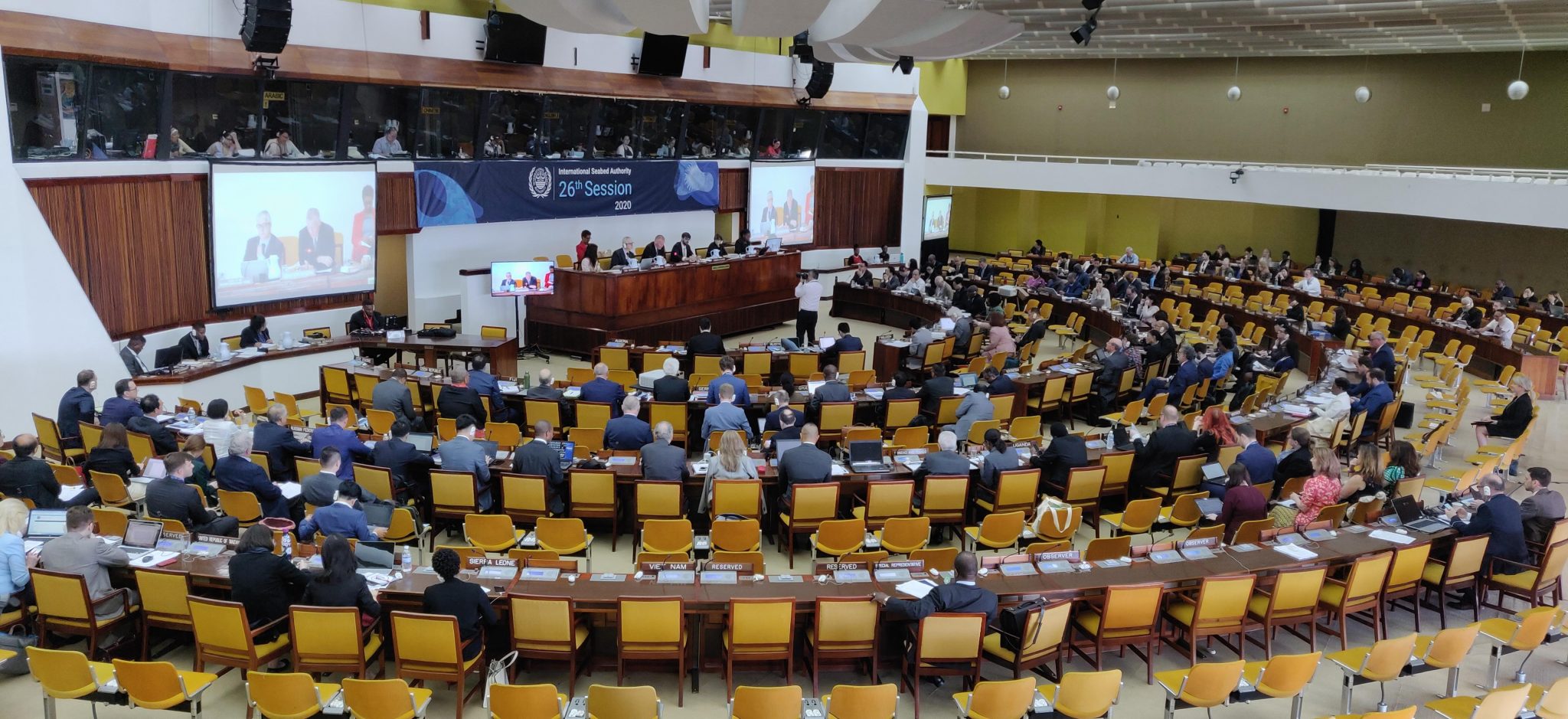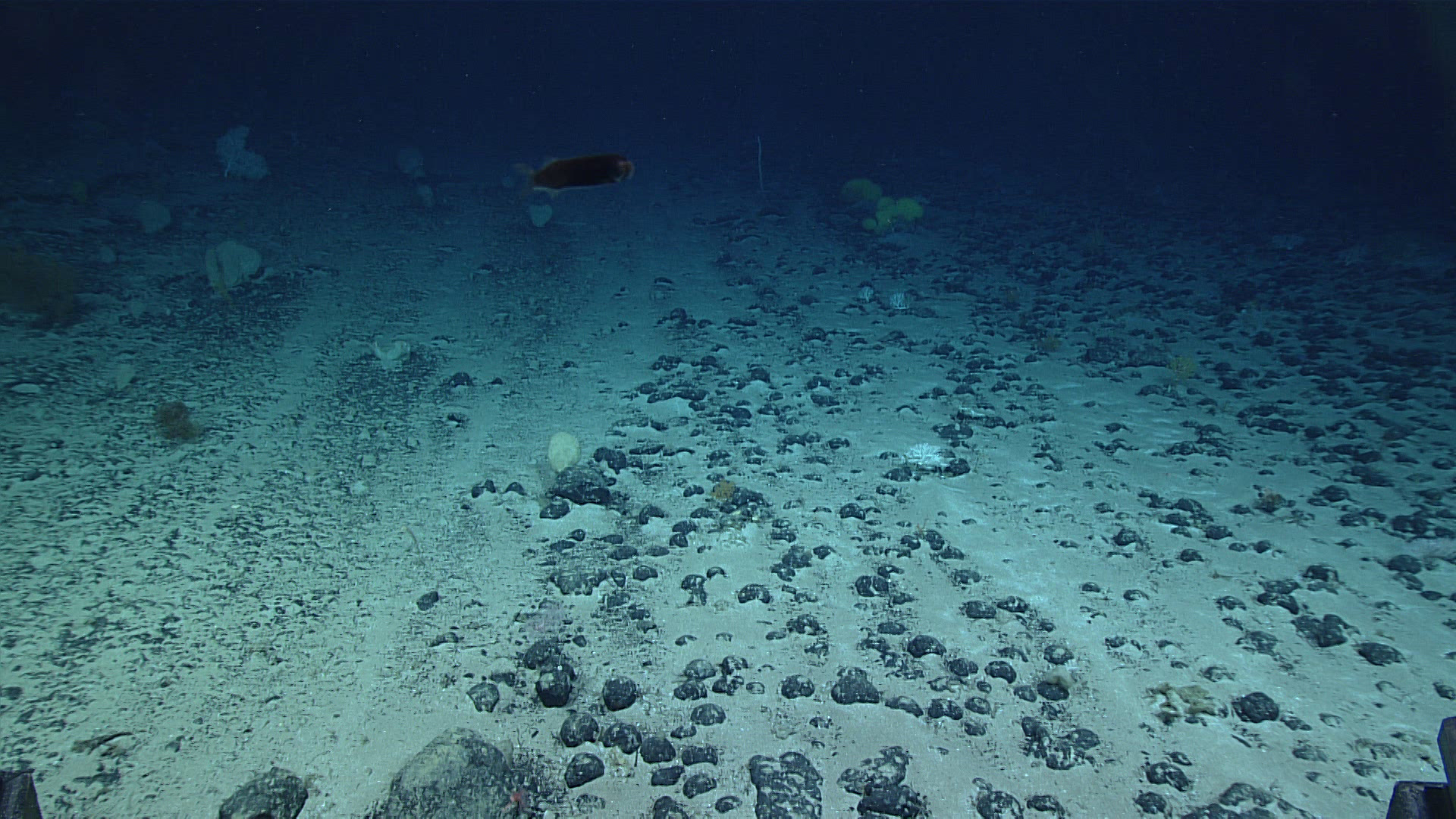
As in-person negotiations on the future of exploitation in the deep ocean resume this week in Kingston Jamaica, we reflect back on the last two years of development as reported on our sister site, the Deep-sea Mining Observer. This editorial first appeared on August 27, 2021.
Opinion by Andrew Thaler, DSMO Editor-in-Chief
As we enter the final quarter of 2021, with a global pandemic still raging across all but a few countries and impacting supply chains and critical work throughout the world, it looks increasingly unlikely that an in-person session of the ISA will be possible before 2022, marking two years of substantially diminished progress on the development of the mining code and increasing frustration among stakeholders. Some of the most important voices at the negotiating table continue to struggle to get the latest outbreak under control. India, Russia, the UK, and Japan are not only among the top ten countries with the most new Covid cases as of this week but are ISA member states that sponsor mining contractors (at least one other contractor-sponsoring member state has stopped reporting new cases, while the United States, though not a member state, is also in the midst of a pandemic surge and contributes capacity and expertise to ISA negotiations).
In light of this global progress slowdown, not just for deep-sea mining, but among a host of international challenges and objectives, the push for urgency among some mining contractors and sponsoring states simply does not add up.
It is inarguably true that the process of negotiating the mining code has slowed significantly since February, 2020. This has frustrated not just contractors, but nearly every stakeholder involved in the process. The ISA has put tremendous effort into pushing forward through remote meetings and the silence procedure. And yet, the invocation of Article 15, initiating the 2-year countdown, reflects a belief that the process is being intentionally stalled, rather than adapting to a worldwide crisis that, frankly, takes precedence over the development of a new industry.
I am certainly sympathetic to the difficulties of commercial contractors that need to raise capital and attract investors during this difficult moment. But should the internal finances of a private company be a priority for the Council, the Assembly, and the Legal and Technical Commission?
The pandemic hit at a pivotal moment and forced stakeholders from all corners of the community to abandon many ambitious plans for 2020 and now, 2021. But even before the pandemic, the most optimistic contractors were eyeing the latter half of this decade for the beginning of commercial production, with the real promise of the industry reaching fruition in the 2030s and into the 2040s. With or without the 2-year countdown, that likely won’t change. The key bottlenecks, including, but not limited to, technological capacity and environmental impact assessments can and are advancing regardless of a finalized mining code.
Deep-sea mining in some form may be inevitable, but the current trajectory for development does not make it urgent. It is well positioned to support global efforts to decarbonize our energy infrastructure into the mid-century, but it will almost certainly play a very small role, if any, in the rapid decarbonization needed by 2030. Deep-sea mining will be the model for the next generation of extractive industries beyond national boundaries. Unlike the vast majority of green revolution technologies and policies necessary to avert the worst outcomes of climate change, deep-sea mining is in the enviable position of a long lead time to get the science, the regulations, the financial regimes, and the technology right. Deep-sea mining has time.