Skip to content

Southern Fried Science

Over 15 years of ocean science and conservation online

  • Home
  • About SFS
  • Authors
  • Support SFS

What sharks would Odysseus have encountered during his journey?

Posted on October 9, 2026 By David Shiffman No Comments on What sharks would Odysseus have encountered during his journey?
Uncategorized

A face. A fleet. A war. A man. And some sharks! Here’s a look at what sharks are found in Greek waters, and how things have changed over the centuries.

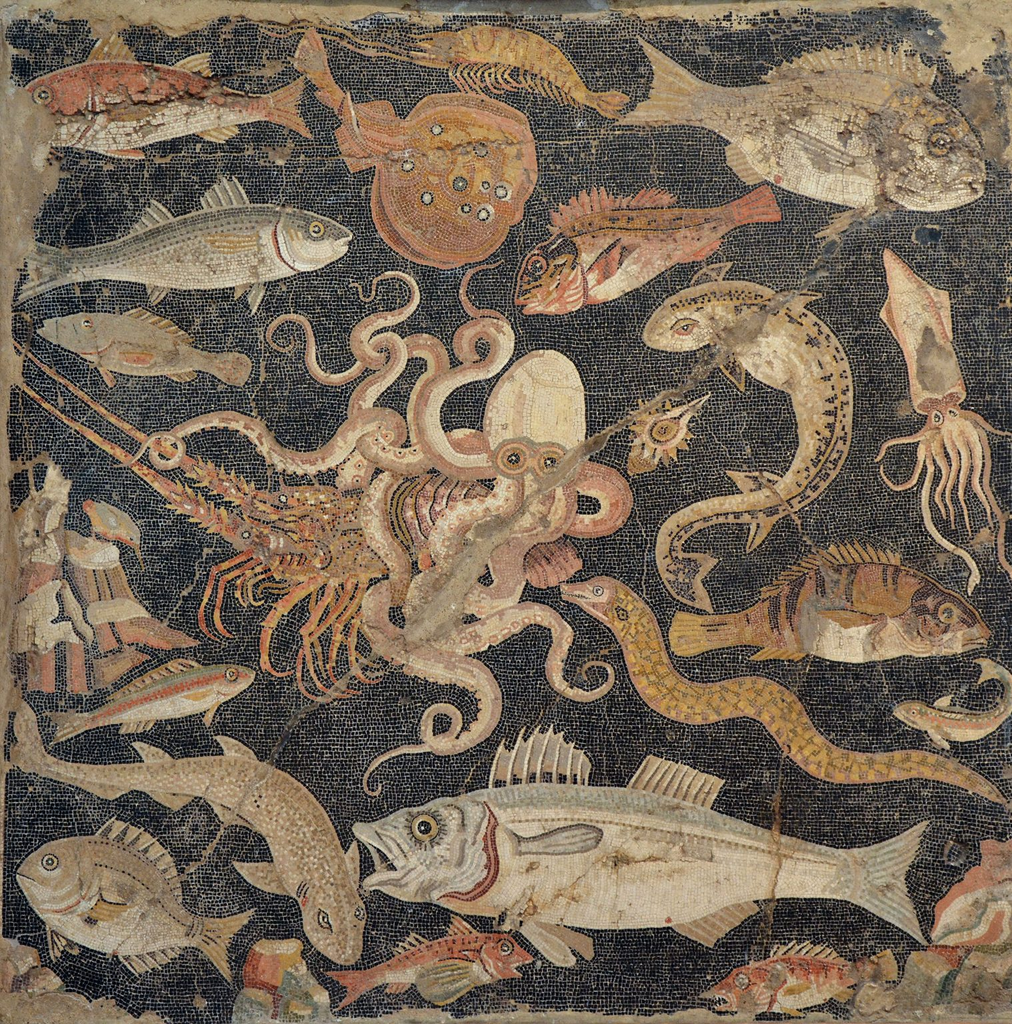
People have been talking about sharks in the Mediterranean for a very long time- some of the first written descriptions of shark egg cases come from Aristotle himself, and the ruins of Pompeii contain mosaic drawings of multiple shark species. While sharks are not mentioned in the Odyssey, the people of Homer’s time were very familiar with them.
But what sharks are there? A new paper reviews thousands of scientific, government, and citizen science records and concludes that in the modern era, Greek seas contain 33 shark species, 28 species of skates and rays, and one chimaera species. “If we use the Odyssey as a cultural lens and a fisheries dataset, it reminds us that sharks, dogfish and other large marine animals were already part of the ancient Mediterranean seascape,” Dr. Ioannis Giovis, a conservation officer with the Greek environmental non-profit iSEA and the lead author of the new paper, told me. “The quantitative evidence from more recent history is far more sobering: several groups of large predatory sharks in the Mediterranean have declined by roughly 96% to more than 99% from former levels.”
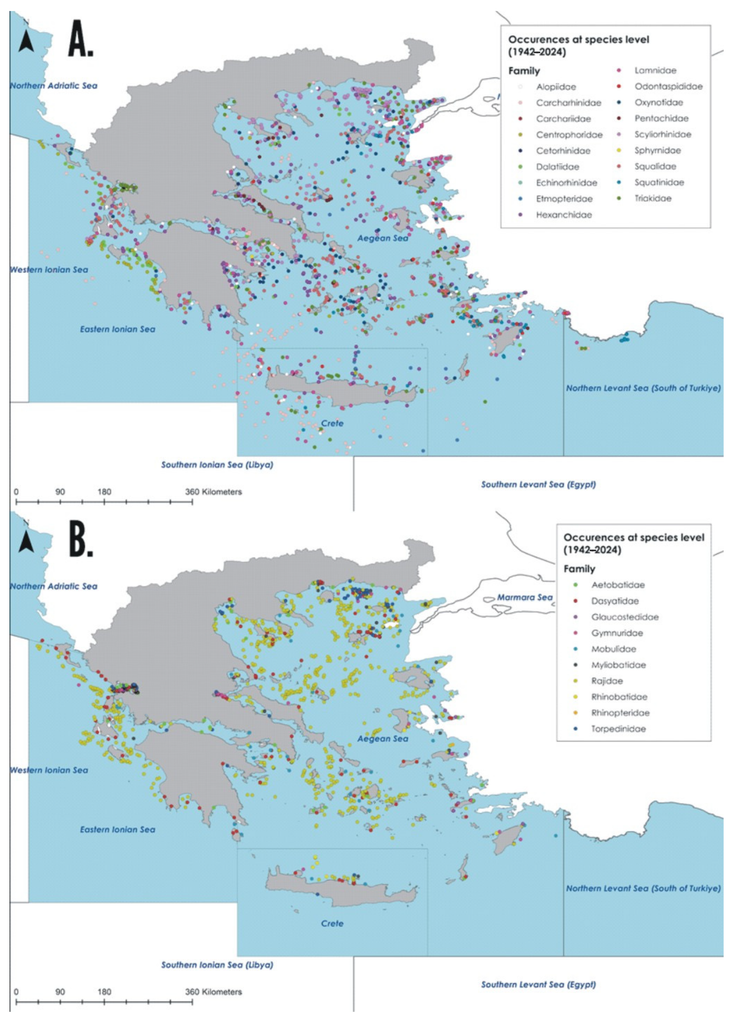
The species found in modern Greek seas include “famous” sharks like great whites, makos, threshers, hammerheads, and even sandbar sharks! There are also open ocean sharks known for following ships like blue sharks, deep sea sharks that glow in the dark, and angel sharks that lie flat on the bottom until prey swims within striking distance. “The key point is that high diversity should not be confused with healthy populations, as more than half of Mediterranean chondrichthyan species are considered threatened with extinction,” Dr. Giovos told me.

Indeed, the Mediterranean is one of the most overfished parts of the world, and those impacts have hit sharks and rays hard. A 2016 publication of the IUCN Species Survival Commission Shark Specialist Group found that not only are more than half of species threatened with extinction, but many are Critically Endangered. “We cannot calculate a precise decline from the age of Odysseus to today, but we can say with confidence that the modern Mediterranean is a profoundly depleted version of the sea known even a few generations ago,” Dr. Giovos told me.

Dr. Giovos’ past research has highlighted major gaps in conservation and management in the region. Despite major conservation challenges, he stresses that it’s not too late to save these animals. “Greek waters still have extraordinary biodiversity, and the challenge now is to ensure that these species do not become part of our historical memory,” he said.

Share this:

  • Share on Bluesky (Opens in new window) Bluesky
  • Share on Facebook (Opens in new window) Facebook
  • Share on Reddit (Opens in new window) Reddit
  • Share on Threads (Opens in new window) Threads
  • Share on WhatsApp (Opens in new window) WhatsApp
  • Share on Mastodon (Opens in new window) Mastodon

Related

Post navigation

❮ Previous Post: Sabotaging conservation in the US: this time it’s the next generation of conservation scientists

Leave a Reply

Your email address will not be published. Required fields are marked *

This site uses Akismet to reduce spam. Learn how your comment data is processed.

Popular Posts

That's not a blobfish: Deep Sea Social Media is Flooded by AI SlopThat's not a blobfish: Deep Sea Social Media is Flooded by AI SlopDecember 19, 2025Andrew Thaler
Why the new Trump order to shoot wolves is both illegal and a dreadful precedent for endangered speciesWhy the new Trump order to shoot wolves is both illegal and a dreadful precedent for endangered speciesSeptember 5, 2026Ali Gaster
What is a Sand Shark?What is a Sand Shark?November 12, 2017Chuck Bangley
Our favorite sea monsters – Ningen (#4)Our favorite sea monsters – Ningen (#4)September 7, 2010Andrew Thaler
What sharks would Odysseus have encountered during his journey?What sharks would Odysseus have encountered during his journey?October 9, 2026David Shiffman
What Ocean Ramsey does is not shark science or conservation: some brief thoughts on "the Shark Whisperer" documentaryWhat Ocean Ramsey does is not shark science or conservation: some brief thoughts on "the Shark Whisperer" documentaryJuly 2, 2025David Shiffman
Have we found the city of Atlantis?Have we found the city of Atlantis?September 1, 2026Chris Parsons
A continued assault on the Endangered Species Act – this time it’s the "Jobs Act"A continued assault on the Endangered Species Act – this time it’s the "Jobs Act"October 8, 2026Ali Gaster
Our favorite sea monsters – The Kraken (#1)Our favorite sea monsters – The Kraken (#1)September 10, 2010Andrew Thaler
Sabotaging conservation in the US: this time it's the next generation of conservation scientistsSabotaging conservation in the US: this time it's the next generation of conservation scientistsOctober 9, 2026Ali Gaster
Subscribe to our RSS Feed for updates whenever new articles are published.

We recommend Feedly for RSS management. It's like Google Reader, except it still exists.

Southern Fried Science

  • Home
  • About SFS
  • Authors
  • Support SFS


If you enjoy Southern Fried Science, consider contributing to our Patreon campaign.

Copyright © 2026 Southern Fried Science.

Theme: Oceanly Premium by ScriptsTown