
The Largetooth Sawfish (Pristis perotteti) is about to become the second elasmobranch protected by the Endangered Species Act, a welcome step in the conservation of these animals. In addition to the slow growth, low number of offspring, and relatively late maturity which characterizes most elasmobranchs, another biological feature contributes to sawfish being “among the most endangered fishes in the world,” according to Shark Advocates International President Sonja Fordham. It’s hard to imagine a biological structure that can get more thoroughly entangled in fishing nets than the “saw” on their rostrum, and bycatch is one of the leading causes of population decline in this group of animals. Additionally, the saw used to be a part of the souvenir trade.
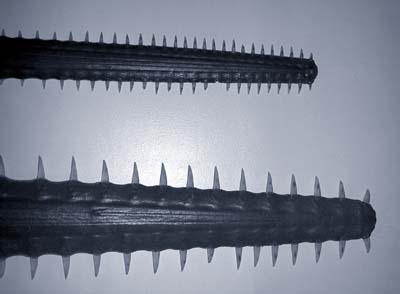
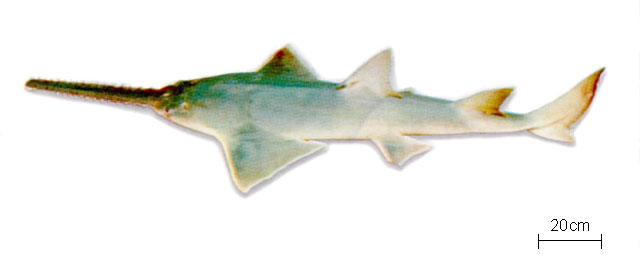
Largetooth sawfish used to live in U.S. waters (near Texas), but haven’t been seen since the 1960s. They can now primarily be found in Mexico, Central and South America, and West Africa. Like other sawfish species, the saw is used both to immobilize fish prey and to dig for benthic invertebrate prey. The largest largetooth sawfish on record was over 20 feet in length.
In addition to overexploitation, another important threat facing sawfish is habitat destruction. These animals depend on estuaries, which are decreasing worldwide due to coastal development. All sawfish species except for Pristis microdon are listed under CITES appendix I, essentially banning international trade of these animals.
The Endangered Species Act protections, the result of a petition by WildEarth Guardians, take effect on August 11. The U.S. will also work with nations where these animals are found to encourage similar protections. “By adding largetooth sawfish to the Endangered Species List, the U.S. government is taking an important step toward preventing extinction of this remarkable animal and raising awareness about the plight of all sawfish species,” says Sonja Fordham.
Additionally, Shark Advocates International recommends the following steps:
- National protection for all species of sawfish in all range countries
- Better monitoring of South Atlantic and Gulf of Mexico shrimp fisheries
- Fishing measures to minimize sawfish bycatch
- Research to inform sawfish conservation, and
- Development of an IUCN Shark Specialist Group global strategy for sawfish conservation.
ESA protections are a cause for celebration, but much more needs to be done to save these animals.
Certainly an important species for protection efforts, and its a good idea to utilize the CITES and ESA, and further strengthen the importance of those mandates/laws.
PB
Charleston, SC
843-762-8609 office