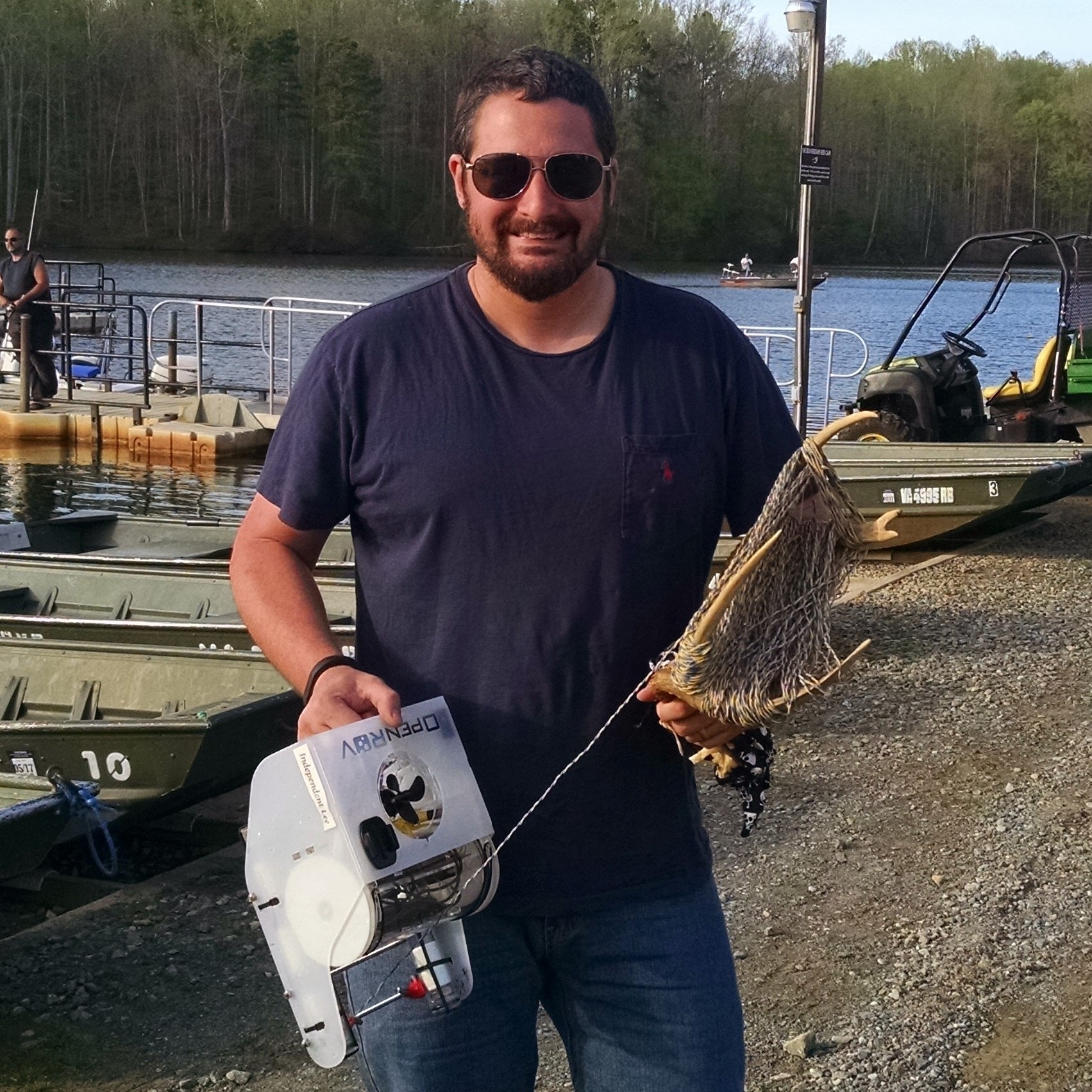
 Two years ago, I moved to San Francisco. It was… an experience. I had the opportunity to meet some incredible technologists, leaders in the emerging world of citizen exploration, and developers, coders, and makers using their skills and expertise to help save the environment. I met some amazing drone builders developing platforms and tools to measure the world. I also learned that West Coast living was not for me. The southern Atlantic coast called me back. But before I left, I led a small team across the Pacific to Papua New Guinea, where we taught undergraduates from the University of Papua New Guinea and the University of the South Pacific how to build and operate OpenROVs and incorporate them into marine ecology research.
The West Coast was good to me. It helped refine my vision for bringing low-cost, open-source technologies into the marine science and conservation world. Citizen science is becoming increasingly important, and the need for both democratizing and decolonizing science will drive much of the evolution of the scientific community in the 21st century. Tools that are effective, cheap, and open-source will play a major role in this transition. I returned east and began planning the next phase of this vision.
The Chesapeake Bay (San Franciscans take heed, you can keep your “Area” but “The Bay” will always be the Chesapeake) is the largest estuary in the United States, is economically important for shipping, fisheries, and tourism, and also happens to be the body of water that I grew up on. I learned to swim, fish, sail, and motor in one of the Bay’s many tributaries. It’s also home to more than a dozen research institutes, which work, sometimes in coordination and sometimes not, on studying and protecting the Bay.
Earlier this year, I, along with four other excellent ocean scientists, received the Ocean Classrooms’ Early Career Scientist Grant, for a proposal to connect technology and marine conservation through low-cost robotics. The one-year project will, among other things, allow me to introduce the OpenROV to Chesapeake Bay research program and build a custom quadcopter specifically designed for marine science and conservation work. This is hugely exciting for me personally, and for the research teams that will gain access to these tools.
There are four phases to #BayBots, beginning with a trip back to San Francisco to meet up with the OpenROV team and consult with my drone builder, Sean from Aerotestra. You might remember Aerotestra from early trials in 2014 where we used one of their drones to take water quality measurements in Lake Merritt, Oakland. I’ll also have the chance to join the OpenROV Tahoe Haxpedition, bringing together OpenROV users from around the world for a long weekend of development and deployment in Lake Tahoe, and attend the Bay Area Maker Faire to meet up with other technologists and further expand my toolbox.
After returning from the West Coast, I’ll launch into the the second phase of the project, the Girls and Grads Underwater Robot Camp. I can’t take credit for this one. The Girls Underwater Robot Camp is the brainchild of submarine pilot and National Geographic Explorer Erika Bergman. We’ll bring together local high school students and graduate students at the Virginia Institute of Marine Science for a multi-day workshop building and testing a pair of OpenROVs. Once built, the ROVs will the join #BayBot research fleet.
FYI, journalists and NGOs should be paying attention to Bergman’s career, great things are coming from her.
At some point in the early Fall, we’ll have two OpenROV’s and an ecodrone ready to fly. Phase three begins with a day long robotics workshop, where I’ll demonstrate the capabilities of these tools to interested member of the scientific community and hold an ecodrone flight school. During flight school, we’ll discuss not just the capabilities of these devices, but also the regulations and best practices, as well as providing practical flight training, so that even researchers who want to use their own drones, rather than the ecodrone, will benefit from #BayBots.
All of this is leading up to the final, and most exciting portion of the project. Thanks to Ocean Classrooms, we have support to offer these tools for use by Chesapeake Bay researchers at little-to-no cost to their research projects, for at least the next year. The field program integration phase will put these tools in the hands of researchers, allowing them to test their capabilities and decide whether they are truly appropriate for the questions they want to answer. Rather than multiple labs using their precious, and precarious, research funding to try out the next big thing, #BayBots will give them the opportunity develop a research protocol using drones, ROVs, or both, without risking their grants.
This matters. When I came back to the Bay, I searched out and talked with researchers from several institutions who were trying to bring drones and robots into their projects. These tools are inexpensive compared to the heavy-weight industrial/research platforms, but they’re only cheap if they’re the right tools for the job. The overwhelming story I heard was from lab groups who had taken a risk on something like a DJI Phantom ($1200 on Amazon) for photosurveys, only to crash it into the Bay, in some cases on their first flight. #BayBots is here to change that story, and bring the right tools into the Chesapeake in a form that makes them as accessible to scientists, conservationists, and citizen groups as possible.