For decades, the International Whaling Commission (IWC) was defined by a single, highly polarized debate: the battle between pro-whaling and anti-whaling nations over commercial catch quotas. Today, however, the landscape of the IWC has radically evolved.
For the current IWC Commissioners, conservation-related topics (such as sustainable whalewatching, marine pollution, and protected areas) hold an equal, if not greater, priority alongside traditional whale population estimations. Initially for establishing whaling quotas, estimating whale abundance and modelling population data is increasingly being integrated with environmental data and data on anthropogenic impacts to implement targeted, science-based, conservation actions and recommendations.
A cornerstone of this modern, conservation-centric framework is the State of the Cetacean Environment Report (SOCER), an annual ecological audit that bridges the gap between complex marine science and high-level policy decisions.
Whale management in the 21st century
Population abundance and stock structure estimation remain a core operational duty of the IWC. However, the purpose of these data sets has shifted dramatically from calculating sustainable hunting yields to diagnosing human-induced threats. Cutting edge methods and fieldwork involving vessel-based sighting surveys, acoustic monitoring, drone data and AI-driven photo-identification is actively deployed to track vulnerable stocks. For example, launched in late 2024, the IWC Status of Whales Project translates complex scientific population metrics into accessible “thermometer” graphics. It evaluates long-term trends and health risks for species such as the fin whale and North Pacific gray whale. The Commission also continues to back extensive global tracking efforts, such as the North Pacific IWC-POWER long-term research cruises. These initiatives gather data on abundance trends specifically to inform international conservation and management frameworks.
The rise of the conservation agenda
However, as the commercial whaling industry has become largely defunct, the active focus of IWC Commissioners has rapidly pivoted toward an expanding conservation agenda. This change is heavily reflected in the Commission’s strategic alignment with global treaties like the Kunming-Montreal Global Biodiversity Framework. The three major pillars of this modern agenda include:
Whalewatching management
Whalewatching has grown into a multi-billion dollar global industry, serving as a powerful socio-economic alternative to commercial whaling. However, the IWC recognizes that unmanaged maritime tourism can inflict acute behavioral stress on localized populations. In addition to sub-committees on the scientific and management aspects of whale watching in the Scientific and Conservation Committees, respectively, the IWC promotes sustainable whalewatching via the online IWC Whale Watching Handbook. This is a living, collaborative tool designed to help over 50 countries regulate vessel speeds, limits, and approach distances to ensure sustainable whale tourism.
Mitigating anthropogenic pollution
Marine debris, chemical contamination, and ocean noise are classified by the IWC as severe existential threats to cetaceans. Long-running initiatives, such as Pollution 2025, explicitly study how persistent organic pollutants act as endocrine disruptors, lowering reproduction rates and compromising whale immune systems.
Furthermore, the IWC Bycatch Mitigation Initiative directly addresses entanglement in commercial fishing gear, which remains the leading cause of human-induced cetacean mortality worldwide.
Protected Areas & Conservation Management Plans (CMPs)
To shield species traversing transboundary waters, the IWC heavily utilizes Conservation Management Plans (CMPs). These plans establish critical habitats and safety regulations across multiple jurisdictions. Active CMPs are currently deployed for highly vulnerable populations, including the critically endangered Arabian Sea humpback whale and the Iberian killer whale.
In addition, a massive operational layer of the IWC’s modern conservation platform is the management of large-scale Whale Sanctuaries. While the global commercial whaling moratorium provides a baseline ban, sanctuaries are designed to act as permanent, legally designated havens where commercial whaling is forbidden and habitat health is prioritized. Currently, the IWC oversees two designated sanctuaries, while actively debating a monumental third (see below).
The modern International Whaling Commission recognizes that counting whales is futile if the oceans they return to are left too degraded to sustain them. By elevating conservation topics and issues, the current Commissioners have successfully transformed the IWC from an antiquated whaling forum into a modern, proactive, international marine conservation framework.
How Important is SOCER?
The State of the Cetacean Environment Report (SOCER) is one of the most critical instruments available to the IWC. Initiated via a 1997 Commission resolution, and supported an endorsed by multiple resolutions subsequently, the SOCER is an annual, peer-reviewed, non-technical compendium that synthesizes the newest global data regarding the health of marine environments.
The strategic value of SOCER
- Bridging science and governance: Many IWC Commissioners are diplomats and politicians rather than marine biologists. SOCER translates dense oceanographic data regarding stressors like microplastics, heavy metals, and climate change into actionable policy insights.
- A holistic ecosystem view: Traditional modeling focuses strictly on counting individuals. SOCER shifts the focus toward habitat viability, monitoring environmental indicators like sea surface temperatures, coastal tourism waste spikes, and ship-breaking yard chemical runoff.
- An early warning system: SOCER acts as an ecological, horizon-scanning radar. By tracking regional mortality events and habitat degradation, it can guide the Commission’s budget allocations and flags where new Extinction Alerts, conservation initiatives or CMPs are urgently needed.
Whale Sanctuaries
As noted above, currently, the IWC oversees two vast whale Sanctuaries covering two entire oceans, while the Commission actively debating a monumental third whale sanctuary.
- The Indian Ocean Sanctuary (IOS)
Established in 1979, the Indian Ocean Sanctuary covers the entire Indian Ocean south to 55°S. In recent management revisions, the IWC has adapted the sanctuary’s objectives to move past historical boundary mapping and address hyper-localized, modernized threats.
The focus within the IOS has shifted to safeguarding critical populations like the small, isolated Arabian Sea humpback whale. Modernized management includes targeting ship strikes in high-traffic northern Indian Ocean shipping lanes, regulating rapid coastal tourism expansions, and analyzing the impact of intense underwater acoustic noise from oil and gas exploration.
- The Southern Ocean Sanctuary (SOS)
Adopted in 1994, the Southern Ocean Sanctuary encircles the entirety of Antarctica. Its northern boundary perfectly matches the southern line of the Indian Ocean Sanctuary, creating an integrated safety net for migratory great whales moving between polar feeding grounds and tropical breeding waters.
Management plans for the SOS have undergone rigorous overhauls. Following collaborative mandates, the Commission recently accepted a comprehensive Southern Ocean Sanctuary Management Plan. This framework shifted the sanctuary’s performance measures away from passive monitoring toward proactive research and conservation.
Facilitated by the IWC-Southern Ocean Research Partnership (IWC-SORP), the updated plan focuses heavily on ecosystem-based management. This includes measuring how climate change affects krill distributions and enforcing non-lethal research methods to track population recoveries.
For over two decades, a coalition of nations led by Brazil, Argentina, Uruguay, South Africa, and Gabon has championed the creation of a South Atlantic Whale Sanctuary (SAWS). If approved, SAWS would protect roughly 21 million square kilometers of ocean, completely bridging the gap between the existing Indian and Southern Ocean sanctuaries.
The proposed sanctuary is explicitly designed around a dual-objective strategy:
- The SAWS Management Plan: Unlike older models, proponents introduced a proactive SAWS Management Plan to the Scientific Committee before formal adoption. It details 12 target actions across two pillars: coordinated regional research and public outreach/sustainable whale tourism.
- Geopolitical deadlocks: Because sanctuary designations require amending the IWC Schedule, a 75% supermajority vote is legally required. The proposal remains one of the most contentiously debated topics among current Commissioners.
At the IWC annual sessions, the proposal has repeatedly come devastatingly close to passing but has been blocked by a minority bloc of pro-whaling or pro-sustainable-use nations, such as Norway, who argue that a sanctuary is legally unnecessary because whales are already protected by the global moratorium. This sadly ignores the myriad research and conservation benefits of designating the sanctuary. Despite these setbacks, the South Atlantic sanctuary remains a top agenda item for a clear majority of current IWC commissioners, showcasing the shift toward highly managed, interconnected global ocean safe havens.
Non-Lethal Research in the Southern Ocean Sanctuary: The IWC-SORP Framework
For over half a century, the primary method used to study whale diets, age structures, and population health was scientific whaling, a practice that required killing the animals. However, following the 1994 establishment of the Southern Ocean Sanctuary (SOS), the international community demanded a transition to harmless methodologies. In response, the IWC established the Southern Ocean Research Partnership (IWC-SORP) in 2009. This multi-nation research initiative proved that robust, high-density scientific data could be gathered without harming a single animal. Within the SOS, the IWC-SORP project relies on four primary non-lethal research technologies.
- Passive Acoustic Monitoring (PAM)
The Southern Ocean is vast, dark, and plagued by severe sub-zero weather, making traditional visual searches incredibly difficult. To bypass this, researchers utilize Passive Acoustic Monitoring (PAM). Scientists deploy arrays of directional frequency analysis sonobuoys into the freezing waters. These specialized microphones listen continuously to the ocean, capturing low-frequency vocalizations from miles away. By analyzing specific audio signatures, scientists can differentiate between Antarctic blue whales and fin whales, mapping out exactly where these populations gather to feed, even in total darkness.
- Unoccupied Aerial Vehicles (UAVs)
The introduction of customized, marine-grade drones has completely transformed how scientists evaluate whale health. Using high-resolution aerial cameras, drone pilots fly directly over surfacing whales to perform close-up photogrammetry. By measuring the exact length-to-width ratio of a whale’s body from above, scientists can precisely calculate its body condition and fat storage. This data provides an early warning system showing how shrinking krill populations—driven by climate change—directly impact the physical survival of nursing mothers and newborn calves.
- Biopsy sampling and satellite tagging
To gather deep biological data without major surgery, researchers use pneumatic darts to collect tiny, superficial skin and blubber samples. These small tissue samples provide a wealth of information, allowing scientists to extract DNA, determine the whale’s sex, assess stress levels through hormone analysis, and identify chemical pollution build-up in the blubber. Additionally, scientists attach miniature satellite tags to the whale’s dorsal area. These tags transmit real-time data, mapping out migration corridors that connect Antarctic feeding grounds to warm equatorial breeding grounds.
- AI and crowd-sourced photo-identification
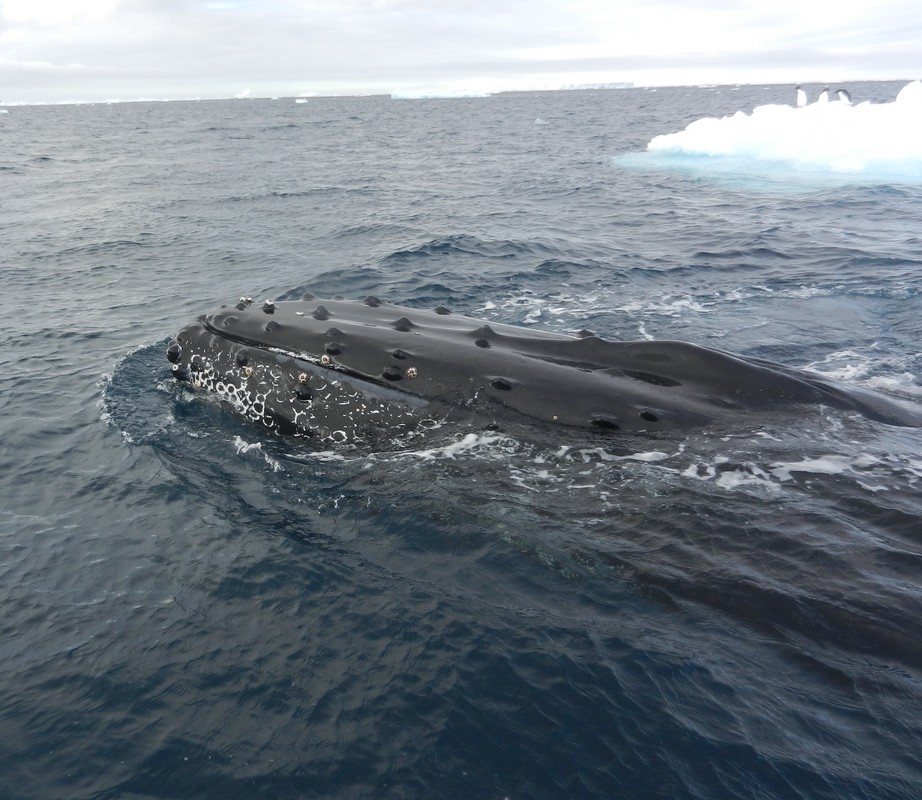
Every whale possesses unique physical traits. A humpback whale’s tail fluke features distinct pigment patterns, while a southern right whale develops unique callosity patterns on its head. IWC-SORP scientists take high-resolution photos of these features and run them through automated, AI-driven matching databases such as Happywhale. This allows researchers to track individual whales over several decades, monitoring their survival, calving cycles, and long-term travel paths without ever needing to capture or touch them.
Key recommendations from the 2026 IWC Scientific Committee
When the IWC Scientific Committee convened for its 2026 session (SC70) in Bled, Slovenia, the agenda moved far beyond historic population formulas. The resulting SC70 Report delivered a series of urgent, targeted conservation mandates aimed at halting the immediate decline of several critically endangered cetaceans while confronting industrial threats on the high seas.
In particular, the Committee prioritized critical emergency interventions for the planet’s most vulnerable marine mammal populations:
- Restoring protections for Rice’s whales: With an estimated population of only 51 individuals remaining exclusively in the Gulf of Mexico, the Committee expressed profound concern over escalating industrial pressures. Following highly controversial U.S. Government decisions to exempt local oil and gas activities from conservation regulations, the Scientific Committee issued an explicit recommendation for the deployment of all available legal and regulatory tools to restore maximum protections. This includes expanding habitat models along the Atlantic coast and creating mandatory vessel slowdown zones to prevent catastrophic ship strikes.
- North Atlantic right whale (NARW) recovery: Estimated at roughly 350 remaining individuals, the western NARW population continues to face a severe downward trajectory driven by human activity. The 2026 Committee pushed for accelerated international data-sharing to build out advanced web tools via the State of the Seas initiative. The SC70 framework calls for immediate, mandatory expansions of acoustic tracking, rope-less fishing gear requirements, and stricter shipping speed zones to curb gillnet entanglements and vessel collisions.
- Saving the Taiwanese white dolphin: This localized subspecies of the Indo-Pacific humpback dolphin has plummeted to a critical baseline of fewer than 50 individuals along the shallow estuarine waters of western Taiwan. Backed by the IWC Voluntary Fund for Small Cetacean Conservation, the Committee urged the immediate expansion of AI-driven photo-identification tracking. They noted that rapid nearshore industrial changes require localized community-incentivized reporting and immediate bans on gillnet fishing within their primary feeding corridors.
- Low-cost bycatch reduction innovations: To immediately address global gillnet entanglement risks without imposing severe financial burdens on small-scale fishers, the Committee formally highlighted a highly successful, low-tech bycatch mitigation strategy evaluated in Peru and Brazil . By lashing empty, tightly sealed 250 ml upcycled plastic bottles every 130 meters along a net’s floatline, the air-filled chambers act as highly reflective passive acoustic mirrors . This creates a clear “acoustic silhouette” that bounces back when a dolphin utilizes its high-frequency biosonar. Field trials demonstrated a staggering 88% reduction in dolphin bycatch while causing zero reduction in commercial fish catches. As a result, the Committee recommended adding this low-cost innovation directly to the IWC Bycatch Mitigation Initiative Toolbox, with plans to publish a global practical manual on adjusting bottle ballast using sand to maintain the correct backscatter angle in heavy currents.
Beyond monitoring specific species, the Committee took a firm stance on the rapid expansion of extractive ocean industries:
- Alarm over deep-sea mining: As commercial interest in scraping the abyssal plain for polymetallic nodules escalates, the Scientific Committee issued a stern warning regarding its unknown ecological side effects. The SC70 report highlights that deep-sea mining risks introducing massive, toxic sediment plumes into pelagic feeding zones. More critically, the continuous, low-frequency sound generated by heavy machinery risks deafening deep-diving cetaceans like sperm whales and beaked whales, which rely on echolocation to find food.
- The impacts of oil, gas, and offshore energy exploitation: The Committee highlighted the compounding acoustic and physical footprints of offshore energy infrastructure. In addition to traditional oil and gas drilling threats in the Gulf of Mexico and the Indian Ocean, the committee evaluated the impacts of nearshore renewable energy expansion. They specifically noted that the intense sound generated by pile-driving during offshore wind farm construction can cause permanent hearing damage, severely displacing vulnerable coastal species such as the Taiwanese white dolphin from their native habitats.
The IWC is THE global cetacean conservation treaty organization
The evolution of the International Whaling Commission proves that even the most deeply entrenched, resource-exploitative institutions can successfully pivot into global champions of environmental stewardship. By elevating holistic conservation priorities (such as marine sanctuaries, bycatch mitigation toolboxes, and the insights of the State of the Cetacean Environment Report, the IWC has established the gold standard for modern, data-driven ocean governance. Non-member nations must look to the IWC not as a historic, outdated whaling forum, but as a vital blueprint for cooperative marine protection. Joining the Commission and actively adopting its conservation frameworks is a critical diplomatic step for any country dedicated to safeguarding the world’s cetaceans against escalating ocean threats.