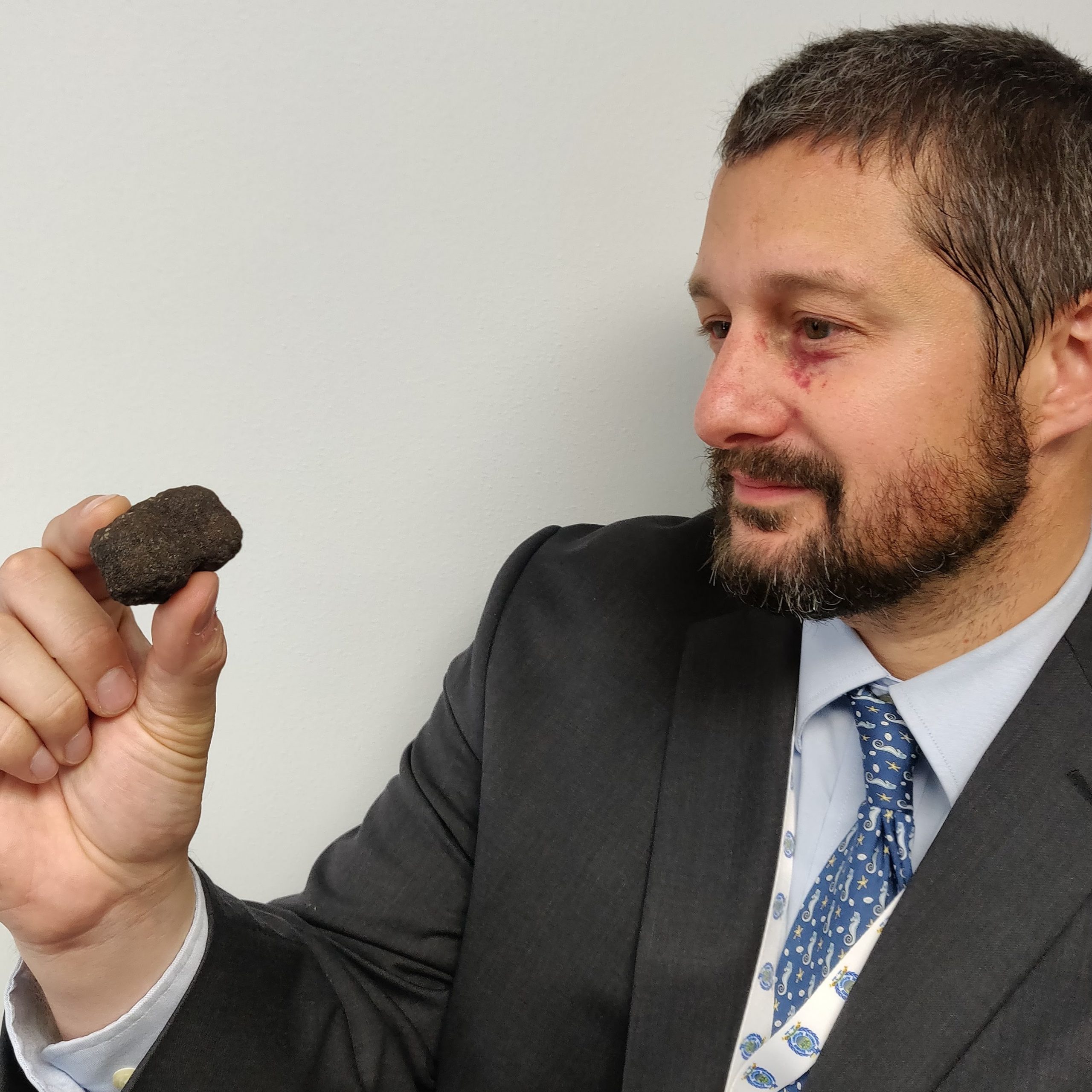
In 2001, on an expedition to hydrothermal vent fields in the Indian Ocean, researchers made a bizarre discovery. Clustered in small aggregations around the base of a black smoker was an unusual snail, seemingly clad in a suit of armor. Rather than a single, hard, calcareous structure, the snail’s operculum was covered in a series of tough plates. On recovery to the surface, those plates, as well as the snail’s heavy shell, began to rust. This was an Iron Snail.
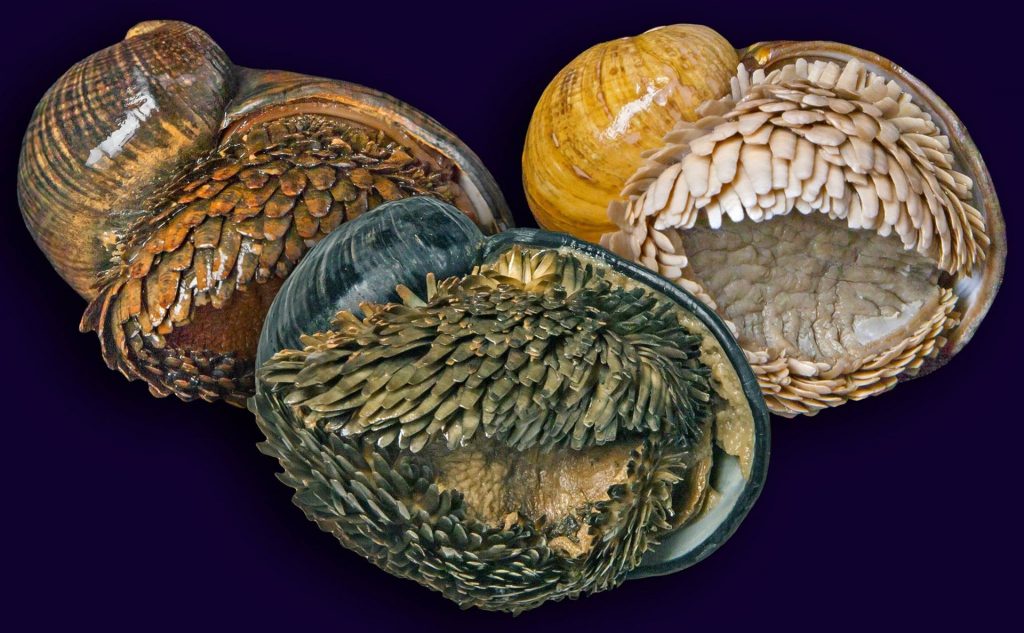
Chrysomallon squamiferum is a truly weird snail. It is the only known animal that builds its skeleton with iron. Rather than the conventional shell of calcium carbonate, the outermost layer of its shell is formed from a matrix of iron sulphides. The dermal scales that plate its foot and lend it a distinctively armored look are formed from the same ferrous materials. As a vent-dependent species, it plays host to chemoautotrophs, microbes hungry for the chemical energy emitted by a hydrothermal plume, which live in symbiosis with the snail, providing food for their host. The high oxygen demands of scaly-foot snail result in a massively oversized heart, at 4% of the animal’s body volume, the giant heart of Chrysomallon squamiferum is proportionally among the largest in the animal kingdom.
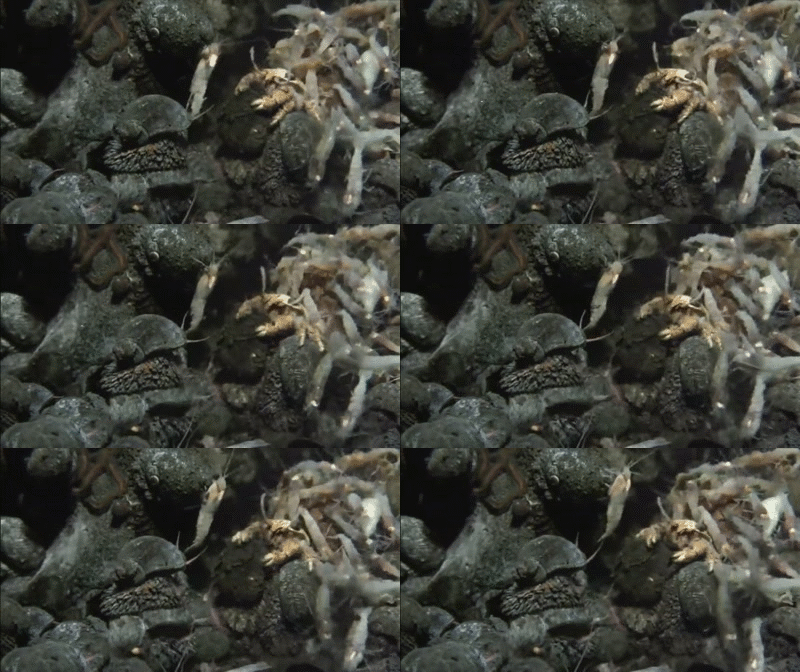
The scaly-foot snail occupies a precarious position in the Indian Ocean. The vents they call home are few and far between—the snail has only been observed in three locations—and even within each vent field, the snails occupy a tiny area. According to deep-sea ecologist Drs. Chong Chen and Julia Sigwart, connectivity between these three sites is extremely low. The populations are functionally isolated from each other. “If one population got knocked out,” says Chen, “it would be impossible for the site to recolonize.”
Chen estimates that, in total, the scaly-foot snail’s habitat covers only a few square meters of area in a vast and unforgiving ocean. This incredibly limited range, coupled with the rarity of acceptable habitat, is what started Chen and Sigwart down the path to establishing an endangered listing. On one cruise, the scientists struggled to locate an aggregation they had observed a few years previously. “What if something happened? What if we can’t find them because they aren’t here anymore?” wondered Chen, as they grappled with the fragility of these deep-sea communities.
It is the emergence of deep-sea mining that poses an existential threat to this rare and charismatic snail. In a forthcoming paper, Thaler and Amon (2019) reveal that nearly all known hydrothermal vents in the Indian Ocean currently fall within a mining exploration lease. The deep Indian Ocean is relatively unexplored and one of the few places where mining interests are poised to dramatically expand human presence on the sea floor.
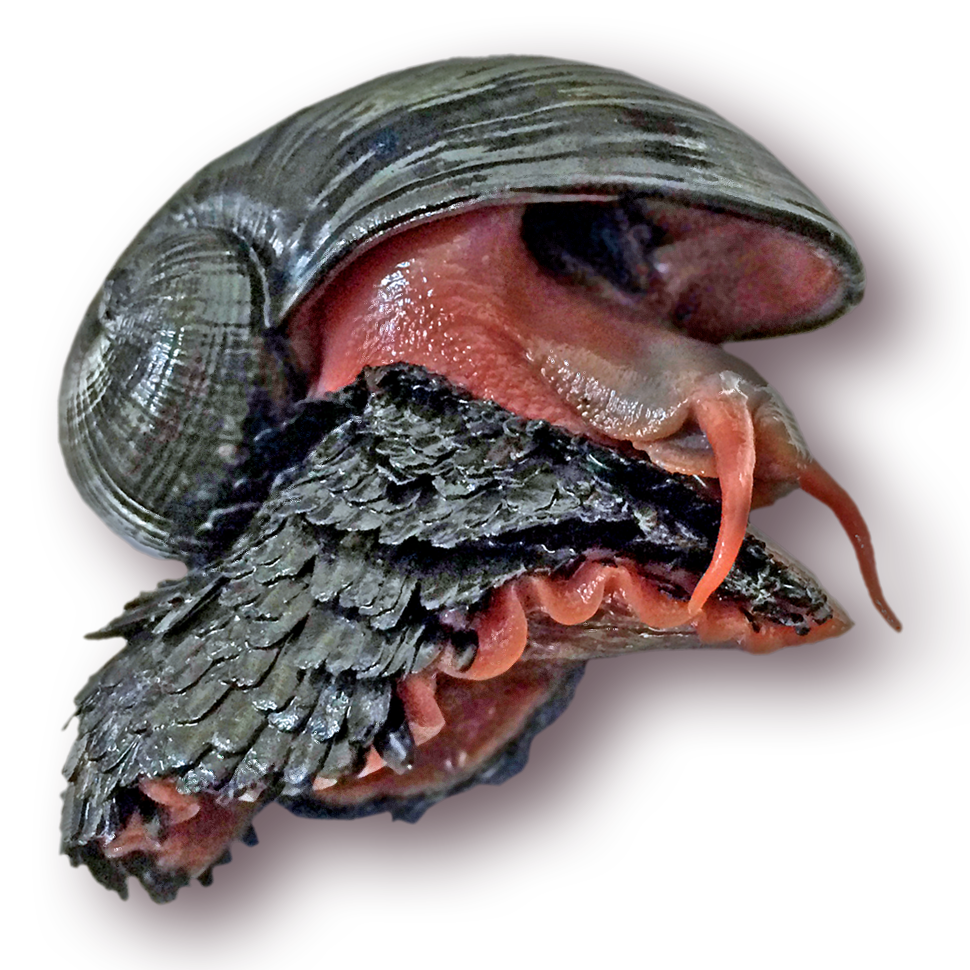
Adding Chrysomallon squamiferum to the venerable red-list required a crash-course in IUCN process protocols. The International Union for the Conservation of Nature has an extensive system in place for assessing best-available data to draw conclusions about where a species falls on its spectrum from Critically Endangered to Least Concern. With rare deep-sea species, even those that are likely vulnerable, tend to be data deficient, highlighting the conservative nature of the Red List. Working with recognized world experts (of which they were included) and specialist groups, Chen and Sigwart navigated the complex process of developing a convincing case for the species’ inclusion.
Only two other species endemic to deep-sea hydrothermal vents are included on the IUCN red list, both of which are categorized as Least Concern. That may soon change.
In addition to the scaly-foot gastropod, romanticized as a Sea Pangolin in a paper out today in Nature Ecology and Evolution, Sigwart, Chen, and others reports that an additional 14 draft assessments have been submitted to the IUCN for species found on deep-sea hydrothermal vents in the Indian and Pacific Oceans, all of which are expected to be listed as Vulnerable or Endangered. They further call for a concerted effort from the deep-sea research community to complete comprehensive assessments for a majority of vent-endemic species ahead of large-scale resource extraction.
One of the great challenges of the developing deep-sea mining industry lies in balancing the value of the mineral resources, both financially and as a stepping-stone towards a post-fossil-fuel future, with the scientific and cultural value of the organisms that thrive in these ecosystems. In the two decades since its discovery, the scaly-footed snail has not only galvanized global interest in the ecology of Indian Ocean hydrothermal vents but has inspired research ranging from the evolution of chemosynthetic symbiogenesis to the development of light-weight body armors.
As the International Seabed Authority General Assembly meets this week to negotiate the draft regulations for deep-sea mining in international waters, the future of this big-hearted iron snail remains uncertain.