Skip to content

Southern Fried Science

Over 15 years of ocean science and conservation online

  • Home
  • About SFS
  • Authors
  • Support SFS

Author: Guest Writer

So, Manta Rays Aren’t a Thing Anymore…

Posted on July 29, 2013October 28, 2013 By Guest Writer 21 Comments on So, Manta Rays Aren’t a Thing Anymore…
Science

Neil_HexatrygonNeil Aschliman is an Assistant Professor of Biology at St. Ambrose University by day, a freelance artist by night. He earned his PhD in Biology from FSU by recovering the “Tree of Life” for rays, skates and their relatives, and is broadly trained in vertebrate biology and evolution. His personal website can be found at www.iceandshadows.com.

So mantas aren’t a thing anymore… – paraphrase, David Shiffman’s liveblog of my talk at the recent meeting of the American Elasmobranch Society.

Wow, is that going to require some explanation! Did I steal these guys away under cover of night? Did they pull a “so long, and thanks for all the fish” on us? No, this is a story about the power of naming, and one that may have serious implications for the conservation of these amazing animals and their close relatives.

Human beings love to name things. We do it vigorously and redundantly: a single fish species may be christened with a dozen or more common names by people in different geographic areas, times, or even marketing departments! It helps to have an international-standard system of naming animals to give this enterprise some consistency. It doesn’t matter if you know it as Chilean Sea Bass or the Patagonian Toothfish, people worldwide will be happy to confirm for you that Dissostichus eleginoides is indeed one ugly customer.

This system of precise identification in which scientists apply a formal code to name organisms is called binominal nomenclature (“two-part name”). This is often incorrectly called “binomial” nomenclature (“two number,” a mathematical expression), even by professionals! The first part of the name is the genus, which can apply to between one and many species that are closely related and resemble each other. The second part of the name is the specific epithet, which applies to one and only one species. These names are usually derived from Greek and Latin. For example, Batrachognathus volans translates as “flying frog-jawed” one, an apt appellation for an odd pterosaur from the Late Jurassic.


Read More “So, Manta Rays Aren’t a Thing Anymore…” »

Is Whale Wars a waste of money?

Posted on July 2, 2013October 27, 2013 By Guest Writer 27 Comments on Is Whale Wars a waste of money?
Conservation

Portobello Road

Lindsey Peavey is  a PhD student in the Bren School of Environmental Science & Management at the University of California, Santa Barbara.  She is a marine ecologist whose research seeks to find a sustainable balance between human resource use and species conservation.  You can follow her work on Twitter (@lepeavey) and her blog, turtlesinthedeep.org.

Last December, I sat down to enjoy a pizza pie and draft beer with my friend Neal, a 6-foot, 5-inch, 280-lb. (think offensive lineman), die-hard conservative republican. He was giddy with excitement to talk with me about one of his favorite TV shows, Animal Planet’s “Whale Wars.” Knowing that I’m a tree hugger by nature and a marine biologist by trade, he thought an hour of “Save the whales!” camaraderie was ahead. He was shocked when I let out a long sigh and confessed, “I’m not a fan of Whale Wars.”

Neal was completely deflated. He demanded to know why I didn’t like the show. Shouldn’t I, of all people, be Sea Shepherd’s No. 1 fan? I offered my gripes: It’s outrageously expensive to operate a vessel like Sea Shepherd’s SSS Steve Irwin in the extremely volatile and dangerous environment of intercepting Japanese whaling vessels in the Antarctic — on the order of tens of thousands of dollars a day. Although funds are available to support these operations, the return on investment is unclear. How many whales are actually being saved?

Read More “Is Whale Wars a waste of money?” »

A citizen science project to monitor sevengill sharks in San Diego

Posted on June 13, 2013October 27, 2013 By Guest Writer 3 Comments on A citizen science project to monitor sevengill sharks in San Diego
Science

by Michael Bear

MikeyMichael Bear is  Science Diving Editor for California Diver Magazine and  currently contributor to Marine Science Today with over a 1000 cold-water dives, an AAUS (American Academy of Underwater Sciences) Scientific Diver and  founder of Sevengill Shark Sightings.org. He  lives and work  in San Diego.


I am not a professional shark researcher–just an experienced San Diego diver who has been diving in the San Diego area since 2000. In October of 2008, I began hearing reports of encounters between local San Diego divers and Sevengill sharks, (Notorynchus cepedianus).   At the time, I thought this a bit unusual, since this was the first I had heard of these encounters in nearly a decade of regular diving in the San Diego area and monitoring local Internet dive boards. Between 2000 and 2006, almost no encounters were reported. But in 2008, that all changed and they began appearing on  the dive boards and  lists, one here, two there, five there,  slowing increasing until it was obvious that something was happening–exactly what was not clear–only that more and more encounters were being reported by divers.

Then, in the summer of 2009, I had my own memorable encounter with a Sevengill.   I was diving off of Point La Jolla when a large seven footer glided majestically between me and my dive buddy, who was no more than two meters away from me.   To say we were startled would be an understatement.   It was this incident, along with the increase in reports by other divers, caused me to set up a website  later that same year,  allowing San Diego divers to log and document their encounters with this species, as a sort of  personal citizen science project, because  no local marine institution, including Scripps Institution of Oceanography and NOAA SW Fisheries in La Jolla, had ever done any baseline studies locally prior to this point–I know, because we checked.

Read More “A citizen science project to monitor sevengill sharks in San Diego” »

A Call to Action: Preventing a Potential Setback in U.S. Atlantic Shark Finning Policy

Posted on March 27, 2013October 27, 2013 By Guest Writer 12 Comments on A Call to Action: Preventing a Potential Setback in U.S. Atlantic Shark Finning Policy
Conservation
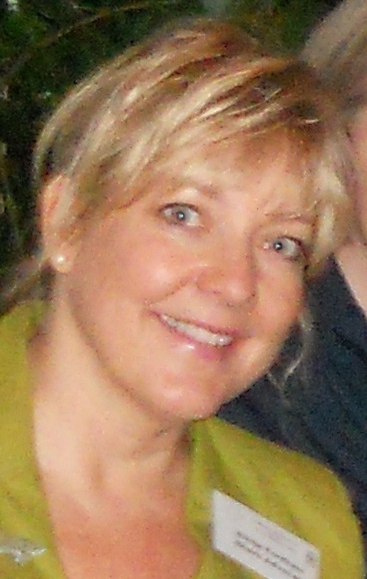
Sonja Fordham President, Shark Advocates International
Sonja Fordham
President, Shark Advocates International

SAISonja Fordham founded Shark Advocates International as a project of The Ocean Foundation in 2010 based on her two decades of shark conservation experience at  Ocean Conservancy.  She is Deputy Chair of the IUCN Shark Specialist Group and Conservation Committee Chair for the American Elasmobranch Society, has co-authored numerous publications on shark fisheries management, and serves on most of the U.S. federal and state government advisory panels relevant to sharks and rays.  Her awards include the U.S. Department of Commerce Environmental Hero Award, the Peter Benchley Shark Conservation Award, and the IUCN Harry Messel Award for Conservation Leadership.

After many months of intense attention to advances in international shark conservation policy through CITES and the European Parliament, it’s time to refocus on sharks in my backyard.  A potentially terrible shark policy precedent has been brewing through the Atlantic States Marine Fisheries Commission (ASMFC), and threatens to weaken that body’s coast-wide ban on finning (slicing off a shark’s fins and discarding the body at sea) smoothhounds and other sharks.  Help from the concerned public is needed in the final few days of the official public comment for this proposal!


Read More “A Call to Action: Preventing a Potential Setback in U.S. Atlantic Shark Finning Policy” »

Why a California great white shark scientist opposes CA Endangered Species Act protections

Posted on February 22, 2013October 27, 2013 By Guest Writer 15 Comments on Why a California great white shark scientist opposes CA Endangered Species Act protections
Why a California great white shark scientist opposes CA Endangered Species Act protections
Conservation, Science

csulb shark labChris Lowe -CSULBDr. Chris Lowe is a Professor of Marine Biology at California State University Long Beach, and is Director of the  CSULB Shark Lab. He has studied  California’s great white sharks for more than 10 years, and has written more than 75 peer-reviewed scientific publications. Dr. Lowe also serves on the Board of Directors for the American Elasmobranch Society, the world’s largest professional organization of shark scientists. The following guest post was also submitted as a public comment to the California Department of Fish and Wildlife.


Comments for consideration on the petition to list white shark as threatened or endangered species:

I am a Professor of Marine Biology and the Director of the CSULB Shark Lab at California State University Long Beach and have been conducting State and Federally permitted white shark research in California since 2002. In addition, as a professional and published shark scientist who has studied a variety of shark species around the world, including white sharks in California, I would like to take this opportunity to express my personal professional opinion in regards to the petition request and the science behind it.

Read More “Why a California great white shark scientist opposes CA Endangered Species Act protections” »

The ten best and worst events in shark fisheries management of 2012

Posted on January 4, 2013October 27, 2013 By Guest Writer 1 Comment on The ten best and worst events in shark fisheries management of 2012
Conservation, Science
Sonja FordhamPresident, Shark Advocates International
Sonja Fordham
President, Shark Advocates International

SAISonja Fordham founded Shark Advocates International as a project of The Ocean Foundation in 2010 based on her two decades of shark conservation experience at  Ocean Conservancy.  She is Deputy Chair of the IUCN Shark Specialist Group and Conservation Committee Chair for the American Elasmobranch Society, has co-authored numerous publications on shark fisheries management, and serves on most of the U.S. federal and state government advisory panels relevant to sharks and rays.  Her awards include the U.S. Department of Commerce Environmental Hero Award, the Peter Benchley Shark Conservation Award, and the IUCN Harry Messel Award for Conservation Leadership.


The last twelve months added up to another exciting year in shark and ray conservation policy.  We certainly saw and should herald a lot of great progress in 2012.  I think it’s also important to acknowledge what went wrong so we know where we stand and how best to move forward.  I’ve taken a look back and compiled a top ten list of what I see as the best and worst events in shark fisheries management for 2012, based on my work at Shark Advocates International.  I’m starting with the low points, but keep reading!  It ends on a high note.

Read More “The ten best and worst events in shark fisheries management of 2012” »

Meet WormCam

Posted on December 5, 2012December 3, 2012 By Guest Writer
Science

Technology in water? That seems a bit counter-intuitive  doesn’t it? Well, Dr. Kersey Sturdivant, during his undergraduate and graduate years, denied the golden rule of electronics and submerged a video camera under water. But this is not your typical Canon Powershot D10. This is WormCam. As much as I love thumbing through magazines and flipping page … Read More “Meet WormCam” »

Saving Bimini: A campaign to protect a Bahamian gem

Posted on June 19, 2012October 27, 2013 By Guest Writer 11 Comments on Saving Bimini: A campaign to protect a Bahamian gem
Conservation

Kristine Stump is a PhD candidate in Marine Biology and Fisheries at the University of Miami’s Rosenstiel School of Marine and Atmospheric Science (RSMAS).  Her dissertation focuses on the effects of anthropogenic nursery habitat loss on juvenile lemon sharks in Bimini, Bahamas.  She was the Principal Investigator of the Bimini Biological Field Station (BBFS, or Sharklab) from 2008 – 2011 while collecting field data for her degree and has been heavily involved in the process of establishing a Marine Protected Area in Bimini.  Kristine has an M.A. in Marine Policy from RSMAS, and prior to entering the doctoral program, she spent five years working in Washington, DC at Ocean.US – the National Office for Integrated and Sustained Ocean Observations (now the NOAA IOOS Program).  In addition, she has worked for the Census of Marine Life program office at the Consortium for Ocean Leadership in Washington, DC. 


There is an apex predator roaming the seas.  For hundreds of thousands of years, this beast has hunted in the waters of the world’s oceans.  Relentless is it in its search along the shorelines for that which satisfies its primal urges.  Its numbers ever on the rise, the destruction in its path knows no bounds.  And now, in 2012, it wants to dominate the sea more than ever before: it wants glass-bottom bungalows.  It needs yacht dockage at its vacation home.  It craves manicured fairways.  IT MUST HAVE AN INFINITY POOL!

If you haven’t already guessed, the apex predator here is man.  Throughout history, the environment has shaped man, but now more than ever, man is shaping the environment.  In the current era of environmental awareness, however, we have learned that there are limits to the anthropogenic changes ecosystems can withstand while still maintaining ecosystem function.  Luckily, we have learned to implement mitigation strategies to offset, to some degree, the negative effects of human expansion.

Read More “Saving Bimini: A campaign to protect a Bahamian gem” »

The Semester I Got Crabs

Posted on May 14, 2012October 27, 2013 By Guest Writer 2 Comments on The Semester I Got Crabs
Science

Shannon is a student who participated in my blogging workshop as part of her Science and Nature Writing class earlier this semester. He she recounts her experience conducting independent research at the Duke University Marine Lab.


This past semester I was simply enjoying my life and doing what college students do when it happened: I got crabs. Sixty-four of them, to be exact. Never before had I experienced such prolonged irritation; before long I was just itching to get rid of them. For weeks I was sure that I had made a foolish mistake, vowing to be more careful in the future. Now, I’m not talking about Pthirus pubis, the sexually transmitted disease—get your mind out of the gutter! The crabs I’m referring to are Clibanarius vitattus, the striped hermit crabs that haunted my dreams and terrorized my every waking moment for the duration of my first ever independent study experiment.

Read More “The Semester I Got Crabs” »

Swordfish, certifications, and sustainable seafood

Posted on May 1, 2012October 27, 2013 By Guest Writer 4 Comments on Swordfish, certifications, and sustainable seafood
Science

Jordan Nikoloyuk is the Sustainable Fisheries Coordinator of the Ecology Action Centre, a membership-based community environmental organization based in Nova Scotia, Canada. The Marine Issues Committee of the EAC was founded in 1995 after the collapse of the Atlantic Canadian groundfish stocks and works towards conserving and protecting marine ecosystems and maintaining sustainable fisheries and vibrant coastal communities.

As part of its sustainable seafood work and through its Friends of Hector campaign – www.friendsofhector.org – the EAC has participated in many Marine Stewardship Council assessments for Atlantic Canadian fisheries and encouraged retailers to support certified fisheries. Jordan has written this guest post to share his recent experiences with a certification that has left the EAC and other conservation organizations wondering whether seafood certification can contribute to sustainable fisheries management in the long term, or if the conflict between keeping an eco-label rigorous on the one hand and expanding its market appeal on the other is just too difficult to manage. What do you think?

The best way to buy seafood responsibly is to read a sustainable seafood guide and ask your retailer the two big questions: where is this from and how was it caught? When getting these answers is tough, many people turn to eco-certifications and labelling. Despite some increasingly controversial certifications, the Marine Stewardship Council (MSC) is considered to be the most trusted and reliable label, but how many unsustainable fishery certifications will it take to ruin this credibility?

Last week, after lengthy and widespread opposition, the MSC approved certification of the Atlantic Canadian longline swordfish fishery, which catches 100,000 sharks and 1,400 endangered sea turtles every year. The Ecology Action Centre spent almost two years working to oppose this greenwashing. Now we are left asking: how can we promote sustainable fisheries with organizations the size of the MSC working against us? When a definition of sustainability is so weak that it lets the status quo continue, can this be seen as an effective ‘market-driven solution’?

Read More “Swordfish, certifications, and sustainable seafood” »

Posts pagination

Previous 1 … 6 7 8 9 Next

Popular Posts

Shark scientists want their research to help save threatened species, but don’t know how. Our new paper can help.Shark scientists want their research to help save threatened species, but don’t know how. Our new paper can help.December 1, 2025David Shiffman
Norway and Cook Islands put their deep-sea mining plans on pause.Norway and Cook Islands put their deep-sea mining plans on pause.December 3, 2025Andrew Thaler
What Ocean Ramsey does is not shark science or conservation: some brief thoughts on "the Shark Whisperer" documentaryWhat Ocean Ramsey does is not shark science or conservation: some brief thoughts on "the Shark Whisperer" documentaryJuly 2, 2025David Shiffman
What we know we don't know: impacts of deep-sea mining on whales, dolphins, sharks, turtles, and other migratory species.What we know we don't know: impacts of deep-sea mining on whales, dolphins, sharks, turtles, and other migratory species.November 20, 2025Andrew Thaler
2025: My year in writing, public speaking, and media interviews2025: My year in writing, public speaking, and media interviewsDecember 3, 2025David Shiffman
The Trouble with Teacup PigsThe Trouble with Teacup PigsOctober 14, 2012Andrew Thaler
Urea and Shark OsmoregulationUrea and Shark OsmoregulationNovember 15, 2010David Shiffman
How tiny satellites are tracking marine wildlifeDecember 1, 2025Andrew Thaler
Shark of Darkness: Wrath of Submarine is a fake documentaryShark of Darkness: Wrath of Submarine is a fake documentaryAugust 10, 2014Michelle Jewell
Quick Tips for Graduate Student Life - Write a Book ReviewJanuary 23, 2014Andrew Thaler
Subscribe to our RSS Feed for updates whenever new articles are published.

We recommend Feedly for RSS management. It's like Google Reader, except it still exists.

Southern Fried Science

  • Home
  • About SFS
  • Authors
  • Support SFS


If you enjoy Southern Fried Science, consider contributing to our Patreon campaign.

Copyright © 2025 Southern Fried Science.

Theme: Oceanly Premium by ScriptsTown