Skip to content

Southern Fried Science

Over 15 years of ocean science and conservation online

  • Home
  • About SFS
  • Authors
  • Support SFS

Author: Andrew Thaler

Marine science and conservation. Deep-sea ecology. Population genetics. Underwater robots. Open-source instrumentation. The deep sea is Earth's last great wilderness.

Saturation diving, destroying the world with Bitcoin mining, deep-sea mining, Arctic shrinkage, and more! Monday Morning Salvage: May 21, 2018

Posted on May 21, 2018 By Andrew Thaler
Weekly Salvage

Foghorn (A Call to Action!)

  • Yale study: Newspaper op-eds change minds and The Long-lasting Effects of Newspaper Op-Eds on Public Opinion. Scientists and conservationists, this May, make an effort to publish a Letter to the Editor or OpEd in your local paper. If you’ve done so, please leave a link to it in the comments.

Flotsam (what we’re obsessed with right now)

  • Immediately after college, my backup plan if I didn’t get into grad school was to go to work as an underwater welder doing saturation diving. After reading this, I’m pretty glad I didn’t go that route. The Weird, Dangerous, Isolated Life of the Saturation Diver.
  • Walking the talk in Vanuatu, the first country in the world to ban plastic straws.
  • We’ve been saying this for a awhile now. Cryptocurrencies that rely on ever increasing processing power to resolve transaction are an environmental disaster. Alarming Study Suggests Bitcoin Consumes an Astonishing Amount of Energy and It’s Only Getting Worse.

The Levee (A featured project that emerged from Oceandotcomm)

  • Stitching Hope for the Coast is still accepting contributions from knitters around the world. Join the fun!

Read More “Saturation diving, destroying the world with Bitcoin mining, deep-sea mining, Arctic shrinkage, and more! Monday Morning Salvage: May 21, 2018” »

Bone-eating Jabba worms, the world’s deepest plastic bag, new shipwrecks, climate change art, and more! Monday Morning Salvage: May 14, 2018.

Posted on May 14, 2018 By Andrew Thaler
Weekly Salvage

Foghorn (A Call to Action!)

  • Yale study: Newspaper op-eds change minds and The Long-lasting Effects of Newspaper Op-Eds on Public Opinion. Scientists and conservationists, this May, make an effort to publish a Letter to the Editor or OpEd in your local paper. If you’ve done so, please leave a link to it in the comments.
  • How to save the high seas: As the United Nations prepares a historic treaty to protect the oceans, scientists highlight what’s needed for success.

Flotsam (what we’re obsessed with right now)

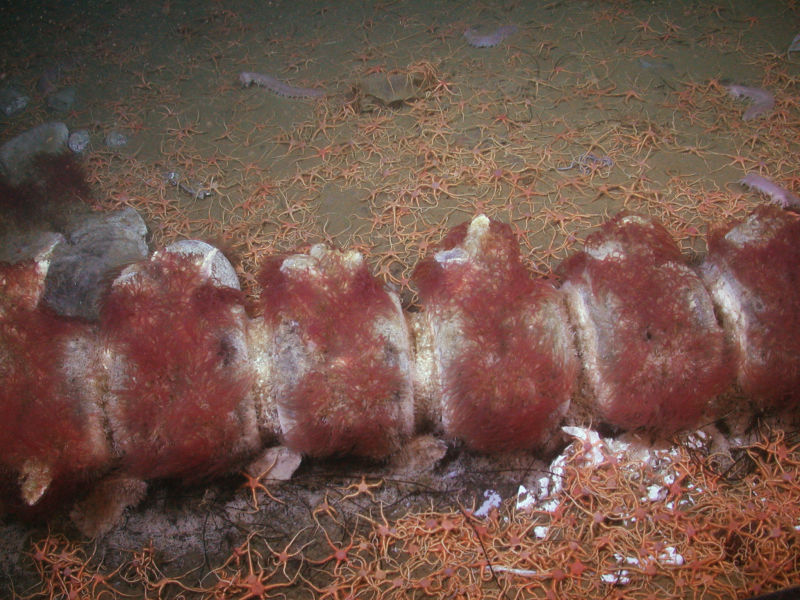
  • No commentary needed: Eyeless, Mouthless, Bone-Eating Worm Named After Jabba the Hutt.
Osedax worms growing on the vertebrae of a dead whale.
Photo: 2006 MBARI
  • Every ocean, every dive, every time, trash: Plastic Bag Found at the Bottom of World’s Deepest Ocean Trench.

Read More “Bone-eating Jabba worms, the world’s deepest plastic bag, new shipwrecks, climate change art, and more! Monday Morning Salvage: May 14, 2018.” »

Crab industry in crisis, world’s largest deep-sea mining vessel takes to sea, Bayou Women, ocean trash, and more! Monday Morning Salvage: May 7, 2018

Posted on May 7, 2018May 7, 2018 By Andrew Thaler 1 Comment on Crab industry in crisis, world’s largest deep-sea mining vessel takes to sea, Bayou Women, ocean trash, and more! Monday Morning Salvage: May 7, 2018
Weekly Salvage

Foghorn (A Call to Action!)

  • The Eruption at Kilauea on Hawai’i’s Big Island is truly spectacular, however hundreds of people are displaced from their homes. The mayor has directed those interested in giving donations to contact the Salvation Army at +1 (808) 756-0306.
  • Yale study: Newspaper op-eds change minds and The Long-lasting Effects of Newspaper Op-Eds on Public Opinion. Scientists and conservationists, this May, make an effort to publish a Letter to the Editor or OpEd in your local paper. If you’ve done so, please leave a link to it in the comments.

Flotsam (what we’re obsessed with right now)

  • Without seasonal workers, the Maryland crab industry is barreling towards a crisis. “Nearly half of the Eastern Shore’s crab houses have no workers to pick the meat sold in restaurants and supermarkets.” Crab crisis: Maryland seafood industry loses 40 percent of work force in visa lottery.
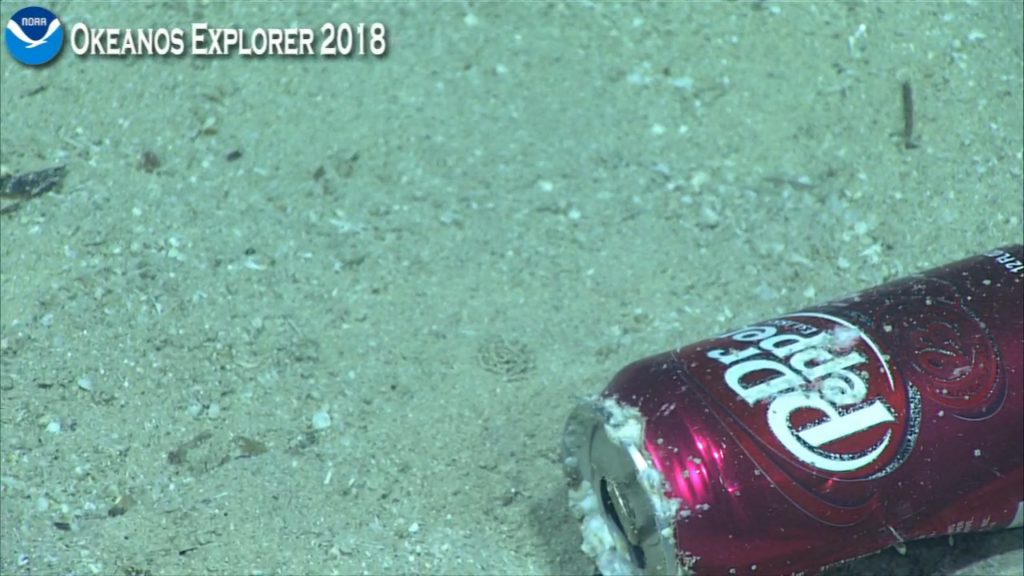
  • Trash on the seafloor. Megan McCuller has an eye-opening thread on all the trash they’re finding on the deep seafloor.

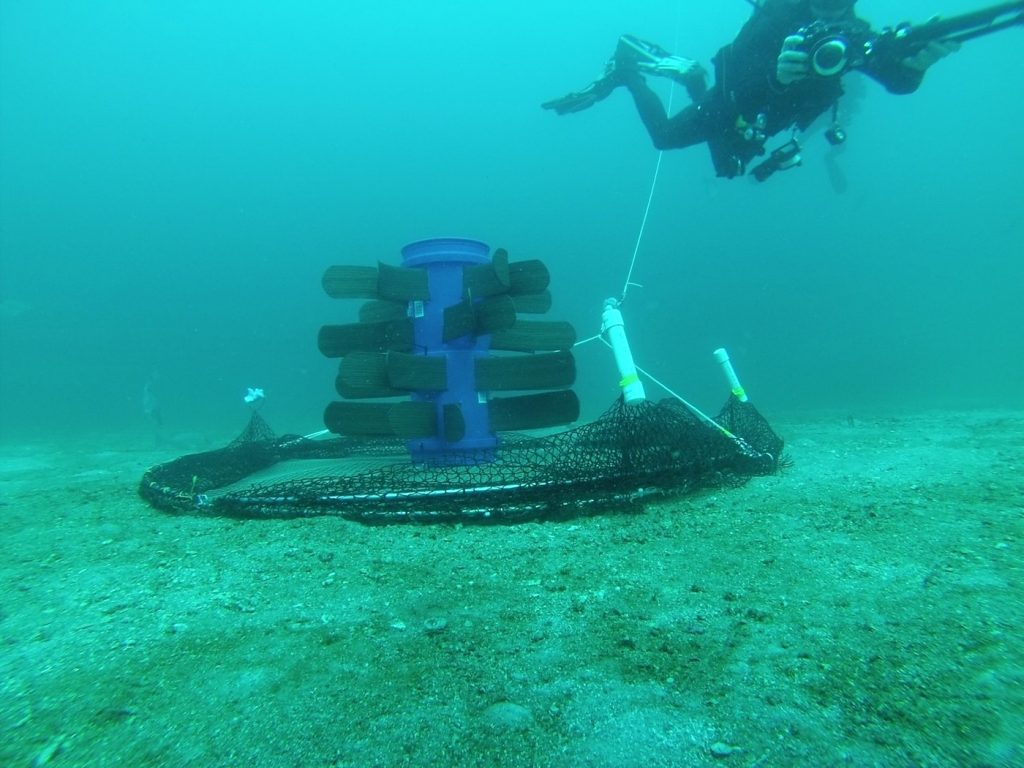
  • Lionfish Traps! Jake Levenson has been trying something similar in Dominica. New Weapons in the War on Lionfish, a Beautiful but Deadly Invader.
A second trap design from Gittings. Lionfish are attracted to the structures inside. (Steve Gittings/NOAA)

The Levee (A featured project that emerged from Oceandotcomm)

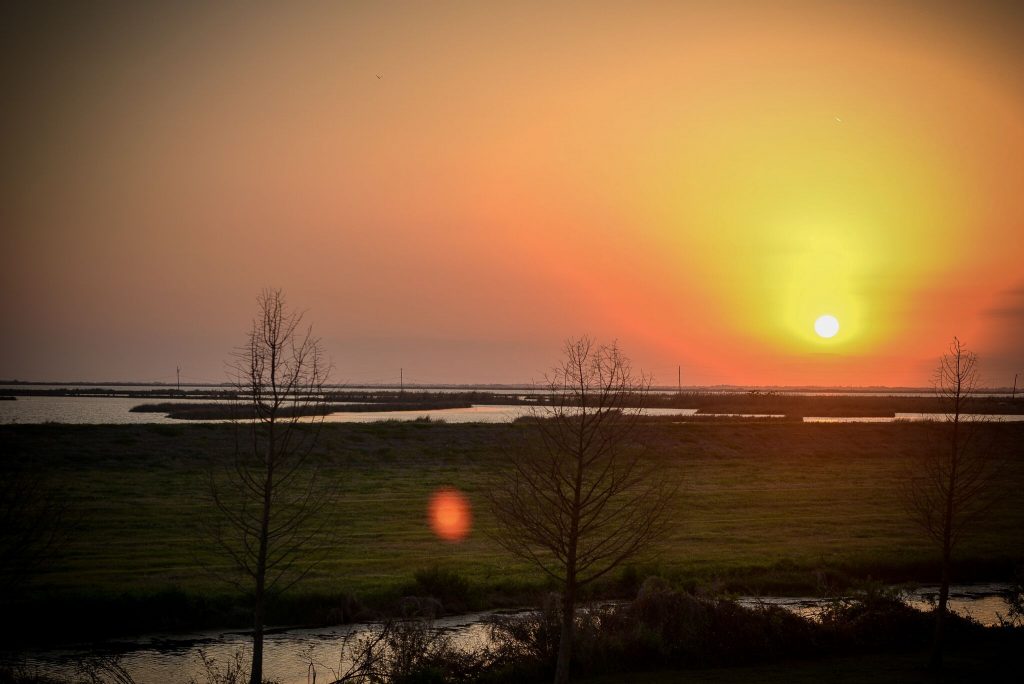
  • Women of the Bayou: Stories of resilience and ingenuity in south Louisiana’s changing landscape.
  • Listen to the Bayou Women radio production, too!

Read More “Crab industry in crisis, world’s largest deep-sea mining vessel takes to sea, Bayou Women, ocean trash, and more! Monday Morning Salvage: May 7, 2018” »

Write to your newspaper, banning plastic in the Bahamas, vanishing atolls, and more! Monday Morning Salvage: April 30, 2018.

Posted on April 30, 2018April 29, 2018 By Andrew Thaler
Weekly Salvage

Foghorn (A Call to Action!)

  • Yale study: Newspaper op-eds change minds and The Long-lasting Effects of Newspaper Op-Eds on Public Opinion. Scientists and conservationists, this May, make an effort to publish a Letter to the Editor or OpEd in your local paper.

Flotsam (what we’re obsessed with right now)

  • Rescued octopus returns to thank its rescuers.
  • The government of the Bahamas will ban plastic bags and other single use plastics by 2020!
  • Are you listening to Offshore by Civil Beat? The current season on adoptions in the Marshall Islands is a gut punch.

The Levee (A featured project that emerged from Oceandotcomm)

  • Saving the Coast through Storytelling.
© RAFEED HUSSAIN

Read More “Write to your newspaper, banning plastic in the Bahamas, vanishing atolls, and more! Monday Morning Salvage: April 30, 2018.” »

I love Jargon: my three biggest peeves about how we think about science communication. #SciComm

Posted on April 27, 2018 By Andrew Thaler
Uncategorized

I have a fundamentally tactical approach to science communication, which occasionally puts me at odds with more conventional practices. Some of the most common pieces of advice in scicomm tend to be the least effective for accurately and precisely communicating your message to a target audience.

Release the Kraken.

1. The J-Word.

Jargon. Jargon. Jargon. We’re all supposed to eradicate jargon from our outreach. Jargon should be avoided. We need to rehab our use of jargon. Hone your science writing by only using the ten hundred most common words (because ‘thousand’ isn’t among the top 1000 word). Sure, these are good exercises for thinking about how you communicate science, but as actual communication advice, it’s big animal that makes white drink back end drop.

Jargon is beautiful. Jargon is powerful. Not only are jargon words often more precise than their generic equivalent, but jargon acts as a form of shorthand. It tells your intended audience “hey, friend, this article/film/tweet/podcast is for you”. Outreach in all forms is always targeted towards a specific audience. Using jargon well helps define that audience and helps that audience connect to your piece. Smart use of jargon can make a good piece of outreach into a tactical piece of outreach.

Which is not to say that you shouldn’t think about jargon use at all. Understanding how different words are used in different contexts and how technical language can alienate non-specialist audiences is essential to producing high-quality outreach. But the general advice that we should all just avoid jargon the least effective approach possible.

Read More “I love Jargon: my three biggest peeves about how we think about science communication. #SciComm” »

An octopus’s garden in the sea, the world’s densest island, dangers of deep-sea fishing, and more! Monday Morning Salvage: April 23, 2018

Posted on April 23, 2018 By Andrew Thaler
Weekly Salvage

Foghorn (A Call to Action!)

  • The journey is over but the expedition continues. Follow us on Open Explorer for our ongoing adventures in the Mariana Islands.
  • WHOI is looking for some science communication superstars: Science Writer & Multimedia Producer and Social Media Specialist.

Flotsam (what we’re obsessed with right now)

  • The Okeanos Foundation for the Sea.
  • Nuclear Legacy Voyage with Okeanos Marshall Islands.
  • Why We Created This First-of-Its-Kind Digital Field Journal.

The Levee (A featured project that emerged from Oceandotcomm)

  • What’s with the egret and Terrebonne Parish in this month’s newsletter?
  • A great thread on the pop-up Sketching for Scientists event.

Read More “An octopus’s garden in the sea, the world’s densest island, dangers of deep-sea fishing, and more! Monday Morning Salvage: April 23, 2018” »

Alvin dives for early-career scientists, join me in the Marianas Islands, stump a scientist, embraces MPAs, and more! Tuesday (?) Morning Salvage: April 17, 2018

Posted on April 17, 2018April 16, 2018 By Andrew Thaler 1 Comment on Alvin dives for early-career scientists, join me in the Marianas Islands, stump a scientist, embraces MPAs, and more! Tuesday (?) Morning Salvage: April 17, 2018
Weekly Salvage

We’re late because Andrew doesn’t understand time zones.

Foghorn (A Call to Action!)

  • This is an incredible oportunity for an early career researcher to get their feet wet leading a deep-sea science cruise: Announcing a NSF-UNOLS Early Career Training Cruise Opportunity to the East Pacific Rise 9° 50’N – December 2018

Flotsam (what we’re obsessed with right now)

  • We have a new writer! Please welcome the Original Saipan Blogger, Bucky Villagomez!
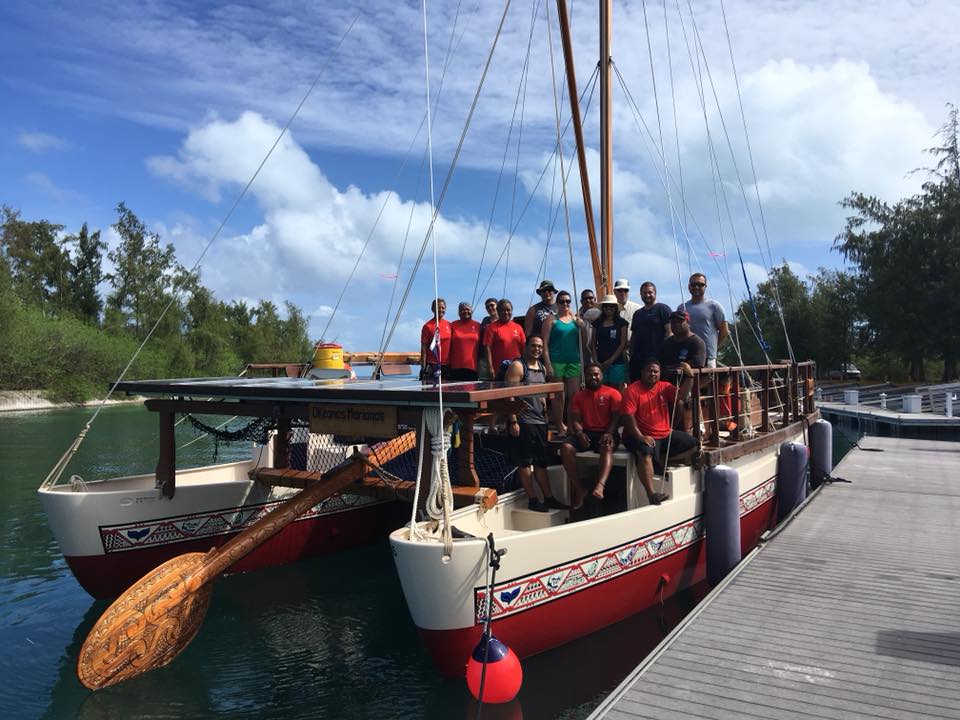
  • Hafa Adai from the Commonwealth of the Northern Marianas Islands! Are you following along with our adventure on OpenExplorer? Yesterday was one of the highlights of my career: Marine Ecology and Underwater Robotics in the Commonwealth of the Northern Mariana Islands.
The Okeanos Marianas. Our research vessel for the day.
  • Add this to the list of things that are really not good: Atlantic Ocean Current Slows Down To 1,000-Year Low, Studies Show.
  • Look, if anyone could actually pull this off, it’s Phil Nuytten, but I. Have. Questions: Who’d like to live under the sea? H/T to Dr. Diva Amon.

The Levee (A featured project that emerged from Oceandotcomm)

  • Behold, the interactive Salt Marsh!
  • David S. and S. David did a thing!

Read More “Alvin dives for early-career scientists, join me in the Marianas Islands, stump a scientist, embraces MPAs, and more! Tuesday (?) Morning Salvage: April 17, 2018” »

Seven ways the heroes of the Marvel Cinematic Universe could stop runaway climate change.

Posted on April 9, 2018November 11, 2018 By Andrew Thaler
Popular Culture

One of the big ironies of superhero comics and movies is that these beings of immense power, though committed to saving the world, do so by punching things pretty hard. Even when far more obvious solutions to world shaking challenges are presented, the question is not “what will do the most good for the most people” but “can I punch at it really, really hard?” Superman could have done far more for his adoptive home world if he used his limitless strength to turn a crank on an alternator.

Weinersmith knows what’s up.

Heroes in the Marvel Cinematic Universe don’t fair much better. While off avenging, sorcering, and civil warring, they’ve managed to overlook some fairly self-evident solutions to the most pressing global crisis of our time. So how could Earth’s Mightiest Heroes bring an end to runaway climate change?

1. Tony Stark creates unlimited free energy.

We can get the obvious one out of the way, first. Stark’s Arc Reactor is, for all intents and purposes, a free energy machine. Miniaturization means Arc Reactors could be used to power anything, from cars to aircraft carriers to entire cities. Switching the world’s power grid and transportation network to Arc tech would result in an immediate reduction in CO2 emissions and halt the accumulating damage of continuous energy growth as demand for technology increases around the world.

Ok, that’s the obvious one that has to be mentioned in order to avoid insufferable Twitter comments. Now on the the good stuff.

2. Use Pym Particles to sequester CO2 in the Quantum Realm. 

Pym Particles are particles that “shrink the spaces between atoms” allowing an object bombarded with these particles to shrink continuously while maintaining its mass, unless it’s a tank on a key-chain, for some reason. Comic books are ridiculous, ok?

Unfortunately, the shrinking power of Pym Particles is limitless, and once an object shrinks to the point where it’s smaller than an atom, somehow, it enters the Quantum Realm, where the laws of Newtonian physics no longer apply, time is meaningless, and you can never escape (except when you can). Shrink into the Quantum Realm and you shrink forever. That really seems like the ideal place to sequester CO2 , doesn’t it?

The big problem with carbon sequestration is that it’s not always a permanent solution. Sequestered CO2 in trees is only sequestered so long as no one cuts those trees down and burns them. The carbon is still out there in the world, waiting to be re-mobilized into the environment. But! If we could sequester carbon by bombarding it with Pym Particles and sending it to the Quantum Realm, it would shrink forever, permanently locked away in a world of very poorly interpreted quantum physics. That seems safe.

Read More “Seven ways the heroes of the Marvel Cinematic Universe could stop runaway climate change.” »

Smart phones are worse than you think, SeaWorld takes a dive, this week in deep-sea mining, and more! Monday Morning Salvage: April 9, 2018

Posted on April 9, 2018April 8, 2018 By Andrew Thaler
Weekly Salvage

Foghorn (A Call to Action!)

  • Stop raising awareness already (and start translating information into action).
  • Scott Pruitt still has a job [As of 16:59 on 4/8/2018 ~Ed.]. A Running List of Wild Shit Scott Pruitt Hasn’t Been Fired For (Yet).
  • What to up you outreach skills? Sign up for Andrew Lewin’s Podcasting for Environmental Communications course.

Flotsam (what we’re obsessed with right now)

  • Smart phones. As you know I have a love/hate relationship with tech and the resources needed to fuel our increasingly demanding hardware. Now, we’ve got the most clear picture yet of the impact of smartphones on the environment and it’s not pretty.
    • Smartphones Are Killing The Planet Faster Than Anyone Expected.
    • Smartphones are warming the planet far more than you think.
GIF by Anthony Antonellis

The Levee (A featured project that emerged from Oceandotcomm)

  • Knitting *and* environmental justice? Sign me up! Stitching Hope for the Coast: Creative pieces that celebrate coastal optimism for Louisiana.

Read More “Smart phones are worse than you think, SeaWorld takes a dive, this week in deep-sea mining, and more! Monday Morning Salvage: April 9, 2018” »

Hagfish, chill Puffins, swamp monsters, the mining boat floats, and more! Monday Morning Salvage: April 2, 2018

Posted on April 2, 2018March 31, 2018 By Andrew Thaler
Weekly Salvage

Foghorn (A Call to Action!)

  • Want to help stem the tide of misinformation online and off? Do you have it all figured out and just need resources to implement your world-saving solution? The Rita Allen Foundation is looking for Solutions to Curb the Spread of Misinformation.

Flotsam (what we’re obsessed with right now)

  • Hagfish. Tough. Lovable. Slimy. But not too slimy. Hagfish Take Weeks to Recover from Sliming Someone.

https://www.youtube.com/watch?v=pmaal7Hf0WA

  • Kevin D’Angelo integrated the OpenCTD with a new protocol for detecting salinity using the gold pins of a microUSB controller and I am blown away! Outstanding work.
  • This is a puffin wearing sunglasses for science.

The Levee (A featured project that emerged from Oceandotcomm)

  • Installed as a beacon of hope for a hurricane-racked island, the statue had to be moved multiple times due to the eroding coast: Our Lady of the Sea by Russel Arnott.
  • Russell also created these outstanding posters to warn us away from Louisiana’s famed and fearsome swamp ghosts:
Beware the Feu Follet, by Russell Arnott

Read More “Hagfish, chill Puffins, swamp monsters, the mining boat floats, and more! Monday Morning Salvage: April 2, 2018” »

Posts pagination

Previous 1 … 27 28 29 … 149 Next

Popular Posts

The story of the pride flag made from NASA imagery: Bluesky's most-liked imageThe story of the pride flag made from NASA imagery: Bluesky's most-liked imageSeptember 27, 2024David Shiffman
"Why Sustainable Seafood Matters" is now available for preorder! Here's what it's about, and why I decided to write it."Why Sustainable Seafood Matters" is now available for preorder! Here's what it's about, and why I decided to write it.June 8, 2026David Shiffman
What Ocean Ramsey does is not shark science or conservation: some brief thoughts on "the Shark Whisperer" documentaryWhat Ocean Ramsey does is not shark science or conservation: some brief thoughts on "the Shark Whisperer" documentaryJuly 2, 2025David Shiffman
Tackling the least important debate in deep-sea mining: the desultory hyphenTackling the least important debate in deep-sea mining: the desultory hyphenJune 8, 2026Andrew Thaler
Deep-sea Mining, Domestic Cats, Star Trek, and Ocean Exploration: Andrew's mid-year podcast round-up.Deep-sea Mining, Domestic Cats, Star Trek, and Ocean Exploration: Andrew's mid-year podcast round-up.June 6, 2026Andrew Thaler
Shark of Darkness: Wrath of Submarine is a fake documentaryShark of Darkness: Wrath of Submarine is a fake documentaryAugust 10, 2014Michelle Jewell
What is a Sand Shark?What is a Sand Shark?November 12, 2017Chuck Bangley
I just told 850 shark scientists a hard truth: We’re not communicating shark conservation correctly.I just told 850 shark scientists a hard truth: We’re not communicating shark conservation correctly.June 1, 2026David Shiffman
That's not a blobfish: Deep Sea Social Media is Flooded by AI SlopThat's not a blobfish: Deep Sea Social Media is Flooded by AI SlopDecember 19, 2025Andrew Thaler
Isn’t ironic, don’t you think: dismantling the Ocean Observatories Initiative on World Oceans DayIsn’t ironic, don’t you think: dismantling the Ocean Observatories Initiative on World Oceans DayJune 9, 2026Southern Fried Science
Subscribe to our RSS Feed for updates whenever new articles are published.

We recommend Feedly for RSS management. It's like Google Reader, except it still exists.

Southern Fried Science

  • Home
  • About SFS
  • Authors
  • Support SFS


If you enjoy Southern Fried Science, consider contributing to our Patreon campaign.

Copyright © 2026 Southern Fried Science.

Theme: Oceanly Premium by ScriptsTown