Skip to content

Southern Fried Science

Over 15 years of ocean science and conservation online

  • Home
  • About SFS
  • Authors
  • Support SFS

Author: Andrew Thaler

Marine science and conservation. Deep-sea ecology. Population genetics. Underwater robots. Open-source instrumentation. The deep sea is Earth's last great wilderness.

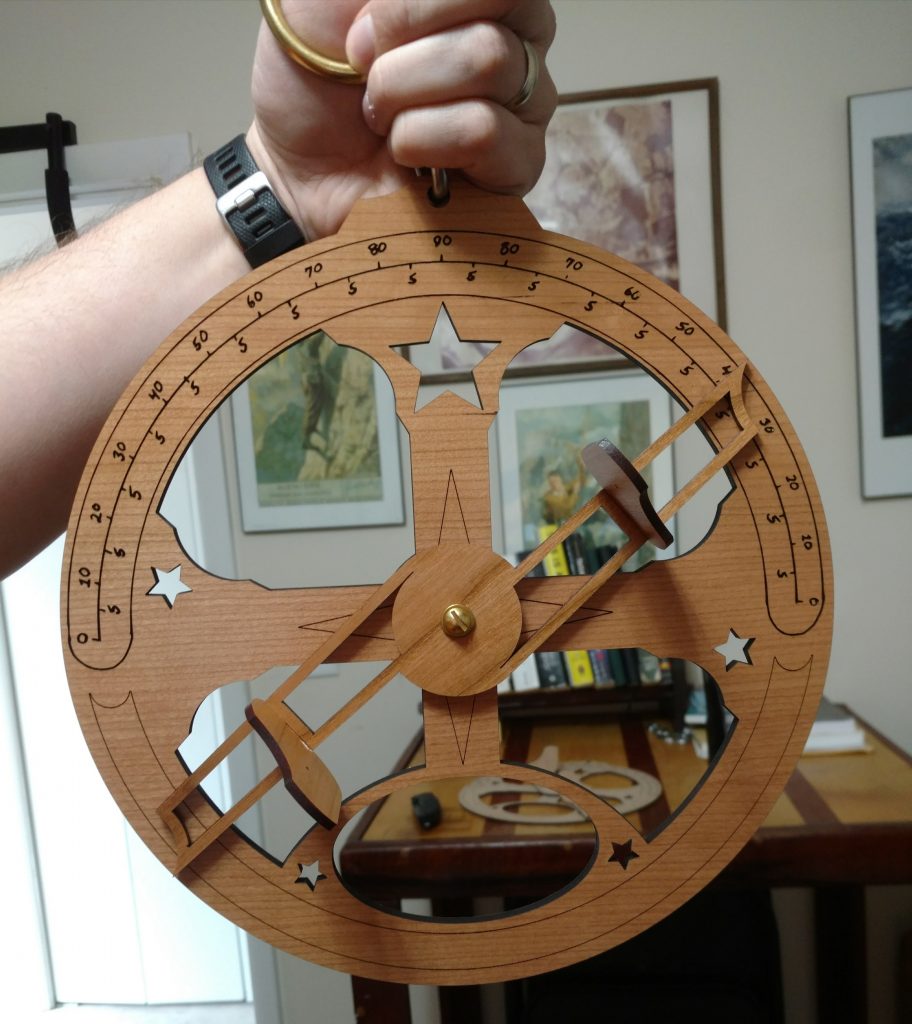
Try your hand at celestial navigation with an open-source, Glowforge-ready astrolabe!

Posted on March 28, 2018 By Andrew Thaler
Education

I have a bit of a soft spot for classic navigational instruments. In an age where more people interact with maps than ever before and yet spend much less time plotting their own course, being able to look up at the sky and discern your place in the world is a powerful skill. Unfortunately, it’s not exactly easy to make your own navigational instruments. Unless, of course, you have your own laser cutter.

I recently got a Glowforge, so honestly, you should have seen this coming.

Say hello to the Mariner’s Astrolabe!

Read More “Try your hand at celestial navigation with an open-source, Glowforge-ready astrolabe!” »

Frisky Anglerfish, Persistent Aquatic Living Sensors, Make for the Planet Borneo, Sea Cucumber Mafia, and more! Monday Morning Salvage: March 26, 2018

Posted on March 26, 2018March 25, 2018 By Andrew Thaler
Weekly Salvage

Foghorn (A Call to Action!)

  • Sign up for Make for the Planet Borneo and help push forward the next generation of conservation technology!
  • Announcing the Con X Tech Prize for Hacking Extinction! Apply for funding to create a working hardware prototype and win up to $20,000 in awards.

Flotsam (what we’re obsessed with right now)

  • This is a totally ordinary, not at all alarming, call for government bidders on a contract to build “new systems that employ natural or engineered marine organisms as sensor elements to amplify signals related to the presence, movement, and classification of manned or unmanned underwater vehicles.” They even adorably call these Persistent Aquatic Living Sensors PALS. Normal!
  • Here’s a video of anglerfish mating, because anglerfish are beauty.
  • This week in science and conservation slowly, awkwardly coming to terms with their racist history: For Decades, Our Coverage Was Racist. To Rise Above Our Past, We Must Acknowledge It and Environmentalism’s Racist History.
  • Scientists in Survival Mode: After a disastrous hurricane season, scientists in the storms’ pathways struggle to return to work.

The Levee (A featured project that emerged from Oceandotcomm)

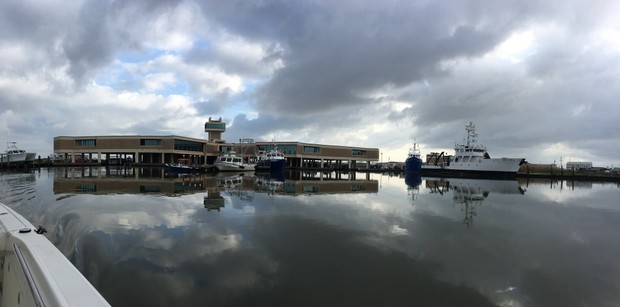
  • Marine lab has ‘front row seat’ to Louisiana coastal loss.
LUMCON by boat
Photo by Melissa Miller

Read More “Frisky Anglerfish, Persistent Aquatic Living Sensors, Make for the Planet Borneo, Sea Cucumber Mafia, and more! Monday Morning Salvage: March 26, 2018” »

#Make4thePlanet Borneo is coming! Team Applications are Open!

Posted on March 13, 2018March 11, 2018 By Andrew Thaler
Uncategorized

Make for the Planet is back! And this time, rather than the atrium of the Ronald Reagan Building, it’ll be in beautiful, sunny, Sarawak, Borneo!

Trading the robot orangutans for actual orangutans.

To ensure a better future for our planet, conservation experts need to work with solutions, technologies, and expertise from diverse fields to greatly improve the efficacy, speed, cost, scale, and sustainability of conservation efforts.  Ocean acidification, invasive species, marine protection, overfishing, coral reef degradation – we are aware of the many problems faced by our oceans, and humankind has the ingenuity and optimism to solve them!

How can you help solve ocean conservation challenges? Participate in Make for the Planet Borneo and create solutions to conservation challenges in front of a global audience at the 5th International Marine Conservation Congress (IMCC5) in Kuching, Sarawak, Malaysia June 24-29, 2018!  Team applications are open now through April 1st, 2018. Apply here!

Read More “#Make4thePlanet Borneo is coming! Team Applications are Open!” »

Meet me in Borneo, exploitation on the high seas, navy sonars, creature reports, and more! Monday Morning Salvage: March 12, 2018.

Posted on March 12, 2018March 12, 2018 By Andrew Thaler
Weekly Salvage

Happy Monday-est Monday!

Foghorn (A Call to Action!)

  • This is the final week to get you abstracts in for the International Marine Conservation Congress, the premier ocean conservation conference, coming to you from Kuching, Malaysia this June! We got a cracking good symposium on human impacts in the deep sea and plenty of travel grants available for researchers in need. And, for the first time, we’ll be hosting Make for the Planet, Borneo!

Flotsam (what we’re obsessed with right now)

  • An outstanding piece on exploitation in the high seas by Jeff Marlow. The High Seas Are Being Exploited. Exploration Must Keep Pace.
  • This is a thing that happened:

Tweet about potential confirmation of Amelia Earhart's remains.

Read More “Meet me in Borneo, exploitation on the high seas, navy sonars, creature reports, and more! Monday Morning Salvage: March 12, 2018.” »

Shiver me whiskers! What would it cost to fund the Octonauts’ undersea adventures?

Posted on March 11, 2018March 12, 2018 By Andrew Thaler 1 Comment on Shiver me whiskers! What would it cost to fund the Octonauts’ undersea adventures?
Popular Culture

Octonauts live in the sea. Hardware’s their specialty. While ocean grants are a struggle… their source of funding, it really is a puzzle!

Explore! Rescue! Protect! The Octonauts have an ambitious undersea mission and an equally ambitious fleet of marine vehicles. How they pay for it is a mystery. Are they backed by the federal government? The UN? Is Professor Inkling financing this venture by selling genetically engineered vegetable-fish hybrids? Is a billionaire film-maker backing the venture? One thing’s for certain, an Octonaut-level research program does not come cheap. So how much does this operation actually cost?

Actuaries! To your stations!

The Octopod

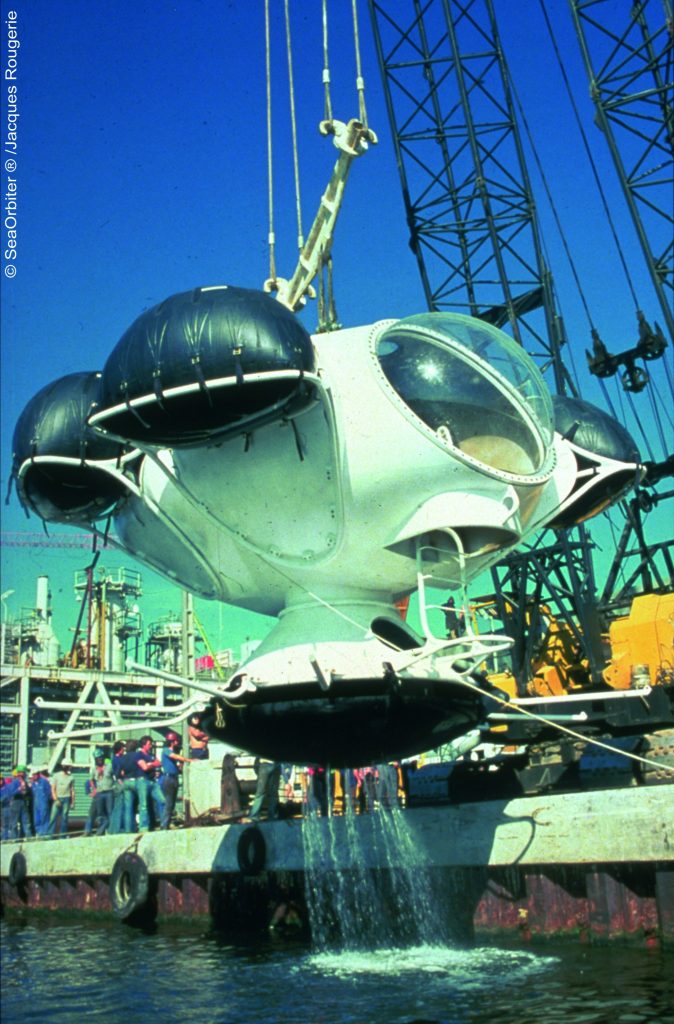
With 4 housing/laboratory units and a central command bay, the Octopod would be the largest and most sophisticated underwater research station ever operated. There’s nothing in the marine research world the even comes close. Aquarius Reef Base is currently the only working undersea research laboratory. I can’t find the initial budget to build and install Reef Base, but a modern (albeit unrealized) aquatic residential habitat comes with a $10 million startup costs. Reef Base itself has a wildly variable annual budget, with a baseline around $1 million per year. The Octopod, on the other hand, has four Octo… Pods? each of which is similar in function to Reef Base (though the whole structure more closely resembles the extremely French Galathée Underwater Laboratory).

Galathée Underwater Laboratory

The central command bay is both the core of the Octopod and its power supply. Not much is known about where the Octopod gets its seemingly limitless power, but if the Octonauts are anything like the US Navy, there’s a nuclear reactor in the, somewhere. Meet Nerwin. NR-1 was the USA’s only nuclear-powered, deep-diving research submarine. With room for 16 crew and scientists and a multi-month endurance, Nerwin could hand both covert and scientific missions. The NR-1 was equipped with a wheeled base, allowing it to roll across the sea floor. Unfortunately, NR-1 was a strictly off-book asset for most of its life, so we don’t really know what it cost, but the initial build estimate was $58.3 million. As the military is not often known for bringing projects in under budget, that seems like a reasonable baseline. For annual operating costs, we might as well assume the upper end of Reef Base at $3 million to start. It’s almost certainly much *much* higher.

Cost to build: $98.3 million.

Annual operating cost: $7 million.

Read More “Shiver me whiskers! What would it cost to fund the Octonauts’ undersea adventures?” »

The hunt for Soviet submarines, a 5-foot-long shipworm, the impossibilities of deep-sea mining, and more! Massive Monday Morning Salvage: March 5, 2018.

Posted on March 5, 2018March 4, 2018 By Andrew Thaler
Weekly Salvage

Foghorn (A Call to Action!)

  • Subscribe to the Chesapeake Bay Journal (it’s free)! The venerable grey lady of the Bay survived the EPA’s attempt to defund them. Consider sending a few dollars to the journal, too. If you’re filing MD taxes this year, you can earmark some of you return to Chesapeake Bay programs.

Flotsam (what we’re obsessed with right now)

  • The secret on the ocean floor: the wild, weird origin of the modern deep-sea mining industry, complete with spies, Soviet submarines, and Howard Hughes. How much is real? How much is emergent from this first fake venture? If you only read one thing about deep-sea mining, read this.

We really misled a lot of people and it’s surprising that the story held together for so long”

source.

  • As biodiversity declines, so does public attention. We need to push back against this trend.
  • After Centuries of Searching, Scientists Finally Find the Mysterious Giant Shipworm Alive!

Read More “The hunt for Soviet submarines, a 5-foot-long shipworm, the impossibilities of deep-sea mining, and more! Massive Monday Morning Salvage: March 5, 2018.” »

Open Science in Africa, defend the ADA, the value of the outdoors, Minke whale rides, and more! Monday Morning Salvage: February 19, 2018.

Posted on February 19, 2018February 19, 2018 By Andrew Thaler
Weekly Salvage

Foghorn (A Call to Action!)

  • Sign up for AfricaOSH: The Africa Open Science Hardware Gathering and meet some of the most incredible, innovative technologists in the world!
  • Remember when the disability community put their bodies on the line to defend the Affordable Care Act? Remember the videos of people in wheelchairs being handcuffed outside Mitch McConnell’s office? Last week, the House voted to gut the Americans with Disabilities Act. There’s no bill in the Senate yet, but the time to mobilize is now. Call your Senators and defend the ADA.

Flotsam (what we’re obsessed with right now)

  • In the annuals of obvious thing that still need to be said: protecting wild places is better for Americans and better for the economy than strip mining them. Outdoor Recreation Is a Bigger Economic Booster Than Mining.
  • The Cousteau Society shares a great little clip of all the great Cousteau tech.

Read More “Open Science in Africa, defend the ADA, the value of the outdoors, Minke whale rides, and more! Monday Morning Salvage: February 19, 2018.” »

A precautionary approach to health and safety while using awesome, awesome laser cutters in the home.

Posted on February 15, 2018March 11, 2018 By Andrew Thaler
Uncategorized

Holy Mola, Laser Cutters! If you follow me on Instagram, you’ve probably seem some pretty cool projects coming out of my freshly arrived Glowforge laser cutter.

But laser cutters are not all sunshine and cool, wooden hinges. Laser cutters were, until very recently, the domain of industrial fabrication shops with extensive safety systems. As a new generation of low(er) cost, hobby and household cutters enter the market, we need to step back an think critically about the potential health and safety impacts of these incredible machines.

Like I did with 3D printers a few years back, I’m taking a deep dive into the hazards of laser cutters in the home and how to avoid them.

First, the issues of least concern (not because they aren’t bad, just that they’re far less likely to occur).

Fire. Lots of materials can catch fire, including, to no one’s surprise, wood. A fire safety plan will go a long way, but you can avoid ruining your laser cutter by being aware of what materials frequently catch fire. ABS, HDPE, polystyrene and polypropylene, and anything with poor thermal properties is going to ignite rather than cut cleanly. And then you’re going to have a bad day.

Beam escape. If your machine is not well taken care of and well shielded, there’s a small chance the wrong materials or loose connections can result in a beam escape, which can injure the user, bystanders, pets, or anything else that gets in the laser’s path. Most hobby grade lasers have good safety features to prevent this (although cheap knock-off machines are starting to hit the markets that may not be up to par), but monitoring you equipment and keeping it properly maintained will go a long way to avoiding this.

But those aren’t the biggest concerns. Th biggest concern with laser cutters is the byproduct that happens every time you cut, no mater what. That’s right, I’m talking about:

Fumes! 

This is the big one and the issue that I’m most concerned about. Laser cutters haven’t really left industrial settings until now, so we don’t have very good data on chronic exposures of laser cutting fumes, especially on young children and pregnant people. What we do know is that the fumes produced by laser cutter depend heavily on the materials you choose to cut.

All materials will produce fumes when cut, which is why it’s essential that your set-up is well-ventilated. Most hobby cutters have a vent port that you can connect to a dryer vent or to the outside. I actually don’t recommend using a dryer vent. In all the rental houses I’ve lived in, not one has ever had the dryer properly vented, and hooking up to your dryer port might mean that you’re just venting into the crawlspace or the wall, rather than out of you house. Go for the window. There’s no hard and fast rule for how much ventilation you need, other than as much as possible. For 3D printers we recommended that your ventilation system moves 3 times as much air as the volume of the room per hour. For laser cutters, it should probably be more.

Everything you cut is going to release volatile organic compounds (VOCs), which is why ventilation is essential. For things like hardwoods and paper products, the VOCs released are comparable to a woodburning stove, frying too much bacon, or sitting around a campfire (though sitting around a campfire will give you a much higher dose). Prolonged exposure can cause respiratory problems and asthma. More complex materials like plywoods and plastics can have some pretty nasty compounds, so you want to make absolutely sure you know what’s going into your laser cutter, be aware of what materials should never, ever go into you household cutter, and always ventilate, ventilate, ventilate.

Read More “A precautionary approach to health and safety while using awesome, awesome laser cutters in the home.” »

Conservation has a Trolley Problem

Posted on February 13, 2018February 13, 2018 By Andrew Thaler
Conservation

A train screams down the tracks. Dead ahead, a pile of of giant pandas frolic, inexplicably, through a bamboo stand growing through the rails. But wait! There’s a switch. Pulling it will divert the train onto another track, where a tank containing one of the last 30 vaquita will surely be crushed. Do you pull the lever, dooming the vaquita, or hold the line, flattening the frolicking pandas? Do you stammer indecisively, wondering how you ended up in this situation as you careen, inexorably, into into an increasingly unavoidable outcome?

What if, rather than the conductor’s seat, you’re at the helm of a conservation organization? What if the train wasn’t a hundred tons of steel and steam, but the relentless press of public will, funding, and focus upon which it is your duty to shape and direct into action?

What if conservation has a Trolley Problem?

Ah the Trolley Problem, the thought experiment turned pop-philosophy darling whose use and misuse is, at best, an annoyance to every ethicist I know. Regrettably, I do them no favors here.

Read More “Conservation has a Trolley Problem” »

Skate saunas, clone armies, deep news from deep-sea mining, an ocean of plastic, and more! Monday Morning Salvage: February 12, 2018.

Posted on February 12, 2018February 13, 2018 By Andrew Thaler
Weekly Salvage

Flotsam (what we’re obsessed with right now)

  • Attack of the clones! A Pet Crayfish Can Clone Itself, and It’s Spreading Around the World!
Ranja Andriantsoa/The Atlantic
  • One of the take-home points in the talk I gave last Friday is that we barely know anything about the services hydrothermal vents provide to the rest of the ocean ecosystems. Deep-sea hydrothermal vents are nurseries for skates.
ROV framegrab of Pacific white skate egg sacs near a black smoker in the Galapagos. Photo Courtesy Ocean Exploration Trust

Read More “Skate saunas, clone armies, deep news from deep-sea mining, an ocean of plastic, and more! Monday Morning Salvage: February 12, 2018.” »

Posts pagination

Previous 1 … 28 29 30 … 149 Next

Popular Posts

The story of the pride flag made from NASA imagery: Bluesky's most-liked imageThe story of the pride flag made from NASA imagery: Bluesky's most-liked imageSeptember 27, 2024David Shiffman
"Why Sustainable Seafood Matters" is now available for preorder! Here's what it's about, and why I decided to write it."Why Sustainable Seafood Matters" is now available for preorder! Here's what it's about, and why I decided to write it.June 8, 2026David Shiffman
What Ocean Ramsey does is not shark science or conservation: some brief thoughts on "the Shark Whisperer" documentaryWhat Ocean Ramsey does is not shark science or conservation: some brief thoughts on "the Shark Whisperer" documentaryJuly 2, 2025David Shiffman
Tackling the least important debate in deep-sea mining: the desultory hyphenTackling the least important debate in deep-sea mining: the desultory hyphenJune 8, 2026Andrew Thaler
Shark of Darkness: Wrath of Submarine is a fake documentaryShark of Darkness: Wrath of Submarine is a fake documentaryAugust 10, 2014Michelle Jewell
Deep-sea Mining, Domestic Cats, Star Trek, and Ocean Exploration: Andrew's mid-year podcast round-up.Deep-sea Mining, Domestic Cats, Star Trek, and Ocean Exploration: Andrew's mid-year podcast round-up.June 6, 2026Andrew Thaler
What is a Sand Shark?What is a Sand Shark?November 12, 2017Chuck Bangley
I just told 850 shark scientists a hard truth: We’re not communicating shark conservation correctly.I just told 850 shark scientists a hard truth: We’re not communicating shark conservation correctly.June 1, 2026David Shiffman
That's not a blobfish: Deep Sea Social Media is Flooded by AI SlopThat's not a blobfish: Deep Sea Social Media is Flooded by AI SlopDecember 19, 2025Andrew Thaler
Isn’t ironic, don’t you think: dismantling the Ocean Observatories Initiative on World Oceans DayIsn’t ironic, don’t you think: dismantling the Ocean Observatories Initiative on World Oceans DayJune 9, 2026Southern Fried Science
Subscribe to our RSS Feed for updates whenever new articles are published.

We recommend Feedly for RSS management. It's like Google Reader, except it still exists.

Southern Fried Science

  • Home
  • About SFS
  • Authors
  • Support SFS


If you enjoy Southern Fried Science, consider contributing to our Patreon campaign.

Copyright © 2026 Southern Fried Science.

Theme: Oceanly Premium by ScriptsTown