Skip to content

Southern Fried Science

Over 15 years of ocean science and conservation online

  • Home
  • About SFS
  • Authors
  • Support SFS

Author: Andrew Thaler

Marine science and conservation. Deep-sea ecology. Population genetics. Underwater robots. Open-source instrumentation. The deep sea is Earth's last great wilderness.

An Ocean Playlist for Science Online Oceans

Posted on October 10, 2013October 27, 2013 By Andrew Thaler

So you’re heading out to Miami this weekend for Science Online Oceans and you’re thinking “hey, I really need some fresh jams to get me pumped up for the conference”. Or perhaps you’re thinking “you know, I need some good thoughtful rhymes that make me think about ocean issues from a different angle”? Well, we here at Southern Fried Science Aim to please. Enjoy.

Alela Diane – The Pirate’s Gospel

httpv://www.youtube.com/watch?v=SpwSxHiiNSw
Read More “An Ocean Playlist for Science Online Oceans” »

Everything is better with Aquaman

Posted on October 8, 2013October 27, 2013 By Andrew Thaler
Popular Culture

And that includes teen drama parody series. Especially when it promises some nerdy marine science in-jokes. httpv://www.youtube.com/watch?v=U3kpKNXLdCQ “You know what I love about members of the Chordata phylum? Nothing!” You and me both, Aquaman, you and me both.

Science in the Fleet: The Promise of Technology as a Panacea for Human Impacts

Posted on October 7, 2013October 27, 2013 By Andrew Thaler
Popular Culture, Science

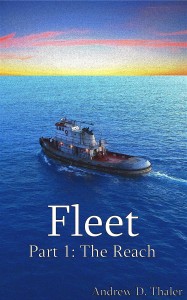
FleetCover1-REACHToday marks the release of Fleet: Wide Open, part 2 of my serial maritime science fiction adventure. With half the story revealed, we now see the roll technology plays in both the history and the day-to-day operations of the fleet. Specifically, we see three major technological advances that seem as though they would have been major solutions to the environmental problems facing the fleet, yet somehow, the world continues to fall apart.

In our world and the world of the fleet, we often hold up technological innovation as a panacea for global problems. It’s easy to look towards the next big advancement as the solution to our current woes — from alternative energy sources to groundbreaking trash removal devices — but what is often lost in the hype is the human component. Yes, technology is a necessary component of global environmental solutions. You can even look at the arc of human advancement as one long series of bootstrap-hoists — we need to utilize dirty tech to access environmentally sustainable tech (i.e. you can’t develop the ability to produce solar panels without first harnessing the energy locked in fossil fuels). But technology alone is useless without also changing human behavior. This creates a major problem, as technological innovation is often used as a tool to bypass human behavior entirely, the assumption being that it doesn’t matter what the individual does, so long as the tech is in place to mitigate it.

The horse piles of New York

Around the turn of the last century, New York City was in crisis. Horses, the primary means of transportation for people and products within the city have an unfortunate byproduct — feces, lots and lots of feces. At its peak, more than 60,000 horses were depositing upwards of 500 tones of manure every day. The horse crisis itself was the result of a major technological innovation — more efficient fertilizer based on mass produced phosphate. Where once there was a major economic incentive to collect the manure and resell it as fertilizer, now there was also no incentive. And so, the mountains of feces piled up. It got so bad that one editorial expounded that, by the 1930’s piles of horse manure would stand three stories tall and the city would be awash in an unending tide of feces.

Read More “Science in the Fleet: The Promise of Technology as a Panacea for Human Impacts” »

Fleet: Wide Open now available in the Amazon Kindle Store!

Posted on October 6, 2013October 27, 2013 By Andrew Thaler
Popular Culture

“The sea is big. The sea is cruel. She takes more than she gives. That’s how it’s always been.” Fuel is the lifeblood of the fleet and it is running out. It has been months since the crew of Miss Amy brought home a catch big enough to feed the fleet. With fuel rationed, there … Read More “Fleet: Wide Open now available in the Amazon Kindle Store!” »

TGIF: 250+ videos from the deep sea for you to enjoy

Posted on October 4, 2013October 27, 2013 By Andrew Thaler

InDEEP and the Deep-Ocean Stewardship Initiative have compiled a massive database of more than 250 online videos featuring ecology, biology, oceanography, and conservation of the deep ocean: Deep-sea Online Videos. There’s a ton of videos in there to explore (especially if you find yourself with an abundance of shutdown related free time). Here’s just one … Read More “TGIF: 250+ videos from the deep sea for you to enjoy” »

Updated covers for Fleet: The Reach and Fleet: Wide Open

Posted on October 1, 2013October 27, 2013 By Andrew Thaler
Popular Culture

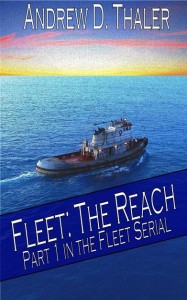
After receiving some great feedback on my first foray into indie publishing, I’ve decided to redo the covers for Fleet, my maritime science fiction serial. Take a look and let me know what you think. And, of course, check out Fleet: The Reach on Amazon’s kindle store. Fleet: Wide Open will be available on Monday!

Your Ocean Science Shutdown Open Thread

Posted on September 30, 2013October 27, 2013 By Andrew Thaler 6 Comments on Your Ocean Science Shutdown Open Thread
Blogging

Are you an ocean scientist suffering from government shutdown? Are you furloughed for the foreseeable future? Do you have friends, colleagues, co-workers, collaborators, rivals, or sworn enemies feeling the sting? You better believe we do to. Here’s your open thread to talk about how the government shutdown is affecting you and affecting the ocean. Here … Read More “Your Ocean Science Shutdown Open Thread” »

Comments, Trolls, and Moderation

Posted on September 26, 2013October 28, 2013 By Andrew Thaler 2 Comments on Comments, Trolls, and Moderation
Blogging

It was an early winter’s morning in 2009. The participants of Science Online 2009 were slowly, wearily emerging from the haze of the night before — the reputation that marine science bloggers had livers of steel was not yet a stone-carved edict. We sat down for a session, I don’t remember which, that was ostensibly about managing commenters. This was they heyday of Web 2.0, the nascent social media ecosystem was in its early successional stages — no longer larval, but still bursting with untapped potential. Blogs were still king. There were earnest debates about whether Twitter or FriendFeed was a better platform.

Someone stood up, I don’t remember who, but they were certainly qualified, and made the startling (thought paraphrased) statement: “If you moderate comments, your legally liable for anything said in those comments. You’re only protected if you let all comments through.” This is not true, but it was certainly the mentality of the 2000’s, where comment threads were fast and loose. Newspapers took this advice to heart to such a degree that even the spam was left exposed to the world. Even today, articles on your local news site may boast more comments about how much money Freddy Fakename makes working from home than actual responses to the article.

Read More “Comments, Trolls, and Moderation” »

Shift: an adventure in marine science from the not-too-distant future

Posted on September 24, 2013October 27, 2013 By Andrew Thaler
Popular Culture

FleetCover1-REACHAs I never stop telling you, I’m writing a book. Fleet is a dystopian maritime adventure in which sea level rise and disease has driven the last survivors of the human race to sea. I’m releasing the story in serials — 3 chapters per month — on Amazon. Loyal readers who can’t wait for the next installment can slate their thirst with a series of short stories set in the world of Fleet that will be published on Southern Fried Science every few weeks. Please enjoy the second of these distractions, Shift, a story that takes place before the main events of Fleet and fills in some of the backstory surrounding the fleet.

A version of Shift appeared last year in Eno Magazine, but this iteration has been revised to fit into the world of Fleet.


150 years before the Great Hurricane.

The old winch groaned under the strain of a full net. Captain Willis sighed. A heavy haul was a bad sign.

“Well, that’s the last cast this season, probably the last I’ll ever do.” He said the same thing last year.

The net cleared the ship’s deck. It bulged with the unmistakable quiver of a thousand tire-sized jellies, each one a tiny ecosystem. We dumped them into the shaker tray that violently separated the worthless goo from the precious catch.

I grabbed a few jellies to measure before tossing them over the side. They were smaller this year, a good sign. Something was eating them.

I turned back to the shaker. The captain was smiling. At the bottom of the catch bin were eight hollow-eyed shrimp, the largest haul we’d had all week. Hollow-eyes were a luxury, favored by the new international elite, who, despite living in massive floating cities that circled the world, imported more seafood than any other demographic. Hollow-eyes were particularly desirable, as they had the dual caché of being both new to the world market and already extremely rare. At current market price, they would cover the repairs to the winch, with a little left over for fuel. We counted sixty-seven hollow-eyes in the Miss Amy’s hold. It had been a very good week.

Read More “Shift: an adventure in marine science from the not-too-distant future” »

Namibian Government Announces 18-month Moratorium on Seabed Mining

Posted on September 24, 2013October 27, 2013 By Andrew Thaler
Conservation, Science

Good news came out of Namibia last night, as the government declared an 18-month moratorium on all experimental seabed mining in Namibian waters, pending a more comprehensive environmental impact assessment. Pressure from both environmental groups and the fishing industry ultimately led to this decision. Both sets of stakeholders, as well as scientists and members of the international community, have legitimate concerns regarding the safety of seabed mining. This is the precautionary principal as it was meant to be implemented.

According to Swakopmund Matters, a seafloor mining protest group in Namibia:

The message conveyed by the Namibian decision is bold and clear. It will resonate throughout the world where battles are being fought against actions by mining companies that will harm, if not destroy, important marine areas. It will embolden all those who are standing up for the protection of their marine environments. But even more important, it will demonstrate to other governments that environmental concerns do take precedent over companies’ questionable actions when it comes to their exploitation of the oceans. Furthermore, that the Namibia government is not prepared to be a guinea pig for an untested and unknown endeavor. It refused to let its ocean and marine resources become the proverbial experimental playground.

(Source is a press release e-mailed to me.)

Read More “Namibian Government Announces 18-month Moratorium on Seabed Mining” »

Posts pagination

Previous 1 … 61 62 63 … 148 Next

Popular Posts

What Ocean Ramsey does is not shark science or conservation: some brief thoughts on "the Shark Whisperer" documentaryWhat Ocean Ramsey does is not shark science or conservation: some brief thoughts on "the Shark Whisperer" documentaryJuly 2, 2025David Shiffman
I can serve on your graduate thesis committee. Here’s what you can expect of me, and what I expect in return.I can serve on your graduate thesis committee. Here’s what you can expect of me, and what I expect in return.October 16, 2025David Shiffman
What can the funniest shark memes on the internetz teach us about ocean science and conservation?What can the funniest shark memes on the internetz teach us about ocean science and conservation?November 8, 2013David Shiffman
I turned my woodshop into a personal solar farm.I turned my woodshop into a personal solar farm.June 21, 2021Andrew Thaler
Shark of Darkness: Wrath of Submarine is a fake documentaryShark of Darkness: Wrath of Submarine is a fake documentaryAugust 10, 2014Michelle Jewell
Build a dirt cheap, tough-as-nails field computer in a Pelican caseBuild a dirt cheap, tough-as-nails field computer in a Pelican caseJuly 21, 2015Andrew Thaler
Norway and Cook Islands put their deep-sea mining plans on pause.Norway and Cook Islands put their deep-sea mining plans on pause.December 3, 2025Andrew Thaler
Breaking News! "Most Comprehensive Estimate of Mortality": Between 63 and 273 Million Sharks Killed Each YearBreaking News! "Most Comprehensive Estimate of Mortality": Between 63 and 273 Million Sharks Killed Each YearMarch 1, 2013David Shiffman
Mermaids: The New Evidence is a Fake DocumentaryMermaids: The New Evidence is a Fake DocumentaryMay 28, 2013Andrew Thaler
I spent 50 days working out in Virtual Reality and everything went better than expected.I spent 50 days working out in Virtual Reality and everything went better than expected.May 16, 2019Andrew Thaler
Subscribe to our RSS Feed for updates whenever new articles are published.

We recommend Feedly for RSS management. It's like Google Reader, except it still exists.

Southern Fried Science

  • Home
  • About SFS
  • Authors
  • Support SFS


If you enjoy Southern Fried Science, consider contributing to our Patreon campaign.

Copyright © 2025 Southern Fried Science.

Theme: Oceanly Premium by ScriptsTown