Skip to content

Southern Fried Science

Over 15 years of ocean science and conservation online

  • Home
  • About SFS
  • Authors
  • Support SFS

Author: David Shiffman

State of the Field: Satellite tagging sharks

Posted on February 15, 2011 By David Shiffman 2 Comments on State of the Field: Satellite tagging sharks
Science

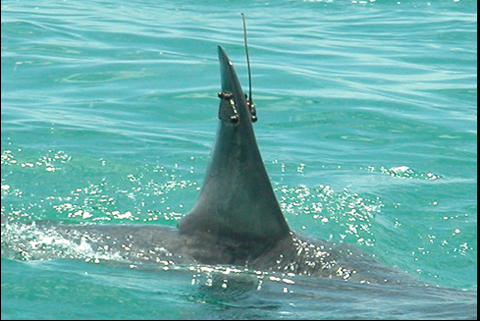
Modern shark researchers have access to a variety of high-tech tools. Acoustic tags with noises specific to each individual shark signal a receiver (or network of receivers) every time the shark passes nearby. Some tags have three-dimensional accelerometers, allowing researchers to study the small scale movement patterns and behaviors of sharks. Others, which are placed in the stomach, measure pH before, during, and after digestion. The most advanced technology on the market, however, is undoubtedly the satellite tag.

Image from SurfThereNow.com

Read More “State of the Field: Satellite tagging sharks” »

Shark Science Monday: Sonja Fordham explains international shark conservation and management policies

Posted on February 14, 2011February 14, 2011 By David Shiffman
Conservation

In this week’s edition of Shark Science Monday, Shark Advocates International President Sonja Fordham explains international conservation and management policies. If you have a question for Sonja, please leave it as a comment and I’ll make sure it gets to her.

Biodiversity Wednesday: Ngorongoro Crater

Posted on February 9, 2011February 9, 2011 By David Shiffman
Uncategorized

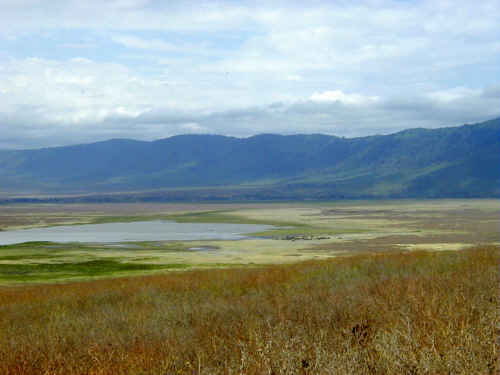
Located in the East African nation of Tanzania, Ngorongoro Crater (pronounced just like it’s spelled, 😉 ) is one of the coolest places I’ve ever had the privilege to visit. Technically a caldera, the remnants of a collapsed volcano, the floor of Ngorongoro provides over 100 square miles of habitat surrounded by steep walls to more than 25,000 animals.

Ngorongoro Crater- what looks like mountains in the distance actually surrounds the habitat. Photo credit: David Shiffman, 2001

Read More “Biodiversity Wednesday: Ngorongoro Crater” »

State of the Field: Is catch-and-release fishing harmful to sharks?

Posted on February 8, 2011February 2, 2011 By David Shiffman 10 Comments on State of the Field: Is catch-and-release fishing harmful to sharks?
Conservation, Science

In the wake of the new Marianas Islands shark conservation law, a debate has been raging on the shark  listservs. The law wouldn’t have been possible without support from several local recreational fishermen- people who often take tourists catch-and-release fishing for sharks.

“When I heard of your effort in Hawaii to ban the sale,trade and possession of shark fins I knew if the CNMI was to follow someone with inside connections to the fishing world there had to espouse it and grow it.  They do not like being told what to do from outsiders.  I was not an outsider, and I fished alongside two of the very top level fishermen who happened to be upper level politicians whom I respected.  Rep. Diego Benevente was one of them.  I spoke with him and asked him to introduce a bill which replicated Hawaii’s law, and he did so. I kept constant contact with him and his staff in the effort to see this bill become law.”- Captain William McCue

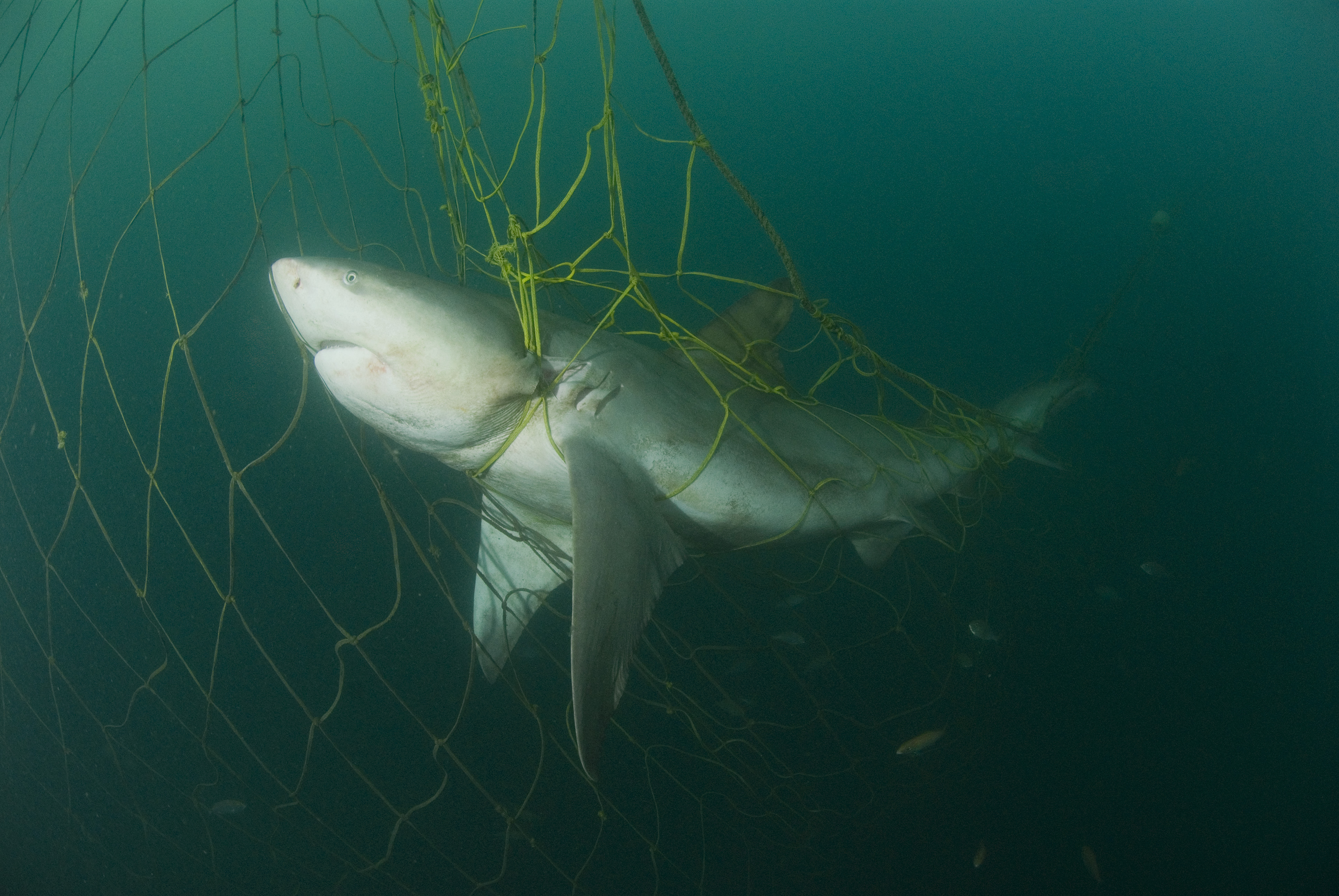
Image from FishingDestin.info

Many shark conservationists support catch-and-release fishing, claiming that it allows fishermen the thrill of catching a large animal without killing it. Captain McCue reports that in the last 20 years:

“I’ve caught over 300 sharks in the that time a killed four- and if you include spiny dogfish it’s caught well over 2000 sharks and still killed only four- two of which were promptly eaten.”

However, some (such as “My Sunset Rendezvous” author Ila France Porcher) claim that even when a shark is released, the stress from being caught often still causes long-term damage or even death.

“As a shark ethologist, I have personally witnessed sharks who were hooked and fought, and who broke the line, emerge from the ordeal with a jaw so damaged that they lost weight and died over the following weeks or months. A high fraction of sharks caught suffered this fate, and they suffered greatly as a result of this enjoyable passtime pursued by sports fishermen. It would be great news to hear that you switched from a blood sport to a sport that celebrates the life that still remains in our seas, such as diving and photography.” – Ila France Porcher

Read More “State of the Field: Is catch-and-release fishing harmful to sharks?” »

Ethical Debate: Clean Energy and the State of the Union

Posted on February 1, 2011January 30, 2011 By David Shiffman 7 Comments on Ethical Debate: Clean Energy and the State of the Union
Uncategorized

I’ve been critical of President Obama’s policies concerning science, technology and education in the past. I think he uses a lot of great-sounding rhetoric, but I have yet to see very much in the way of actual results. Despite lofty promises about climate change, we remain without a cap-and-trade system or any sort of meaningful response plan. To make things worse, the administration recently fired their primary adviser for climate change policy. Is all hope lost? Perhaps not.

Read More “Ethical Debate: Clean Energy and the State of the Union” »

Shark Science Monday: Aurelie Godin discusses shark management in Canada

Posted on January 31, 2011January 30, 2011 By David Shiffman 2 Comments on Shark Science Monday: Aurelie Godin discusses shark management in Canada
Conservation

In this week’s edition of Shark Science Monday, Aurelie Godin discusses Canada’s shark management policies. If you have a question for Aurelie, please leave it as a comment below and I’ll make sure that she gets it.

Great Diagrams of Science: It’s a bird! It’s a plane! It’s… a really bad drawing of a bird.

Posted on January 28, 2011January 28, 2011 By David Shiffman 2 Comments on Great Diagrams of Science: It’s a bird! It’s a plane! It’s… a really bad drawing of a bird.
Uncategorized

The latest edition of my Great Diagrams of Science series comes from a field near and dear to my heart- using stable isotope analysis to map a food web. Japanese scientists Wada, Mizutani, and Minagawa got the opportunity to study the feeding ecology of penguins in Antarctica, and were some of the first researchers to use stable isotopes for food web analysis. To travel so far and use what was at the time (1991) state-of-the-art technology, they must have received an impressively large grant. Their results played a part in revolutionizing how scientists study food web interactions, so the grant money was well spent in that regard.

However, it seems that none of it was spent on graphic design:

Read More “Great Diagrams of Science: It’s a bird! It’s a plane! It’s… a really bad drawing of a bird.” »

Send testimony to help protect Guam’s sharks!

Posted on January 26, 2011January 26, 2011 By David Shiffman 14 Comments on Send testimony to help protect Guam’s sharks!
Conservation, Science

The sharks of Guam need your help! Bill number 44-31, which would make selling or possessing shark fins illegal in Guam, was just introduced by members of the Senate. The Natural Resources Committee will hold a hearing on the bill next Tuesday night Guam time, which is Monday night our time.

This bill is expected to face strong opposition from the fishing industry, which has a powerful voice.  However, you can help! You send a letter in support of this policy to Shark Defenders, and they will make sure that it gets into the right hands.  Many of the letters will be read out loud as testimony, and receiving a large number of letters in support of the law will be a big help!

Please send these letters to Info AT SharkDefenders DOT com by Monday afternoon U.S. East Coast time (sooner would be better).

Read More “Send testimony to help protect Guam’s sharks!” »

Shark Science Monday: Christopher Neff discusses shark management policy in the US, Australia, and South Africa

Posted on January 25, 2011January 25, 2011 By David Shiffman
Uncategorized

In this week’s edition of Shark Science Monday, Christopher Neff discusses how shark attacks play a role in shark management policy in three countries- the United States, Australia, and South Africa. If you have a question for Christopher, please leave it in the comments and I’ll make sure it gets to him.

Pirate fishing: far less awesome then it sounds

Posted on January 25, 2011January 25, 2011 By David Shiffman 6 Comments on Pirate fishing: far less awesome then it sounds
Conservation, Science

Earlier this month, NOAA provided a list of “pirate fishing” countries to Congress. This report identifies Portugal, Italy, Venezuela, Colombia, Ecuador, and Panama as nations whose vessels engage in “illegal, unreported, unregulated” fishing.

Russell Smith, NOAA deputy assistant secretary for international fisheries, explains why this so-called pirate fishing is such a big deal:

“Illegal fishing must be stopped as it subjects our fishermen to unfair competition and undermines efforts to sustainably manage the valuable fish stocks around the world that so many communities depend on for food and jobs.”

The Pew Charitable trusts reports that an estimated 20% of all fish removed from the oceans are fished illegally. NOAA claims that this results in an annual loss of $23 billion to legal fisheries worldwide. Specifically, the six violator countries listed here are guilty of having:

“fishing vessels that did not comply with measures agreed to under various international fishery management organizations, such as closed fishing seasons, vessel registry lists, and a ban on the use of driftnets. Other violations included illegal gear modifications, fishing without authorization, and possession of undersized bluefin tuna.”

Read More “Pirate fishing: far less awesome then it sounds” »

Posts pagination

Previous 1 … 47 48 49 … 68 Next

Popular Posts

The next OpenCTD is here!The next OpenCTD is here!June 22, 2026Andrew Thaler
What Ocean Ramsey does is not shark science or conservation: some brief thoughts on "the Shark Whisperer" documentaryWhat Ocean Ramsey does is not shark science or conservation: some brief thoughts on "the Shark Whisperer" documentaryJuly 2, 2025David Shiffman
Undermining the Law of the Sea. Some additional thoughts following my OpEd in the Hill.Undermining the Law of the Sea. Some additional thoughts following my OpEd in the Hill.June 22, 2026Andrew Thaler
What is a Sand Shark?What is a Sand Shark?November 12, 2017Chuck Bangley
The story of the pride flag made from NASA imagery: Bluesky's most-liked imageThe story of the pride flag made from NASA imagery: Bluesky's most-liked imageSeptember 27, 2024David Shiffman
Ageism in the conservation job marketAgeism in the conservation job marketJune 19, 2026Chris Parsons
That's not a blobfish: Deep Sea Social Media is Flooded by AI SlopThat's not a blobfish: Deep Sea Social Media is Flooded by AI SlopDecember 19, 2025Andrew Thaler
Our favorite sea monsters – Ningen (#4)Our favorite sea monsters – Ningen (#4)September 7, 2010Andrew Thaler
Rice’s whale and the curious case of the disappearing species.Rice’s whale and the curious case of the disappearing species.June 25, 2026Southern Fried Science
Screaming into the void - Why your scientific paper doesn’t matterScreaming into the void - Why your scientific paper doesn’t matterJune 18, 2026Chris Parsons
Subscribe to our RSS Feed for updates whenever new articles are published.

We recommend Feedly for RSS management. It's like Google Reader, except it still exists.

Southern Fried Science

  • Home
  • About SFS
  • Authors
  • Support SFS


If you enjoy Southern Fried Science, consider contributing to our Patreon campaign.

Copyright © 2026 Southern Fried Science.

Theme: Oceanly Premium by ScriptsTown