“My family lived and died in America, hm
– Ya Ya lyrics, Beyonce
Good ol’ USA (good ol’ USA), shit
Whole lotta red in that white and blue, huh
History can’t be erased, ooh-oh
Are you lookin’ for a new America? (America)
Are you tired, working time and a half for half the pay?”
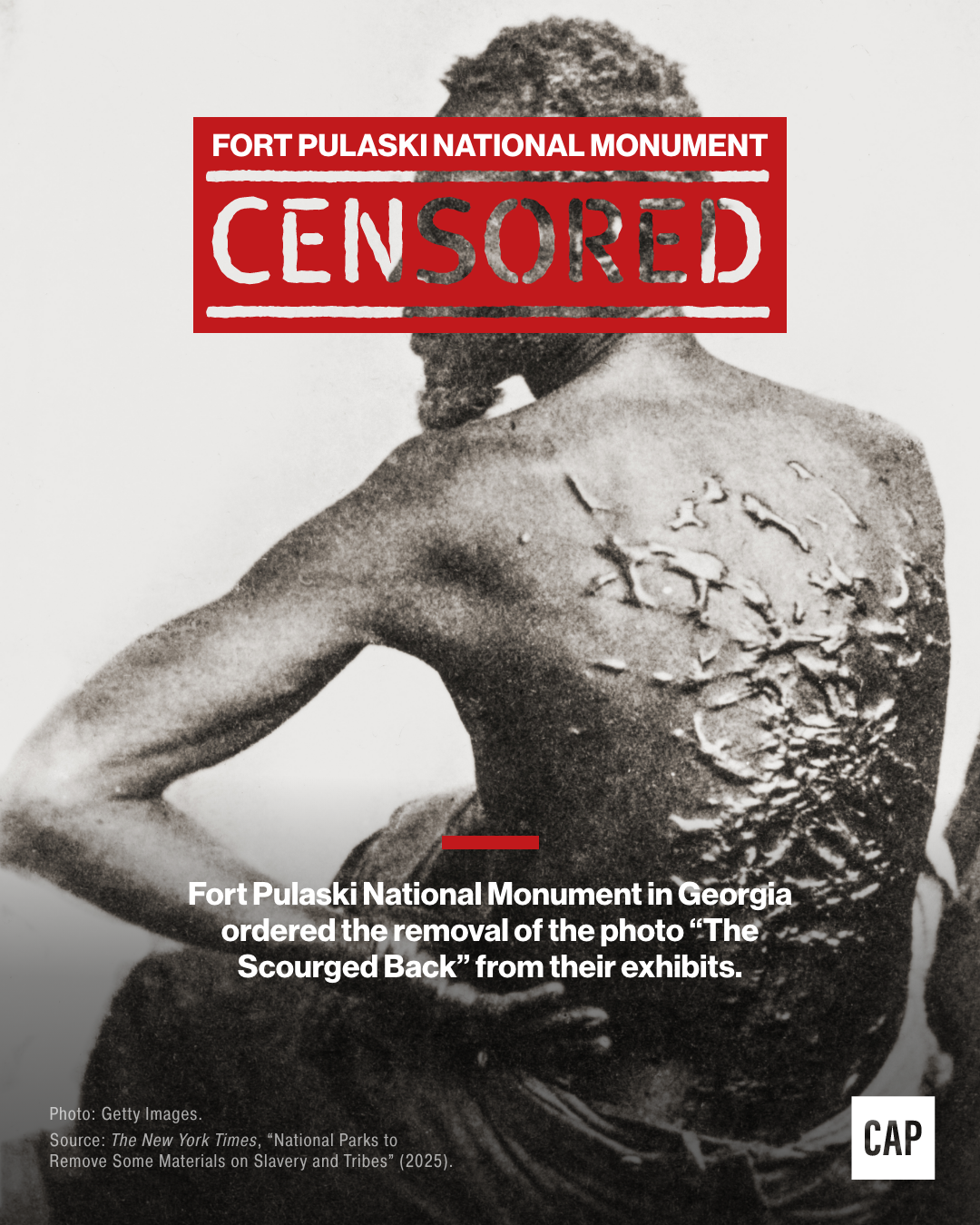
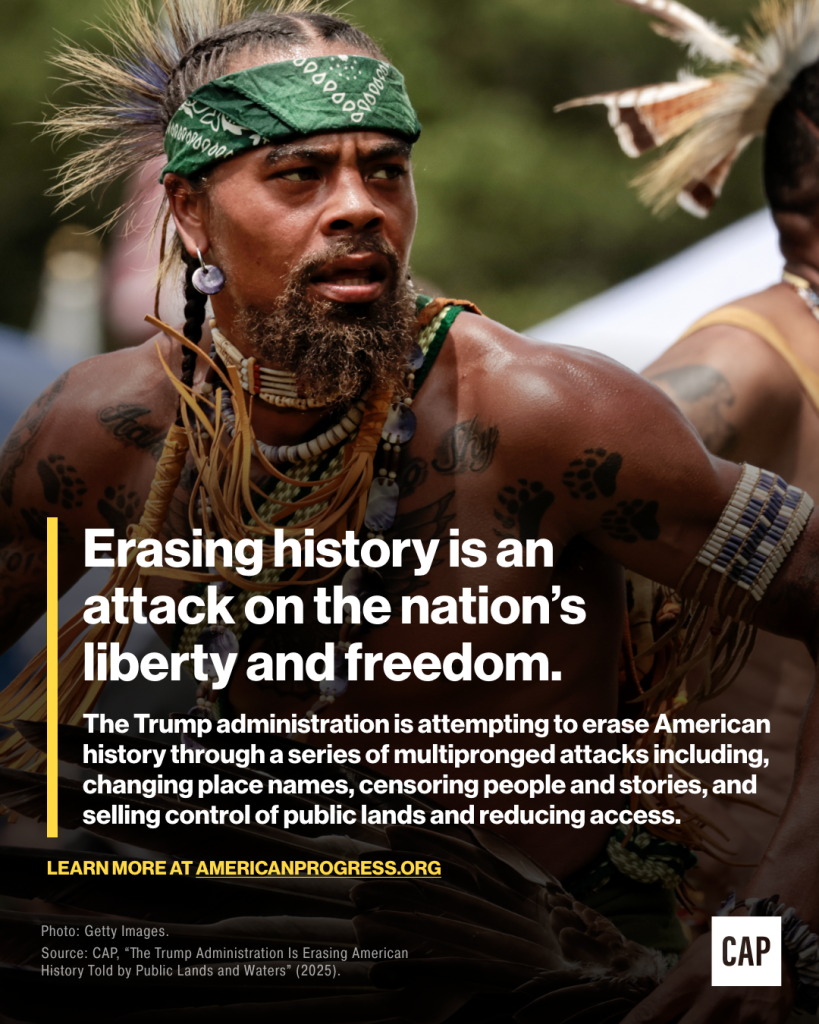
The Trump administration is attempting to rewrite the history of the United States by erasing the multicultural and multiracial stories of the people who built and shaped this country. This is not a new phenomenon; elements seeking to impose a version of history based on white supremacy have always existed. For instance, around the time many of our first national parks were designated, groups like the United Daughters of the Confederacy and the Ku Klux Klan were erecting Confederate monuments, such as Stone Mountain Park in Georgia. History has endured these challenges, and tactics used then can be applied today to document and interpret history in the face of efforts to distort it.
Read The Trump Administration Is Erasing American History Told by Public Lands and Waters by the Center for American Progress
Many of these vital stories are meant to be permanently honored within our national public lands and waters. However, through a multi-pronged strategy that includes pushing for changes in school curricula and censoring museum exhibits, the administration is attempting to erase nonwhite history. This is evident on our public lands and waters through orders that change names of public places, censor historical exhibits, and reduce access to public areas. There are ways to fight back against these actions.
Document the Erasure
Preserving historical truth is a crucial safeguard against authoritarian rule. It is the responsibility of universities, NGOs, friends groups, and citizens to act as custodians of the knowledge contained within our public lands and waters.
For example, a group of historians and librarians, in collaboration with the University of Minnesota, launched the Save Our Signs campaign. This initiative documents public education signs from national parks, inviting people nationwide to photograph and upload them to an online database for preservation. Additionally, the Coalition for Outdoor Renaming and Education provides a toolkit for responding to the “snitch signs” appearing across the country.
Supporters of public lands and waters need to develop similar programs to track and document executive orders, memos, and actions that rewrite history, as well as protect the books, signs, stories, and other resources that tell the true history across the nation.
Fight Back
In April 2025, the administration removed content from a National Park Service website about the Underground Railroad. They replaced a large photograph of Harriet Tubman with images of Postal Service stamps emphasizing “Black/White cooperation” and deleted any mention of slavery. The revised text described the Underground Railroad as something that “bridged the divides of race, religion, sectional differences, and nationality” and “joined the American ideals of liberty and freedom.” This action was widely criticized in the press, leading to the restoration of the original website days later.
Similarly, in July 2025, the Smithsonian removed references to Donald Trump’s two impeachments from an exhibit on American Democracy, posting a sign that stated, “only three presidents have seriously faced removal.” Public outcry led to the exhibit’s restoration days later.
In another instance, Congress attempted to sell off public lands with the Big Beautiful Bill, but Republican Mike Lee of Utah removed the provision after bipartisan public opposition.
Attempts to rewrite history or sell public lands are outrageous and unpopular. The administration has shown sensitivity to public sentiment on these issues. Public protest and petition remain effective tactics for preserving democracy.
Tell American Stories
The responsibility to tell the real history of America ultimately rests with the American communities who own these stories and have generations-long connections to the peoples, lands, and waters these stories remember. Black History Month and Pride Month are powerful examples of how marginalized communities have come together to celebrate and honor the sometimes uncomfortable history and truths of American history and culture. While the federal government may be retreating from ensuring freedom for all, there have always been those who can carry the torch, including academics, cultural practitioners, elders, and others.
There are many ways to do this. In the coming weeks and months the America the Beautiful for All Coalition is building out a story directory on the subreddit r/NatureJusticeHealth. We are inviting stories around the theme “The Right to Restore, The Right to Repair.”
Conclusion
Ultimately, the ongoing struggle to preserve accurate historical narratives and protect public lands and waters is a testament to the enduring power of social movements. As seen through successful protests and initiatives like “Save Our Signs,” and despite the current flirtation with autocracy, public sentiment can still influence policy and restore historical truth. By documenting efforts to erase history, actively fighting back against such attempts, and continuing to tell the diverse stories of America, we can ensure that the rich, multicultural tapestry of our past remains intact for future generations. The responsibility lies with all of us to carry the torch of truth and freedom, just as marginalized communities have done for decades, ensuring that the real history of America is honored and remembered.