Skip to content

Southern Fried Science

Over 15 years of ocean science and conservation online

  • Home
  • About SFS
  • Authors
  • Support SFS

Category: Blogging

A decade of failures in Science Communication.

Posted on February 12, 2020February 18, 2020 By Andrew Thaler 4 Comments on A decade of failures in Science Communication.
Blogging

Eleven years is a long life for a science blog. Southern Fried Science was born in 2008, when the main writers were all graduate students. Over the last decade the online landscape has changed. Science Communication changed with it, adapting and evolving to meet an ever-shifting ecosystem. Looking back on the last decade and thinking about the next, it’s becoming easier to see where we went wrong. It’s not quite as easy to determine what we need to correct the course.

This is not a scientific assessment, this is my own personal observations from the last decade of running Southern Fried Science, from teaching Social Media for Environmental Communications for the last 7 years, from working with Upwell, one of the most dynamic and visionary ocean NGOs ever conceived, from helping build and launch multiple online platforms, dozens of novel programs, and hundreds of outreach campaigns, and from spending a lot of time since November 2016 reflecting on what we’ve done wrong.

That Hideous Deficit

Do we really need another 200 words on how bad the deficit model is and why it needs to die?

Apparently, yes.

The basic premise: that science perception and policy is shaped by an information deficit and that if we just make good science education content and spread it, we can combat the spread of misinformation, people will learn, and everything will get better.

It doesn’t work. It never worked. And it ignores the reality that misinformation is manufactured for political and financial gain, with tremendous incentives and, often, far better funding than science outreach campaigns. But beyond that, multiple studies have shown that, when confronted with information that challenges their fundamental world view, people don’t throw out their worldview, they reject the science, creating a more entrenched and intractable audience.

Read More “A decade of failures in Science Communication.” »

What the hell is the DC Metro’s “climate change will increase shark bites” ad talking about? An investigation

Posted on January 14, 2020January 14, 2020 By David Shiffman
Blogging, Climate change

Ever since I moved to Washington, DC last summer, I’ve been fascinated by an ad campaign for the DC Metro. The premise of the campaign is simple: taking public transit reduces your carbon footprint compared with driving yourself. It highlights various negative consequences of climate change, and points out how riding the Metro can help fight them.

Many of these ads highlight well-known consequences of climate change:

Photos by David Shiffman

Others highlight less well-known consequences of climate change, but are still on solid scientific ground:

Photo via DC Metro twitter account

But one ad in particular has been perplexing me for months:

Read More “What the hell is the DC Metro’s “climate change will increase shark bites” ad talking about? An investigation” »

10 sharks that mattered in the 2010’s

Posted on December 19, 2019December 19, 2019 By David Shiffman
Blogging, Popular Culture, Science, Uncategorized

Just when you thought it was safe to read another decade-in-review listicle…

You can buy this on a tshirt

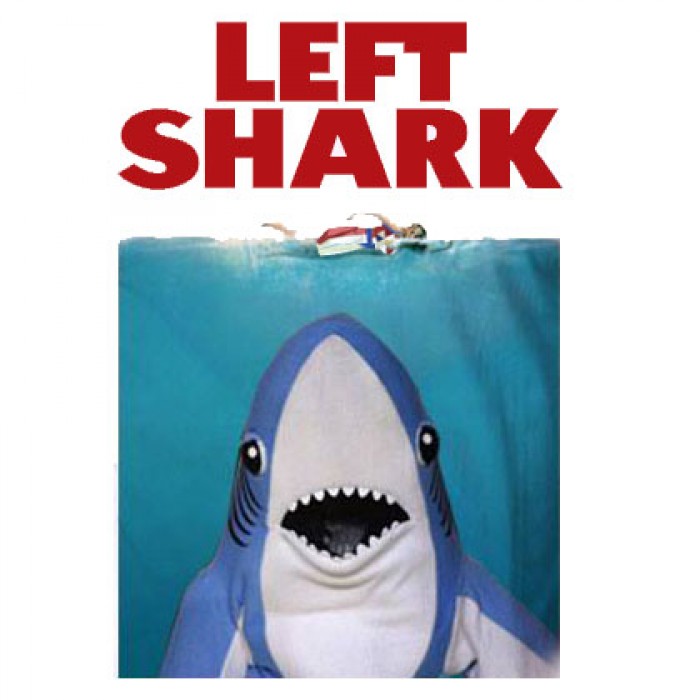
As the 2010’s come to an end, it’s a time to reflect on the often-problematic decade that was as we plan for a hopeful future. I am a sucker for year-in-review and decade-in-review listicles, and was devastated to learn that no one had yet written a decade-in-review listicle for sharks! Please enjoy my official, scientific list of the most important science, conservation, and pop culture sharks from the past decade.

Read More “10 sharks that mattered in the 2010’s” »

SciComm Infuses Science with Soul

Posted on November 26, 2019November 25, 2019 By Michelle Jewell
Blogging

Every scientist I work with spends most of the day communicating, whether that’s preparing grants, manuscripts, theses, outreach talks, emails to colleagues/students… the list goes on.  However, most of these outlets share fairly strict formatting rules. Grants comes with pages of guidelines. Talks have defined who I am, what I did, found, next, thank you slide.  While this sterile approach is arguably fundamental to science’s critical tenant of replication, it makes for terrible communication.

Read More “SciComm Infuses Science with Soul” »

Repairing the world: How my Jewish faith informs my conservation philosophy

Posted on November 6, 2019November 6, 2019 By David Shiffman
Blogging

It’s easy to get discouraged or demoralized as an environmentalist in today’s world. It seems like every day brings more devastating news. Half of the world’s wildlife has died in my parents’ lifetime, and current rates of extinction may be up to 10,000 times higher than the natural background rate. We’re losing a terrifying number of birds and insects, and a million species are considered threatened or endangered. Things are bad enough that “eco anxiety” is now a recognized mental health condition.

It is said that in the environmental movement, all of our victories are temporary, and all of our defeats are permanent. Much of the current focus of environmental advocacy has been described as “playing against the slaughter rule,” hoping not to win but to avoid getting totally wiped out in our inevitable loss.

In the face of all this, I’m often asked how I can remain so optimistic, and so motivated to keep working. Some people are surprised to learn that a large part of my answer comes from my Jewish faith.

Read More “Repairing the world: How my Jewish faith informs my conservation philosophy” »

Don’t boop the snoot: an interview with the creators of the “life of sharks” webcomic

Posted on September 14, 2018September 14, 2018 By David Shiffman
Blogging

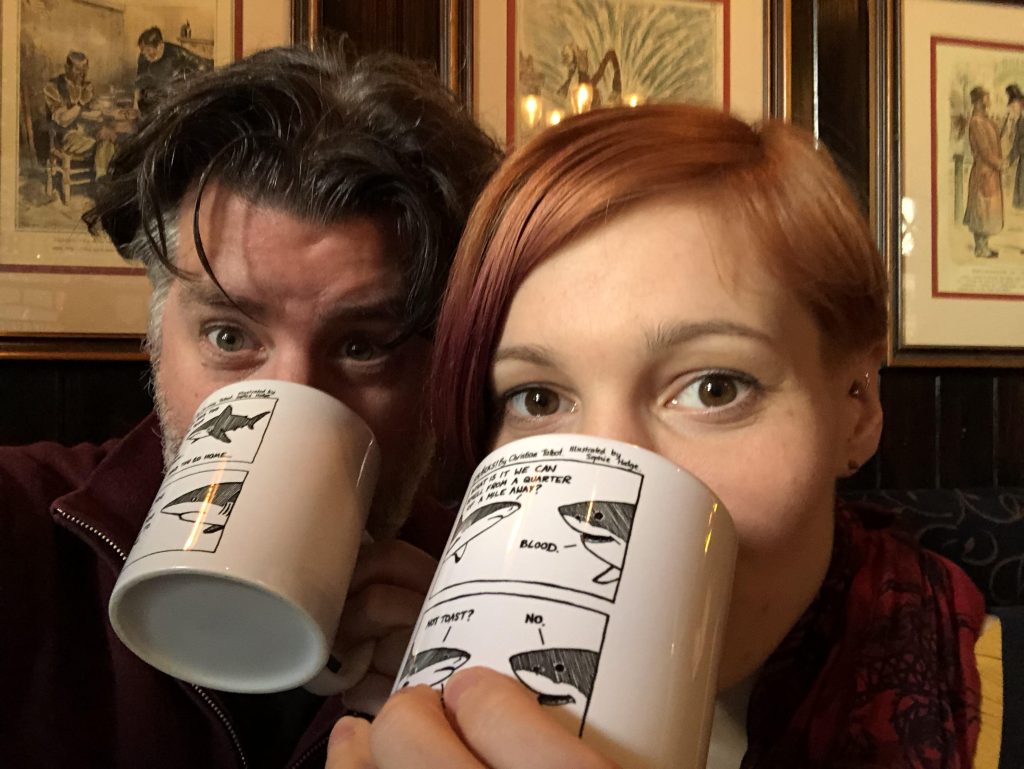
Christian and Sophie

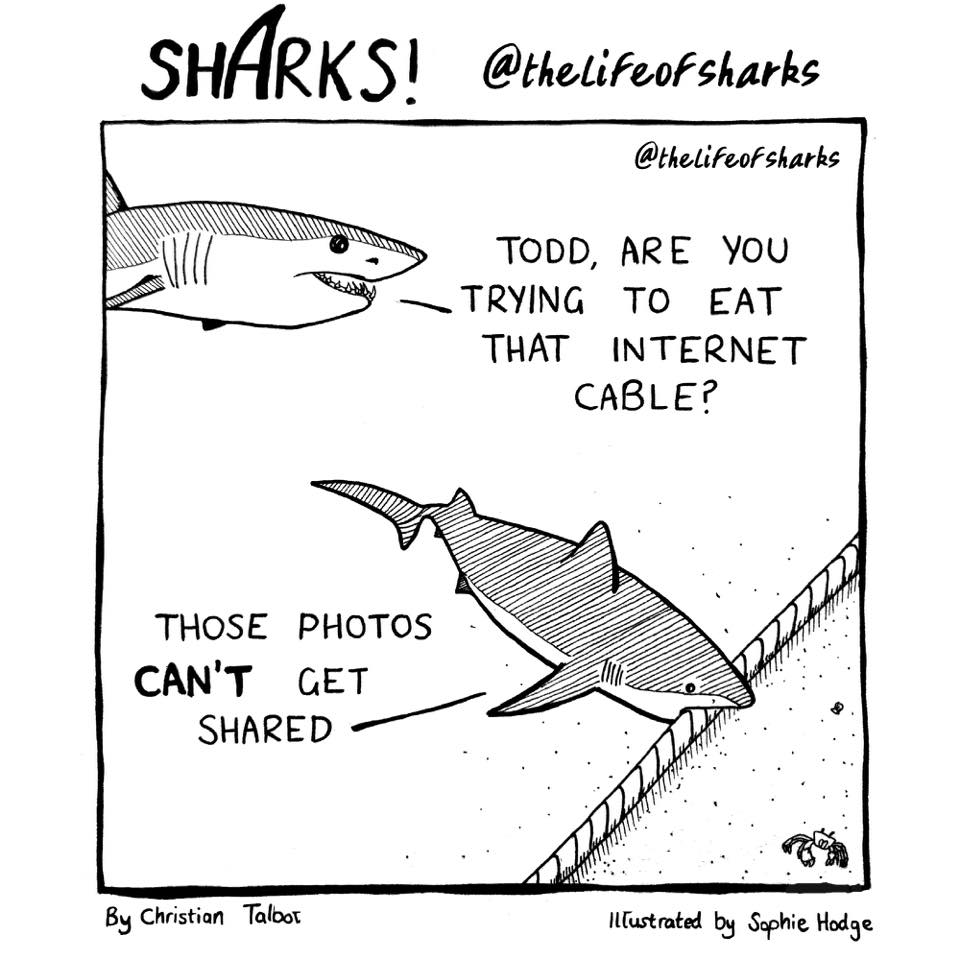
The “life of sharks” webcomic, which features real facts about sharks along with clever humor, is taking the internet by storm! Creators Christian Talbot (writer) and Sophie Hodge (Illustrator) were kind enough to answer some of my questions about their comic and where they get their ideas. Be sure to follow them on Facebook, Twitter, and Instagram, and check out their online store. Responses are lightly edited for length and clarity. 

David: Tell me about your comic. Why sharks? 

Sophie: Mostly the comic is about the minutiae of everyday life, relationships and emotions. That’s kind of funny when you put it into the mouths of fish that are perceived to be cold hearted killers.

Christian: They can be about anything, really. I just like the way we can anthropomorphize the sharks. Sharks just seemed like the funniest animal to try and give human emotions to and put into relationships because they’re seen as being cold, solitary, killing machines. Plus sharks are just cool. Also, sharks can’t claim royalties.

https://www.facebook.com/LifeofSharks/photos/a.849154768625597/973874562820283/?type=3&theater

Read More “Don’t boop the snoot: an interview with the creators of the “life of sharks” webcomic” »

A scene-by-scene breakdown of the first trailer of “The Meg”

Posted on April 10, 2018April 10, 2018 By David Shiffman 1 Comment on A scene-by-scene breakdown of the first trailer of “The Meg”
Blogging, Popular Culture

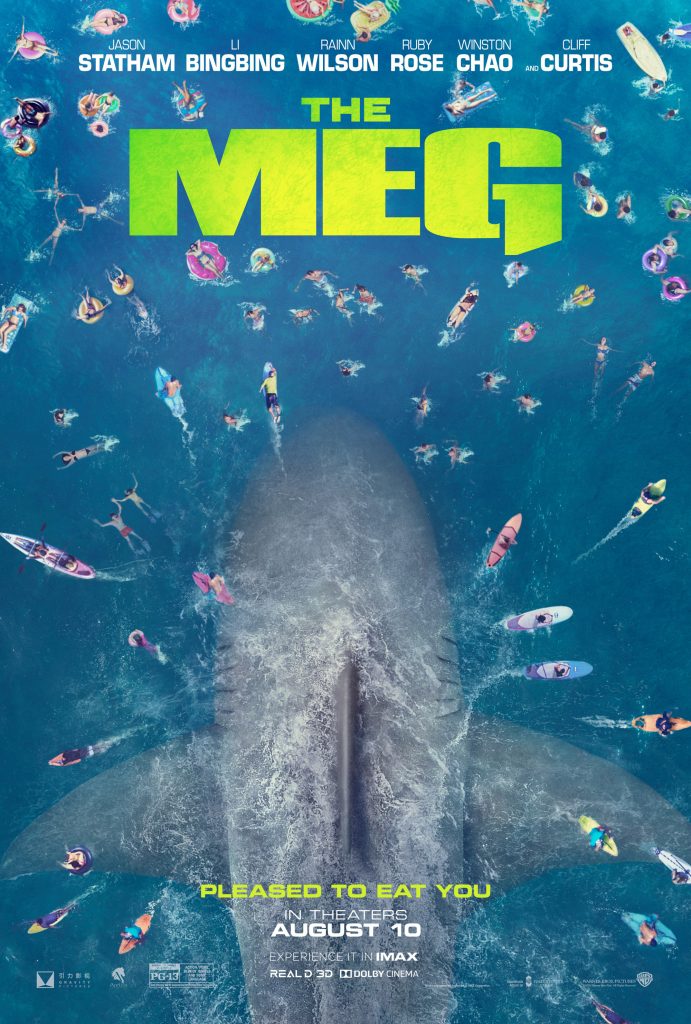
Yesterday, the trailer for “the Meg” was released online.  This movie is based on a popular book series that claims that megalodon is actually not extinct, just hiding. (I’m in the 4th book).


I have a love-hate relationship with movies like this, by which I mean that I love them and I hate myself for loving them. While movies like “Jaws” had a measurable negative effect on public perception of sharks, I don’t believe that more obviously ridiculous movies like SharkNado have a similar effect.  Jason Statham playing a marine biologist in a movie that includes Rainn Wilson? Sign me up.

If not for the people who believe that these movies are real and therefore decide to yell at marine biologists on twitter about it, I’d be all for this.  Let’s be totally clear here- Carcharocles megalodon is extinct, and here’s how we know. Shark Week lied to you about it. Actresses from this movie asking about it are not experts. This movie is completely fictional. You can certainly watch it and enjoy it, but please don’t cite it as evidence that a 50 foot long whale-eating shark that used to live in shallow coastal waters near what are now populated areas is not extinct.

Anyway, here is a scene-by scene breakdown of what’s in the first trailer. From it, we can tell that this is an action-packed movie with a great cast that does not stick too closely to the books, and is also not particularly interested in scientific accuracy even with respect to issues unrelated to the “giant extinct animals are actually not extinct”central conceit.

Read More “A scene-by-scene breakdown of the first trailer of “The Meg”” »

How to support your favorite Southern Fried Science writers in 2018

Posted on January 2, 2018 By Andrew Thaler
Blogging

Southern Fried Science is growing! Thanks to Patreon and a few passive income streams, for the first time in almost a decade, we’re able to begin paying our volunteer writers for their outreach efforts. This year, we’ve established the Southern Fried Science Writers’ Fund to begin paying out compensation for all the incredible work that … Read More “How to support your favorite Southern Fried Science writers in 2018” »

How to help our island colleagues in the wake of total devastation.

Posted on September 27, 2017September 27, 2017 By Andrew Thaler 1 Comment on How to help our island colleagues in the wake of total devastation.
Blogging

After three brutal hurricanes, the islands of the Caribbean are hurting. It can be hard, in the wake of catastrophe, to know where your donations can be best spent. We’ve contacted several of our colleagues on the ground to find out who’s doing the work and which aid organizations and groups need help now. Puerto … Read More “How to help our island colleagues in the wake of total devastation.” »

The many, many ways I screwed up my first science crowdfunding campaign.

Posted on September 26, 2017October 1, 2017 By Andrew Thaler
Blogging

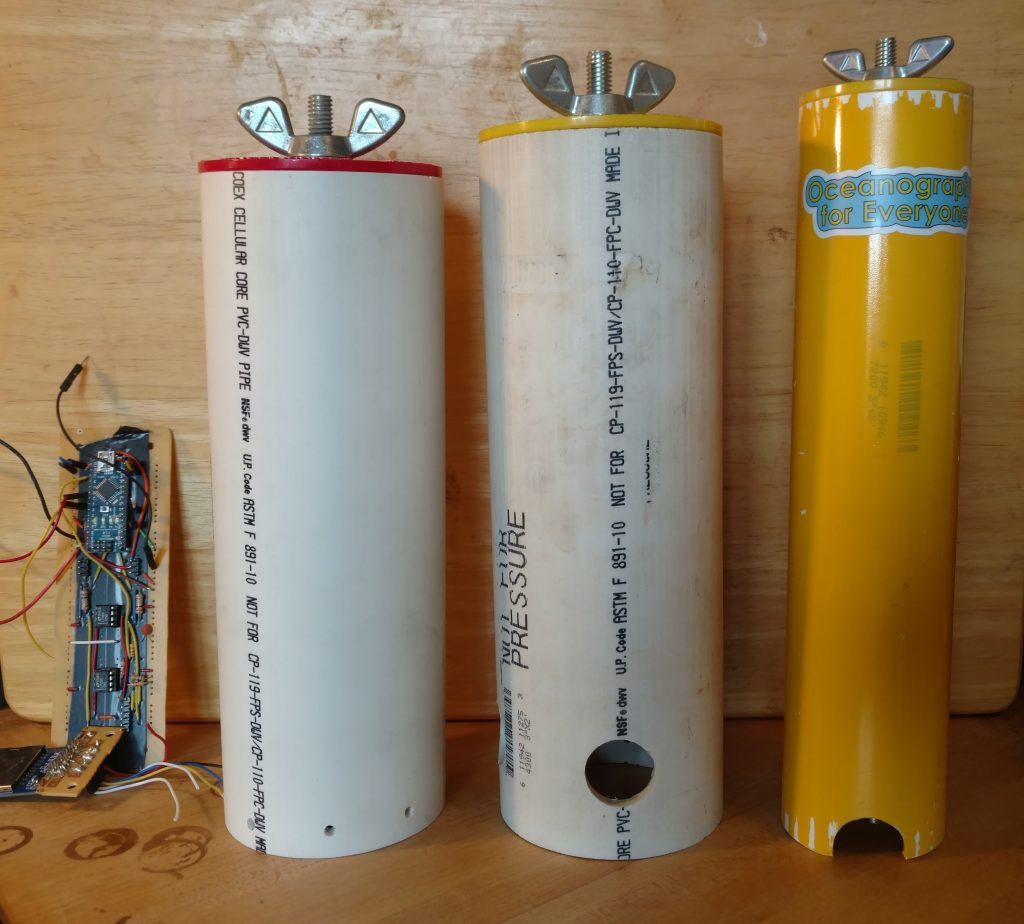
Four generations of field hardened OpenCTDs.

It’s been over five years since Kersey Sturdivant and I launched Oceanography for Everyone – The OpenCTD, my first attempt at crowdfunding science. Over the years, that initial effort has grown into Oceanography for Everyone, a community of researchers, educators, and citizen scientists, and has created new open-source tools for open-source, open-science hardware. The OpenCTD is the finest oceanographic instrument that you can build in your own home for less than $300.

The crowdfunding campaign was a total disaster.

Since then, I’ve written several articles on how scientists can launch and managed crowdfunding campaigns:

  • Can Crowdfunding Fill the Science Funding Gap?
  • Setting Up Your Crowdfunding Campaign
  • Managing a Successful Crowdfunding Campaign

…but I’ve never written explicitly about what we did wrong during that campaign and how it impacted our success. Now that the final reward from that campaign has been delivered (yes, five years later, talk about the eternally delayed crowdfunding campaign), it’s the right moment to look back and think about how everything went so wrong.

I went with lesser-known platforms. We launched the OpenCTD on RocketHub. At the time, RocketHub was hosting the #SciFund Challenge, a campaign to encourage scientists to launch science crowdfunding campaigns. Both the #SciFundChallenge and RocketHub were relatively small players in the nascent crowdfunding world. RocketHub doesn’t even appear to do crowdfunding anymore, they’ve pivoted to a “social network for entrepreneurs”. The old OpenCTD campaign page is long deprecated. #SciFund Challenge’s website hasn’t been updated in almost half a year.

Here’s the thing with crowdfunding, and especially crowdfunding in the early days: There are two dominant communities that you can rely on. There’s the community of people who want to support what you’re doing and there’s the community of people enamored with the idea of crowdfunding. Being a crowdfunding “investor” is a hobby in and of itself and many of the biggest donors are people who support dozens of different campaigns. So the larger and more popular the platform, the more crowdfunding enthusiasts you’ll attract. Heck, since backing the very first OpenROV, I’ve backed 23 other projects on Kickstarter, most recently Public Lab’s Balloon Mapping kits.

By going with RocketHub, I committed our campaign to a smaller potential audience. Considering Kickstarter was garnering huge press at the time, this was a near-fatal mistake.

Read More “The many, many ways I screwed up my first science crowdfunding campaign.” »

Posts pagination

Previous 1 … 4 5 6 … 19 Next

Popular Posts

Shark scientists want their research to help save threatened species, but don’t know how. Our new paper can help.Shark scientists want their research to help save threatened species, but don’t know how. Our new paper can help.December 1, 2025David Shiffman
Norway and Cook Islands put their deep-sea mining plans on pause.Norway and Cook Islands put their deep-sea mining plans on pause.December 3, 2025Andrew Thaler
What Ocean Ramsey does is not shark science or conservation: some brief thoughts on "the Shark Whisperer" documentaryWhat Ocean Ramsey does is not shark science or conservation: some brief thoughts on "the Shark Whisperer" documentaryJuly 2, 2025David Shiffman
What we know we don't know: impacts of deep-sea mining on whales, dolphins, sharks, turtles, and other migratory species.What we know we don't know: impacts of deep-sea mining on whales, dolphins, sharks, turtles, and other migratory species.November 20, 2025Andrew Thaler
2025: My year in writing, public speaking, and media interviews2025: My year in writing, public speaking, and media interviewsDecember 3, 2025David Shiffman
The Trouble with Teacup PigsThe Trouble with Teacup PigsOctober 14, 2012Andrew Thaler
Urea and Shark OsmoregulationUrea and Shark OsmoregulationNovember 15, 2010David Shiffman
How tiny satellites are tracking marine wildlifeDecember 1, 2025Andrew Thaler
Shark of Darkness: Wrath of Submarine is a fake documentaryShark of Darkness: Wrath of Submarine is a fake documentaryAugust 10, 2014Michelle Jewell
Quick Tips for Graduate Student Life - Write a Book ReviewJanuary 23, 2014Andrew Thaler
Subscribe to our RSS Feed for updates whenever new articles are published.

We recommend Feedly for RSS management. It's like Google Reader, except it still exists.

Southern Fried Science

  • Home
  • About SFS
  • Authors
  • Support SFS


If you enjoy Southern Fried Science, consider contributing to our Patreon campaign.

Copyright © 2025 Southern Fried Science.

Theme: Oceanly Premium by ScriptsTown