Skip to content

Southern Fried Science

Over 15 years of ocean science and conservation online

  • Home
  • About SFS
  • Authors
  • Support SFS

Category: Conservation

Oil Spill vs. Hypoxic Zone

Posted on May 19, 2010May 19, 2010 By Bluegrass Blue Crab 4 Comments on Oil Spill vs. Hypoxic Zone
Conservation

There’s an elephant in the room as summer arrives on the Gulf Coast: hypoxia season.

This year, it’s a different Gulf, one covered in the largest oil slick in our country’s history.  No one is quite sure what the interaction between the oil and hypoxia will be.  Best guess is that both stresses will mean the end for most organisms living in the area and that hypoxia will exacerbate problems associated with the spill and hinder recovery by limiting oxygen availability for detoxifying bacteria.  However, step back for a minute and speculate on other possibilities: could the oil spill actually be helpful if it prevents or slows the eutrophication process? Could the damages associated with the oil spill be less than those associated with a large hypoxic zone?

Read More “Oil Spill vs. Hypoxic Zone” »

Crowdsourcing ConGen – A Reading List

Posted on May 18, 2010June 16, 2010 By Andrew Thaler 1 Comment on Crowdsourcing ConGen – A Reading List
Conservation, Science

This is a little different from my usual Crowdsourcing ConGen posts. I recently completed my qualifying exams for PhD candidacy, so have a very large reading list compiled for population and conservation genetics. So, if you’re interested in the field, you should check out some of these papers, and if you know of any others that should be included, please let me know in the comments.

Read More “Crowdsourcing ConGen – A Reading List” »

WhySharksMatter attends an offshore drilling public hearing

Posted on May 16, 2010 By David Shiffman
Conservation

A few weeks ago, I attended a public hearing about offshore oil drilling here in Charleston. I filmed the public comment period, and several participants agreed to be interviewed after the hearing ended. I have over 3 hours of footage if anyone is curious about what didn’t make the final cut. Interestingly, only a few participants lived in South Carolina. Oil companies and conservation NGO’s sent people from their Washington, DC headquarters. Most of the people who spoke were affiliated with a conservation NGO or an oil company or conservation NGO, but the unaffiliated individuals (residents of South Carolina) who spoke were all opposed to offshore drilling.

Read More “WhySharksMatter attends an offshore drilling public hearing” »

The Menhaden of History

Posted on May 13, 2010December 20, 2011 By Andrew Thaler 8 Comments on The Menhaden of History
Conservation, Science

ResearchBlogging.orgMenhaden were the most important fisheries throughout American history. When the first settlers learn to farm corn, it was with menhaden that they fertilized the seeds. When the whaling industry reached its height, it was outweighed by menhaden oil. Menhaden ruled the ocean from the middle of the food chain, they were the dominant prey of most large predatory fish. They swarmed the sea in schools several miles long and millions of fish deep. Their huge biomass supported by plankton, they regulated algal blooms, mediated the transfer of primary production up the food chain, filtered the ocean.

Read More “The Menhaden of History” »

Are humans a keystone species?

Posted on May 11, 2010December 20, 2011 By Bluegrass Blue Crab 12 Comments on Are humans a keystone species?
Conservation, Science

“Humans are just a fossil-fueled outbreak that will go away”, stated one of my professors yesterday.

In the world investigating the human dimensions of natural resource management there’s two schools of thought as to how humans fit in: a) as just another particularly troublesome species in the ecosystem or b) a special kind of species with the ability to predict and change the future.  This latter formulation hinges on humans as a species with “motivation” and “intent”, according to C.S. Holling.

Otherwise, however, humans should be able to fit into the ecological definitions and models we all learned in intro biology.  At an extreme case, it means we’re the next trilobite or dinosaur, living in our 15 minutes of fame now but soon to disappear.  In the process, we will pave the way for a new species to become dominant.

Read More “Are humans a keystone species?” »

Hawaii shark fin bill passes!

Posted on May 3, 2010 By David Shiffman 1 Comment on Hawaii shark fin bill passes!
Conservation, Science

A few weeks ago, I asked readers to voice their support for a proposed anti-shark finning bill in Hawaii. Those of you who follow me on Twitter have seen numerous updates about this important issue.  I am pleased to report that the bill passed both the House and Senate this morning, and it will soon go to the desk of the Governor of Hawaii. If signed (and everyone is pretty optimistic that it will be signed), it will be the strongest shark conservation law in North America- and one of the strongest in the world. Stefanie Brendl, President of Shark Allies and owner of Hawaii Shark Encounter worked harder than anyone on this issue, and she has agreed to answer a few questions about it for us.

Read More “Hawaii shark fin bill passes!” »

Douglas Adams on Evolution, Endangered Species, Conservation, and writing Last Chance to See

Posted on May 2, 2010May 2, 2010 By Andrew Thaler 2 Comments on Douglas Adams on Evolution, Endangered Species, Conservation, and writing Last Chance to See
Conservation, Popular Culture, Science

The brilliantly funny Douglas Adams shares the adventures he had while writing Last Chance to See. Since he gave this talk, the Yangtze River Dolphin has been declared extinct and only 123 Kakapo remain.  Komodo dragons are now listed as vulnerable, and although their population appears quite large, it was recently discovered that Komodo dragons … Read More “Douglas Adams on Evolution, Endangered Species, Conservation, and writing Last Chance to See” »

Ethical Debate: Should we have freed Willy?

Posted on April 29, 2010 By David Shiffman 65 Comments on Ethical Debate: Should we have freed Willy?
Conservation, Science

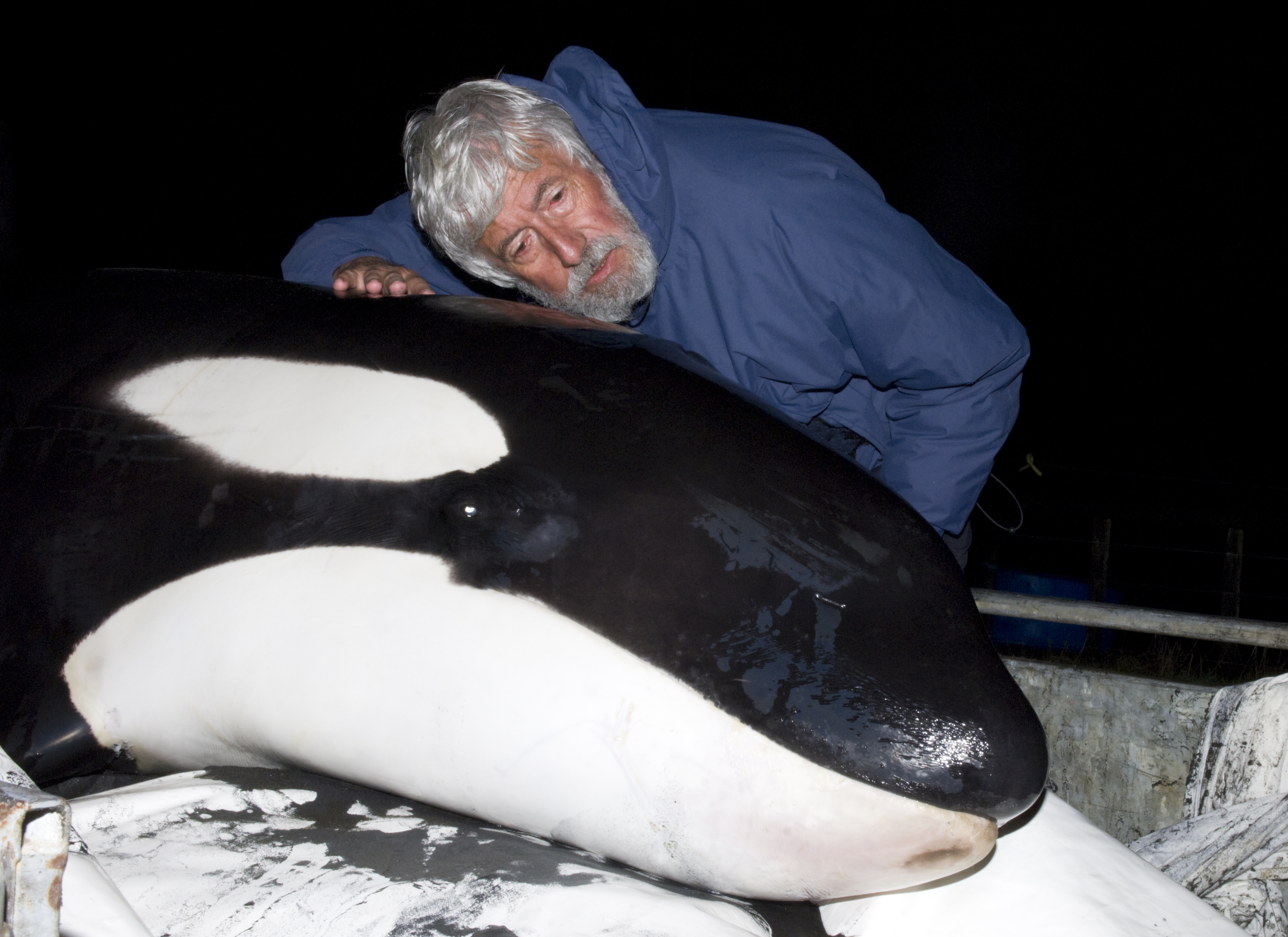
Jean-Michel Cousteau with an orca. Photo credit: Carrie Vonderhaar, Ocean Futures Society

The  death of Sea World trainer Dawn Branchaeu revived an old debate over whether it is appropriate to keep orca whales in captivity. Many people are calling for all captive orcas to be set free, but I continue to support aquariums because of the roles they serve as educators and conservationists. Although several readers have pointed out that the sea world incident itself would make for a solid ethical debate, I am instead going to take you back more than 15 years to a movie that started this whole movement: Free Willy.

Read More “Ethical Debate: Should we have freed Willy?” »

What the hell happened to the environmental movement?

Posted on April 22, 2010April 21, 2010 By Andrew Thaler
Conservation, Popular Culture, Science

This post was originally published on Earth Day, 2009. The responses I received from it were tremendous, both positive and negative. Were I to write it again today, I would include a discussion of Carbon Offsets and Eco-Guilt.

There is a real challenge in the environmental movement. On one hand, the science is on our side, but on the other hand, there is a growing group within the movement committed to dogma and willing to sacrifice facts for pseudoscience. So, this Earth day, we once again bring you “What the hell happened to the environmental movement?”


473px-rachel-carsonForty-seven years ago, a brilliant, passionate scientist who understood the power of public outreach, noticed a decline in songbird populations, discovered a trend of decreasing egg shell thickness, and correlated this effect with the increase in the use of DDT as a pesticide. After thoroughly and rigorously verifying her results and conclusions, she did something revolutionary; she wrote a book. The publication of Silent Spring in 1962 marks the beginning of the modern environmental movement in America. Its simple, elegant prose made the complex interaction between humankind and the environment accessible to a public that had limited exposure to scientific writing. Like other works of literary science, Silent Spring, wove the scientific method into a narrative; observations, questions, conflicts, discoveries, joy and sorrow. To struggle and to understand, never the last without the first. The beauty of her words still echo with that same power today.

Read More “What the hell happened to the environmental movement?” »

Seeing Green

Posted on April 21, 2010April 21, 2010 By Bluegrass Blue Crab
Conservation

Is eco-chic all is cut out to be?

Did you ever meet that gear-head who had a shelf full of Nalgenes or a trunk full of those reusable shopping bags?  At the time, did you stop and think about the environmental impact of these eco-friendly products? In honor of Earth Day, I’d like to take a moment to step back and evaluate the state of our environmental movement.

Yes, at some level these things reduce your personal environmental impact.  They save millions of plastic bags and cups from entering the waste stream and therefore our biosphere.  At the same time, they promote the consumer culture that created many of our environmental issues in the first place.

Read More “Seeing Green” »

Posts pagination

Previous 1 … 41 42 43 … 46 Next

Popular Posts

Shark scientists want their research to help save threatened species, but don’t know how. Our new paper can help.Shark scientists want their research to help save threatened species, but don’t know how. Our new paper can help.December 1, 2025David Shiffman
Norway and Cook Islands put their deep-sea mining plans on pause.Norway and Cook Islands put their deep-sea mining plans on pause.December 3, 2025Andrew Thaler
What Ocean Ramsey does is not shark science or conservation: some brief thoughts on "the Shark Whisperer" documentaryWhat Ocean Ramsey does is not shark science or conservation: some brief thoughts on "the Shark Whisperer" documentaryJuly 2, 2025David Shiffman
What we know we don't know: impacts of deep-sea mining on whales, dolphins, sharks, turtles, and other migratory species.What we know we don't know: impacts of deep-sea mining on whales, dolphins, sharks, turtles, and other migratory species.November 20, 2025Andrew Thaler
2025: My year in writing, public speaking, and media interviews2025: My year in writing, public speaking, and media interviewsDecember 3, 2025David Shiffman
The Trouble with Teacup PigsThe Trouble with Teacup PigsOctober 14, 2012Andrew Thaler
Urea and Shark OsmoregulationUrea and Shark OsmoregulationNovember 15, 2010David Shiffman
How tiny satellites are tracking marine wildlifeDecember 1, 2025Andrew Thaler
Shark of Darkness: Wrath of Submarine is a fake documentaryShark of Darkness: Wrath of Submarine is a fake documentaryAugust 10, 2014Michelle Jewell
Quick Tips for Graduate Student Life - Write a Book ReviewJanuary 23, 2014Andrew Thaler
Subscribe to our RSS Feed for updates whenever new articles are published.

We recommend Feedly for RSS management. It's like Google Reader, except it still exists.

Southern Fried Science

  • Home
  • About SFS
  • Authors
  • Support SFS


If you enjoy Southern Fried Science, consider contributing to our Patreon campaign.

Copyright © 2025 Southern Fried Science.

Theme: Oceanly Premium by ScriptsTown